
What “For Rent by Owner” Means in Wichita
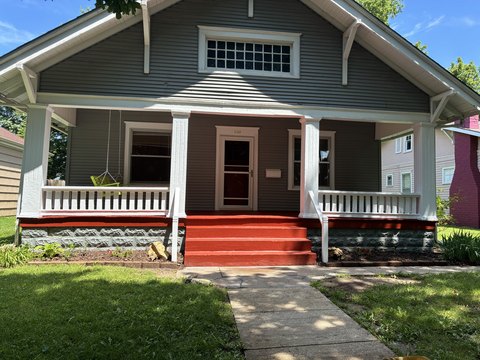
“For rent by owner” means the person you’re dealing with is the house’s owner. You deal with that person directly for showings, the lease, rent payments, and every repair request, since they set every term themselves rather than a company office setting it for them.
Verifying a Private Landlord Is Legitimate
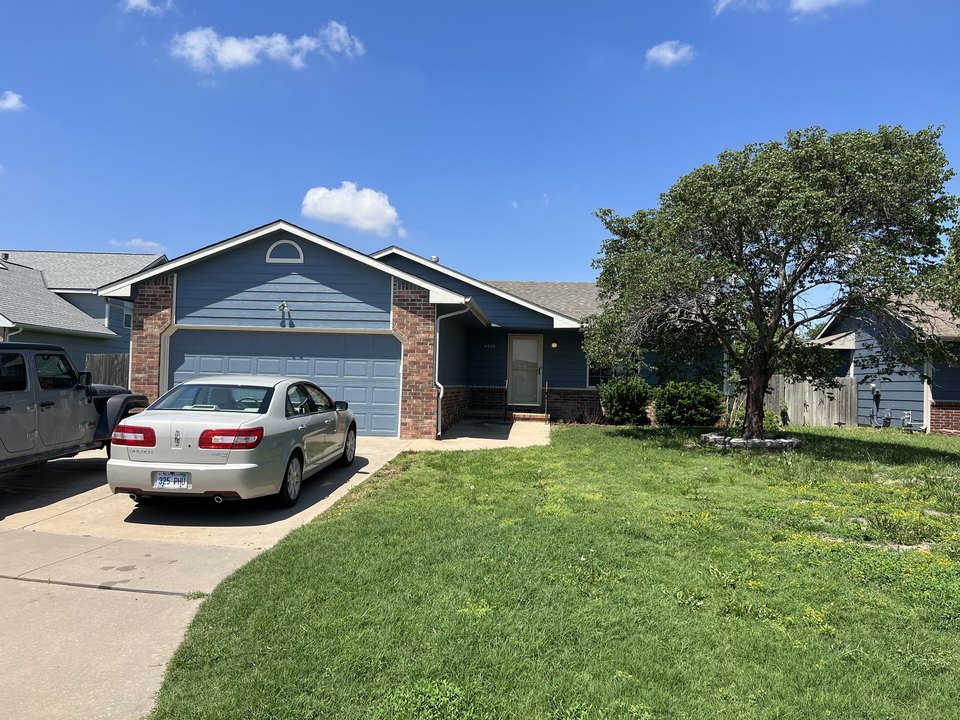
A private owner has no company name, no office address, and no employee roster to check against, which is exactly what makes verification worth doing before anything else. The FTC’s Consumer Protection Data Spotlight, published in December 2025, put reported rental-scam losses at close to $65 million between 2020 and mid-2025, and found that about half of the scams reported in the year ending June 2025 started with a fake ad on Facebook. Renters between 18 and 29 were three times as likely as older adults to report losing money.
- Confirm ownership before you send anything. Sedgwick County’s Real Estate Ownership, Sales, Appraisal and Tax Records tool lets you search any address for free and see the recorded owner’s name and mailing address. If it doesn’t match the person you’re emailing, ask why before you go further.
- Never pay by wire transfer, gift card, or a person-to-person app before you’ve toured the house in person, per FTC guidance on rental listing scams. These payment methods can’t be reversed once sent.
- Insist on a written lease before any money changes hands, and read it before you sign it. A promise to send the lease after the deposit clears is a refusal dressed up as a formality.
- Treat a below-market price as a reason to verify twice, not a reason to move fast. Scammers use low rent specifically to get renters to skip the steps above.
Skipping this checklist has a specific cost: renters who wire a deposit to someone who doesn’t own the house typically recover nothing, because the payment methods scammers push for don’t offer a way to reverse the transaction. There’s no lease to enforce and no landlord to sue, because the person who took the money was never renting anything in the first place.
Is renting from a private owner in Wichita more likely to be a scam? Not inherently. Scammers target any online listing, managed or owner-listed, by copying real photos and descriptions and reposting them with different contact information. The added risk with a private listing is that there’s no company switchboard to call and confirm the person is who they say they are, which is why the ownership check above matters more here than on a listing run through a management office.
What Kansas Law Still Guarantees You
Kansas tenant protections come from the Residential Landlord and Tenant Act, and they apply the same way whether the landlord is an individual or a corporation; the statute defines “landlord” as the owner, lessor, or sublessor of the unit.
Three provisions matter most for a private rental. Security deposits are capped under K.S.A. 58-2550: up to one month’s rent for an unfurnished house, up to 1.5 months if the landlord supplies furniture, plus up to half a month’s rent more for a pet. The deposit has to come back within 14 days of the landlord itemizing deductions, and no later than 30 days after you move out and hand over possession; a landlord who misses that deadline owes the tenant the amount withheld plus 1.5 times that amount in damages. Separately, K.S.A. 58-2553 obligates the landlord to keep electrical, plumbing, heating, and hot water systems in safe working order and to comply with local housing codes affecting health and safety, regardless of how the rental is managed.
One limitation is worth naming plainly, once: Kansas is one of only two states without a statewide default maintenance code, according to testimony submitted to the Kansas Legislature in February 2026, so what counts as a health-and-safety violation beyond the specific systems K.S.A. 58-2553 lists depends on whether your city has adopted its own housing code. Wichita has, so that local baseline exists even where state law alone would leave a gap.
Do I lose any legal protections by renting from an individual instead of a company? No. The Residential Landlord and Tenant Act defines landlord broadly enough to cover an individual owner, and every duty and deposit rule above applies whether your lease has a company logo at the top or a name you found in a listing post.
FRBO vs. Property-Managed Rentals: What Changes
The legal floor is identical either way. What differs sits above that floor: how fast a repair gets handled, how a deposit dispute plays out, and how much the terms can move.
| Dimension | Managed rental | FRBO (private owner) |
|---|---|---|
| Maintenance response | Routed through a call center or portal, often with an after-hours line | Depends entirely on one person’s availability; no backup if the owner is traveling |
| Screening standards | Formal credit, income, and background checks set by company policy | Set entirely by the owner, with no standardized criteria |
| Deposit handling | Held under company procedures, typically in a dedicated account | Still capped and governed by K.S.A. 58-2550, but enforcement depends on the tenant pursuing it individually |
| Lease negotiability | Largely fixed; terms rarely vary by tenant | Often genuinely negotiable, since one person can approve changes on the spot |
| Communication | Through a company system, with staff turnover over time | Direct with the same person for the length of the tenancy |
The trade is clear once it’s laid out this way: a managed rental buys a standardized process, while a private rental buys a direct relationship with the one person making every decision, for better or worse depending on who that person turns out to be.
What happens if my private landlord won’t fix something? You can send written notice under K.S.A. 58-2559 describing the problem and stating the lease will end on a rent-paying date at least 30 days out. If the landlord starts a good-faith repair within 14 days of that notice, the lease doesn’t end; if the same problem recurs after that window, you can terminate on the same terms without giving another chance.
What Houses Cost in Wichita Right Now
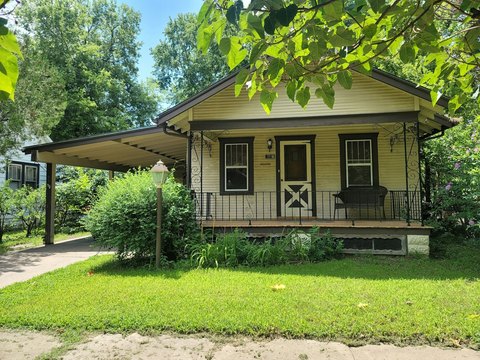
HUD publishes Fair Market Rents every fiscal year for every metro area, based on Census and local rent-survey data. The FY2026 schedule for the Wichita, KS metro area, effective since October 2025, sets these figures:
| Bedrooms | Typical monthly range | Source | As of |
|---|---|---|---|
| Studio | $782 | HUD FY2026 Fair Market Rents | Effective Oct. 2025 |
| 1 bedroom | $849 | HUD FY2026 Fair Market Rents | Effective Oct. 2025 |
| 2 bedroom | $1,099 | HUD FY2026 Fair Market Rents | Effective Oct. 2025 |
| 3 bedroom | $1,444 | HUD FY2026 Fair Market Rents | Effective Oct. 2025 |
| 4 bedroom | $1,784 | HUD FY2026 Fair Market Rents | Effective Oct. 2025 |
These figures set the baseline the Wichita Housing Authority uses to decide whether a voucher will cover a given rental, so a house priced well above the relevant bedroom count sits outside what a housing-assistance renter can use it for, whatever the owner is asking.
Is renting from a private owner in Wichita cheaper than a managed rental? There’s no published data showing individually owned houses are systematically cheaper than managed ones here. Price tracks the house’s condition, size, and location more than who owns it.
Where Wichita’s FRBO Inventory Tends to Concentrate
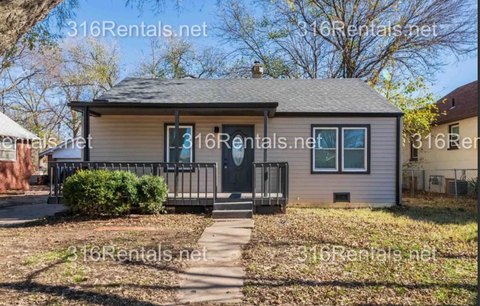
There’s no dataset that breaks Wichita’s rental inventory down by owner type at the neighborhood level, so naming specific ZIP codes as FRBO hotspots here would be a guess dressed up as a fact. The general pattern that holds across most metro housing markets is that older single-family stock, built before large-scale rental-portfolio buying became common, tends to stay in individual hands longer than newer subdivisions that institutional buyers target more aggressively. A renter looking specifically for a private-owner house in Wichita is more likely to find one by filtering directory listings for owner type and checking the year-built field than by assuming any one part of the city is the place to look.
Questions to Ask an Owner Before You Apply
A few questions before you apply save more trouble than reading any lease clause twice.
- Are you local, or is this an absentee-owner property? If the owner lives out of state, ask directly who handles a burst pipe at 11 p.m.
- Is there a written lease, or just an understanding? Get the terms in writing before committing to anything, per the verification checklist above.
- What’s the pet policy, in writing? Verbal permission has no standing if a later deposit dispute turns on it.
- Who pays for lawn care, snow removal, and pest control? This defaults differently across private leases, and the lease should say which way it goes.
Comments