
What the Walkthrough Doesn’t Show You

Standard home inspectors routinely skip pools, or note only “in working order” without checking the shell, coping, or equipment. Anthony & Sylvan Pools executive Jordan Schaeffer has a specific test for the buyer walking through: run a finger along any crack, and if a penny fits into the gap, it’s a separation crack rather than surface crazing, pointing to a structural or leak issue instead of a cosmetic one, according to REALTOR® Magazine. Ask the seller to run the equipment during the showing; a pump that won’t start, or water with a greenish tint, is worth a closer look before you write an offer.
Turning Findings Into Leverage

A bad pool inspection isn’t a deal-breaker by itself, it’s a negotiating position. A hairline crack costs closer to $10 in epoxy. A confirmed structural crack or a liner past its service life is a five-figure item, and it belongs in a credit request or a price reduction rather than a verbal reassurance from the seller. Get the repair quoted before you counter; a number on paper moves negotiations faster than a description of the problem. Which findings justify walking away entirely, versus which can wait, is covered in the triage section near the end of this page.
What It Costs to Own, by Pool Type

| Pool type | Resurfacing/replacement interval | Cost range | Buyer red flag |
|---|---|---|---|
| Vinyl liner | 10 to 15 years | $2,500 to $3,500 for full replacement | Fading, wrinkling, or multiple patches signal a liner near the end of its life |
| Concrete / gunite (plaster) | About every 10 years | $10,000 to $20,000 to resurface | Chalky texture, roughness underfoot, or visible aggregate mean replastering is overdue |
| Fiberglass | 15 to 30+ years before full refinish | About $6,500 per 1,000 sq ft to refinish | Gel-coat crazing or blistering; rare but not free when it happens |
Cost figures: Angi resurfacing data and Angi liner replacement data. A concrete pool nearing its ten-year replaster mark and a vinyl liner already showing wrinkles are both roughly $10,000-plus decisions hiding behind the same word, “pool,” on a listing sheet; the type on the disclosure matters as much as the age.
Should a small crack in the pool shell change my offer?
A hairline surface crack, the kind you can’t catch a fingernail on, rarely does; it’s a low-cost cosmetic fix. A crack wide enough to catch a coin, or one that runs continuously rather than branching, points to structural movement and justifies a professional pool inspection before you remove contingencies.
Above-Ground and Semi-Inground Pools: A Different Case
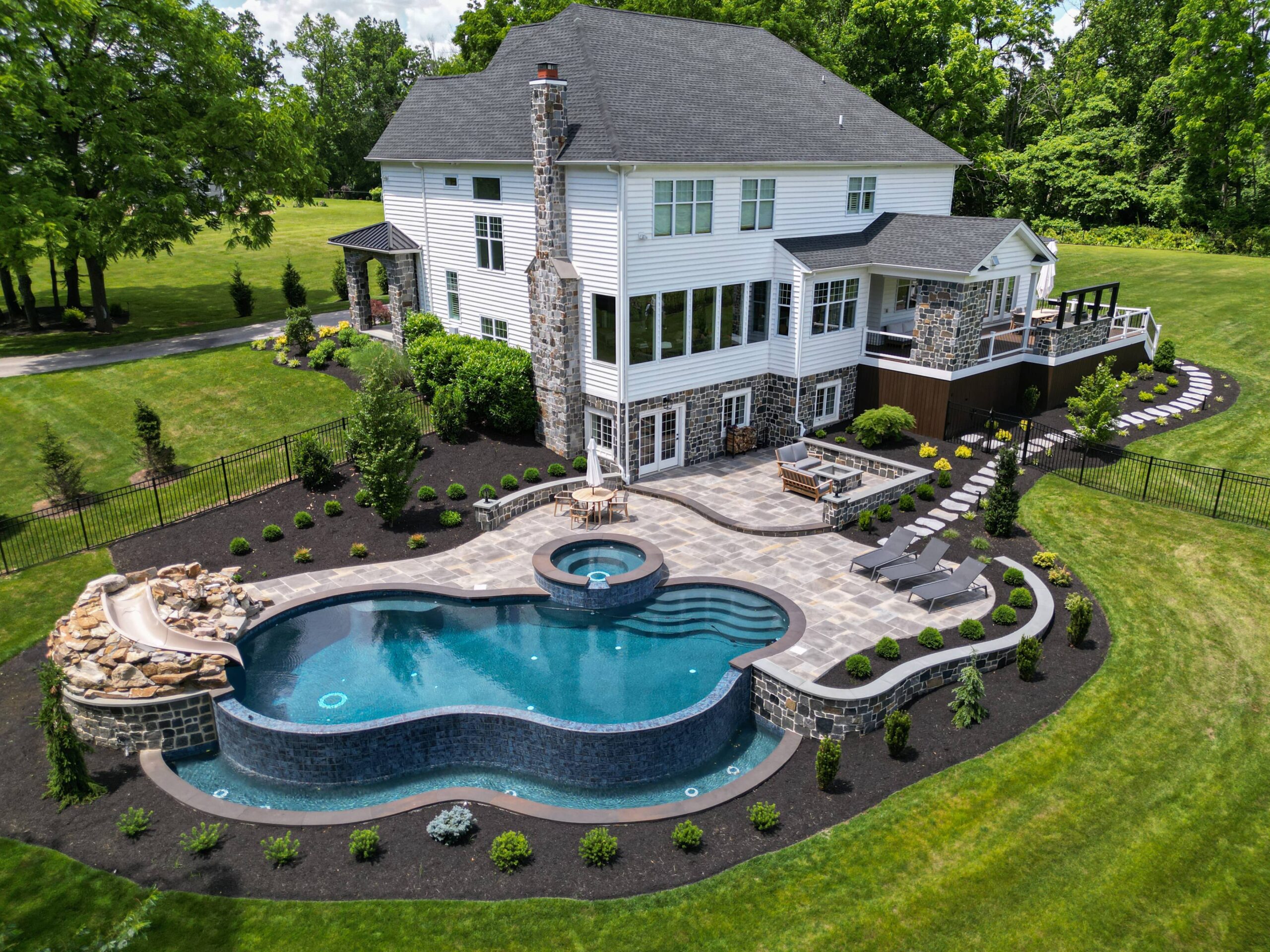
Above-ground pools are excluded from the appraisal entirely under FHA guidelines, meaning they add nothing to, and subtract nothing from, the appraised value, whatever the seller paid for one, per mortgage industry guidance summarizing FHA and Fannie Mae rules. If the pool is the reason you’re drawn to a listing, confirm in the listing details whether it’s in-ground before assuming it factors into the home’s financed value at all.
Insurance and Liability, in Dollars

A pool is a recognized attractive nuisance under most state liability law, and standard homeowners policies typically cap personal liability at $300,000 to $500,000, a gap several insurers flag specifically for pool owners, per CoverageAdvisor’s umbrella insurance guide. Because of that gap, most agents and insurers recommend a personal umbrella policy on top of base homeowners coverage; for $1 million in additional liability protection, Mercury Insurance quotes a typical range of $300 to $600 a year, moving up or down with state, claims history, and how many other risk factors sit on the same policy.
Does my homeowners policy automatically cover pool injuries to guests?
Only up to your policy’s personal-liability limit, commonly $300,000. A serious injury claim can exceed that quickly, which is the specific gap an umbrella policy is priced to close.
Financing and Appraisal Quirks
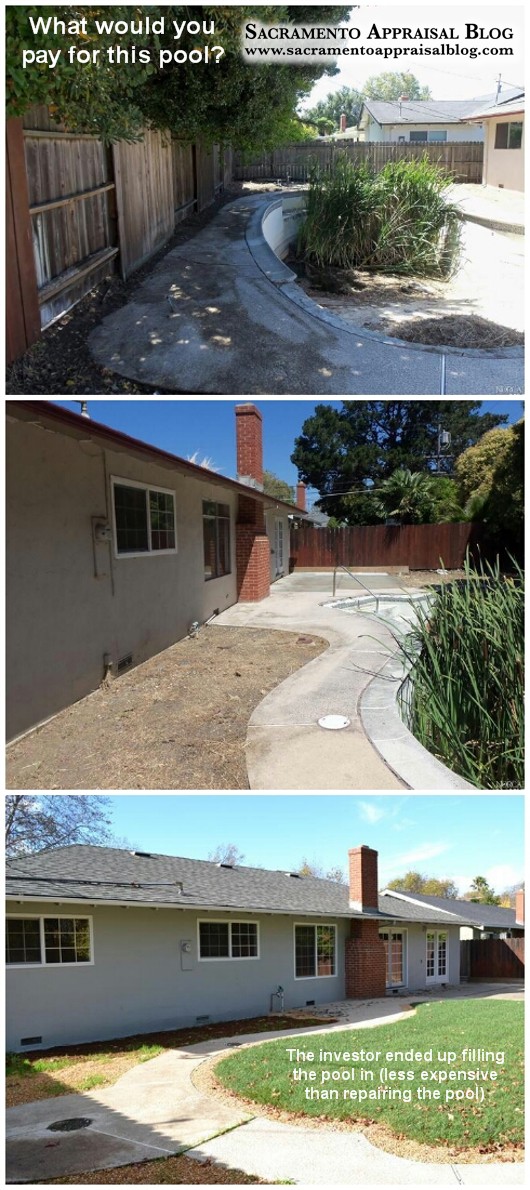
An empty or visibly non-functioning pool can stall closing on both FHA and conventional loans. FHA’s underwriting handbook requires the appraiser to flag any readily observable defect that renders a pool inoperable, per the HUD Handbook 4000.1 guidance, and Fannie Mae treats a non-functioning pool as a physical deficiency that must be repaired before the loan can close on the secondary market, per mortgage industry reporting on Fannie Mae guidelines. In practice: if the pool is drained for winter or under repair at appraisal time, expect the lender to request it be filled, running, and re-inspected, sometimes on the seller’s dime, sometimes negotiated into closing costs, before the loan funds.
Can I get a mortgage on a house with a non-functioning or empty pool?
Usually not without a repair first. FHA and most conventional lenders require the pool to be operational, or the equipment demonstrably restorable at normal cost, before they’ll close; an empty pool with unstable sides may need repair or filling to satisfy the appraisal.
Does a Pool Help or Hurt Resale — The Real Answer

| Source | Year | Methodology | Figure | Applies to |
|---|---|---|---|---|
| Realtor.com | 2025 | Median listing prices of all for-sale homes with a pool vs. all without, nationwide, no size or location control | 54% higher list price ($599,000 vs. $389,000) | Broad market comparison; pool homes also run 32.4% larger on average |
| Redfin (as reported) | Current | Attempts to isolate the pool’s own contribution, controlling for comparable homes | About 7% value increase attributable to the pool | Single-feature, controlled estimate |
| NAR Remodeling Impact Report (as reported) | 2023 | Cost-recovery survey of pool installers’ resale outcomes | 56% of a $90,000 average installation cost recovered, about $50,400 | Installed-pool ROI, not a listing-price comparison |
Redfin and NAR figures via reporting that cites both studies directly.
Las Vegas shows the gap between prevalence and value directly: pool-equipped listings there jumped from 16.2% of the market in 2019 to 43.1% in 2025, a supply shift driven by new construction, not a market-wide revaluation of what any single pool is worth.
Rules You Don’t Control: Codes, HOA, and Tax

Reliable, sourced data on seasonal usage-cost-per-swim-day by climate zone did not turn up during research for this page, so that comparison is left out here rather than estimated; treat local utility bills from the current owner as the best available substitute.
| Jurisdiction example | Fencing/barrier requirement | Other requirement | Verify at |
|---|---|---|---|
| Arizona (statewide) | 5-foot barrier; gate self-closing and self-latching, latch at least 54 inches high | Barrier set at least 20 inches from the water’s edge | Arizona Revised Statutes §36-1681 |
| California (statewide) | 60-inch barrier | Plus at least 2 of 7 additional approved safety features | California Health & Safety Code §115922 |
| Baseline / most other states | 48-inch barrier (International Swimming Pool and Spa Code default) | Self-latching gate, 4-inch max gap | Local building or permitting office |

Property tax is a separate, often-missed trigger. In Florida, the Save Our Homes homestead cap limits annual assessment increases to 3% or the CPI change, whichever is lower, but that cap does not apply to a new pool’s added value: the Pinellas County Property Appraiser is explicit that a pool’s value layers on top of the capped assessment, not inside it. Every state runs this mechanism differently, so a pool that looks “already priced in” on the seller’s current tax bill may not be, once ownership and the cap reset at sale.
HOA covenants are the wildcard none of these statutes touch: many communities layer their own fencing-material, insurance-rider, or alarm requirements on top of state code, and because these are private covenants rather than public statute, there’s no database to check, only the HOA’s own governing documents and a call to the property manager before closing.
If the pool doesn’t meet current fencing code, whose problem is that, mine or the seller’s?
It depends on your state’s disclosure law and the purchase contract, but once you close, code compliance becomes the owner’s liability going forward, regardless of who built the fence. Confirm current-code compliance during inspection, not after move-in.
If You’re Buying as an Investor or Rental Property
None of the pool-resale research above breaks results out by owner-occupant versus rental buyer, and no primary source on rental-market pool premiums or cap-rate impact surfaced during research for this page, so that figure isn’t stated rather than approximated. What is confirmed: the attractive-nuisance liability exposure and the financing quirks above apply identically whether you occupy the house or lease it, and a landlord policy typically needs its own liability rider rather than relying on a standard homeowners umbrella. Before counting on a pool as a rental amenity, check comparable rental listings in the specific submarket directly; nationally, only 24% of home buyers had children under 18 in NAR’s most recent buyer profile, which narrows how many renters see a pool as a pure amenity rather than a cost passed through in rent.
When to Walk, Negotiate, or Proceed
Comments