
Is Chino Hills part of Los Angeles or Orange County? Neither. It’s in San Bernardino County, within the Greater Los Angeles statistical area, and borders Orange County without being part of it.
The real tradeoffs: commute, cost, and space
The average worker in Chino Hills spends 36.1 minutes getting to work, about 25% longer than the California average of 28.7 minutes and 10% longer than the Riverside–San Bernardino–Ontario metro average of 33.2 minutes, according to Census Bureau ACS data compiled by Census Reporter. The reason is geographic: the city’s main outlets are State Routes 71 and 91, both of which, per California State Parks’ description of the surrounding routes, funnel Orange County and Inland Empire traffic through the same interchange. No freeway runs through Chino Hills itself.
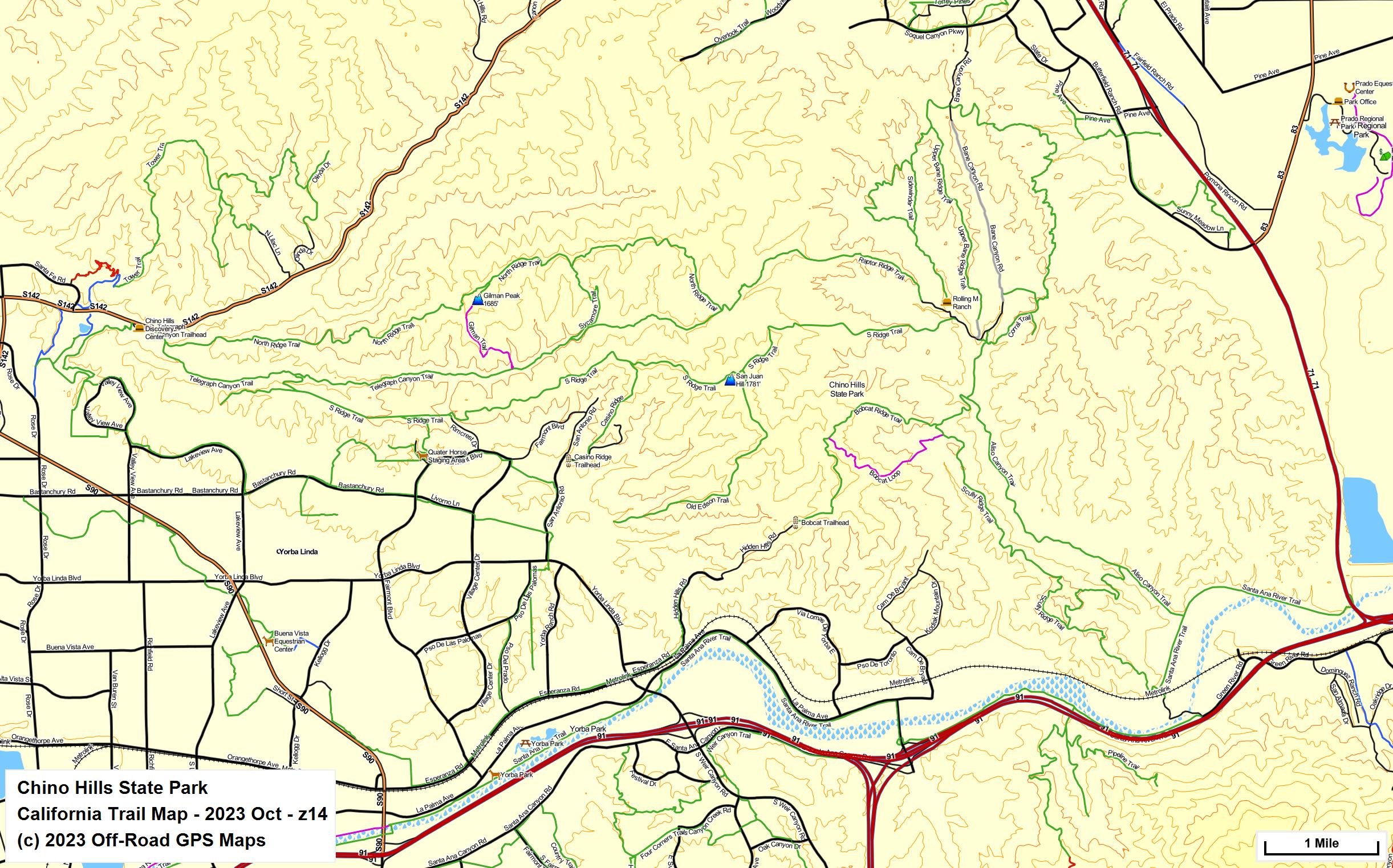
Space is the other side of the trade. Chino Hills State Park covers 14,102 acres and carries more than 90 miles of trail, with a $10 vehicle day-use fee, and the city maintains another 3,000-plus acres of open space and 48 miles of trail inside its own limits. That terrain is why lot sizes and views command a premium flatter cities nearby don’t have to charge for.
| Destination | Distance | Drive time (off-peak) | Route |
|---|---|---|---|
| Downtown Los Angeles | 42 miles | 54 minutes | I-10 / 60 corridor |
| Irvine (Orange County job hub) | 26 miles | about 35 minutes | SR-91 to SR-55/SR-133 |
| Ontario International Airport (ONT) | 15 miles | 20 minutes | SR-71 to I-10 |
These are free-flowing estimates from Travelmath’s driving-time calculator and Airport.guide’s ONT distance page. On the 71/91 interchange specifically, peak-hour delay routinely runs past these numbers, and that congestion is the single complaint that recurs most often across resident commentary on the city.
How bad is the commute from Chino Hills to LA or Orange County? Off-peak, 35 to 55 minutes depending on destination. During the morning and evening peak on the 71/91 interchange, add 20 to 40 minutes; there is no freeway bypass from inside the city.
How Chino Hills compares to Chino, Yorba Linda, and Diamond Bar
| City | Typical home value (Zillow, 5/31/2026) | YoY change | Distance to Irvine job hub | Differentiator |
|---|---|---|---|---|
| Chino Hills | $914,077 | −2.2% | 26 miles | Hillside terrain, state park, no through-freeway |
| Chino | $772,256 | +1.9% | about 35 miles | Flatter, denser, cheaper entry point in the same school district |
| Yorba Linda | $1,420,652 | +1.2% | about 20 miles | Orange County address, highest price, older housing stock |
| Diamond Bar | $920,805 | −4.2% | about 30 miles | Comparable price to Chino Hills, closer to LA County job centers |
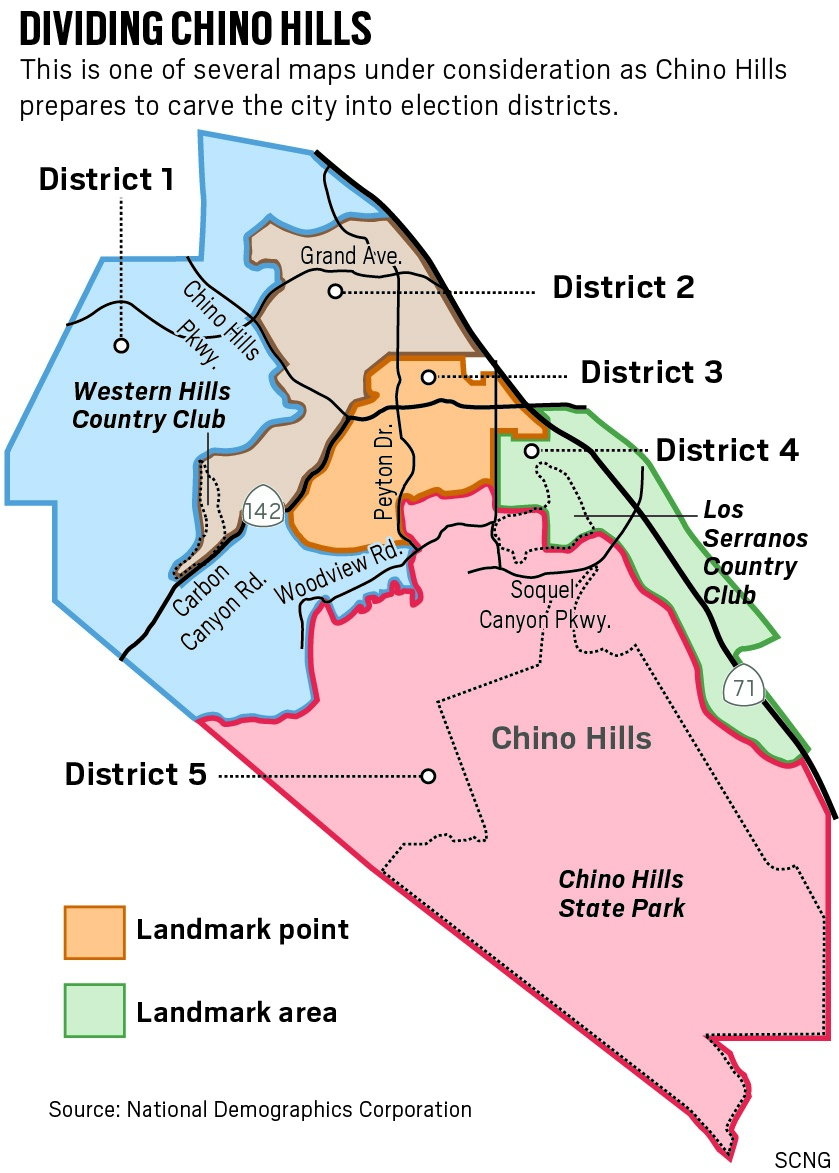
Chino Hills costs $141,821 more than Chino at typical value, an 18% premium between two cities a few miles apart, per Zillow’s Chino Hills home value index and Chino index. That gap tracks the hillside terrain and the state park, not a difference in commute or schools.
Why is Chino Hills more expensive than the city of Chino? Geography: Chino Hills is built into hillside terrain bordering a 14,000-acre state park, which caps buildable lot supply, while Chino sits on flatter, more readily subdivided land. Both cities draw from Chino Valley Unified, so the price gap isn’t a school-quality gap.
Schools and safety, with real numbers
Chino Hills has 16 public district schools inside Chino Valley Unified, a district of 26,529 students across 37 schools, per GreatSchools. On combined math and reading proficiency, PublicSchoolReview’s analysis of testing data ranks the district in the top 20% of California districts, with 46% math proficiency against a 34% state average and 59% reading proficiency against 47% statewide; its graduation rate is 95%. Chino Hills High School has a 46% AP participation rate and ranks 372nd among California high schools, according to U.S. News.
On crime, FBI Uniform Crime Reporting data compiled by HomeSnacks puts the city’s overall rate at 1,113.3 incidents per 100,000 residents, 47% below the national rate of 2,119.2. Violent crime sits at 138.0 per 100,000, 62% below the national rate; property crime is 975.2 per 100,000, 45% below.
Air quality, wildfire, heat, and earthquake risk
| Risk | Current data | What it means |
|---|---|---|
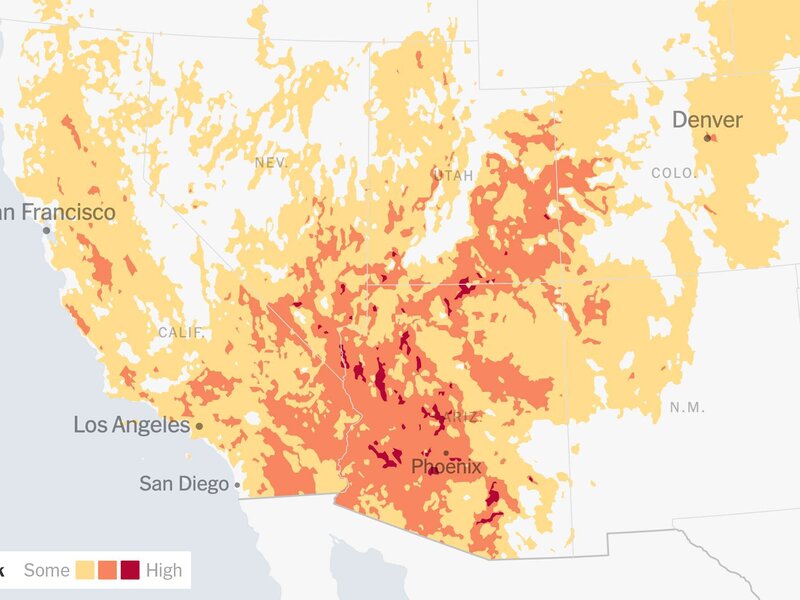
| Wildfire | 99% of properties (24,389) carry some 30-year risk; 6 wildfires recorded near the city 1984–2021 | Near-universal citywide exposure, not a pocket risk limited to hillside lots |
| Extreme heat | 52–53% of properties at major 30-year heat risk; 100°F+ days projected to rise 185% over 30 years | Summer heat exposure is set to intensify faster here than the regional baseline |
| Air quality | Real-time readings typically Good to Moderate, roughly 40–60 AQI | Ozone-season spikes are the main variable; day-to-day air is generally acceptable |
| Flooding | Minor risk; about 13% of properties carry some 30-year exposure | Lowest of the four risks tracked for this city |
Wildfire and heat figures come from First Street Foundation’s Chino Hills risk report; air quality readings are from IQAir’s live monitoring page, drawing on South Coast Air Quality Management District stations. In October 2020, a wildfire damaged 287 buildings within Chino Hills as part of a fire that covered 56 square miles regionally.
Does Chino Hills have wildfire risk? Yes, and it’s close to universal at the property level: First Street Foundation’s model puts 99% of Chino Hills properties at some risk over a 30-year window, consistent with the October 2020 wildfire that damaged buildings inside city limits.
Who Chino Hills fits — and who it doesn’t
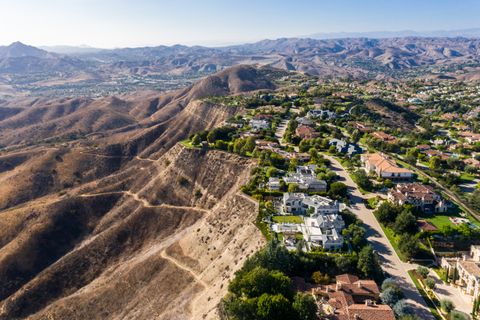
It suits buyers who want a low-crime, hillside suburb with direct trail access and are willing to pay an 18% premium over the next city over for it, plus accept a 36-minute average commute. Chino Valley Unified’s above-average proficiency numbers make it a reasonable target for families weighing measured academic performance over district name recognition.
Anyone who needs a short, freeway-direct commute to downtown LA or central Orange County should look elsewhere: the 71/91 interchange is the only way out, and peak delay is the most consistent complaint in resident commentary on the city. Walkable nightlife is also thin on the ground here; retail closes early, and the nearest late-night options sit in neighboring Brea or Fullerton. Budget-conscious buyers have cheaper options too, since at $914,077 typical value, Chino Hills sits well above both Chino and Diamond Bar in the same commute shed.
The Shoppes at Chino Hills, a 375,000-square-foot open-air retail center on Grand Avenue at Peyton Drive that opened in 2008, is the closest thing the city has to a walkable commercial core.
Neighborhoods and trail access within the city
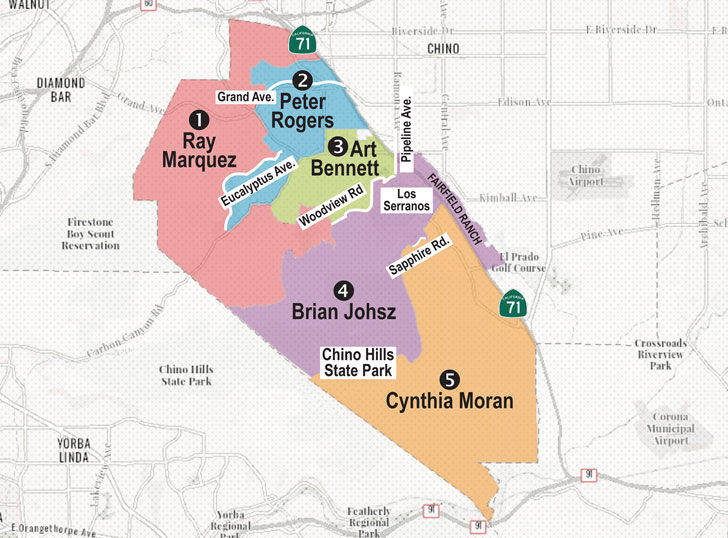
- Northern hillside tracts sit closest to the state park’s Sapphire Road entrance; premium lots trade on view and trail-access proximity.
- Central/Civic Center area surrounds The Shoppes and city hall, giving it the shortest walk to retail and dining.
- Southern tracts near the 71/91 carry the shortest freeway commute exposure, at the cost of traffic noise.
No government or MLS-adjacent source in this search pass published a per-neighborhood price breakdown comparable to a Vellano-versus-Los-Serranos figure. Anyone comparing specific tracts should pull current listing data directly rather than rely on a citywide average.
A brief history and geography note

The area’s 1989 development plan covered roughly 12,000 residents; by incorporation on December 1, 1991, the population had already reached 42,000, according to San Bernardino County’s city history page. The same county record credits part of the city’s safety reputation to FBI data that ranked it among the four safest cities in the U.S. as of 2016.
Comments