
The tradeoff in one paragraph
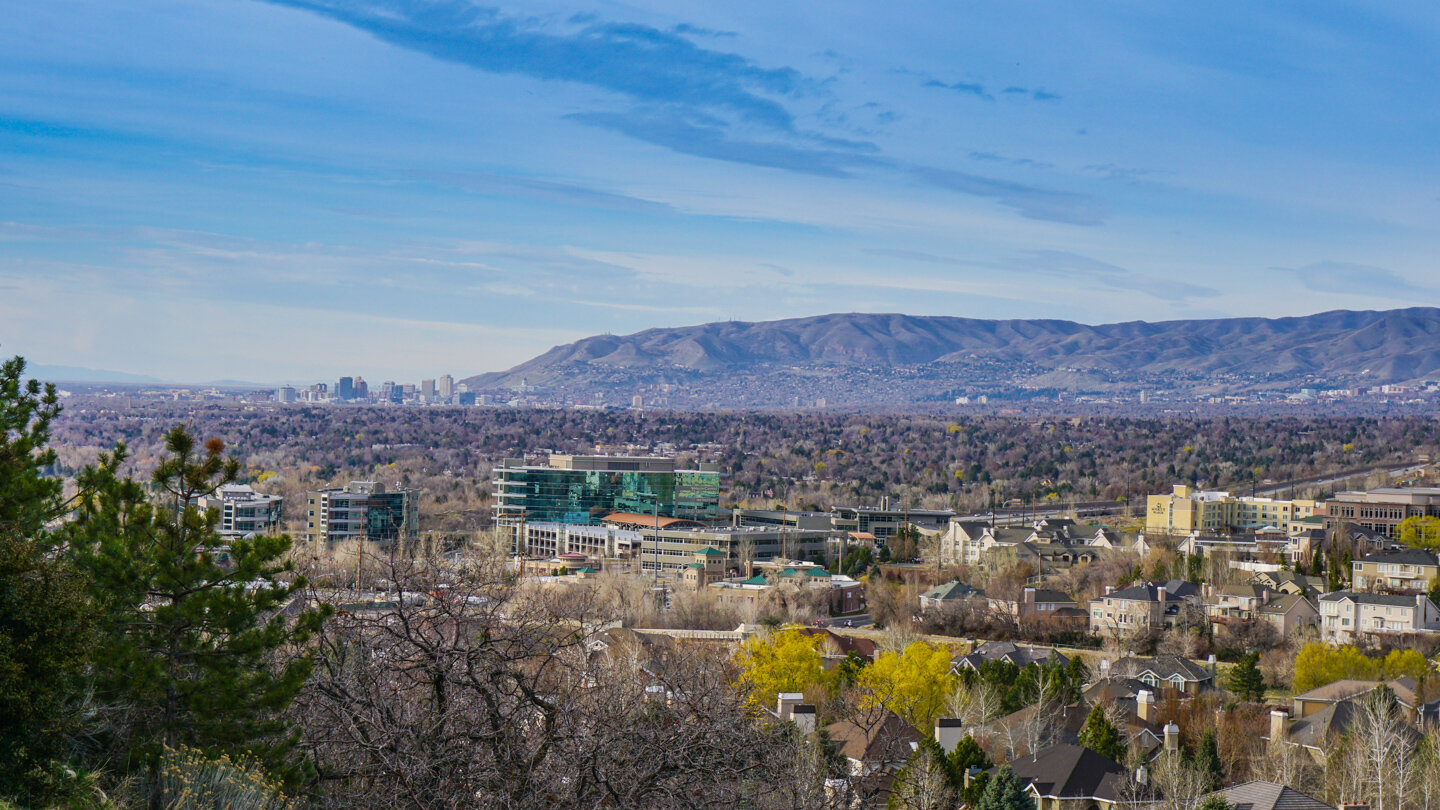
Every source describing Cottonwood Heights leads with the canyons and the schools. Almost none puts a number next to either claim, and none puts the price next to a comparable suburb in the same sentence. The real picture: a smaller, newer city (a 2005 incorporation) sitting directly at the mouth of Big and Little Cottonwood Canyons, priced meaningfully above its immediate neighbors, with a school rating that varies sharply by source, and with two live civic stories, a $30 million town-center bond and a canyon-traffic-management plan, that will shape what living there costs and feels like over the next several years.
What you’re paying for
| City | Median sale price | 1-yr change | Days on market | Source, date |
|---|---|---|---|---|
| Cottonwood Heights | $856,000 | +25.7% | 34 | Redfin, Aug 2025 |
| Sandy | $630,000 | −6.5% | 32 | Redfin, Aug 2025 |
| Holladay | $768,000 | −3.4% | 49 | Redfin, Jan 2026 |
| Utah (statewide) | $528,124 | +1.6% | 52 | Redfin, May 2026 |
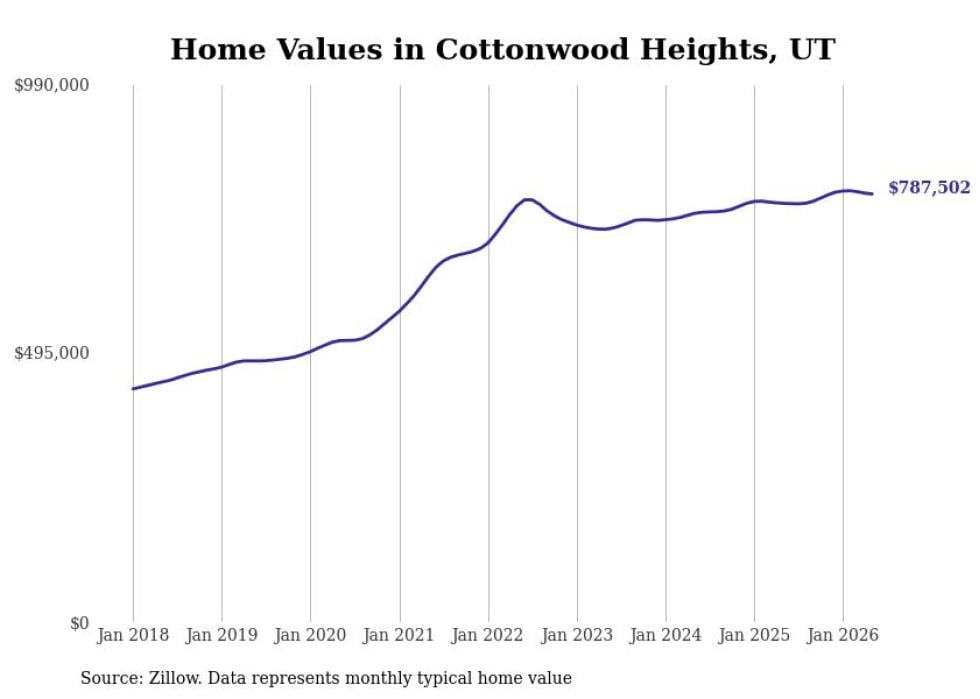
The gap to Sandy, roughly $226,000 at the same point in time, is the single clearest number missing from every other guide to this city. Holladay narrows the gap to about $88,000, which matters if canyon proximity outweighs price: Holladay sits slightly farther from the canyon mouths.
Beyond the mortgage
Cottonwood Heights’ effective property tax rate is 0.56%, translating to a median annual bill of $4,489 on a median-assessed home. The city notes it has raised property taxes only once since incorporating in 2005, and ranks fourth-lowest in tax rate among Salt Lake County’s sixteen municipalities. What’s genuinely unpublished: a citywide HOA-prevalence figure and typical utility setup costs. No source captured here quantifies either, so neither is estimated; a buyer should ask a specific subdivision’s HOA directly rather than assume a citywide norm.
Why do home prices vary so much between sources?Zillow’s typical-value estimate, Redfin’s median sale price, and Movoto’s median list price measure different things: a smoothed valuation model, actual closed sales, and current asking prices. On the same city they can differ by $150,000 or more in a single month. Redfin’s sold-price figures are used throughout this page because they reflect completed transactions.
Who this fits, and who it doesn’t
- Fits: buyers who want to be at the literal base of Big or Little Cottonwood Canyon and will pay a premium for it; households prioritizing a smaller, self-run police department; anyone comfortable driving for daily errands.
- Doesn’t fit: buyers with a hard ceiling near Sandy’s $630,000 median, who will find little single-family inventory at that price here; anyone who needs a walkable, car-optional routine (citywide Walk Score: 41, “car-dependent” on Walk Score’s own scale); anyone planning to add a basement apartment and rent it short-term, since that combination is illegal here; anyone who assumes “close to the resorts” means a quick winter commute.
Getting around: commute and canyon traffic
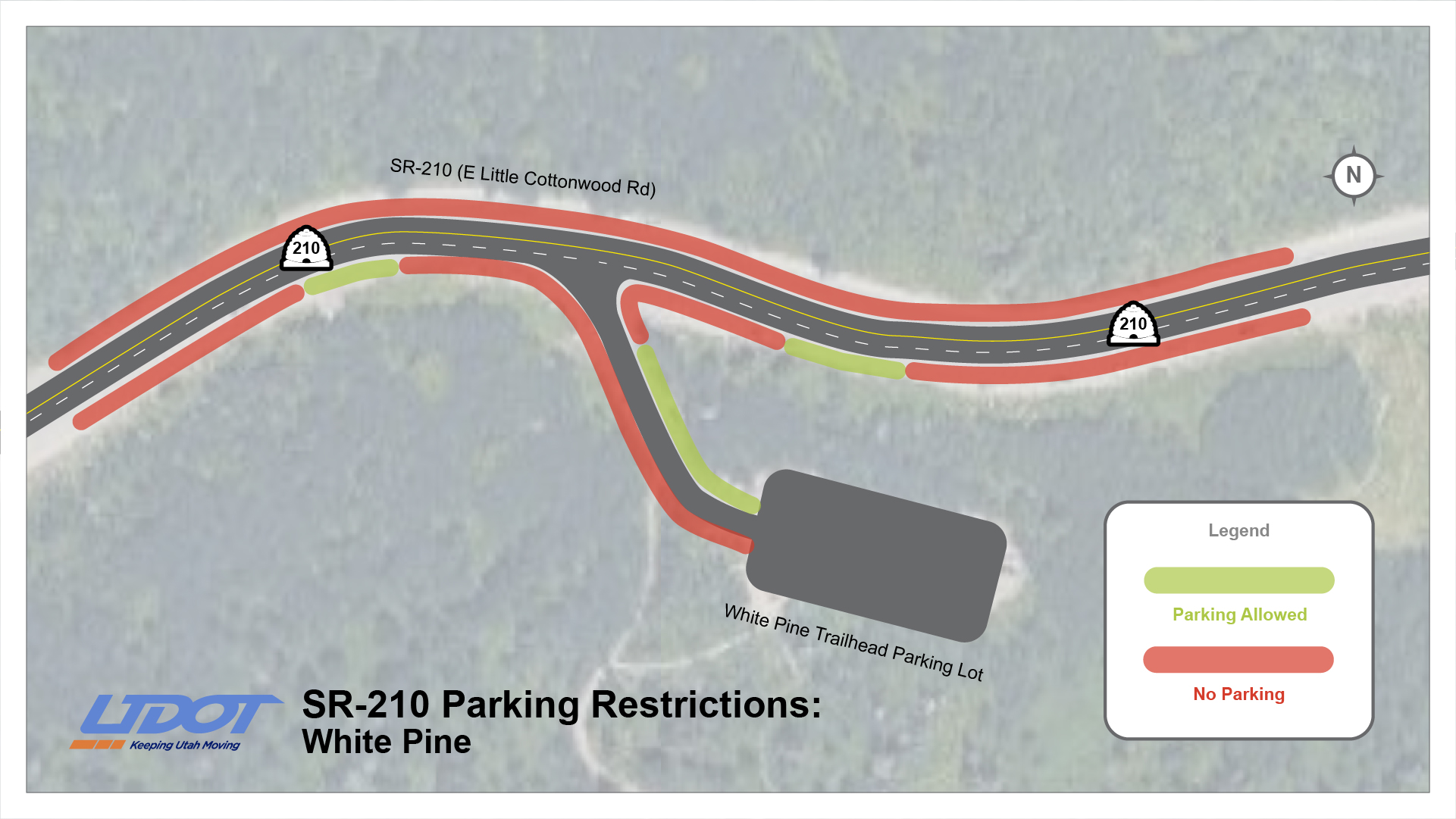
Cottonwood Heights sits roughly 15 miles and a 20-to-25-minute drive from downtown Salt Lake City on a normal day, via I-215 and I-15. The part every amenity-focused guide skips: Little Cottonwood Canyon, the direct route to Alta and Snowbird, can carry 1,000 cars an hour and up to 1,500 on a powder day, per the Utah Department of Transportation, a bottleneck locals call the “red snake.” UDOT’s December 2025 plan pairs a new mobility hub and expanded bus service with a proposed toll of $20 to $50 per vehicle, though tolling won’t start until bus service is built out. None of this touches a daily commute into Salt Lake City. It touches every winter weekend a resident drives up-canyon, which for many households here is the entire point of living in this location.
Do I need a car to live in Cottonwood Heights?Yes, for nearly all daily errands. The citywide average Walk Score is 41 out of 100, and individual addresses range from the low 20s in cul-de-sac subdivisions to the high 70s near the Fort Union Boulevard retail strip. Bus service exists but is limited.
What’s changing: the town center and the rental rules
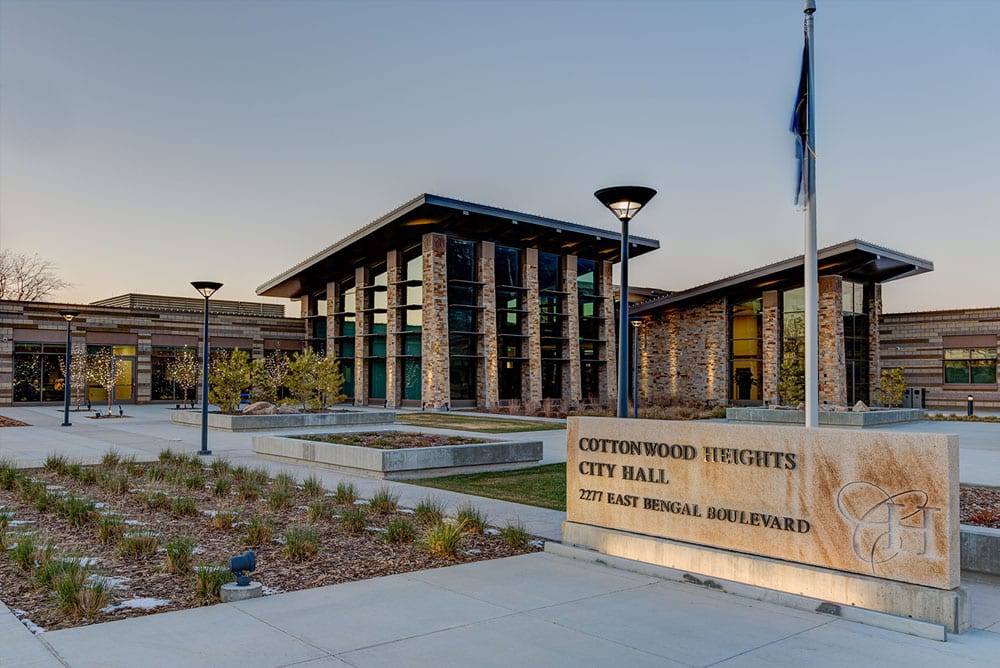
In 2023 the city bought the former Hillside Plaza, a 10-acre site at 2300 East and Fort Union Boulevard, to build a mixed-use town center called “The Heights.” Voters approved a $30 million general-obligation bond for it in November 2024, 52.42% to 47.58%, adding roughly $11 to $12 a month in property tax for an average-value home. Construction timing depends on a private development partner the city has not yet selected.
What’s happening at the old Hillside Plaza site?The city owns the land and has voter approval to bond for the public elements: open space, parking, pedestrian infrastructure. Retail, dining, and any housing depend on a still-unselected private partner, so no opening date exists yet.
Separately, the city legalized internal accessory dwelling units in 2021 under state mandate, but its ordinance requires owner-occupancy, licensing, and one dedicated parking stall per ADU, and it explicitly bans short-term rental use of any ADU. Short-term rentals in general are prohibited outright in the city’s single-family, rural-residential, and foothill zones; the city estimates roughly 400 unregistered short-term rentals operate anyway, and raised first- and second-violation fines to $650 and $800 in December 2024.
Can I legally rent out part of my house here?As a long-term rental, yes, with an owner-occupancy requirement and a permit. As a short-term, under-30-day rental, no, not in single-family zones and not in an ADU anywhere in the city.
The basics
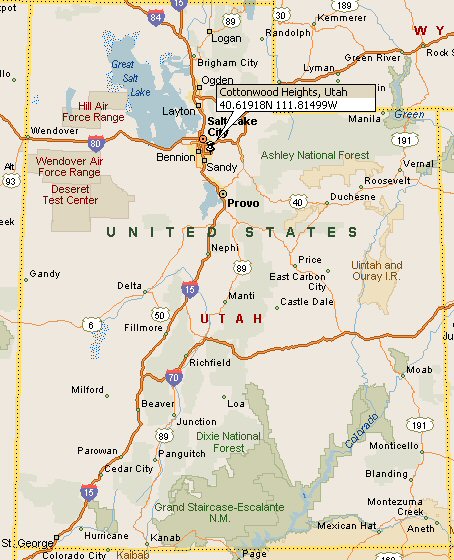
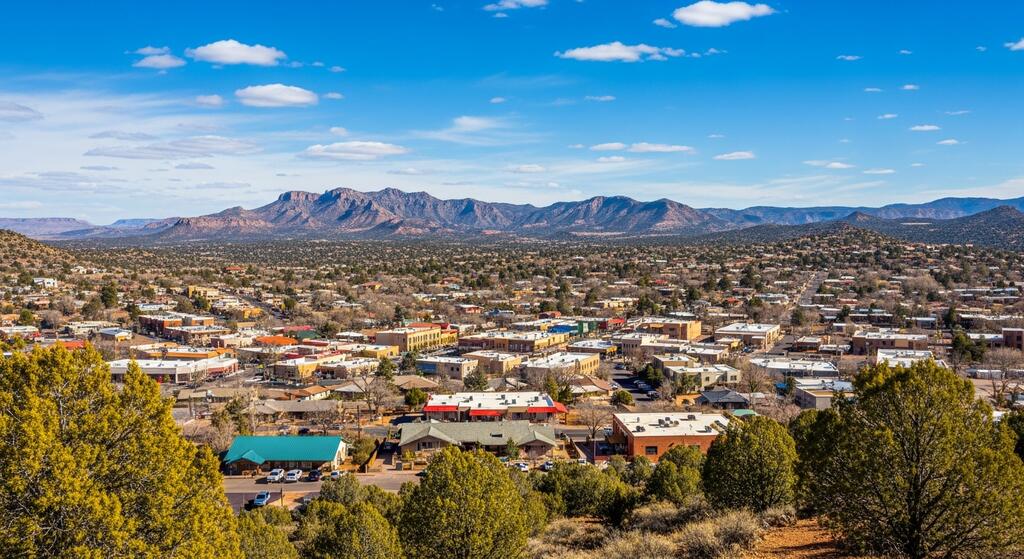
Cottonwood Heights sits on the east bench of the Salt Lake Valley, between Holladay to the north and Sandy to the south, and became a city by referendum in 2005 after decades as an unincorporated area. It is in the Canyons School District, with one public high school, Brighton, inside city limits.
How many people live here, and why the count moves
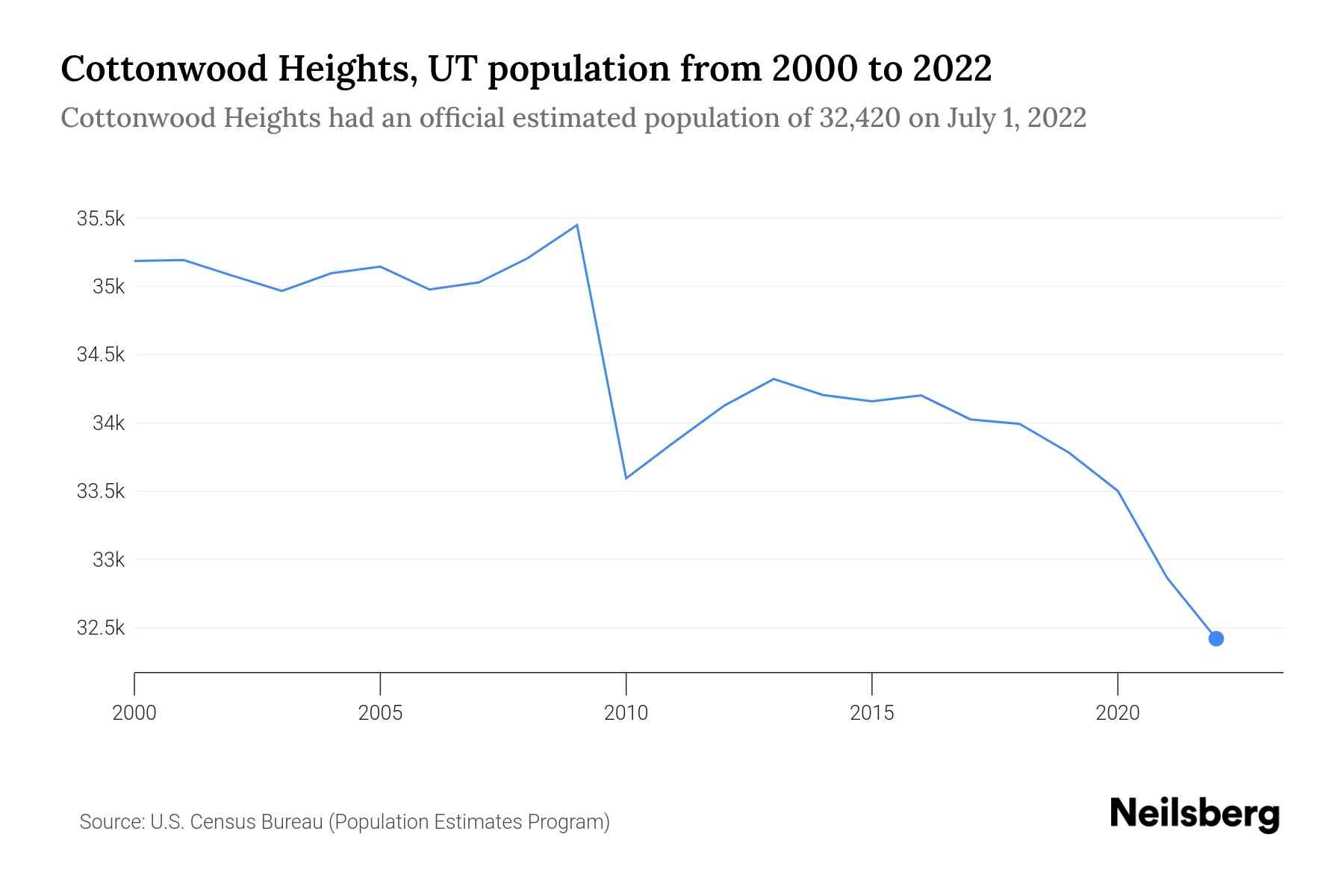
Three legitimate counts disagree, for methodological reasons rather than any error.
| Count | Vintage | Population | Source |
|---|---|---|---|
| Decennial Census | 2020 | 33,617 | U.S. Census Bureau, 2020 Decennial Census |
| American Community Survey | 2024 (5-yr est.) | 32,828 | U.S. Census Bureau (ACS), via Census Reporter |
| Modeled current estimate | 2026 | 31,998 | World Population Review (private model, not an official count) |
The spread, about 1,600 people, or 5%, reflects a real count set against two different estimation methods, one federal and sampling-based, one a third-party projection. Use the 2020 figure for anything requiring an official count and the ACS figure for anything requiring current household or income context.
Is Cottonwood Heights part of Salt Lake City?No. It is a separately incorporated city within Salt Lake County, bordering Salt Lake City’s Sugar House and East Millcreek areas but governing itself with its own council, mayor, and police department.
Schools: the actual numbers
Movoto reports 14 public schools in Cottonwood Heights carrying an average GreatSchools rating of 3 out of 10, well below Holladay’s average of 7 out of 10 in the same dataset. This sits awkwardly next to the “excellent schools” framing used almost everywhere else about this city. Whichever figure a buyer trusts, it’s worth checking the rating of the specific attendance-zone school rather than the city-level average, since 14 schools averaging to a 3 can still include individually strong campuses.
Crime and safety, benchmarked
| Category | Cottonwood Heights rate (per 1,000 residents) | Compared to national average |
|---|---|---|
| Violent crime | 1 | Well below |
| Property crime | 19 | Above |
| Combined victimization odds | 1 in 51 | Higher than typical for cities this size |
Source: NeighborhoodScout, drawing on FBI Uniform Crime Report data for the 2023 calendar year, the most recent available. The split matters more than the headline number: this is a city where violent crime is genuinely rare and property crime, vehicle break-ins and theft in particular, is the risk category worth planning around.
Comments