
Is Rainbow Row worth visiting if I only have a short time in Charleston?Some visitor reviews describe it as a quick look rather than a destination on its own, which is a fair expectation to set. It is one block, free, and works best as a five-minute add-on to a walk toward the Battery or Waterfront Park.
Where Rainbow Row Is and How to Get There
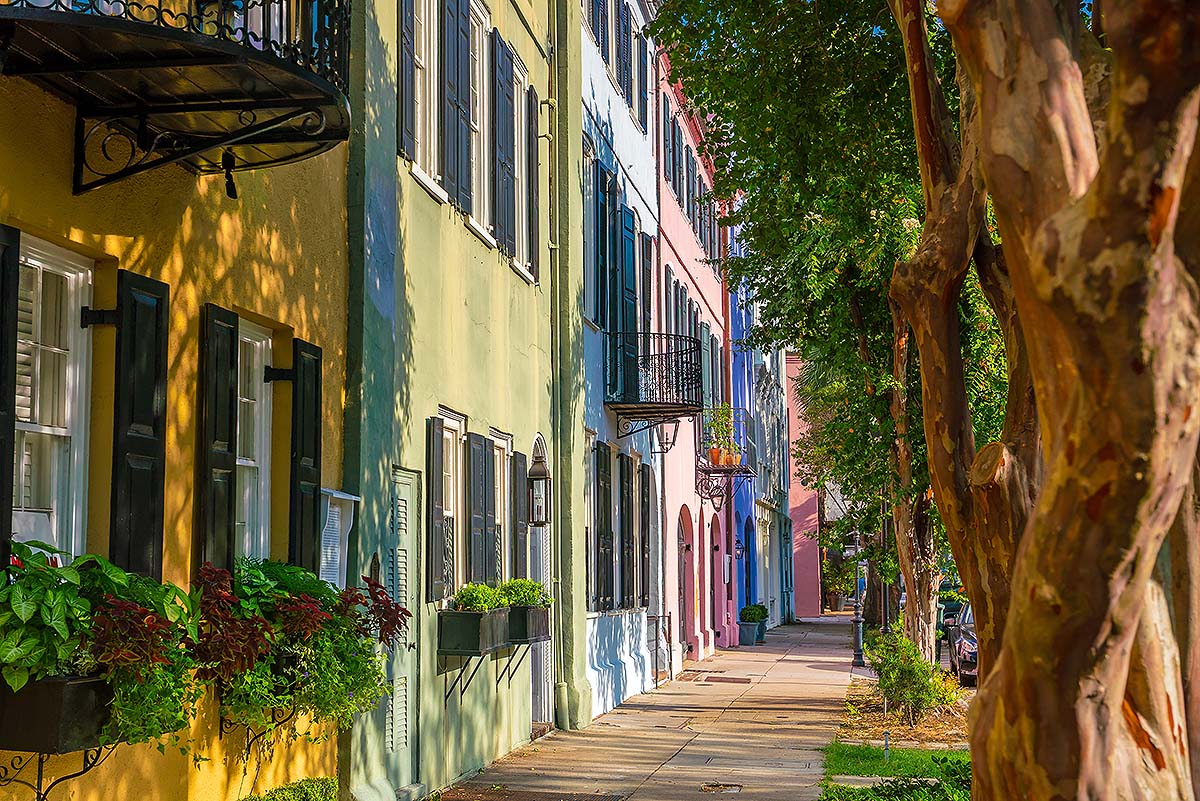
East Bay Street runs north to south along Charleston’s original waterfront, with the row sitting between Tradd Street and Elliott Street. There is no dedicated lot on the block itself. The nearest city-connected option is the East Bay/Prioleau Garage, two blocks north at 25 Prioleau Street, with two separate entrances, one on Prioleau Street and one on Middle Atlantic Wharf, and no in/out re-entry once you’ve parked. The City of Charleston’s parking page lists a $5 flat evening rate at that garage after 5 p.m., with hourly rates during the day. Walking in from the Charleston Visitor Center or Waterfront Park takes under 15 minutes on level sidewalk, though the walk along the row itself crosses original brick paving that is genuinely uneven, worth knowing if you’re using a wheelchair or pushing a stroller; the paved path through Waterfront Park runs parallel and offers sightlines back toward the row.
The Row’s Documented Core: What’s Actually Verified
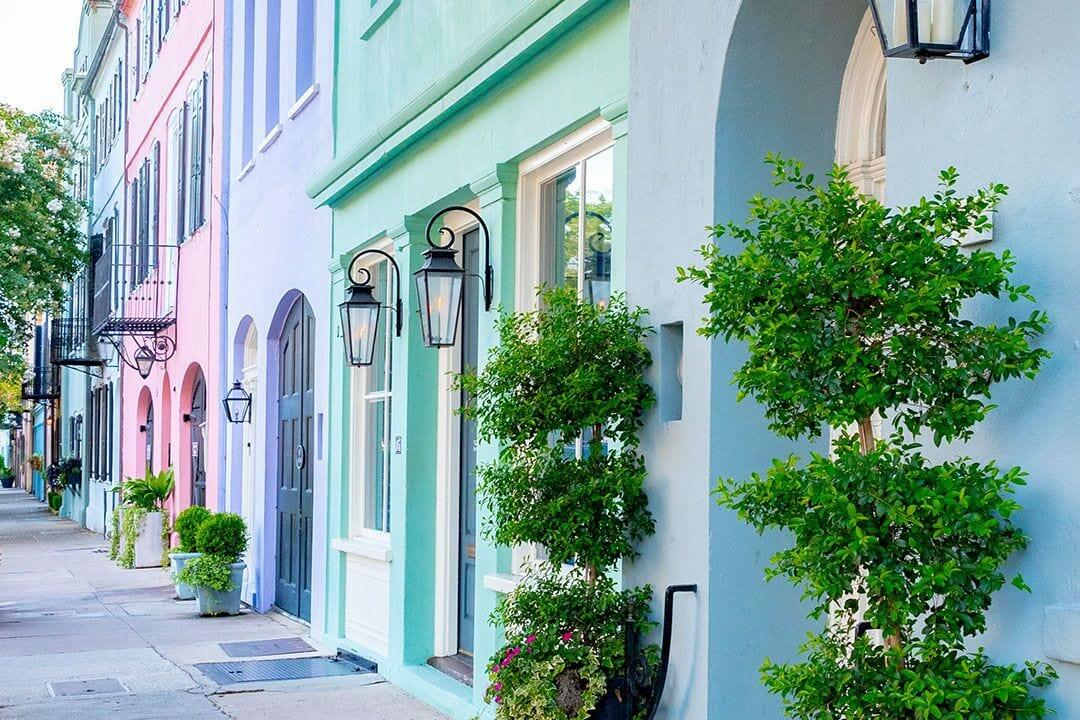
Thirteen buildings make up the row, most sharing party walls with their neighbors, which is why several read as one long façade from across the street. Charleston Magazine places the earliest construction in the 1740s and the newest section around 1845. Ground floors originally held merchants’ shops and counting rooms, with living quarters above, a pattern the South Carolina Encyclopedia confirms was standard across the row.
Here is an honest limit on that picture. A complete, address-by-address record of every current paint color and exact construction year sits mainly in the *News & Courier*’s historical reporting and in Jonathan Poston’s *Buildings of Charleston*, neither of which I could check directly for this page. Repeating those specifics secondhand, without confirming them against the primary record, would be the same shortcut every competitor page already takes. What I can verify directly:
| Address | Year / Period | Documented fact | Source |
|---|---|---|---|
| Row-wide | 1740s to 1845 | Construction span across all 13 buildings | Charleston Magazine |
| 83-89 East Bay St. | Documented after 1933 | Photographed and surveyed by the Historic American Buildings Survey, Survey No. SC-841, photographer Charles N. Bayless | Library of Congress, HABS item sc1087 |
| 99-101 East Bay St. | 1931 | First house on the row repainted, a soft peach, after Dorothy Porcher Legge’s purchase | Post and Courier, 2025 |
| Row-wide | 1920 | Susan Pringle Frost buys six of the buildings to stop their demolition | Post and Courier, 2025, citing Preservation Society historian Anna-Catherine Alexander |
That table is short on purpose: every row is independently checkable against a named source, which is the actual point. If you want the specific color and build year for one address you plan to photograph, the more reliable route today is the Preservation Society of Charleston’s own walking-tour material or a records request through the Charleston County Public Library, not a secondhand tour-company summary.
Can you go inside the Rainbow Row houses?No. All 13 are private residences, several still owned by the families that restored them decades ago, and none operates as a museum or ticketed site.
From Slum to Landmark: Frost, Legge, and the Preservation Society
Two Fires Before the Row Existed
The buildings standing today aren’t the row’s first structures. A fire in November 1740 destroyed the earliest buildings on the site, and a second fire in January 1778 took out several more near the Tradd Street end, part of why construction dates span a full century rather than clustering in one decade.
Susan Pringle Frost’s Six Buildings
Frost founded the Society for the Preservation of Old Dwellings in 1920, now the Preservation Society of Charleston, and that same year bought six of the row’s buildings specifically to stop them from being demolished. She could not raise enough money to restore them right away, and the buildings sat vacant under her ownership for over a decade.
Dorothy Porcher Legge and the First Painted House
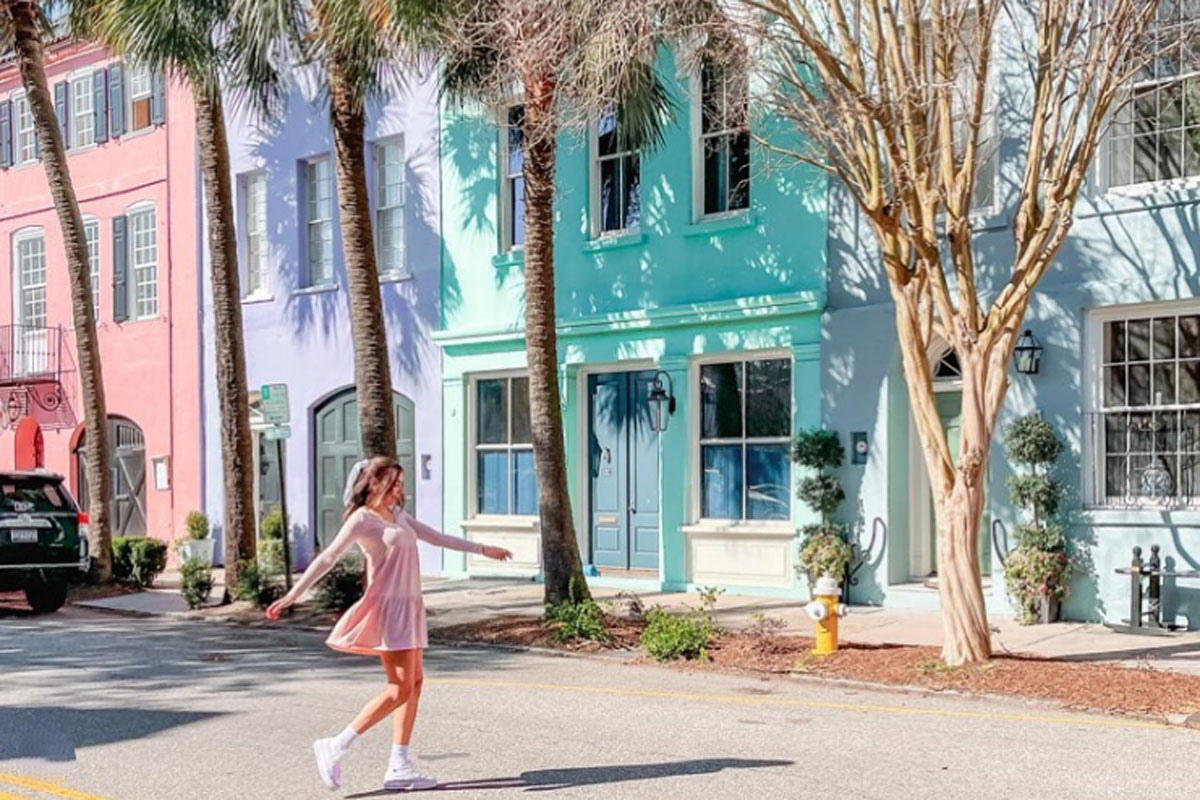
In 1931, Dorothy Porcher Legge bought three houses on the row and restored 99-101 East Bay Street first, painting it a soft peach in place of the muted, unpainted brick and stucco that had been standard on the street. Other owners followed as they restored their own buildings through the 1930s and into the 1950s, choosing blues, yellows, greys, and greens instead of any single coordinated palette, which is why the row reads as a spectrum rather than a matched set.
When Did People Start Saying “Rainbow Row”?
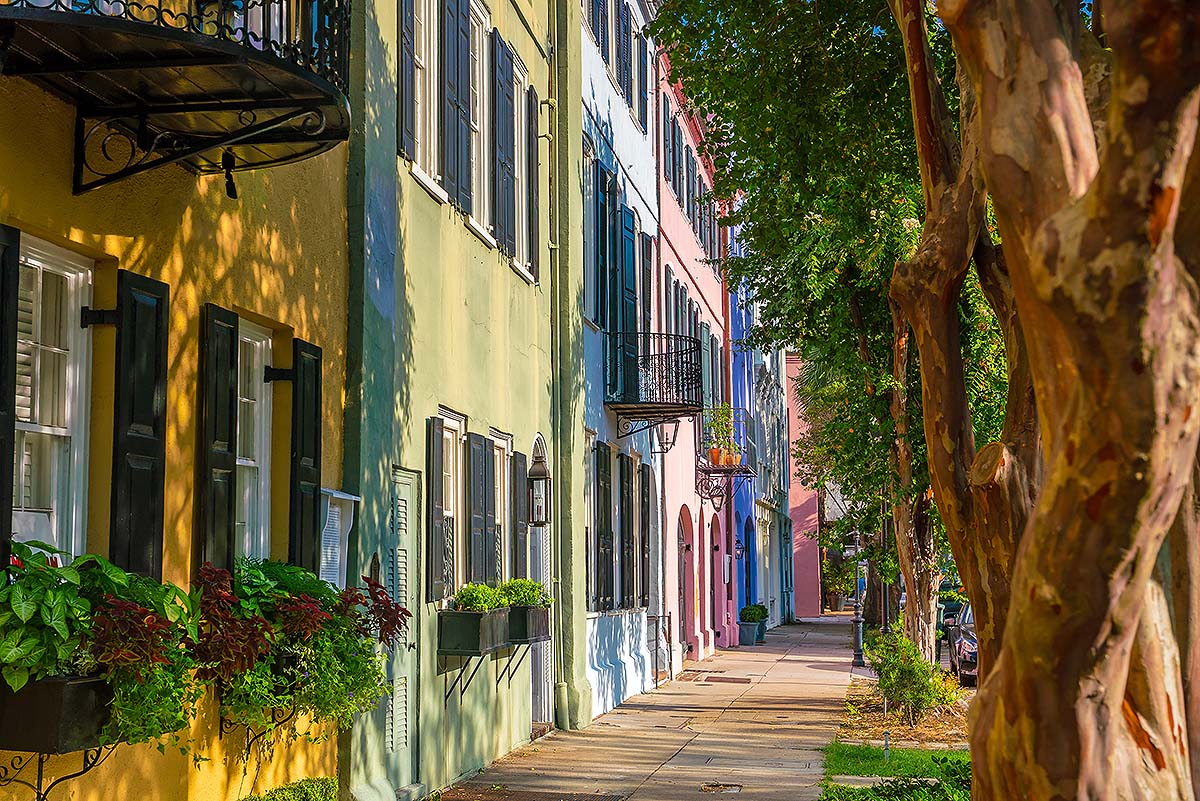
Every guide to this topic states a different decade, and almost none cites a source for it. A 2024 Clemson University thesis, built on newspaper and periodical archives plus physical paint-layer analysis of the buildings themselves, traces the earliest identified public use of the phrase “Rainbow Row” to a 1938 Charleston newspaper piece connected to an exhibited painting of that name, with National Geographic running a color feature that carried the name nationally the following year, 1939. That places the name a decade earlier than a “1950s” figure repeated on at least one visitor-guide site, and roughly four decades earlier than a separate, uncited “1980s, from a National Geographic spread” claim that circulates without any source attached.
Why the Colors Persist: The Board of Architectural Review
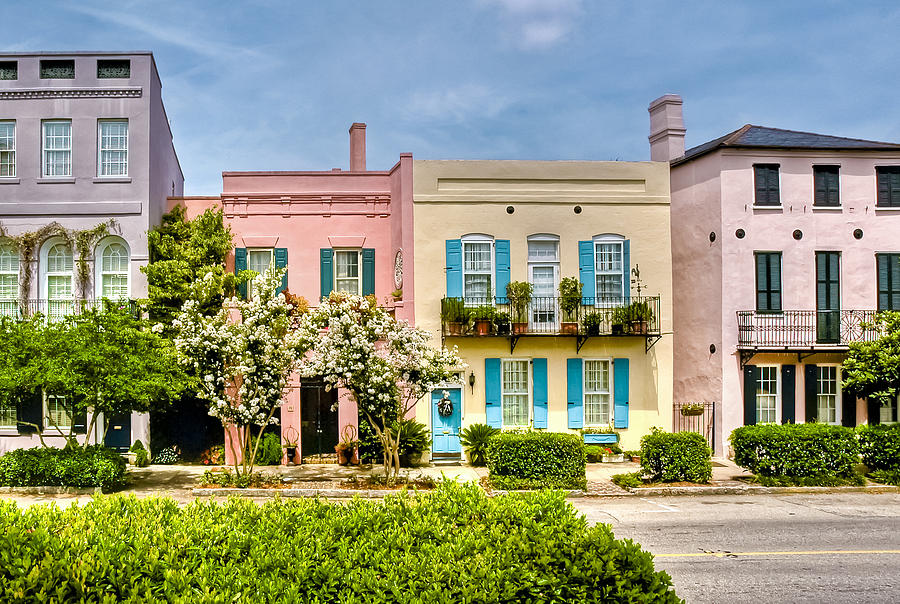
Homeowners on Rainbow Row cannot repaint on a whim. Charleston’s Board of Architectural Review, created in 1931, the same year Legge began her restoration, was the first municipal historic-preservation review board in the country. Any exterior color change on a building inside the Old and Historic District, which covers the whole row, requires a Certificate of Appropriateness, though the city’s own guidance notes that routine repaints are typically cleared by preservation staff rather than needing a full Board hearing. That review process, not a shared decorating instinct, is the real mechanism keeping the row’s palette in the same family after nine decades: a new color submission gets judged against what’s already on the block.
Does a homeowner ever get denied a color?Minor, in-range repaints usually clear at the staff level without a hearing. A color outside the range the Board has already approved for the district would need full Board review, and could be turned down on exactly that basis.
Visiting Rainbow Row Today
| Time of day | Light on the row | Foot and street traffic | Practical note |
|---|---|---|---|
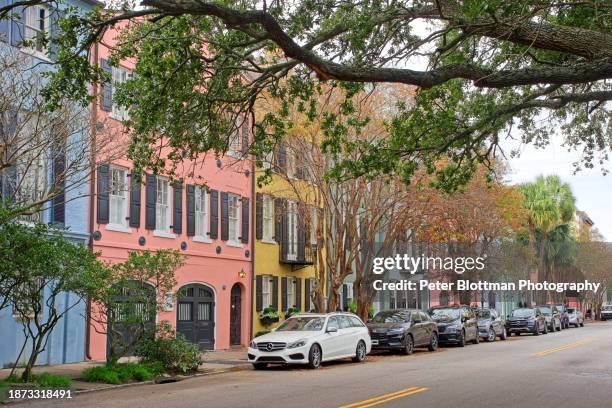
| Early morning | Direct: the row faces east across East Bay Street, so morning sun hits the façades first | Lightest of the day | Best window for the full façade without backlighting |
| Midday | Overhead, flattens color and shadow | Heaviest, tour groups and carriage traffic on the street itself | Standing in the roadway to frame a shot is a real risk here; the street carries active vehicle and carriage traffic |
| Late afternoon into evening | Indirect, the sun moves behind the buildings from the street side | Moderate, tapers after dinner hour | Evening parking at East Bay/Prioleau drops to a flat $5 after 5 p.m. |
Because the row faces east, morning light does the photographic work that other guides vaguely credit to a specific season or hour without ever naming why.
There’s no ticket, no gate, and no seasonal closure. The most common visitor mistake is assuming the block itself has parking, or that one of the houses operates as a house museum.
Comments