
Refurbished, used, and open-box are not the same purchase

“Refurbished” describes a unit that went through an actual repair and inspection process before resale. Best Buy’s marketplace rules require refurbished sellers to run products through professional technicians and grade the result, with an A grade meaning like-new function and no visible defects (Best Buy Marketplace Secondary Products Guidelines). “Open-box” means a unit was returned unused or lightly used and resold, often without a full teardown. “Used” or “pre-owned,” sold privately, means the buyer’s own inspection is the only quality control that happens.
Is refurbished the same as used?No. Refurbished means a technician tested, repaired, and graded the unit before resale, typically with a written guarantee attached. Used means only the seller’s word and the buyer’s own inspection.
What a refurbished window unit costs, by size
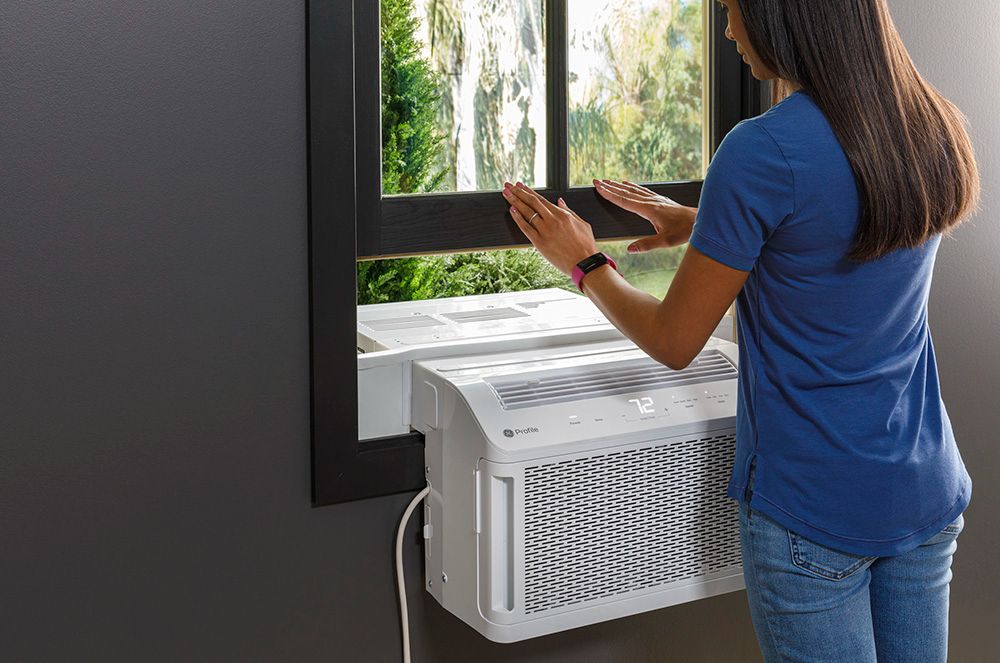
Prices vary more by channel than by brand. A reconditioned GE 8,000 BTU unit sold for $129.99 through an independent appliance liquidator, with no manufacturer warranty stated on the listing (Appliance Depot). The same size unit from a certified-refurbished eBay listing ran $279.99 to $289.99, marked down from a $379.99 new reference price on the same page (eBay 8,000 BTU listings). Best Buy’s refurbished inventory, filtered to the 7,000 to 8,999 BTU and 11,000 to 12,999 BTU bands, is priced across $150 to $749.99, with specific listed units at $239.99, $319.99, and $349.99 (Best Buy refurbished window AC search).
| BTU tier | Typical room fit | Refurbished price observed | New price observed | Approx. savings |
|---|---|---|---|---|
| 5,000 to 7,000 BTU | up to about 250 to 300 sq ft | within Best Buy’s $150 to $249.99 refurbished bands | $135.89, comparable new unit, eBay | thin at this size; refurbished and new prices sit close together |
| 7,000 to 8,999 BTU | about 300 to 350 sq ft | $129.99 (Appliance Depot, reconditioned, no stated warranty); $279.99 to $289.99 (eBay, Certified-Refurbished) | $379.99, same eBay listing’s new reference price | 24% to 66% below new, depending entirely on channel |
| 11,000 to 12,999 BTU | about 500 to 550 sq ft | $250 to $499.99, with units at $319.99 and $349.99 (Best Buy) | not independently captured for this exact tier | open research task |
| 15,000+ BTU, 230V | large rooms or units on a dedicated circuit | eBay’s 230V category lists its few refurbished-grade units inside $350 to $750 | not independently captured | open research task |

The 8,000 BTU row is the one worth remembering: the same nominal size ranged from $129.99 with no disclosed warranty to $289.99 with a graded inspection and a return window. That gap is the channel decision, not a brand decision.
What’s a fair price for a refurbished 8,000 BTU window unit?Based on current listings, $130 to $290, with the low end carrying no manufacturer or platform warranty and the high end carrying a graded inspection and a guarantee.
Where to buy, and how risk changes by channel
Amazon Renewed requires Amazon-qualified suppliers to inspect, clean, and repair units with OEM parts, and every purchase carries a minimum 90-day Amazon Renewed Guarantee, extended to 365 days on Renewed Premium items (Amazon Renewed Guarantee). Best Buy’s marketplace enforces a comparable professional-refurbishing and grading standard on its third-party sellers, with warranty terms disclosed per listing. Independent liquidators, the source of the $129.99 GE AGS08AAG1 above, use looser language like “reconditioned” without a documented grading standard, and that listing itself showed no warranty terms. A private-party sale on Facebook Marketplace or Craigslist offers none of the above: no professional inspection, no guarantee, and the buyer’s walkthrough is the entire quality check.
| Channel | Typical inspection | Typical guarantee | Price signal | Risk level |
|---|---|---|---|---|
| Amazon Renewed | Amazon-qualified suppliers test, clean, repair with OEM parts | 90 days minimum, 365 days on Premium | not independently captured for window ACs at time of writing | Low |
| Best Buy Marketplace refurbished | Professional refurbishing process, seller graded A (excellent) or lower | Disclosed per listing | $150 to $749.99 across observed BTU bands | Low to moderate |
| eBay Certified/Excellent-Refurbished | Seller-applied condition grade, shown on the listing | Seller-specific return window | $279.99 to $289.99 for 8,000 BTU | Moderate |
| Independent liquidator/reconditioner | Seller’s own claim, no disclosed third-party standard | Often none stated | $129.99 for 8,000 BTU | Moderate to high |
| Private-party marketplace sale | Buyer’s own visual and power-on check only | None | Usually lowest for a given size; no data source to cite | High |

Do refurbished window ACs come with a warranty?Through Amazon Renewed or Best Buy Marketplace, yes: 90 days at minimum. Through an independent liquidator or a private seller, often not, so check the listing before assuming one exists.
The inspection checklist, in order
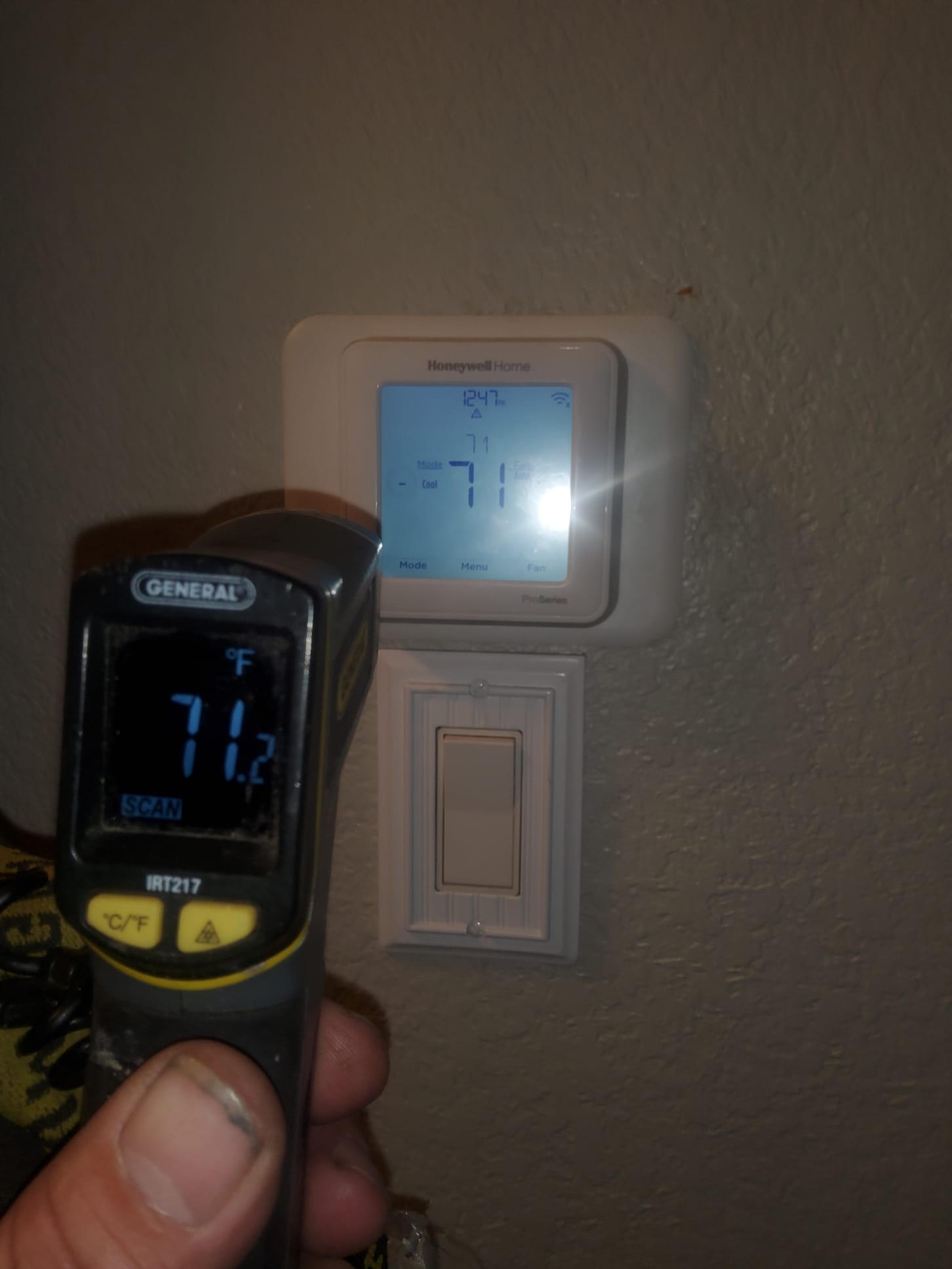
Run this at pickup, before money changes hands, in this order.
- Look first, plug in second. Check the cabinet for rust on the coils, bent fins, and a cracked or missing drain pan.
- Smell it. A musty smell points to mold in the filter or coil compartment; a burnt smell points to an electrical fault. Either one is a reason to walk away.
- Read the label. Confirm the EnergyGuide sticker shows a CEER value, not a SEER or SEER2 value, and that the voltage matches your outlet before you plug in.
- Power it on and let it run. A healthy compressor is audible but shouldn’t grind, rattle, or cycle on and off within the first two minutes.
- Check the cord and plug. Frayed insulation or scorch marks on the plug are a hard stop regardless of price.
- Ask for the warranty in writing. A verbal “it’s covered” from a private seller is not a warranty; get the platform’s return policy in the listing or walk.
Age, lifespan, and the EER/CEER mixup
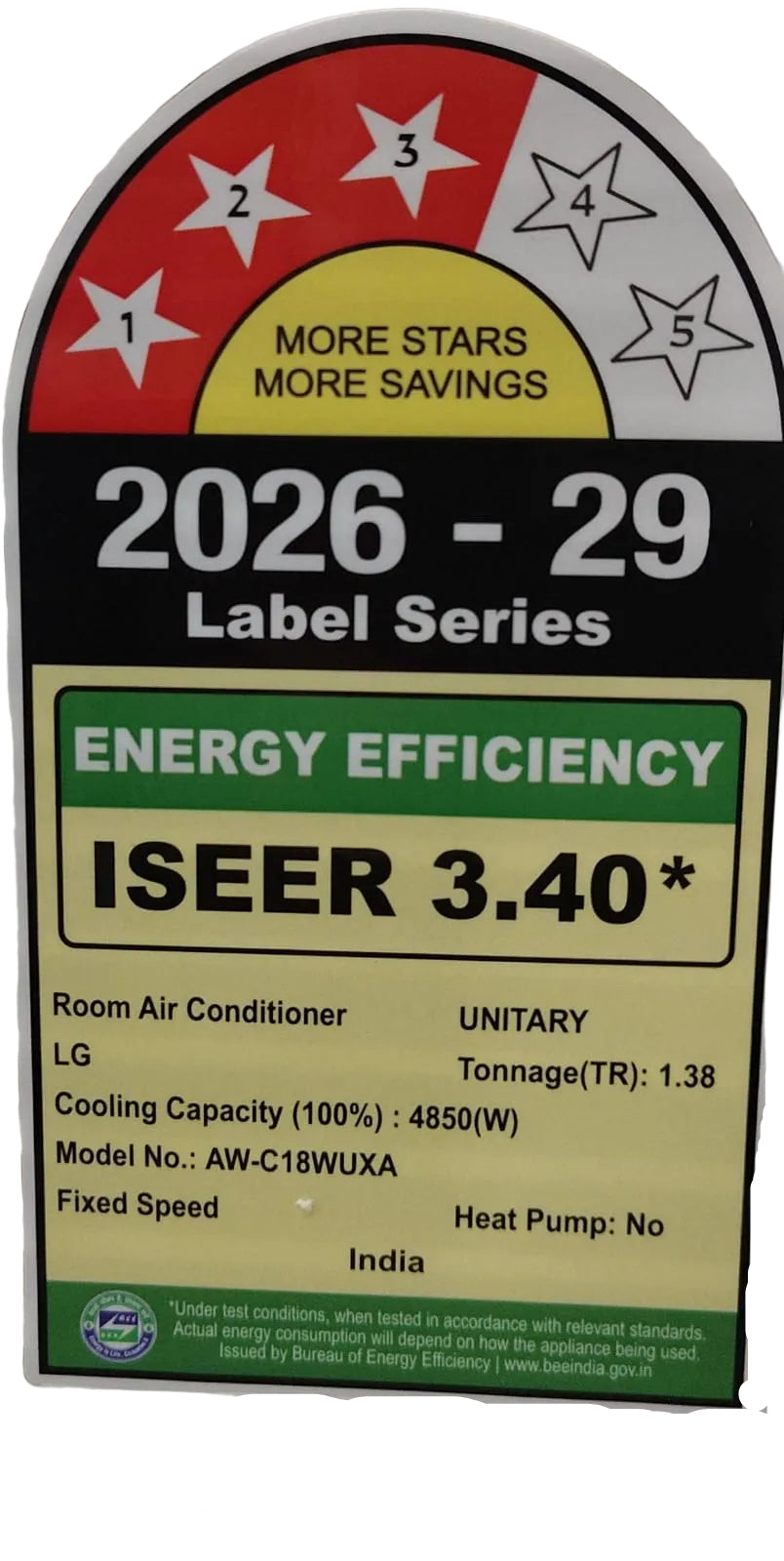
A window unit’s EnergyGuide label carries a CEER, Combined Energy Efficiency Ratio, number, not SEER or SEER2, which are the metrics used for central and split systems. EPA’s official room air conditioner program requirements define CEER as cooling output divided by the sum of active and standby power draw (EPA Room Air Conditioner Program Requirements). New federal rules raise the minimum CEER for units under 8,000 BTU from 11.0 to 12.8 starting in 2026, and DOE states that a typical new room air conditioner already uses 39% less energy than a 1990 model (DOE room AC efficiency rule); a unit that earns ENERGY STAR certification must clear that federal minimum by at least 10%. That gap between the legal floor and the ENERGY STAR bar is worth explaining once: below it, a unit is legal to sell; above it, it earns the label and, generally, lower running costs.
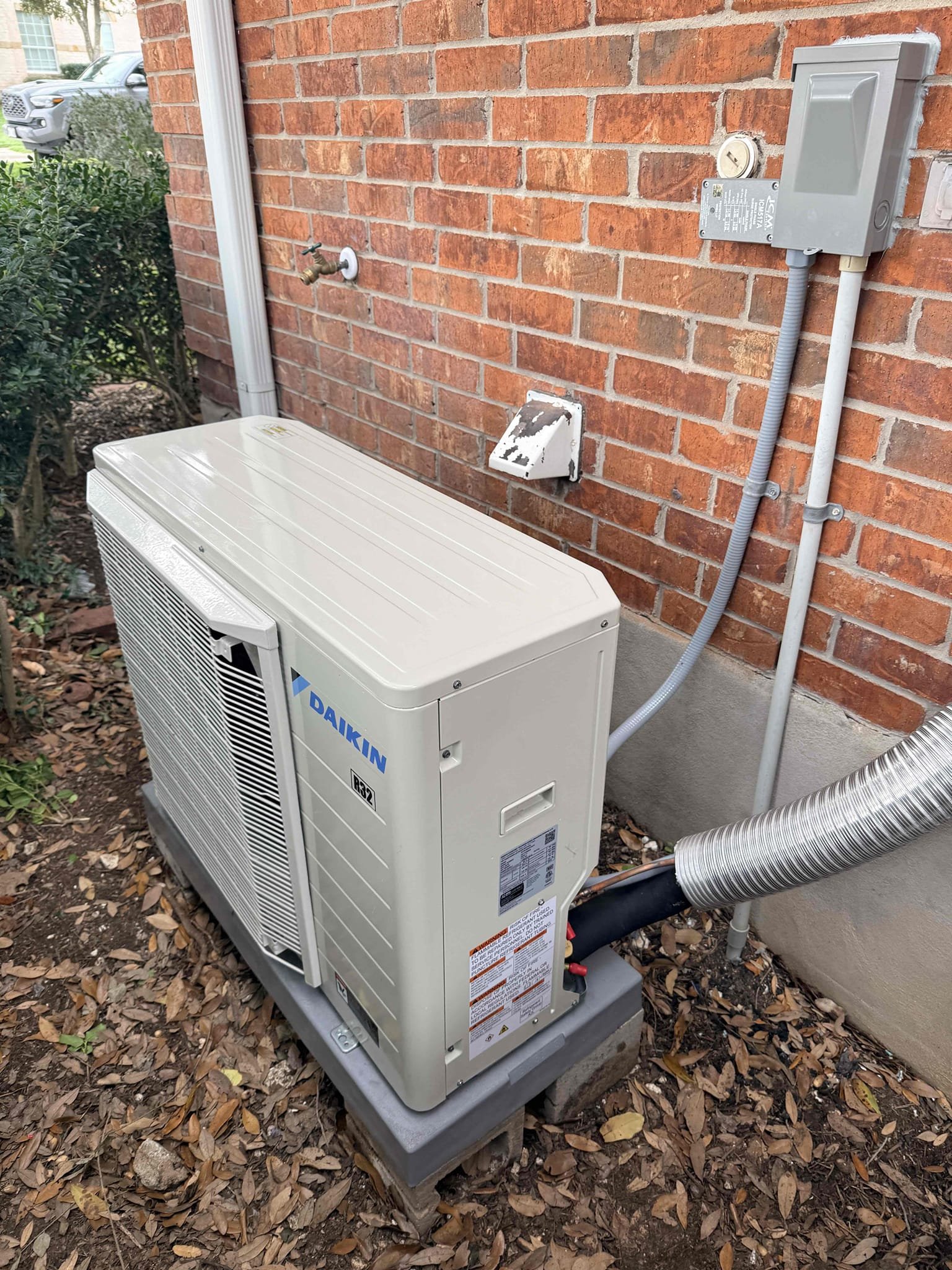
A refrigerant sticker doubles as an age check. R-22 stopped being produced or imported in the US on January 1, 2020, so a unit still charged with it is at least that old (EPA). R-410A replaced R-22 in most new units by 2010 (Trane), and current ENERGY STAR window units increasingly use R-32, which carries a lower global-warming potential than R-410A (TotalHomeSupply, citing manufacturer specs).
| Refrigerant | Years typically used | Status | What it tells you |
|---|---|---|---|
| R-22 (Freon) | Before 2010 | Production and import banned since January 1, 2020 | Unit is at least 15 years old; budget for replacement, not repair |
| R-410A | 2010 to present | No production ban; the standard refrigerant in current inventory | No red flag on its own |
| R-32 / R-454B | Appearing in newer ENERGY STAR models | Lower global-warming potential than R-410A | A plus if present, not a requirement |
How do I know if a unit is too old to buy?Check the refrigerant sticker first: R-22 means pre-2010. Then weigh the age against DOE’s 9-year room-AC service-life assumption, not the 15-to-20-year figure that applies to central air.
Voltage, plug type, and the outlet check
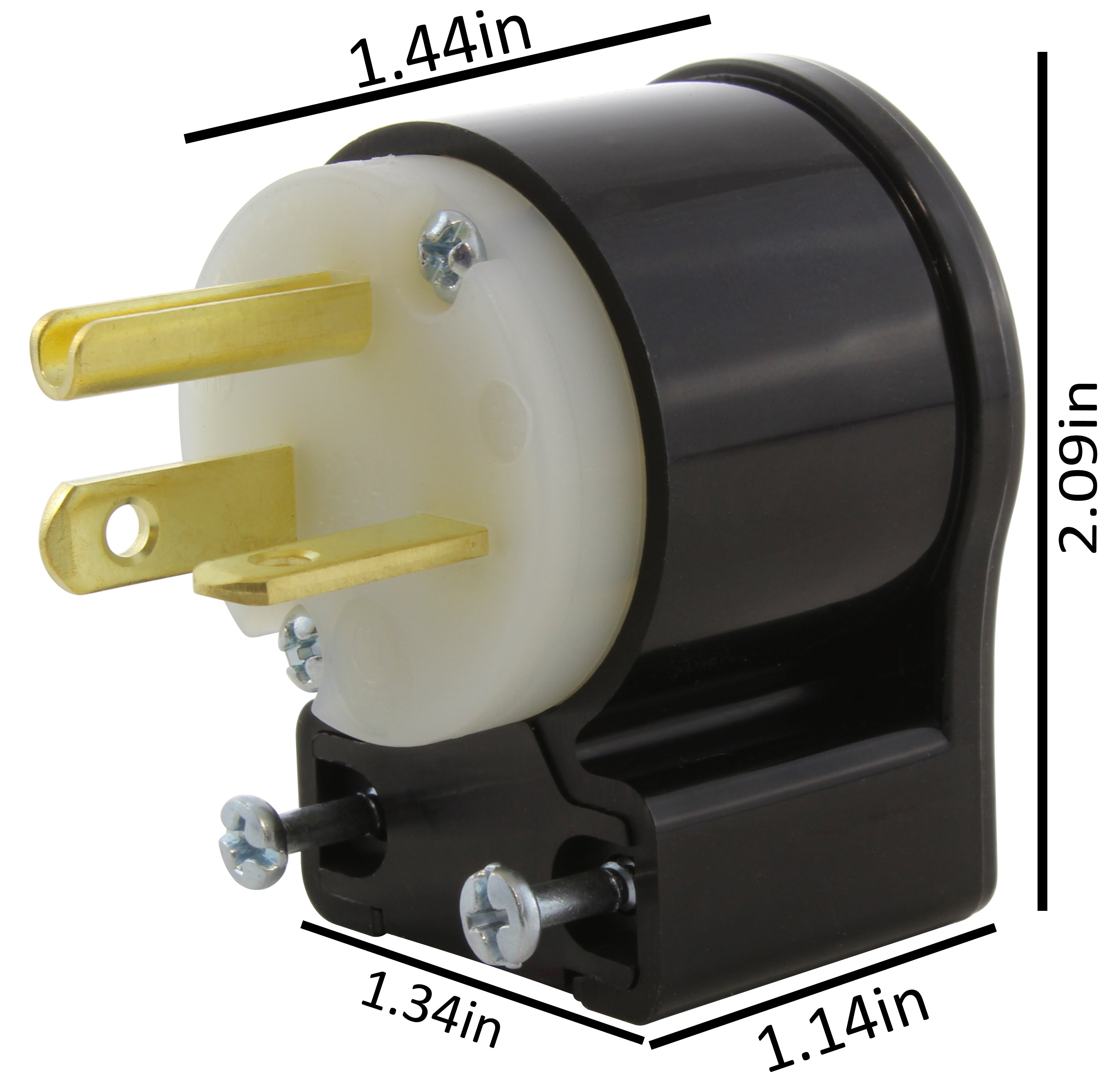
Most window units under about 15,000 BTU run on 115V and use a standard NEMA 5-15 plug, the same two-blade-and-ground plug as any household outlet, and draw roughly 7 to 12 amps (CompactAppliance electrical guide); a dedicated outlet is still worth having so the AC isn’t sharing a circuit with a microwave or space heater (TheFurnaceOutlet 115V guide). Units above roughly 15,000 BTU commonly step up to 208/230V and a NEMA 6-15 plug, a wider blade pattern rated for 250V rather than 125V (NEMA Straight Blade Reference Chart), and typically need a dedicated 230V circuit that a standard bedroom outlet doesn’t provide. A retailer’s own catalog shows the split directly: a 12,000 BTU model at 115V next to an 18,000 BTU model at 208/230V (ACWholesalers).
| BTU range | Typical voltage | Plug type | Outlet requirement |
|---|---|---|---|
| Up to about 8,000 BTU | 115V | NEMA 5-15 | Standard household outlet |
| 8,000 to 15,000 BTU | Mostly 115V, some 230V at the top end | NEMA 5-15 or 6-15 | Check the label before buying; don’t assume |
| Above 15,000 BTU | 208/230V | NEMA 6-15 | Dedicated 230V circuit, often not present in older homes |
Will a refurbished unit work in a standard outlet?Only if its label says 115V and NEMA 5-15. Anything above roughly 15,000 BTU is likely 230V and won’t fit a normal outlet at all, refurbished or new.
What refurbished saves, in real numbers
Using the same-listing comparison above, the eBay Certified-Refurbished Hisense 8,000 BTU unit at $279.99 against its own $379.99 new reference price is a 26% discount for that specific model. Efficiency compounds separately from purchase price: using DOE’s standard test assumptions, a high-CEER unit can save roughly $43 a year in electricity over a low-CEER unit of the same size, or about $430 across a 10-year span (LearnMetrics, citing DOE test parameters). A refurbished unit’s sticker price is only half the comparison; its CEER number decides most of what it costs to run afterward.
A long cooling season changes the math
A window unit that runs from May through October logs far more compressor hours over its life than one used six weeks a year in a milder climate. That matters most for a unit already partway through DOE’s 9-year assumption: a long, hot season uses up whatever service life is left faster than a short one does. In Central Texas, where cooling season runs close to half the year, the age check above carries more weight than it would somewhere the AC runs eight weeks a summer.
What happens when the unit eventually fails

Roughly 40 million window units are in service in the US, and about 6 million reach end of life every year, per EPA’s Responsible Appliance Disposal program (EPA appliance disposal). Federal rules put the burden on the final party in the disposal chain, often a scrap recycler or landfill, to recover the refrigerant before the unit is scrapped; a homeowner curbside drop-off doesn’t satisfy that requirement on its own. EPA’s own archived guidance on appliance disposal goes further and states plainly that reselling an old, inefficient refrigerated appliance should generally be avoided, on the grounds that the energy an aging unit wastes over its remaining life outweighs the value of keeping it in circulation (EPA archived RAD guidance). That advice was written with decades-old refrigerators in mind, not an 8,000 BTU window unit refurbished last year, but it’s worth knowing before assuming secondhand is automatically the greener choice at any age. When your own unit reaches that point, most municipal bulk-pickup programs and some retailers will take it, provided the refrigerant is recovered first.
Comments