
Community, private, and rooftop pools: who pays and who’s liable
Most guides to this topic budget for “a pool” as a single line item. That’s the wrong frame: who cleans it, who insures it, and who gets sued if someone gets hurt depends entirely on which of three structures the pool actually is.
Table 1 – Pool type by cost and liability owner
| Pool type | Who maintains it | Who carries liability | How the resident pays | Best fit |
|---|---|---|---|---|
| Community/shared (multifamily) | Property management or HOA, via a commercial pool-service contract | Building owner/management company, under a commercial general-liability policy | Folded into rent (the $118/mo national premium above) | Renters who want pool access without maintenance or insurance exposure |
| Private/single-family rental | Landlord contracts service, or requires tenant upkeep per the lease | Landlord, personally, unless transferred by lease terms | Rent premium plus, sometimes, a pool addendum shifting upkeep duties to the tenant | Tenants comfortable with lease-addendum responsibilities |
| Rooftop/amenity-deck | Management company, under the building’s master commercial policy | Building’s master policy, plus added structural/code oversight for a roof-mounted body of water | Usually bundled into a separate amenity fee | Urban high-rise renters; commands the highest premiums seen above |
The table above shows why “pros and cons of a pool” can’t be answered in one line: a community pool’s cost sits with the management company, not the resident who benefits from it, while a private-pool tenant may be contractually on the hook for part of the upkeep.
Is a community pool different from a private pool for liability purposes? Yes. A community pool’s liability sits with the property’s commercial general-liability policy, carried by the owner or management company. A private single-family rental’s pool liability sits with the landlord’s personal or landlord policy, and insurers frequently raise that policy’s premium 20% to 40% once a pool is added, according to 2026 industry data reported by Insurify.
What a pool actually adds to rent
The national figure is $118 a month, a 7.5% premium, per Murphy & Prachthauser’s 2025 analysis of Apartments.com listings. That’s roughly double the $70-a-month (4.7%) premium HousingWire reported from 2020 HotPads data, suggesting the dollar value of a pool amenity has grown faster than rent overall over five years, not just tracked it.
The premium is not flat across markets. In Salt Lake City, where pools sit apart from the region’s outdoor-recreation identity, renters pay about $156 more a month. In supply-constrained metros, the number is far higher: San Francisco renters pay about $542 more a month for a pool, and New York renters pay about $483 more, because a pool amenity is rare enough in those cities to function almost like private square footage. Milwaukee shows the widest percentage swing of any metro in the dataset, at roughly 35% over otherwise comparable units.
Table 2 – Cost ranges by category
| Cost category | Typical range | Who bears it | Source |
|---|---|---|---|
| Rent premium, national average | $118/month (7.5%) | Renter | Murphy & Prachthauser, 2025 |
| Rent premium, high-demand metro (San Francisco) | $542/month | Renter | Murphy & Prachthauser, as above |
| Commercial/community pool service | $400 to $2,000+/month | Owner/management company | Bluewater Pools, Texas pricing guide |
| Commercial pool chemicals, annual | $5,000 to $15,000+ | Owner/management company | Bluewater Pools, citing HomeGuide |
| Private single-family pool maintenance, annual | $1,000 to $2,500 (chemicals/cleaning) plus $800 to $2,500 (utilities) | Landlord, or tenant if the lease shifts it | Plungie, pool value and cost breakdown |
| Rental-property liability premium increase | 20% to 40% over a no-pool policy | Landlord | Insurify, 2026 |
No category here is small enough to ignore, and none is the same line item: a renter weighing $118 a month against a nicer unit down the street is answering a different question than a landlord weighing a 20% to 40% insurance jump against a rent increase that may not cover it.
Does renters insurance cover injuries at an apartment pool? Typically not for the renter’s own injury. A standard renters policy covers the tenant’s liability if they harm someone else, while injuries the tenant sustains at a shared pool are usually the property’s liability policy’s responsibility. A pool-related claim can also raise the property’s own insurance rates for years, a cost that lands on the owner, not the individual renter who was hurt.
Maintenance, insurance, and safety compliance
Maintenance
Commercial contracts price by water volume and bather load: a 50,000-gallon community pool needs roughly five times the chemical dosing of a standard 10,000-gallon backyard pool. Multifamily and HOA pools also run on a tighter service schedule, typically two to seven visits a week depending on season, compared with a once-weekly standard for a private residential pool.
Insurance
Drowning killed more than 4,500 people a year in the U.S. from 2020 through 2022, and remains the leading cause of death for children ages 1 to 4, per the CDC data cited in Insurify’s 2026 reporting. About 80% of child drowning deaths happen at a private residence, not a public or commercial facility, which is part of why insurers price private single-family rental pools higher per unit than community pools: a private pool statistically carries more of the actual risk. Standard liability coverage starts at $100,000; insurers commonly ask pool-equipped rental owners to carry $300,000 to $500,000 instead, before they’ll write the policy at all.
Safety and code compliance
Pool barrier law is a moving target. California’s Senate Bill 552, effective January 1, 2025, tightened statewide pool-barrier requirements and added a new duty: sellers must give buyers an inspection report certifying which safety features the pool has before closing. A property that was code-compliant two years ago is not automatically compliant today, which matters for landlords budgeting for retrofits and buyers evaluating a pool-equipped property at resale alike.
When a pool is a bad bet for an investor
The seasonal math
Five months of usable season and twelve months of usable season carry the same annual maintenance and insurance bill, but only the longer season produces rent premium during most of that cost window. NAR’s climate-tiered resale data shows the same split: pools add 10% to 15% or more to home value in Sun Belt markets, and add little to nothing, sometimes negative value, in cold-climate markets. The rental data above tells a related story: Salt Lake City’s $156 premium and Milwaukee’s 35% swing sit in markets with a real off-season, while San Francisco’s $542 premium reflects supply scarcity more than climate.
Table 3 – Climate zone and ROI signal
| Climate zone | Typical usable pool season | Resale/rent ROI signal |
|---|---|---|
| Sun Belt (FL, AZ, TX, southern CA) | 10 to 12 months | Favorable: 10% to 15%+ resale lift per NAR; consistently high rent premiums |
| Transitional (mid-Atlantic, parts of the Midwest) | 5 to 7 months | Marginal: premium exists but must clear a real off-season carrying cost |
| Cold-climate (Northeast, upper Midwest) | 3 to 5 months | Unfavorable: flat-to-negative resale lift per NAR; maintenance and insurance run year-round regardless |
A short-season pool carries essentially the same fixed cost as a year-round one, so the shorter the season, the harder the rent premium alone has to work to clear its own maintenance and insurance bill.
Disqualifying scenarios worth naming outright:
- Very short lease terms or high-turnover buildings: the liability exposure resets with every new tenant, and short-term occupants are statistically less familiar with a property’s specific pool rules.
- Cold-climate markets with a sub-5-month season: the seasonal math above rarely closes.
- HOA structures with capped liability exposure: some HOA bylaws limit the association’s own liability ceiling below what insurers now recommend for pool-equipped properties, leaving the individual owner to inherit the gap.
- Buildings without code-compliant barrier or entry access: post-SB 552-style regulation, a non-compliant pool is a retrofit cost before it’s an amenity.
Buying or selling with a pool
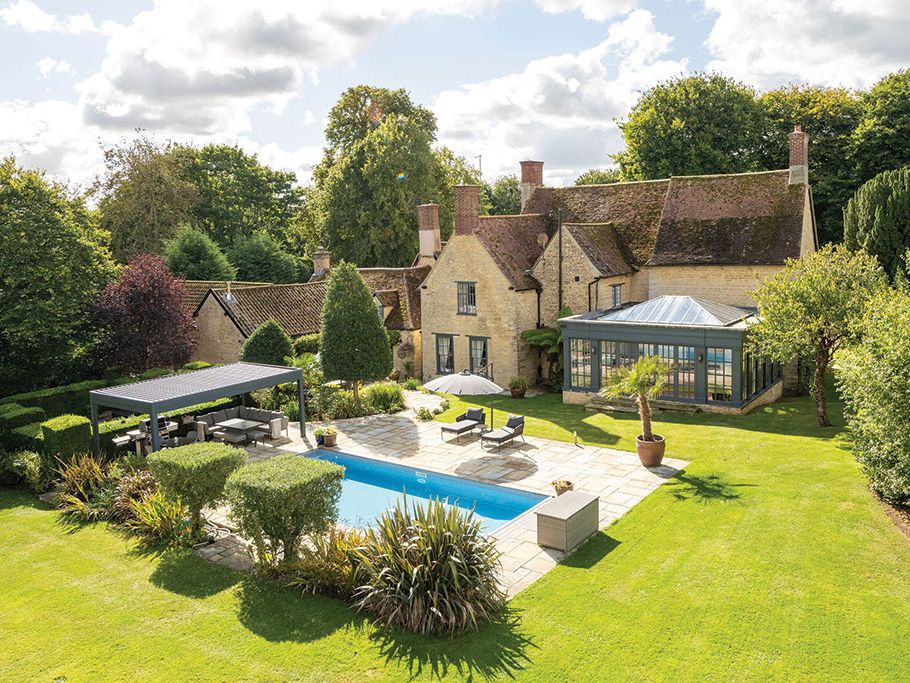
The claim that a pool never returns its installation cost at resale is repeated constantly, and the real data is more specific than the slogan.
For a multifamily building rather than a single-family resale, the more relevant fact is regulatory: since California’s SB 552 took effect on January 1, 2025, sellers there must disclose which pool safety features are present before closing, a documentation requirement that can slow a sale regardless of what the pool does to price.
Does a pool help or hurt when selling a property? It depends on climate and local buyer norms: NAR data shows 10% to 15%+ value gains in Sun Belt markets and flat or negative results in cold-climate markets, so the same amenity produces opposite outcomes depending on where the property sits.
Is a rooftop pool worth more than a ground-level community pool? Rooftop pools tend to command the amenity-fee premiums seen in dense metros like New York and San Francisco, but they carry added structural and code oversight a ground-level community pool doesn’t, offsetting the higher premium against a narrower pool of buildings that can support one at all.
A short note on everyday use
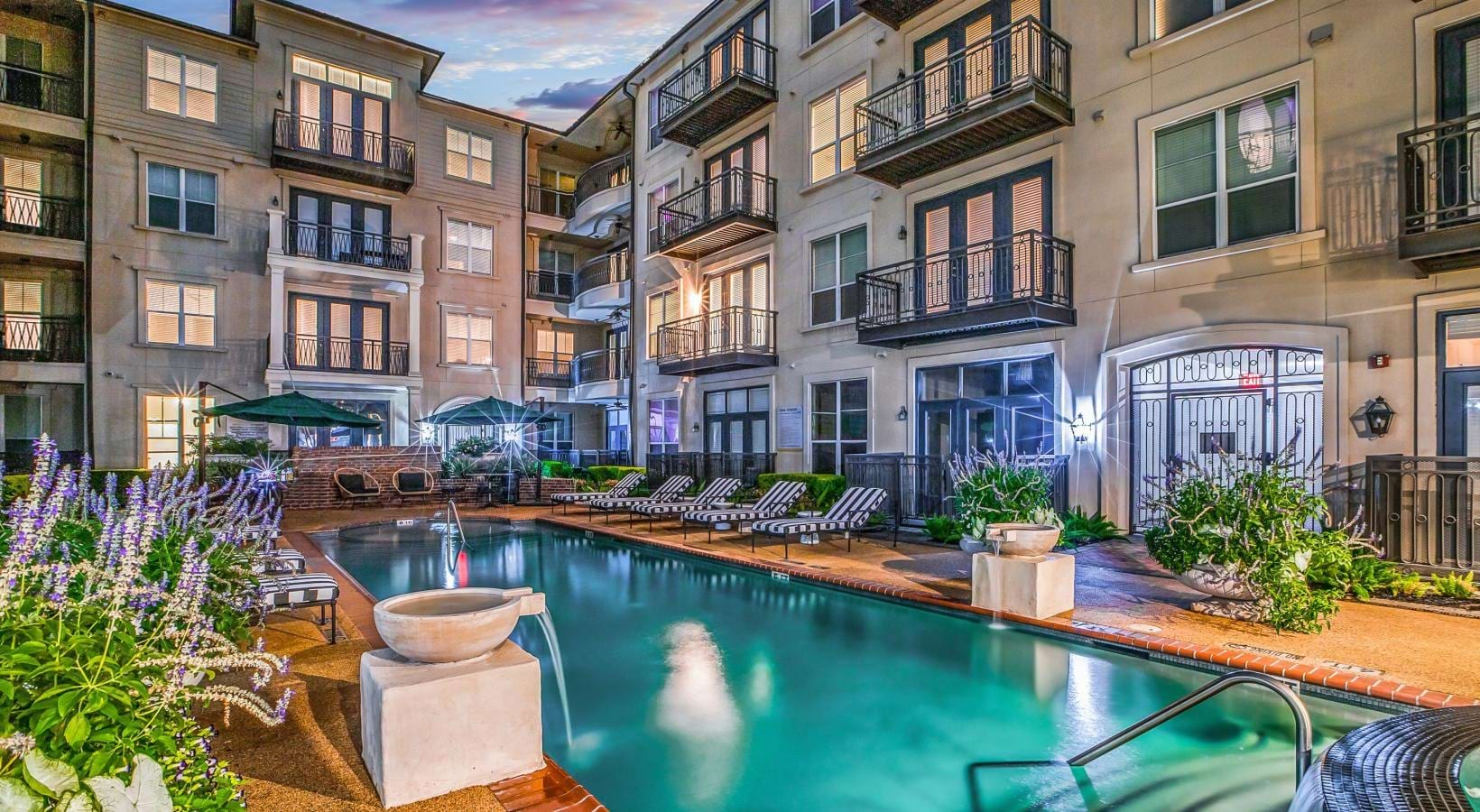
Beyond the numbers, a pool remains a genuine lifestyle amenity: somewhere to cool off, meet neighbors, and get outside without leaving the property. That appeal is real, but it’s also the one fact about apartment pools that every listing already leads with.
Comments