
Forest Park is one park. Renting near it means four neighborhoods
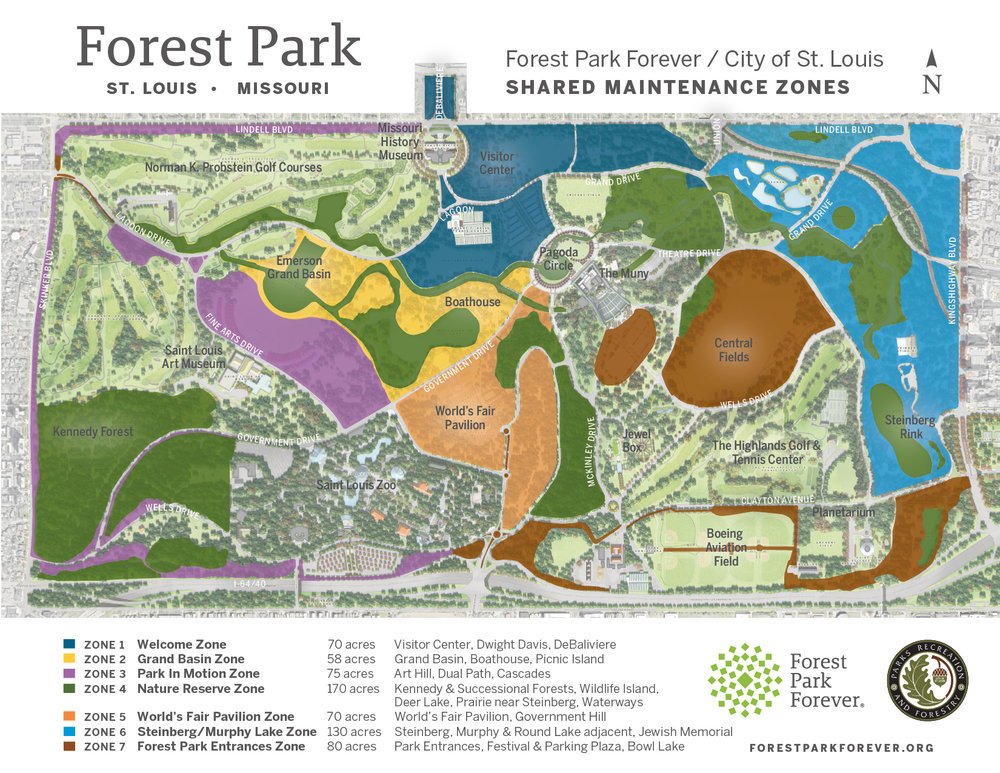
Forest Park was dedicated on June 24, 1876, and today covers what Forest Park Forever’s current materials describe as around 1,300 acres, according to Forest Park Forever. The City of St. Louis owns the park; the nonprofit conservancy Forest Park Forever, founded in 1986, partners with the city to maintain it, as the conservancy’s own about page describes.
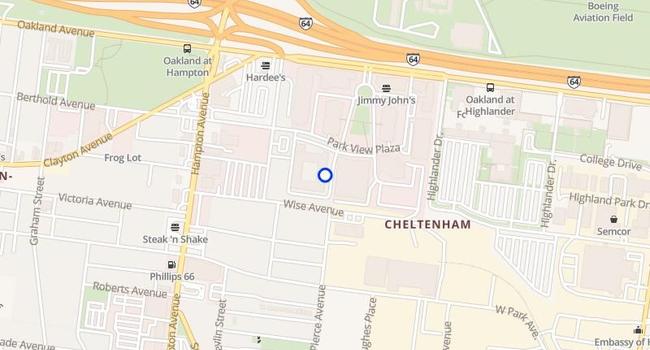
Four residential neighborhoods actually touch the park’s edges: Forest Park Southeast, commonly called The Grove, along the south and southeast; the Central West End along the east and northeast; Skinker-DeBaliviere and the adjoining DeBaliviere Place along the north; and Dogtown, whose Hi-Pointe sub-area runs along the southwest edge. A fifth name, Cheltenham, shows up on listing sites as part of the Dogtown cluster, per Rentable’s neighborhood data, but no rental aggregator tracks it as an independent submarket, so it isn’t broken out separately below.
Is Forest Park Southeast the same neighborhood as Forest Park?No. Forest Park is the roughly 1,300-acre park itself. Forest Park Southeast, often called The Grove, is a distinct residential and commercial neighborhood along the park’s southeastern edge, named for its position relative to the park.
The four neighborhoods, compared
| Neighborhood | Avg. 1BR rent | Nearest MetroLink | Best for |
|---|---|---|---|
| Central West End | $1,508, per RentCafe | Central West End / Forest Park-DeBaliviere (on the border) | Medical-campus staff and residents |
| Skinker-DeBaliviere / DeBaliviere Place | $1,766, per Apartments.com | Forest Park-DeBaliviere / Skinker (on the border) | WashU students, Delmar Loop access |
| Forest Park Southeast (The Grove) | $1,740 average, all unit types, per RentCafe | Forest Park-DeBaliviere / Central West End (about 1 mile) | Nightlife and restaurant-first renters |
| Dogtown / Hi-Pointe | $1,122, per RentCafe, corroborated near $1,345 across the wider Dogtown cluster per Rentable | No station inside the neighborhood; nearest connection is by bus | Budget and space over park-edge access |
Aggregator data for Forest Park Southeast doesn’t break out cleanly by bedroom count the way the other three do, so its figure above is a blended average across unit types rather than a strict one-bedroom comparison; treat it as directional.
Hi-Pointe undercuts the citywide one-bedroom average by roughly $220 a month despite sitting on the park’s edge, while Skinker-DeBaliviere sits about $426 above it. Proximity to Forest Park does not carry one uniform price. It moves with which MetroLink station and which employer district a neighborhood happens to sit closest to.
What proximity to the park costs
Renting in Central West End or Skinker-DeBaliviere costs $168 to $426 more per month than the St. Louis citywide one-bedroom average of $1,340, based on RentCafe’s citywide figures. Renting in Hi-Pointe costs about $218 less than that same baseline.
Central West End’s $1,508 average sits 12.5% above the citywide figure. Skinker-DeBaliviere’s $1,766 sits 31.8% above it. Hi-Pointe’s $1,122 sits about 16.3% below it. Forest Park Southeast’s blended $1,740 average is highest in raw dollars, but isn’t a clean one-bedroom comparison, for the reason noted above.
Do apartments near Forest Park cost more than the rest of St. Louis?Depends which side. Central West End and Skinker-DeBaliviere run 12% to 32% above the citywide one-bedroom average. Hi-Pointe, on the park’s southwest edge, runs about 16% below it.
Getting to work: MetroLink and the medical campus
Three MetroLink stations sit directly on the park’s edge: Forest Park-DeBaliviere, Central West End, and Skinker, per Metro Transit’s station list. Of the four ring neighborhoods, only the Central West End has BJC HealthCare and the Washington University School of Medicine campus starting at its own boundary; WashU’s admissions materials describe the medical campus as bordering Forest Park directly.
| Neighborhood | Nearest MetroLink station(s) | Adjacent major institution |
|---|---|---|
| Central West End | Central West End, Forest Park-DeBaliviere | BJC HealthCare / WashU School of Medicine, borders the neighborhood |
| Skinker-DeBaliviere / DeBaliviere Place | Forest Park-DeBaliviere, Skinker | WashU Danforth Campus, adjacent via Skinker Blvd. |
| Forest Park Southeast | Forest Park-DeBaliviere, Central West End (about 1 mile) | Cortex Innovation District, not directly adjacent |
| Dogtown / Hi-Pointe | No in-neighborhood station; bus connection required | None of the four major medical or innovation employers borders this neighborhood |
Precise walk-time or transit-time minutes to Saint Louis University’s midtown campus and the Cortex district weren’t available in sourced form for this comparison; that gap is listed as an open research task below rather than estimated.
A renter walking to work at BJC or WashU Medicine has exactly one neighborhood that puts the campus at its own edge: the Central West End. Every other ring neighborhood adds a MetroLink ride, a bus connection, or a drive.
What the listings won’t tell you: The Muny runs nightly all summer
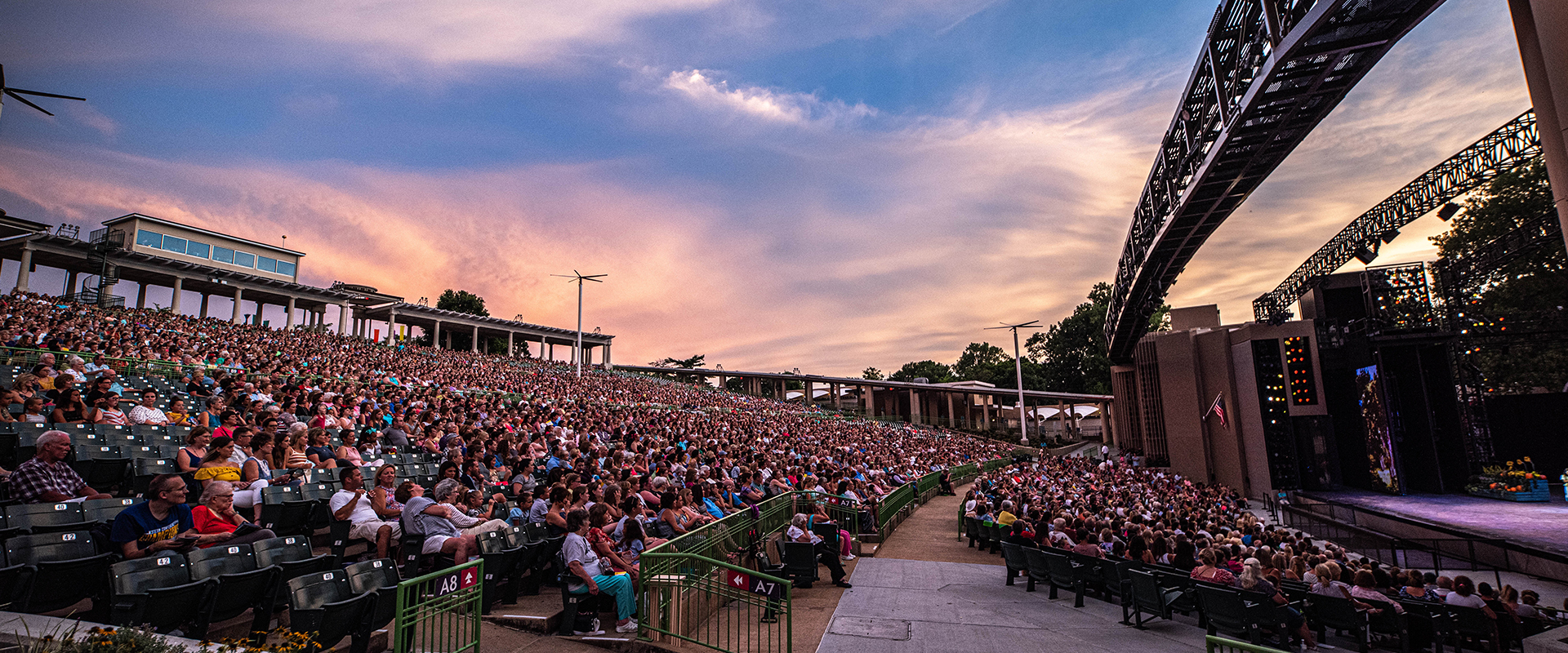
The Muny’s 2026 season runs June 15 through August 23, with seven shows at 8:15 p.m. curtain times at its Forest Park amphitheater on 1 Theatre Drive, per The Muny and Forest Park Forever’s event calendar. Every showtime brings parking pressure and foot traffic to the streets nearest the theater, concentrated in the DeBaliviere and Central West End blocks closest to the park’s eastern half. None of the four ring neighborhoods is exempt from it during those ten weeks.
Who fits which side
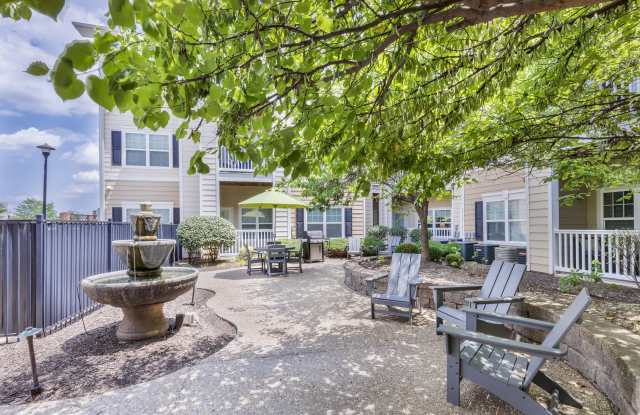
- Medical residents and hospital staff: Central West End, for the walk to BJC and WashU Medicine, in buildings that skew toward mid- and high-rise apartments.
- Washington University students: Skinker-DeBaliviere or DeBaliviere Place, both a few blocks from the Danforth Campus gates, with a larger share of smaller, older apartment buildings than Central West End.
- Renters prioritizing nightlife and restaurants: Forest Park Southeast, where housing runs closer to a 60/40 split between apartment buildings and single-family-style rentals, per RentCafe’s housing-stock data.
- Renters prioritizing space and lower rent: Dogtown/Hi-Pointe, where houses and duplex-style rentals outnumber large apartment buildings by a wide margin.
Is it noisy living near Forest Park in the summer?Only near the theater. The Muny’s nightly summer shows concentrate parking and foot traffic on the streets closest to 1 Theatre Drive, mainly in DeBaliviere and Central West End. Hi-Pointe and most of Forest Park Southeast sit far enough from the amphitheater that the effect is minor.
Choosing between two
Budget rules out Skinker-DeBaliviere and Central West End before it rules out Hi-Pointe or The Grove. Walk-to-work at a medical campus rules out everywhere except Central West End. Between the remaining options, building stock is often the tiebreaker: Forest Park Southeast leans toward smaller mixed-use buildings near its restaurant strip, while Hi-Pointe leans toward standalone houses and duplexes with no MetroLink access at all.
Comments