
Why “average rent in LA” changes depending on which site you check
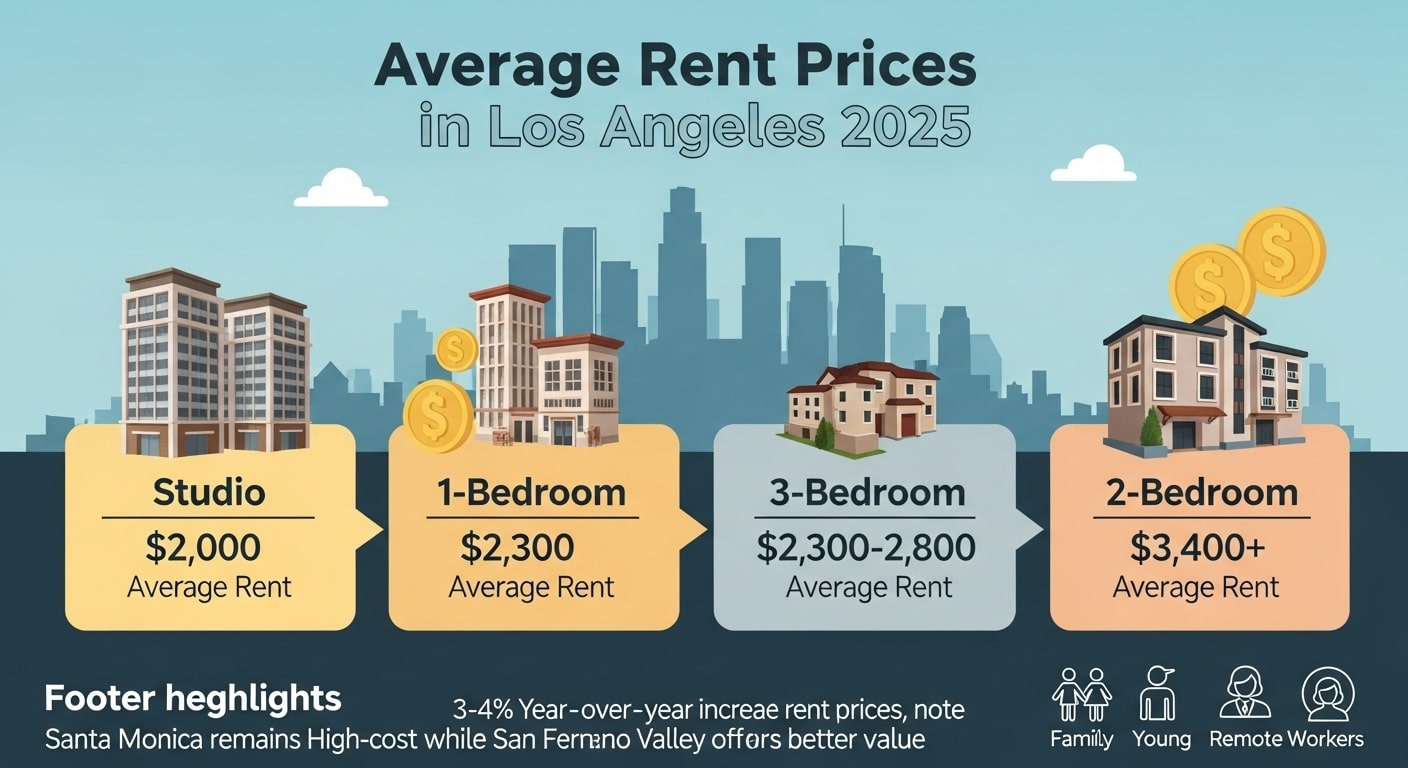
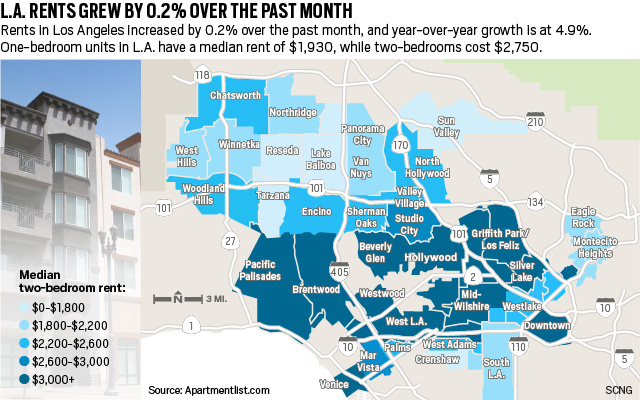
Apartments.com’s FAQ states $2,184 a month. RentCafe’s FAQ states $2,761. Zumper’s trend module states $2,500. The spread between the low and high figure is $577, roughly a quarter of the lowest number, and none of the three pages discloses whether it’s a mean or a median, what date range it covers, or what share of the city’s rental stock the figure is drawn from.
| Source | Stated figure | What it measures | Method disclosed |
|---|---|---|---|
| Zillow Observed Rent Index, LA County | $2,794 (Mar 2026) | Repeat-rent index, all housing stock | Yes, smoothed, stock-weighted |
| Doorstead market report | $2,483 (May 2026) | Median of active listings, all property types | Partial, sample size not given |
| Apartments.com FAQ | $2,184 | Undisclosed | No |
| RentCafe FAQ | $2,761 | Undisclosed | No |
| Zumper trend module | $2,500 (June 2026) | Undisclosed sample, proprietary | Partial, no sample size |
Treat any single “average rent” headline as a starting point, not a budget number, and check whether a building is rent-stabilized before comparing its asking price to any citywide figure.
Why do rent averages differ so much between apartment sites?
Each marketplace pulls from its own listed inventory, which skews toward newer, professionally managed buildings and excludes most rent-stabilized units that rarely turn over. None of the three FAQ-format averages above discloses a sample size or a mean-versus-median choice, which is why cross-checking against an index like ZORI matters before budgeting.
What a lease costs beyond the monthly rent
Security deposit limits
Under California Civil Code §1950.5, as amended by AB 12, most landlords can charge no more than one month’s rent as a security deposit, covering pets and cleaning within that same cap. A narrow exception applies to small landlords, a natural person, or an LLC where every member is a natural person, owning no more than two rental properties with four or fewer units combined, who can charge up to two months. That exception never applies if the tenant is an active-duty service member; the one-month cap holds regardless of the landlord’s size.
Application and screening fees
Civil Code §1950.6 caps what a landlord can charge to run a credit or background check. The base was $30 in 1998 and rises with inflation; the 2026 cap is $65.86 per applicant. A landlord can’t charge this fee if no unit is actually available, and must refund any unused portion.

Broker fees in Los Angeles
California has no statewide law assigning the broker fee to either party. In competitive coastal markets, landlords commonly cover it themselves to fill vacancies faster, unlike New York, where the tenant is the default payer. A Los Angeles renter who hires their own agent still owes that agent’s fee directly.
| Cost item | Legal cap or rule | Typical LA scope | Source |
|---|---|---|---|
| Security deposit, standard | 1 month’s rent | Applies to almost all landlords | Civil Code §1950.5 / AB 12 |
| Security deposit, small-landlord exception | Up to 2 months’ rent | Natural-person owner, 2 or fewer properties, 4 or fewer units | Civil Code §1950.5 / AB 12 |
| Application/screening fee | $65.86 per applicant (2026) | CPI-adjusted annually | Civil Code §1950.6 |
| First month’s rent | Not capped by law | Due at signing alongside deposit | – |
| Broker fee | No statewide assignment rule | Landlord-paid is the local norm | Market custom |
How much can a Los Angeles landlord legally charge for a security deposit?
One month’s rent for most landlords, or up to two months if the landlord qualifies as a small owner under AB 12, meaning natural-person ownership, two or fewer properties, four or fewer total units. Active-duty service members are capped at one month regardless of who owns the building.
Does rent control cover the unit you’re looking at
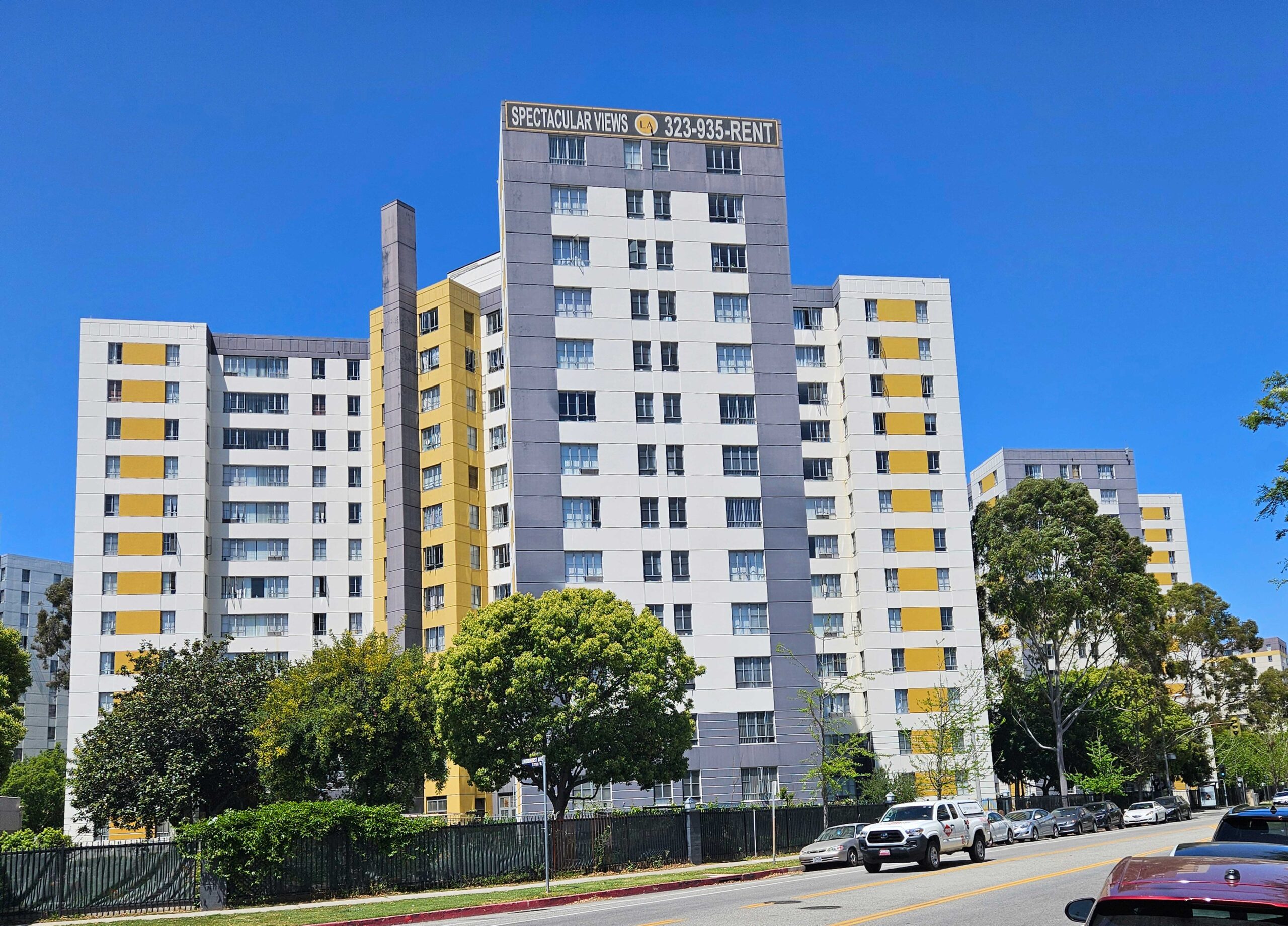
The Los Angeles Rent Stabilization Ordinance covers buildings with a certificate of occupancy on or before October 1, 1978, that hold two or more units. Covered units can only see one increase per 12 months: 3% flat from July 1, 2025 through June 30, 2027, after which a new formula, 90% of CPI floored at 1% and capped at 4%, takes over, down from the prior 3%–8% range. Increases under 10% require 30 days’ written notice; anything larger requires 90 days. You can check any address’s status at zimas.lacity.org.
This matters for budgeting because RSO-covered units are underrepresented in marketplace listings, long-term tenants turn them over slowly, and owners have less reason to advertise them widely, so every citywide “average” discussed above is skewed toward newer, non-stabilized stock. A tenant comparing a $2,200 RSO unit to a $2,800 marketplace average is comparing two different markets, not one price to another.
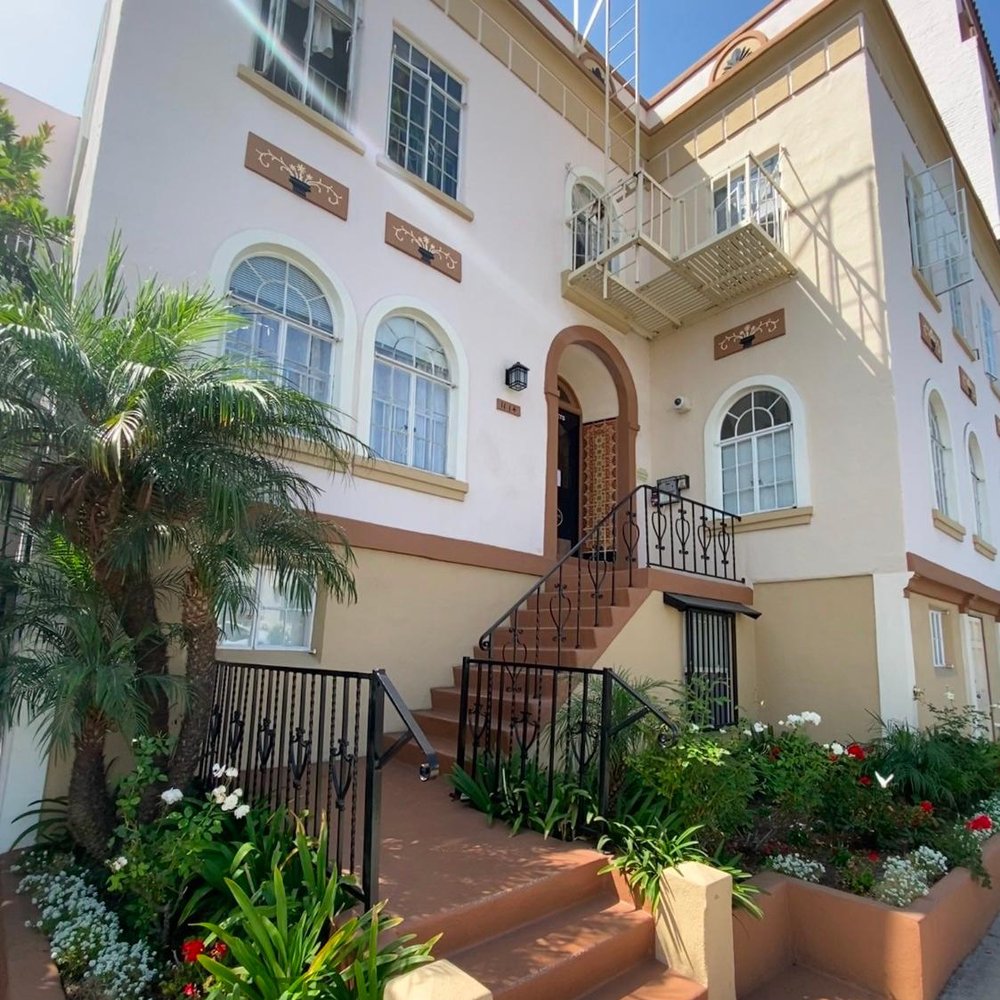
Rent control’s reach is narrower than tenants often assume, and a recent case shows the ordinance can be pared back by courts, not just amended by the council. In April 2026, a California Court of Appeal ruling (Apartment Assn. of L.A. County v. City of L.A., B336071) held that the city can’t tie relocation fees to otherwise-lawful rent increases on units exempt from Costa-Hawkins, mostly post-1995 apartments, single-family homes, and condos. The opinion is unpublished, so it’s persuasive rather than binding, and pre-1978 RSO buildings are unaffected by it.
Is most of the rental housing in Los Angeles covered by rent control?
No. Coverage requires a certificate of occupancy on or before October 1, 1978, in a building with two or more units. Newer apartments, most single-family rentals, and most condos fall outside RSO and follow the wider statewide cap instead, 5% plus inflation, up to 10% a year.
What income and credit qualify you for a lease
Marketplace FAQs commonly answer “what income do I need to live comfortably in LA,” a cost-of-living framing with little bearing on what a leasing office checks. Property managers in the LA market commonly require gross income of 2.5 to 3 times the monthly rent, alongside a minimum credit-score threshold set independently by each building. On a $2,500 unit, that’s roughly $6,250 to $7,500 in gross monthly income before an application clears, a figure no competitor page states. This multiplier comes from a single property-management trade source rather than a citywide survey, so treat it as a common range to confirm with each leasing office, not a fixed rule.
California’s Fair Chance Act bars blanket criminal-history bans and requires individualized review, and state law protects lawful income sources, including housing vouchers, so a leasing office can’t reject a Section-8 applicant purely for using one.
What income do I need to qualify for a lease in Los Angeles?
Most property managers look for gross monthly income at 2.5 to 3 times the rent, separate from any “cost of living comfortably” estimate a marketplace FAQ might quote. Ask the specific multiplier and minimum credit score a building uses before applying, since both vary by owner.
Rent by property type and size: apartments against single-family rentals
Doorstead’s May 2026 data splits the market by size and property type in a way none of the four marketplaces do in their public FAQs.
| Unit type | Median rent | Month over month | Year over year |
|---|---|---|---|
| Citywide, all property types | $2,483 | -1.2% | -1.73% |
| 2-bedroom, all types | $2,482 | – | – |
| Single-family rental, 3-bedroom | $3,365 | – | – |
| Single-family rental, 4-bedroom | $4,214 | – | – |
| Single-family rental, all sizes | $2,967 | – | – |
A 3-bedroom single-family rental runs $883 above the 2-bedroom median, and a fourth bedroom adds another $849. Single-family rentals also lease roughly twice as fast as the citywide average, 62 days against 92, reflecting steadier demand from families rather than a tighter market overall.
Granular neighborhood-by-neighborhood $/sq ft data cross-checked against two independent sources wasn’t available at the time of writing. Treat any single site’s “cheapest neighborhood” ranking with the same skepticism as the citywide averages above, since none of those rankings discloses its sampling method either.
Why LA doesn’t have a reliable public seasonality index
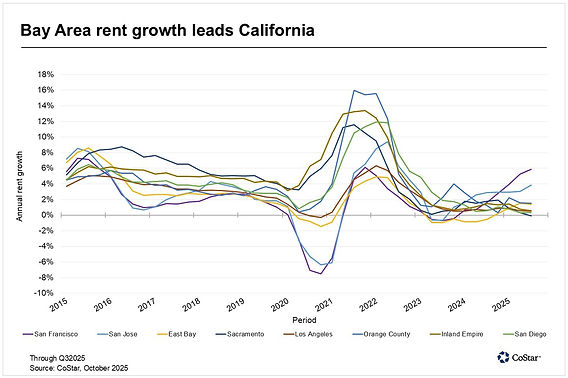
Several marketplaces claim a specific “cheapest month to rent,” but that data isn’t independent of a single platform’s own listings, so it isn’t cited here. What is well documented is the mechanism: leases tied to the academic calendar and to prior-lease anniversaries cluster turnover around summer, the usual explanation for deeper late-spring listings, without a verified LA-specific figure attached to it.
Is the rental market still affected by the 2025 wildfires

The state of emergency triggered California’s price-gouging law, Penal Code §396: existing rentals can’t rise more than 10% above the pre-emergency rate, and units newly listed or relisted since the declaration can’t exceed 160% of HUD’s Fair Market Rent for their zip code. LA County has extended its local version of these protections repeatedly, with recorded extensions through at least January and March 2026, and FEMA separately extended renter housing assistance for eligible survivors through October 9, 2026.

| Bedroom count | HUD Fair Market Rent | 160% price-gouging cap (new/relisted units) |
|---|---|---|
| Efficiency | $2,079 | $3,326 |
| 1-bedroom | $2,328 | $3,725 |
| 2-bedroom | $2,903 | $4,645 |
| 3-bedroom | $3,681 | $5,890 |
| 4-bedroom | $4,098 | $6,557 |
Is the rental market still tight because of the 2025 wildfires?
Yes, as of the most recent county data: displaced households are still competing for scarce units, occupancy in strong neighborhoods sits near 95%, and federal rental assistance for survivors remains active through October 2026. Confirm current numbers before treating this as settled, since the situation is still evolving.
Rental scam patterns tied to the fires
A tenant-organizer group’s data-scraping analysis found 1,343 distinct rent-gouging violations in the first 11 days after the January 2025 emergency declaration alone, an average of 120 new violations a day. Newly listed or relisted units in that sample averaged 315% of Fair Market Rent, nearly double the legal 160% cap, and pre-existing listings that raised rent averaged 29% increases against a 10% legal ceiling.
- A listing priced far above its neighborhood’s other units, with vague or copied photos: often a scraped listing reposted at an inflated price rather than a real vacancy.
- A request to wire a deposit before any in-person or live video tour: a standard advance-fee pattern that predates the fires but has intensified alongside displacement-driven demand.
- A “landlord” citing insurance-company willingness to pay as justification for a price above the posted cap: explicitly disallowed under the price-gouging rules regardless of who’s paying.
Violations carry fines up to $10,000 and a year in jail under state law. LA County separately raised its own maximum penalty to $50,000 per violation.
Comments