
Types of apartment complexes in Richmond
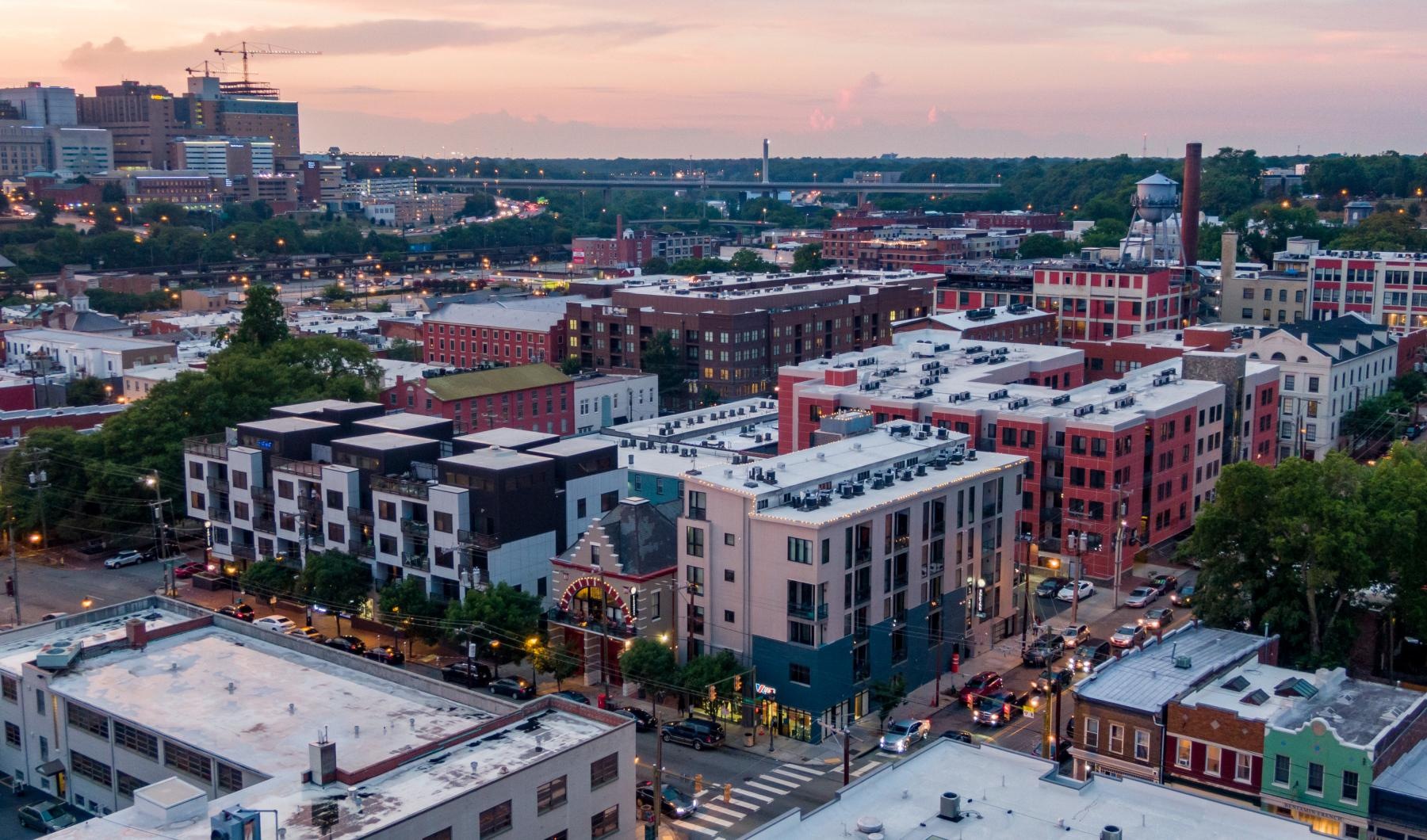
The building type matters as much as the neighborhood for what a lease actually costs and feels like.
Garden-style complexes. Two- to three-story buildings with surface parking, common in the West End and outer Fan-adjacent submarkets. Parking is usually included in the base rent, and unit sizes tend to run larger per dollar than newer construction.
Mid-rise elevator buildings. Four to six stories, found through the Museum District, Near West, and Randolph. Structured or surface parking is sometimes billed as a separate line item rather than folded into rent.
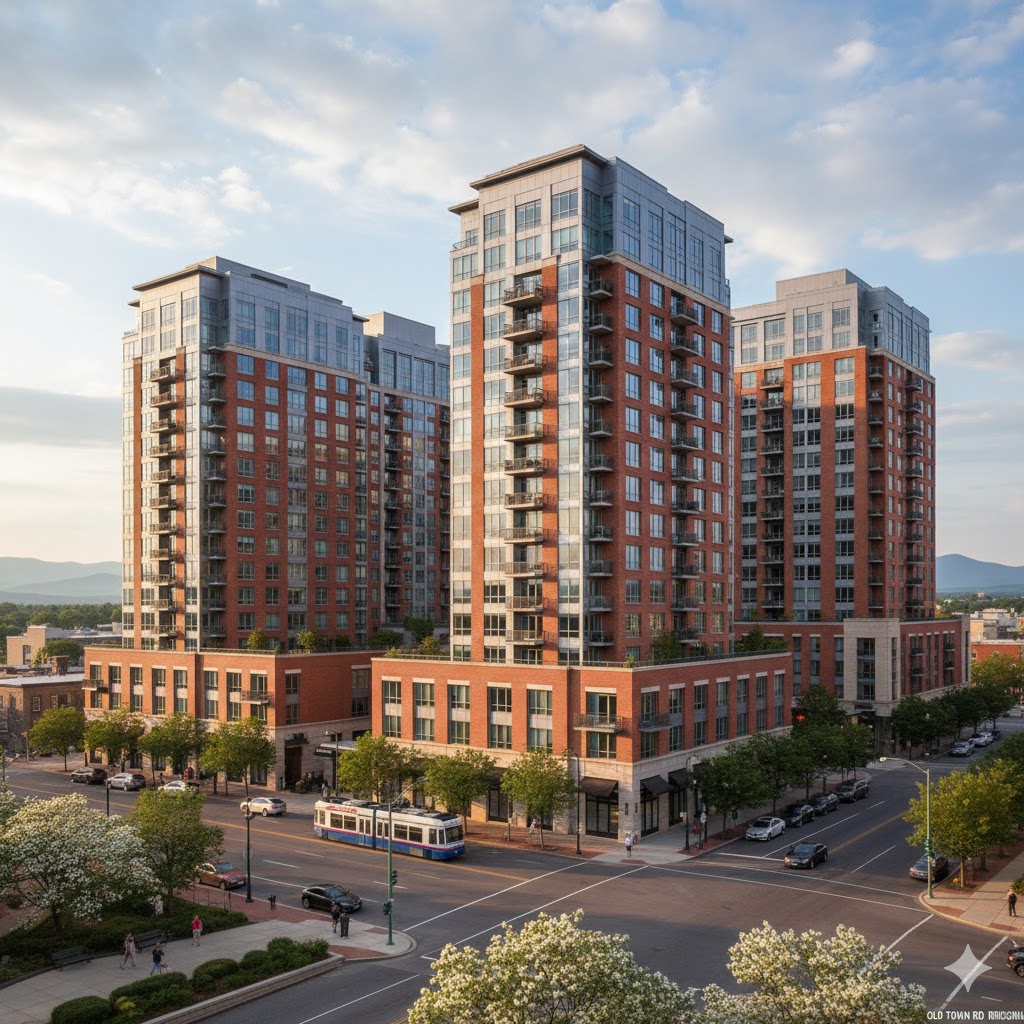
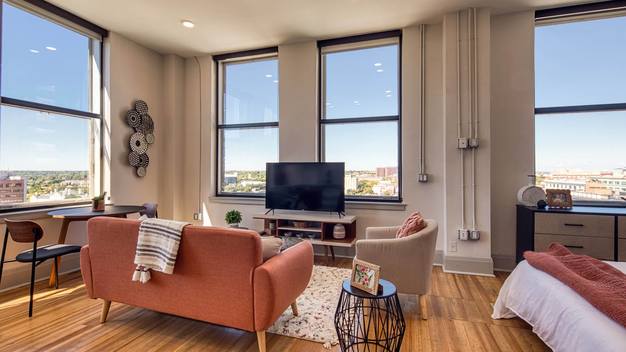
New-build, industrial-aesthetic Class A. Concentrated in Scott’s Addition. Otis, a 350-unit, six-story development that opened there in 2023, illustrates the type: floor-to-ceiling windows, a resort-style pool, and a structured garage, the kind of amenity package standard among the roughly 1,800 units built in the neighborhood since 2018, about one-third of all new apartments added in downtown Richmond since the Great Recession, according to CoStar.
Rowhouse and townhome-style complexes. Concentrated in Church Hill and Manchester. Multi-level layouts, on-street or small-lot parking, and pet policies that vary unit to unit since many of these properties are converted rowhouses under single management rather than purpose-built complexes.
| Type | Where to find it | Typical 1BR price band | Parking / pet norms | Best for |
|---|---|---|---|---|
| Garden-style | West End, outer Fan | $1,250 to $1,500 | Surface lot usually included; moderate pet fees | More space per dollar, no need for car-free access |
| Mid-rise elevator | Museum District, Near West, Randolph | $1,400 to $1,750 | Garage parking often extra | Security and elevator access without full-scale high-rise |
| New-build Class A | Scott’s Addition | $1,650 to $1,950+ | Structured garage extra, $50 to $150/mo; heavy pet amenities | Amenity package and nightlife over price |
| Rowhouse/townhome | Church Hill, Manchester | $1,400+, wide range | On-street or small lot; pet policy varies by unit | Private multi-level entry over building-wide amenities |
Scott’s Addition’s density of new Class A stock is the kind of building-era differentiator most Richmond apartment pages skip in favor of amenity-tag lists.
Does it matter if a complex markets itself to VCU students? It affects turnover and noise more than price. The Fan and Monroe Park-adjacent buildings see August-to-May leasing cycles built around the academic calendar, more turnover but also more short-term sublets if you need flexibility mid-lease.
Richmond submarkets compared by price and commute
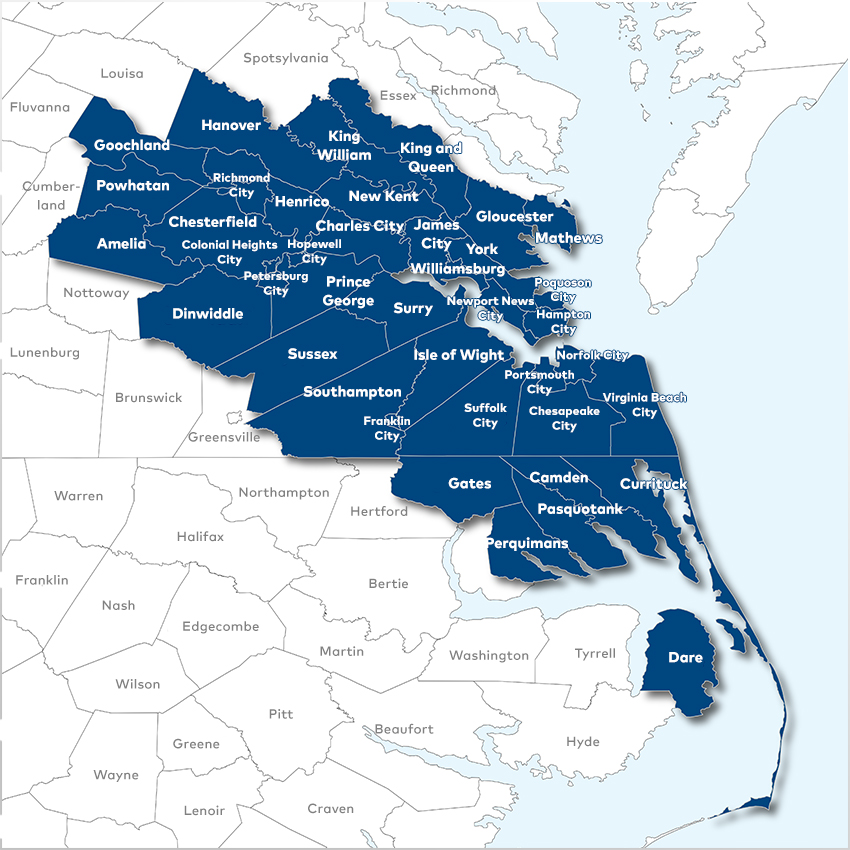
One-bedroom rent right now spans about $925 in Ginter Park to about $1,947 in Scott’s Addition, a gap driven mainly by proximity to the GRTC Pulse bus rapid transit line and by how recently the building was constructed.
| Submarket | Avg 1BR rent (2026) | Transit / highway access | Character in brief |
|---|---|---|---|
| Scott’s Addition | $1,947 | Pulse (Scott’s Addition station, Routes 20/50) | New-build density, breweries, no direct interstate access |
| Jackson Ward | $1,912 | Pulse (Convention Center, Government Center stations) | Historic rowhouses, downtown-adjacent |
| Museum District / Carytown | $1,758 | Pulse (Science Museum station) | Walkable retail corridor |
| Far West End | $1,784 | No Pulse; I-64 access | Suburban-style, car-dependent |
| The Fan | $1,619 | Pulse (Allison St, Science Museum stations) | Tree-lined, VCU-adjacent, student turnover |
| Monument Avenue | $1,115 | Pulse-adjacent (Arts District, VCU/VUU stations) | Historic avenue, wide price variance by block |
| Ginter Park | $925 | No Pulse; north of downtown | Most affordable, longest downtown commute |
The type table above shows what a building style typically costs; this table shows what a location typically costs. Scott’s Addition sits at the top of both because its new Class A stock and its submarket premium overlap in the same few blocks. The Pulse only serves the Broad Street/Main Street corridor between Willow Lawn and Rocketts Landing, so submarkets off that line trade lower rent for a car-dependent commute, the real tradeoff behind the Ginter Park and Far West End numbers above.
Do I need a car in most Richmond apartment complexes? Only if you’re outside the Pulse corridor. Scott’s Addition, Jackson Ward, the Fan, and the Museum District all sit on or near a Pulse station; Far West End and Ginter Park don’t, and both show meaningfully lower rent partly as a result.
What separates a well-run complex from a problem one before you sign
| What you notice on a tour | What it might indicate | What to ask |
|---|---|---|
| Posted maintenance requests show multi-week backlogs | Short-staffed or high-turnover operations | Ask for the average work-order completion time, in writing |
| A mandatory “amenity” or “trash valet” fee isn’t in the listed price | The advertised rent understates the real monthly cost | Ask for the full effective monthly cost including every mandatory fee |
| Leasing staff won’t specify a renewal increase cap | Year-two rent could jump well past the move-in rate | Ask for the typical renewal increase percentage over the last two years |
| Water/sewer billed through a RUBS allocation with no submeter | Your bill is based on a formula, not your actual usage | Ask to see a sample RUBS bill before signing |
| A move-in special is baked into a higher advertised rate | The headline price isn’t what you’ll pay once the free months end | Ask for the rent that resumes once the concession expires |
Any one of these on its own is common and not disqualifying. Two or more on the same tour is the signal worth taking seriously.
How reliable are the average-rent numbers on listing sites? Treat them as directional, not exact. Three trackers disagree by roughly $250 a month for the same city in the same year, because each pulls from a different slice of listed or surveyed inventory.
What the renter-occupancy numbers don’t cover
Richmond is 56% renter-occupied citywide, 58,914 of roughly 104,300 households, per Census Bureau tenure data compiled by RentCafe. That figure doesn’t break down by neighborhood in any public source found for this page. Treat a specific submarket’s “percent renters” claim on a property-marketing page as unverified until it names a citable source.
When to look: Richmond’s leasing calendar and the VCU effect
Demand for Richmond apartments is lowest in December and January and highest in July, according to Apartment List’s twelve-month demand index. That peak lines up with VCU’s return: fall 2025 enrollment was projected above 29,000, and the university’s Class of 2029, over 4,500 freshmen, moved into residence halls the weekend before classes started. VCU’s academic calendar sets Fall 2026 classes beginning Tuesday, August 18.
Move-in specials tend to concentrate in the slower months, December through February and again in late fall, when landlords compete harder for tenants. A unit signed in July competes against the entire VCU-adjacent renter pool at once; the same unit signed in January often comes with a concession the July version didn’t.
Why do some Richmond listings show “months free” and others don’t? It usually tracks the seasonal demand curve above: concessions cluster in the low-demand months and thin out heading into the July peak, when landlords have less reason to discount.
Is a new Scott’s Addition building worth paying more than an older Fan-area building? Depends on what you value. Scott’s Addition adds a dedicated parking cost on top of higher base rent, often $50 to $150 a month for a structured spot; older Fan-area buildings more often fold parking into the base rent, which narrows the real monthly gap between the two submarkets.
Otis alone accounts for 350 of the roughly 1,800 units Scott’s Addition has added since 2018, and that pace of new Class A construction is the single clearest reason its rents sit well above the citywide average in both trackers cited above.
Comments