
How a rental house differs from a rental apartment
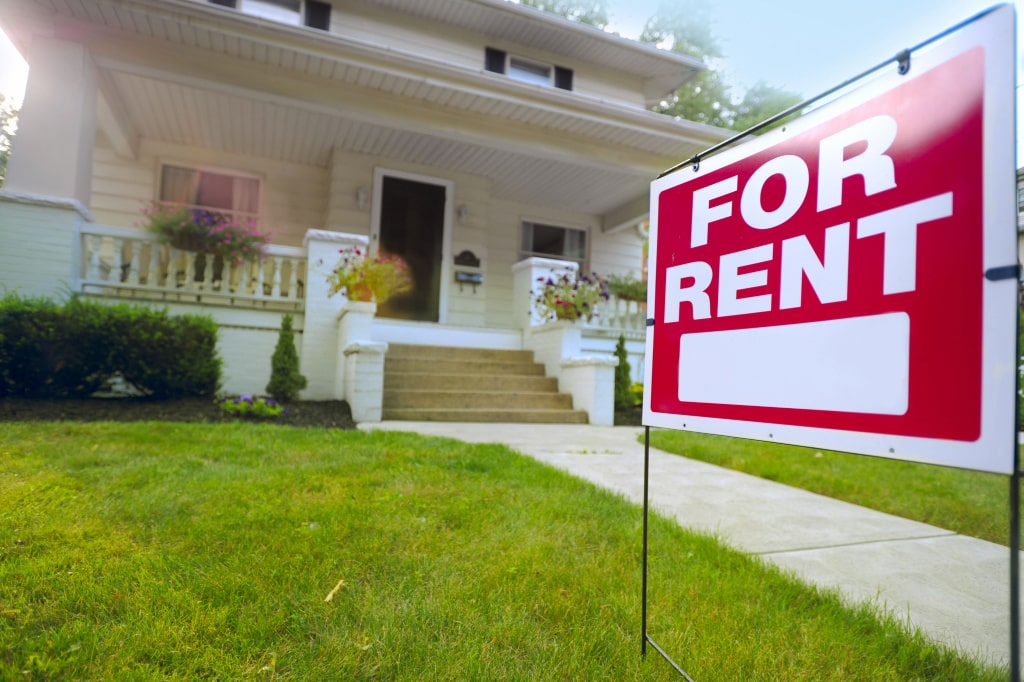
Renting a detached house shifts several costs and duties onto the tenant that an apartment lease usually keeps with the property manager. Nationally, single-family rents now run about 20% above multifamily rents, the widest gap Zillow has recorded since it began tracking the two categories in 2015. Multifamily rents have grown 28% since 2020; single-family rents have grown 45% over the same stretch, per Zillow data reported by CBS News.
| Factor | Typical for a rental house | Typical for an apartment |
|---|---|---|
| Lawn care / pest control | Tenant’s responsibility unless the lease states otherwise | Included in most managed communities |
| On-site maintenance | Individual landlord schedules repairs, no on-site staff | Maintenance staff on the property |
| Shared amenities | None to offset price | Pool, gym, or clubhouse often included |
| Minimum lease term | 12 months is the norm for individual landlords | Shorter or more flexible terms more common |
| Rent growth, 2020 to 2026 | Up 45% nationally | Up 28% nationally |
The trade favors a house when a yard, more square footage, or fewer shared walls outweigh maintenance duties and a longer lease commitment. It favors an apartment when on-site upkeep and lease flexibility matter more than space.
What a Houston house rental actually costs beyond the rent number
Texas sets no statutory cap on security deposits: landlords can charge any amount, though the practical market range is one to two months’ rent. That is the official-minimum-versus-practice gap for this topic. No legal ceiling exists, but market norms keep most deposits in that one-to-two-month band regardless, per Texas Law Help.
| Cost item | Typical range or rule | What it covers | How it’s set |
|---|---|---|---|
| Security deposit | 1 to 2 months’ rent, no state cap | Damage beyond normal wear, unpaid rent, unpaid utility balances | Landlord sets the amount; Tex. Prop. Code §92.102 defines it |
| Deposit return deadline | 30 days after move-out | Refund plus itemized deductions | Tex. Prop. Code §92.103 |
| Bad-faith withholding penalty | $100 plus 3x the amount wrongfully withheld, plus attorney fees | Tenant remedy for a missed deadline or itemization | Tex. Prop. Code §92.109 |
| Pet deposit | $200 to $500, in addition to the security deposit | Pet-related damage | Allowed separately under Texas law; amount set by landlord |
Utilities on a house are more often the tenant’s responsibility from day one.
Is a security deposit for a house always one month’s rent? No. Texas sets no legal maximum, and a higher-risk applicant, a pet, or a higher-end house can push the deposit above the common one-to-two-month range.
Screening: what individual landlords in Houston typically require
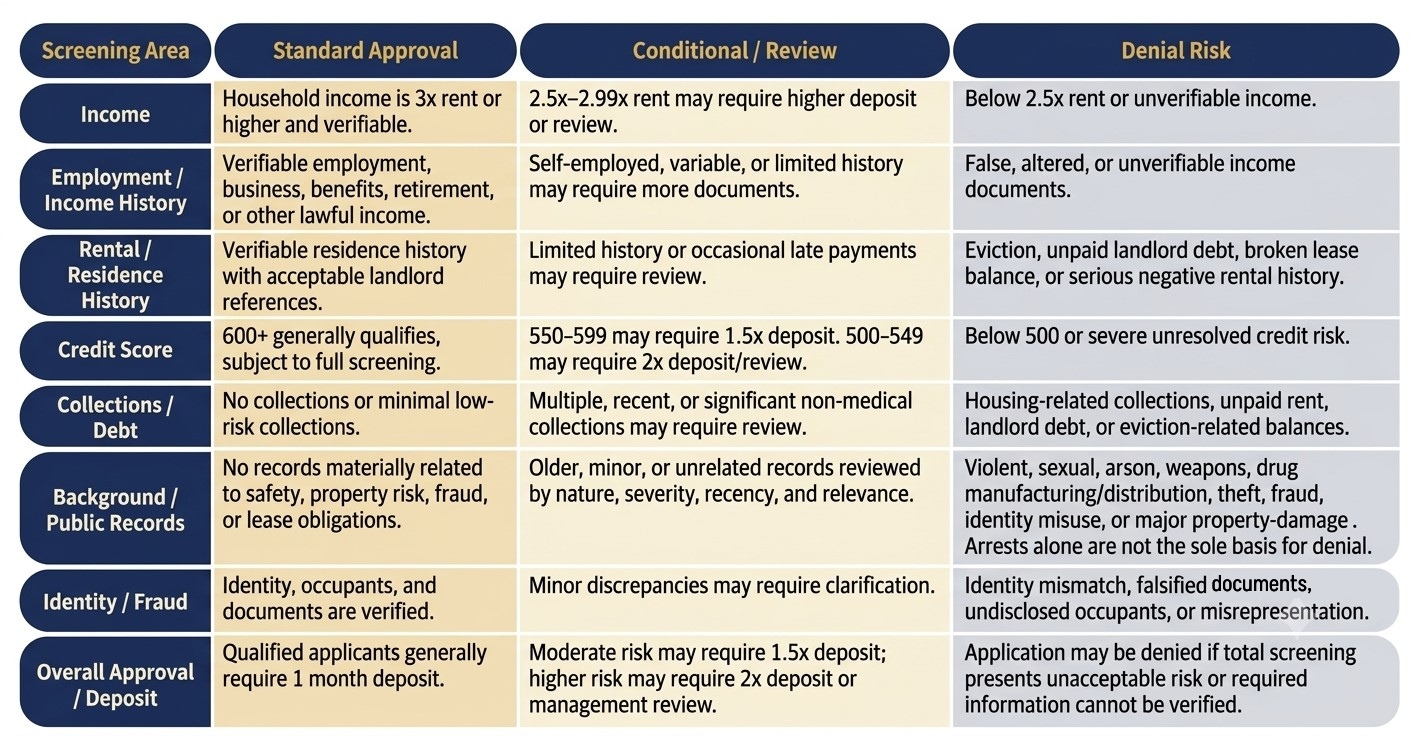
A single-owner house rental is often screened differently than a unit inside a large managed community, where criteria are usually fixed by corporate policy. Individual landlords more often decide case by case on credit, income documentation, and prior rental history.
Do landlords require a higher income for a house than an apartment? Not codified into law either way. Large managed communities tend to apply one fixed income multiple to every applicant; individual house landlords more often weigh income alongside rental history and references case by case.
Avoiding scams on for-rent-by-owner house listings
For-rent-by-owner listings are more common for single-family houses than for apartment communities, and that ownership structure is also where rental fraud concentrates. The FTC’s Consumer Sentinel data puts the median reported rental-scam loss at $1,000, with $65 million in total reported losses. In the twelve months ending June 2025, about half of reported rental scams started with a fake ad on Facebook and 16% started on Craigslist; renters aged 18 to 29 were three times more likely than other adults to report losing money.
| Warning sign | Why it matters | What to do instead |
|---|---|---|
| Payment requested by wire transfer, gift card, or cryptocurrency | These payment methods are functionally irreversible once sent | Pay by credit card, or in person after signing a lease |
| Landlord won’t show the property in person or by live video | Scammers frequently claim to be out of the country | Ask a trusted friend to view it if you can’t go yourself |
| Same address listed at a different price or under a different name | A sign the ad was copied with the contact info swapped | Search the address plus the owner or company name before applying |
| Rent well below comparable houses nearby | Below-market pricing is used to generate urgency | Compare against several similar listings before reacting |
| Request for your Social Security number or credit score before you’ve agreed to rent | Legitimate landlords pull credit themselves | Wait until you’ve toured the property and are ready to apply |
The listing’s price alone can’t tell you whether it’s legitimate. The request pattern, payment method, urgency, willingness to meet, is the more reliable signal, per the FTC’s own guidance.
How do I verify a for-rent-by-owner listing isn’t a scam? Search the property address together with the listed owner or company name online. If the same address turns up under a different name or price, or the “owner” can’t confirm the ad appears on their own site, stop responding.
Pet policy and deposits for house rentals
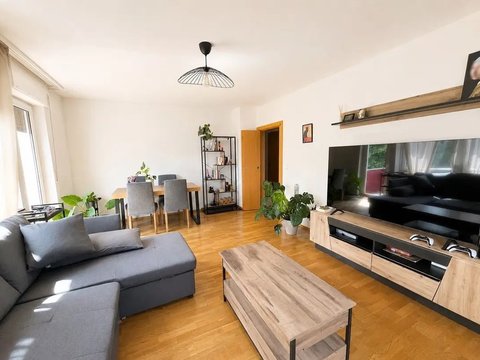
Houses more often allow pets than apartment communities, largely because a yard removes the shared-hallway and shared-elevator objections that drive many no-pets apartment policies. Texas law lets landlords charge a pet deposit in addition to the standard security deposit, and market pet deposits commonly fall between $200 and $500, per Texas landlord-tenant guidance. That deposit doesn’t have to be labeled non-refundable to still function as one in practice. Ask directly whether it’s returned at move-out minus damage, or collected as a flat non-refundable pet fee.
When to search: seasonality and negotiation in Houston
Nationwide, rents in the November-to-December window run about 1.6% ($50 to $100 a month) below the summer peak, and renters face 20% to 30% more competition during summer months, according to Apartment List’s seasonal rent research. Houston runs the opposite way on volume: summer is the metro’s peak leasing window, and the Houston Association of Realtors recorded 4,718 rental homes leased in March 2026, a record for a single month, as supply tightened heading into the season, per Doorstead’s report. Doorstead’s May 2026 data shows Houston homes averaging 97 days on market, which is the leverage point worth using directly: a listing that has sat unrented for two or three months is a stronger negotiating position than a fresh listing, regardless of season.
Are 2-bedroom houses harder to find than apartments at the same price? Often yes, since single-family rentals didn’t see the same construction surge as multifamily buildings over the past several years, keeping available house inventory tighter relative to demand.
Comments