
Cost of Living, Reconciled
Wasilla’s median household income was $67,234 in 2024, against a national median of $80,734, per the Census Bureau’s American Community Survey 5-year estimates as compiled by Census Reporter. Per capita income sat at $39,552, about 88 percent of the $44,673 national figure. Two things most national cost-of-living tools skip close part of that gap: the dividend every eligible resident collects each fall, and the absence of a state paycheck tax.
The Permanent Fund Dividend
Alaska pays residents an annual dividend from its Permanent Fund, a state investment account built from oil revenue. The 2025 dividend, distributed starting October 2, 2025, was $1,000 per eligible person: the smallest payout in five years, and adjusted for inflation, the smallest in the program’s history, per the Alaska Department of Revenue. The 2024 dividend had been $1,702, so a household that qualified in both years saw its combined payment drop 41 percent year over year. The amount is set annually by the legislature through the state budget process; the original 1982 statutory formula still exists in state law but has not bound recent appropriations. A household of four, all qualifying, received $4,000 in October 2025; the same household received $6,808 the year before.
How much is the Permanent Fund Dividend worth to a new resident?Nothing in the first year. Eligibility requires a full prior calendar year of Alaska residency, so someone who moves to Wasilla in 2026 can apply for the dividend paid in 2027 at the earliest, and the amount stays unknown until the legislature sets it the following fall.
Property Tax and the Mill Rate
The Matanuska-Susitna Borough Assembly adopted an areawide property tax mill rate of 8.485 for fiscal year 2026, down from 8.748 the year before, applied against an average assessed single-family value of $388,087; the average resulting bill across the borough is $3,437, according to the Matanuska-Susitna Borough. Parcels outside Wasilla, Palmer, and Houston also pay a non-areawide mill of 0.371 for fire and road services. Parcels inside Wasilla don’t carry that add-on, and unlike Palmer and Houston, Wasilla has not layered its own city property tax on top of the borough rate. Alaska has no state individual income tax, a status the Alaska Department of Revenue confirms applies statewide.
Is Wasilla cheaper to live in than the national average?On income alone, no: Wasilla’s median household earns 17 percent less than the U.S. median. Add the dividend and the absent state income tax and the picture tightens, but the 2025 dividend was the smallest in years, so this isn’t a fixed advantage to count on every year.
| Category | Wasilla figure | National comparator | Source |
|---|---|---|---|
| Median household income | $67,234 (2024) | $80,734 | Census ACS 5-yr, via Census Reporter |
| Per capita income | $39,552 (2024) | $44,673 | Census ACS 5-yr, via Census Reporter |
| 2025 Permanent Fund Dividend | $1,000 per eligible resident | n/a – unique to Alaska | Alaska Dept. of Revenue |
| Avg. Mat-Su Borough property tax bill, FY2026 | $3,437 on $388,087 avg. assessed value (≈0.89%) | Not independently sourced here | Matanuska-Susitna Borough |
| State individual income tax | None | n/a – unique to Alaska | Alaska Dept. of Revenue |
Housing Market Right Now
Five sources publish a median Wasilla home value from the past twelve months, and no two agree. Some measure closed sales. Others measure the current mix of active listings. The Census-based figures reflect what owners report their homes are worth in a survey, a different measurement than a recorded transaction.
| Source | What it measures | Figure | As of |
|---|---|---|---|
| Redfin | Median closed sale price (MLS) | $533,000 | August 2025 |
| Movoto | Median closed sale price (MLS) | $483,500 | May 2026 |
| Alaska MLS, via Alaska Valley | Active-listing range and rough median | $275,000 to $750,000+, ≈$435,000 | Current, 2026 |
| Census ACS 5-yr estimate | Owner-reported home value | $358,400 | 2024 |
| U.S. News (Census-derived) | Median home value | $346,919 | Most recent release |
The two closed-sale figures matter most for a live negotiation: Redfin’s $533,000 and Movoto’s $483,500 both come from actual recorded transactions, and the $50,000 gap between them reflects nine months of a market selling roughly 300 to 400 homes a month, not a data error. The three Census- and estimate-based figures trail both by $75,000 to $187,000 because they carry forward owner-reported and modeled values instead of a specific recent closing.
Is Wasilla a buyer’s or seller’s market right now?Seller’s, for now. The local Alaska MLS-based estimate puts inventory at roughly three months of supply, and Movoto’s May 2026 data show homes selling in a median of 39 days, both signs of a market where well-priced listings move before a buyer has much room to negotiate.
Safety, Reconciled

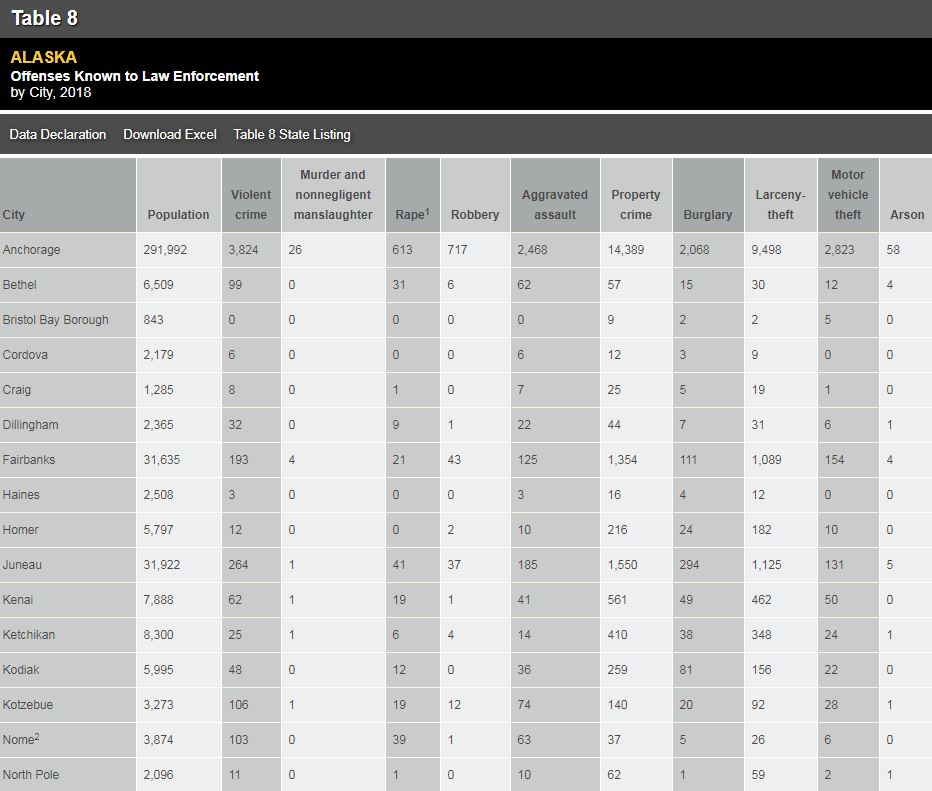
Wasilla’s violent crime rate was 4.49 per 1,000 residents in the FBI’s most recent Uniform Crime Report year, moderately above the national rate of 3.59 per 1,000, per figures compiled by HomeSnacks from the FBI’s October 2025 release. Property crime is the bigger gap: 24.2 per 1,000 in Wasilla against 17.6 per 1,000 nationally, driven mostly by theft and burglary rather than violent offenses. NeighborhoodScout, using the same FBI release, ranks Wasilla safer than only about 6 percent of Alaska communities and estimates a 1-in-35 chance of being a victim of any crime in a given year.
| Metric | FBI-based (NeighborhoodScout/HomeSnacks) | AreaVibes-derived (via eufy.com) | National (FBI-based) |
|---|---|---|---|
| Violent crime | 4.49 | 5.63 | 3.59 |
| Property crime | 24.2 | 38.11 | 17.6 |
| Overall crime | 28.7 | not published | 21.2 |
Rates per 1,000 residents.
The two sets of Wasilla numbers disagree by 25 to 57 percent depending on the category, and the FBI-sourced row deserves more weight: it traces to a named, dated federal release, while the AreaVibes-derived row carries no visible methodology note on the page that republishes it.
Getting Around
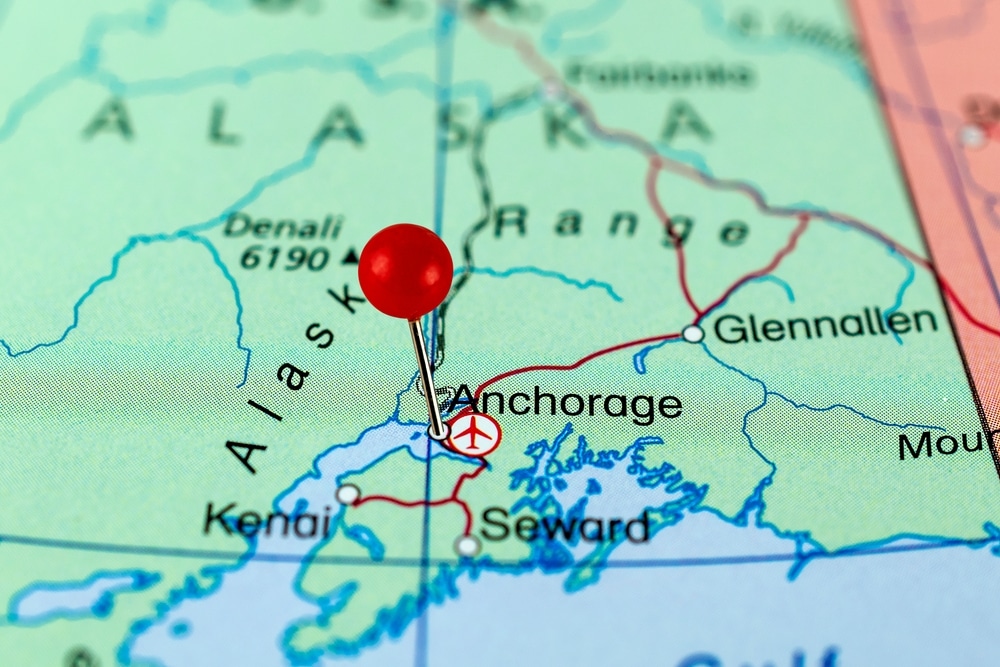
The average commute to work from Wasilla is 29.8 minutes, per Census Bureau American Community Survey data compiled by Data USA, longer than the 26.4-minute national average. Just under 73 percent of workers drive alone, 8.28 percent work from home, and 5.81 percent report a super-commute of 90 minutes or more, typically Anchorage-bound traffic on the Parks or Glenn Highway during peak hours. A competing figure of 21.84 minutes appears on U.S. News’s Wasilla page; that number is lower than every other commute estimate found for the city and its source page doesn’t specify whether it reflects Wasilla proper or a wider area, so the Census-sourced 29.8-minute figure is the one used here.
Individual Wasilla addresses sampled on Walk Score run from 6 to 40 out of 100; a listing on East Cottle Loop Road, for instance, scores 21 and carries the tool’s “Car-Dependent” label, meaning almost every errand requires a vehicle. That single fact changes a household budget more than most relocation guides acknowledge: a second working adult without a second vehicle, or a retiree who no longer drives, is planning around a genuine constraint here, not a minor inconvenience.
Do I need a car to get around Wasilla?Yes. Every sampled address citywide scores under 40 on Walk Score, and public transit options are minimal, so daily errands, work, and appointments all assume a working vehicle per adult who needs independent transportation.
Winter Reality Check

Wasilla averages about 55 inches of snow a year, with the snow season running roughly October through April, per climate-averaging service BestPlaces.net; a precise NOAA 30-year normal specific to the city was not independently verifiable through public channels at the time of writing. Winter driving conditions on the Parks Highway routinely stretch the 29.8-minute average commute well past that figure during storms and after dark, when daylight runs under six hours in December.
Who Wasilla Fits
- Commuting families targeting an Anchorage job: budget for the Census-reported 29.8-minute average commute to run longer in winter, and expect a purchase in the $435,000 to $533,000 range depending on how recent a comparison is used.
- Investors: three months of supply and a 29-to-39-day median time on market both point to a seller-favored window as of mid-2026.
- Retirees and remote workers without a second driver: every sampled Walk Score in the city falls under 40, so plan on a vehicle, and the 2025 Permanent Fund Dividend of $1,000 is not guaranteed to repeat at that level next year.
Comments