
Price by Property Type: What the Blended Range Hides
Several sites advertise a single Throggs Neck price range spanning roughly $350,000 to $1 million or more, with no date or property-type breakdown attached anywhere it appears. That is technically true and practically useless for pricing an offer.
| Property type | Median sale price (Nov.) | YoY change | Note |
|---|---|---|---|
| Single-family house | $732,000 | +19.6% | Largest share of blended volume |
| Condominium | $425,000 | -11.0% | Smaller volume, trending down |
| Co-op | $385,000 | +37.7% | Lowest entry point, largest swing |
| All types blended | $454,000 | -18.2% | Swings with which types sold that month |
The 18% year-over-year drop in the blended row reflects which property types happened to sell that month, not a citywide price collapse. A rolling tracker’s median of $690,000 for September, and a REBNY-sourced 12-month median of $642,000, both weight more heavily toward single-family sales, which is why they sit well above the blended monthly figure. No public dataset currently segments Throggs Neck prices by micro-area: Locust Point, Silver Beach, and the Edgewater Park co-ops all get folded into one neighborhood-wide number. An agent-pulled, block-level comp is the only reliable way to get finer detail.
Why do prices vary so much within Throggs Neck? Property type explains most of the spread: a single-family house sold for roughly double a co-op’s median in the same month. Micro-area effects exist but aren’t published in any dataset fine enough to quote.
Flood Risk and Insurance Reality
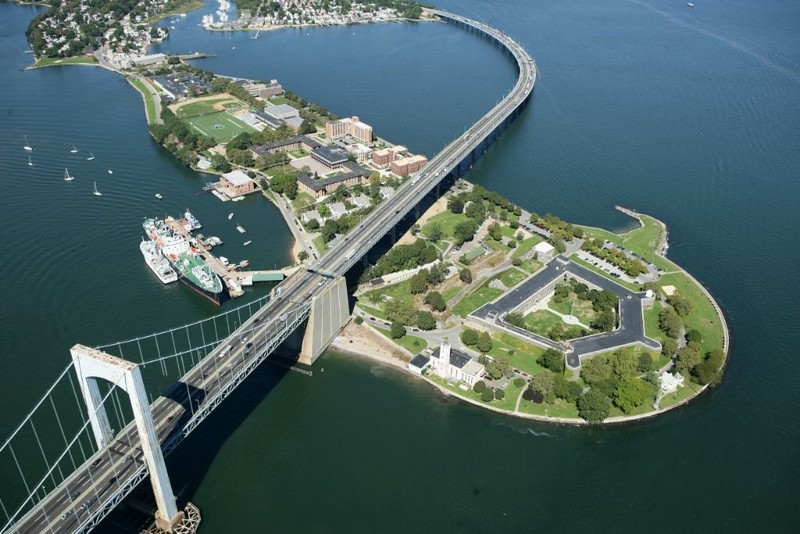
Throggs Neck sits on a peninsula between the East River and Long Island Sound. NYC’s Hazard Mitigation Plan names it, alongside the Rockaway peninsula and Staten Island’s East Shore, as a concentration point for National Flood Insurance Program claims: those named areas together carried 146 severe repetitive loss structures and $32 million in payouts as of April 2023, citywide.
FEMA’s maps split the city into Special Flood Hazard Areas, labeled A, AE, VE and similar, where a federally backed mortgage legally requires flood insurance, and lower-risk B, C, and X zones, where it doesn’t, per NYC Housing Recovery’s flood insurance guidance. Which zone applies to a given block, sometimes a given address, has to be checked individually at FEMA’s Flood Map Service Center; the shoreline and the inland blocks of this peninsula are not automatically in the same zone.
| Property type | NY statewide avg. NFIP premium | Share of NY policies |
|---|---|---|
| Single-family | $1,223/yr | 61% |
| Residential condo | $293/yr | 22% |
| Other residential | $2,746/yr | 2% |
| All NY policies blended | $1,162/yr | – |
These figures, from FEMA-sourced statewide data, are not Throggs Neck-specific: no dataset breaks NFIP premiums out by NYC neighborhood. They do isolate the type-of-structure effect cleanly: a condo owner’s average premium runs about a quarter of a single-family owner’s, largely because a unit owner insures contents and interior finish, not the building envelope.
After Hurricane Sandy, New York City’s Department of City Planning worked through 2017 and 2018 with the Throggs Neck Homeowners Association on the Flood Resilience Zoning Text update, building on the original 2013 Flood Text to make elevation and rebuilding rules for flood-zone homes permanent instead of provisional.
Is Throggs Neck in a flood zone? Parts of it are; coverage depends on the specific block and elevation. A parcel-level lookup at FEMA’s Flood Map Service Center is the only reliable answer for a given address.
Buying a Co-op vs. a Single-Family or Multi-Family Home
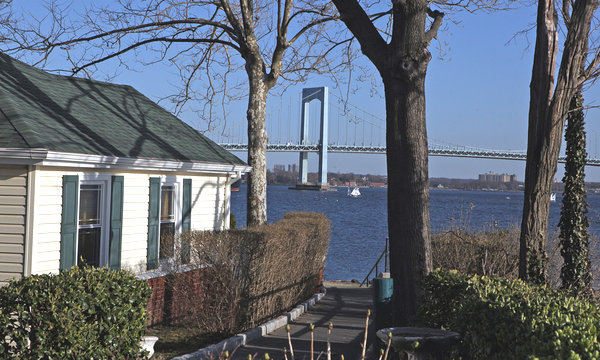
Throggs Neck’s housing stock leans heavily single-family and two-family brick, but a real share of co-op buildings sits within it, and buying into one works differently from buying a house.
| Factor | Co-op | Single-family / multi-family |
|---|---|---|
| Approval | Board interview and approval required | No board approval |
| Typical minimum down payment | 20% cash, often more at stricter buildings | Set by loan program, commonly lower |
| Resale transfer cost | Flip tax, usually 1% to 3% of sale price | Standard NYC/NY transfer taxes only |
| Ownership structure | Shares in a corporation | Direct real property |
Co-op boards commonly target a debt-to-income ratio around 25% to 30% of pre-tax income, per buying-guide data on NYC co-op norms. The flip tax is set in the building’s proprietary lease and can only be changed with a two-thirds shareholder vote, according to Habitat Magazine’s reporting on co-op transfer fees.
Can you get a mortgage on a Throggs Neck co-op easily? It depends on the building’s board rules more than the lender: expect a 20% minimum down payment and a debt-to-income target near 25% to 30%, on top of standard mortgage underwriting.
The Commute: What No Subway Access Costs in Time

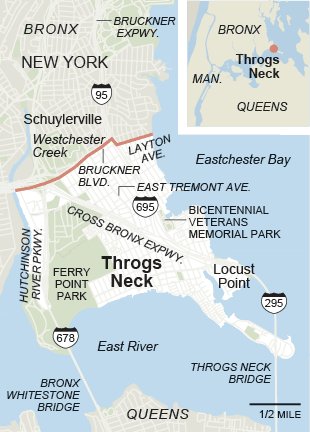
No subway line reaches Throggs Neck. The BxM9 Throgs Neck-Midtown Express, running along Harding Avenue and East Tremont Avenue to the RFK Bridge and Fifth Avenue, is the direct option.
| Departure (Layton Av) | Arrival (Madison Av) | Trip length | Time band |
|---|---|---|---|
| 5:00 AM | 6:00 AM | 60 min | Early morning |
| 6:00 AM | 7:05 AM | 65 min | AM shoulder |
| 7:00 AM | 8:33 AM | 93 min | AM peak |
Figures come from the BxM9’s weekday timetable. A trip before 6 a.m. runs close to an hour; the same route during the 7 a.m. peak takes half again as long. Fare is $7.25 one-way, capped at $67 for unlimited express bus, local bus, and subway rides in a rolling seven-day period. A slower local alternative connects by bus to the 6 train at Westchester Square, described in market-profile data as a two-ticket, roughly hour-long ride.
How do I commute to Manhattan without a car? The BxM9 runs direct to Midtown; expect 60 to 90-plus minutes depending on time of day. A local bus to the 6 train at Westchester Square is the fallback if the express schedule doesn’t line up.
Renovation Room and Lot Constraints
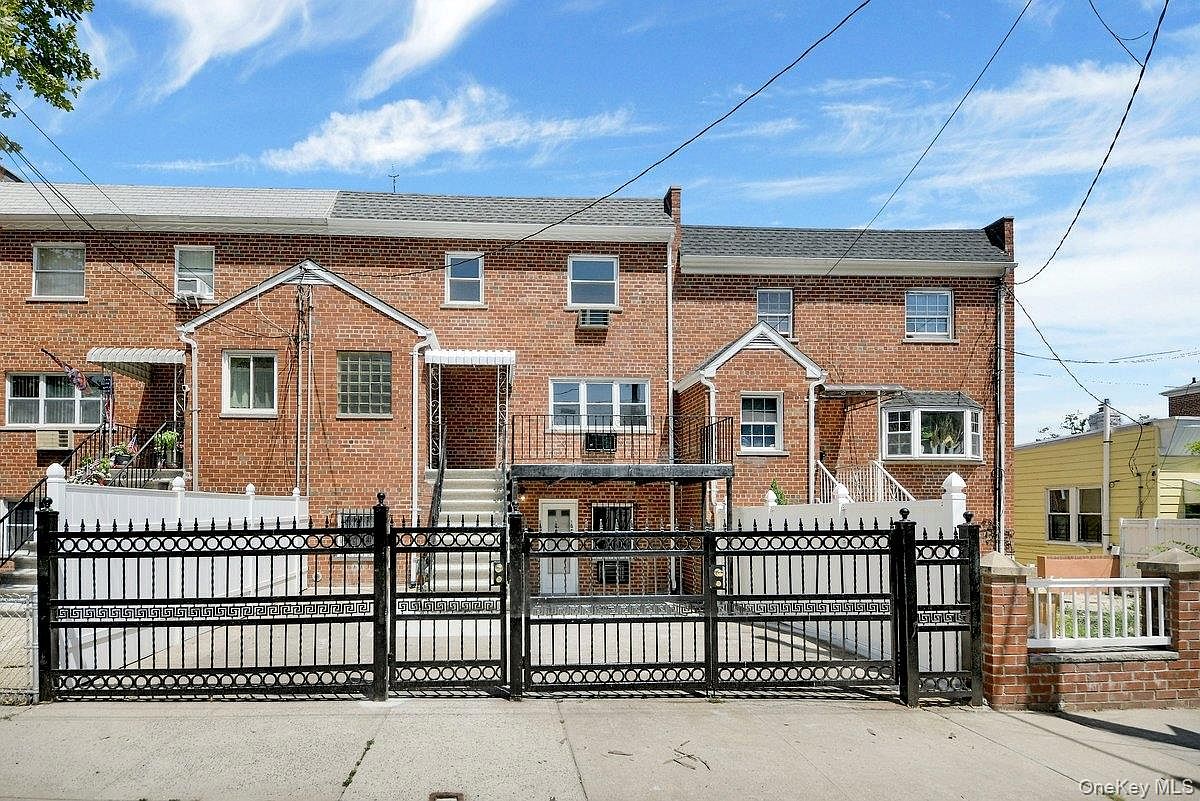
Expansion room changes street by street. Narrower, closely set lots on some of the older blocks push any addition into side-yard setback and floor-area-ratio limits; other blocks, particularly toward Locust Point and Silver Beach, sit on larger detached parcels. No public dataset publishes lot-width norms by block here, so the reliable check before assuming expansion room is a search of the specific tax lot on NYC Planning’s zoning tool, not a neighborhood-wide assumption.
Common Mistakes Buyers and Sellers Make in Throggs Neck
- Offering off the blended median. A buyer who anchors to “$454,000” without checking which property type that figure describes can end up bidding a co-op price against a house, or the reverse, a gap north of $300,000 in either direction.
- Treating the BxM9 schedule as fixed. A commute quoted at “an hour to Midtown” during an off-peak showing can run closer to 90 minutes for a buyer who actually needs to be at a 9 a.m. desk.
- Budgeting flood coverage at the generic low-risk rate. FEMA’s public “under $400” outreach figure describes low-to-moderate-risk zones; a mapped high-risk peninsula address can carry a premium several times that, a number worth pricing before signing a contract, not after closing.
Schools and Safety Snapshot
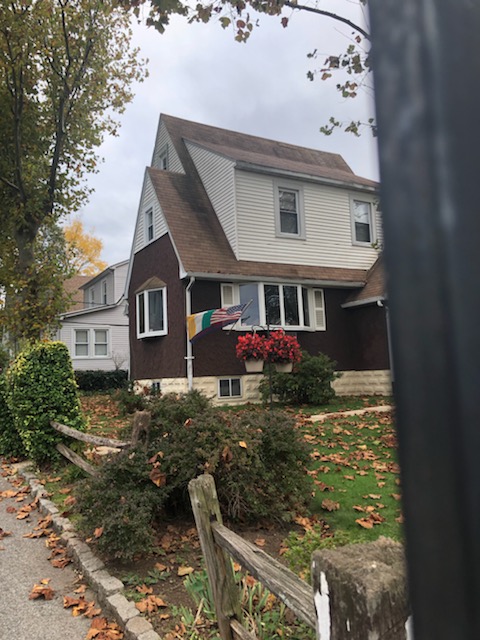
Public elementary options run through P.S. 72 and P.S. 304, feeding Middle School X101 and Herbert H. Lehman High School, with parochial alternatives including Preston High School and St. Frances de Chantal. The 45th Precinct logged about 10.5 calls per 1,000 residents in the most recent tracked year, placing Throggs Neck in the top fifth of city neighborhoods for safety.
Comments