
Where Sunnyside is, and how Sunnyside Gardens differs
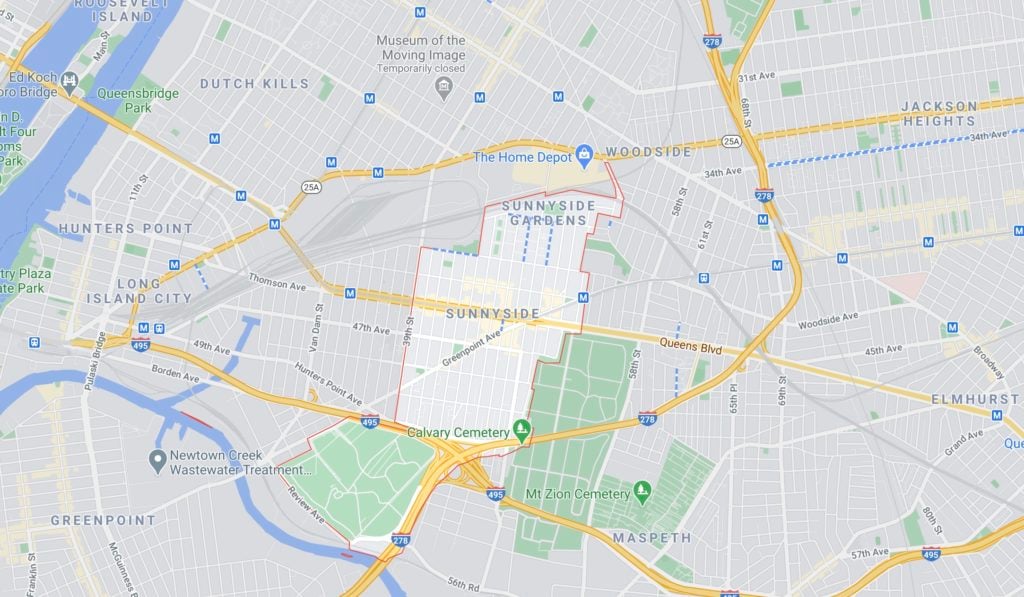
Sunnyside sits in Queens Community District 2, spanning ZIP codes 11101, 11104, and 11377, roughly bounded by Sunnyside Yard and Astoria to the north, Woodside to the east, the Brooklyn-Queens Expressway and Newtown Creek to the south, and Hunters Point and Long Island City to the west.
Within that broader neighborhood sits Sunnyside Gardens: a 77-acre planned community built between 1924 and 1928 by the City Housing Corporation, designed by architects Clarence Stein and Henry Wright on the English garden-city model. It is a specific historic sub-area, not a synonym for the neighborhood as a whole. It was first restricted under a 1974 city zoning designation, listed on the National Register of Historic Places in 1984, and designated a full New York City Historic District by the Landmarks Preservation Commission on June 26, 2007, in a 10-0 vote, meaning exterior changes there now require Landmarks review.
Is Sunnyside Gardens the same neighborhood as Sunnyside?No. Sunnyside Gardens is a roughly 77-acre planned sub-section of the larger neighborhood, distinguished by shared garden courts and its own 2007 Landmarks Preservation Commission historic-district designation. Most of Sunnyside outside those blocks carries no such landmark protections.
Housing stock and ownership types: co-op, condo, and townhouse
Co-op board approval, explained
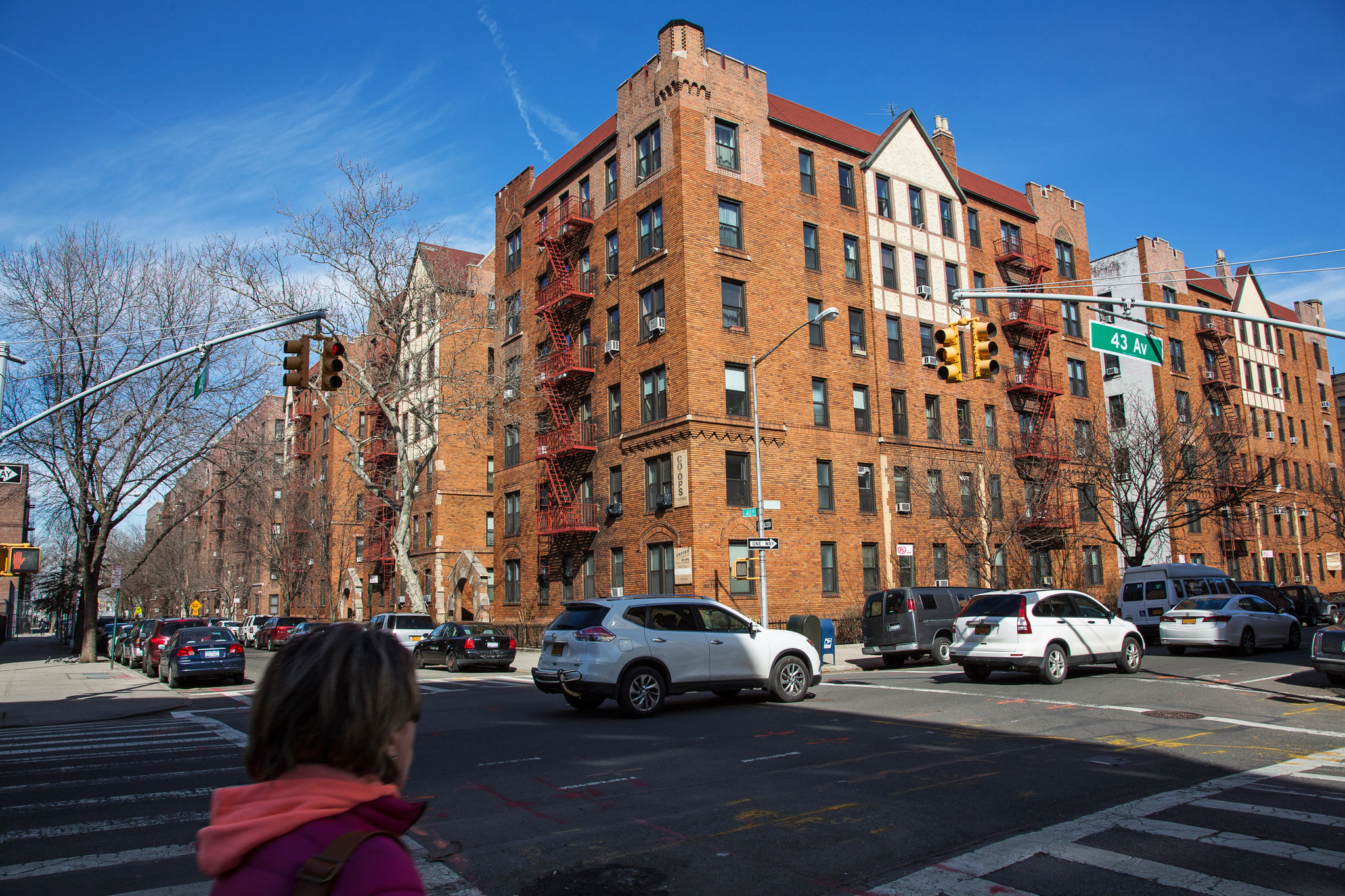
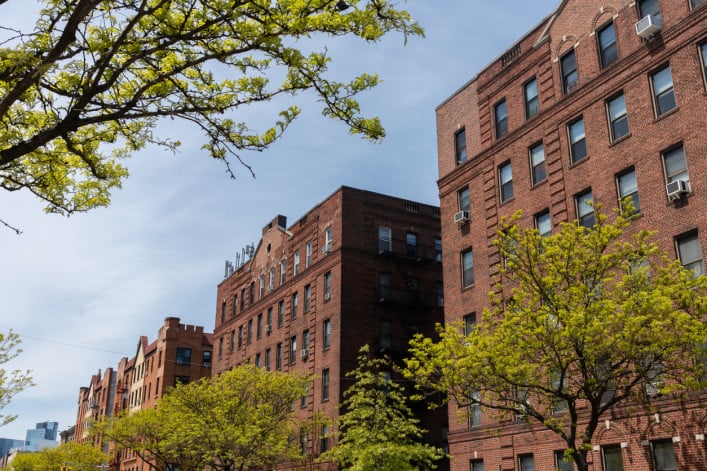
Sunnyside’s stock is dominated by six-story prewar brick apartment buildings, most converted to co-ops decades ago, alongside a smaller and newer set of boutique condo conversions and a stretch of prewar row houses concentrated toward Sunnyside Gardens and the neighborhood’s southern blocks. A co-op purchase here typically means a full board package: tax returns, bank statements, references, and an in-person interview, with the board free to reject an otherwise-qualified buyer without giving a reason. Condos skip that process entirely.
| Ownership type | Median price | Approval process | Typical down payment | Subletting |
|---|---|---|---|---|
| Co-op | $430,000 median sale, +19.8% YoY (PropertyShark, Aug. 2025) | Full board package; board can reject without cause | Often 20-25%, sometimes higher; some boards cap financing | Usually restricted or capped, often 1-2 years within a 5-year period |
| Condo | $420,000 median asking, 24 active listings (Redfin, March 2026) | None; building retains right of first refusal, rarely exercised | Conventional mortgage minimums apply | Generally unrestricted |
| Townhouse / 1-3 family | $880,000 median sale (PropertyShark, Aug. 2025) | None (private sale) | Conventional mortgage; NYC Class 1 tax treatment | No restriction |
For a board-averse buyer, the roughly $10,000 gap between the reported condo and co-op medians is often smaller than the value of skipping board review entirely: condos close faster and carry no risk of a rejected application after months under contract.
Do I need board approval to buy a co-op in Sunnyside?Yes, in nearly every building. Expect a full financial and reference package plus an interview, and understand that the board’s decision does not have to come with a reason.
Current pricing by unit type
| Metric | Figure | Source | As of |
|---|---|---|---|
| Co-op median sale price | $430,000, +19.8% YoY | PropertyShark | August 2025 |
| Townhouse/1-3 family median sale price | $880,000 | PropertyShark | August 2025 |
| Condo median asking price | $420,000, 24 active listings | Redfin | March 2026 |
| Median days on market | Roughly 91 days vs. 58 national | Homes.com neighborhood guide | Undated on source page |
At roughly 91 days on market against a 58-day national average, sellers are working with more negotiating slack than the headline pricing suggests: buyers can reasonably ask for closing-cost credits on listings that have sat two months or longer.
Property taxes and carrying costs
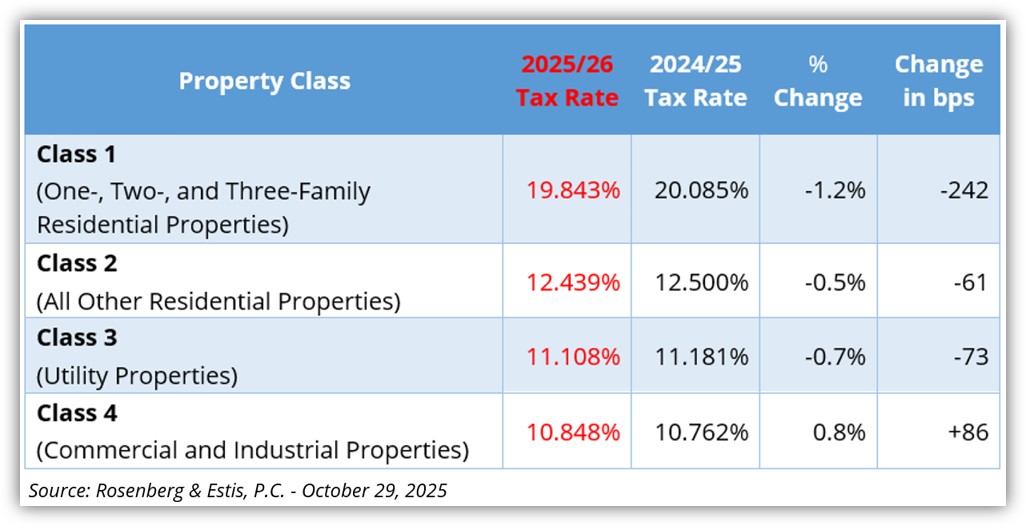
New York City sorts Sunnyside’s housing stock into two tax classes with very different mechanics. Townhouses and 1-to-3-family homes are Class 1, assessed at 6% of market value. Co-ops, condos, and buildings with four or more units are Class 2, assessed at 45% of market value, and, unlike Class 1, valued using an income approach rather than sale comparisons: the NYC Department of Finance’s Class 2 property tax guide treats the building as if it produced rental income even when it’s fully owner-occupied. Owner-occupants in Class 2 buildings can typically apply for a co-op/condo abatement of roughly 17.5% to 28.1% of assessed value, per Department of Finance abatement guidance, which meaningfully narrows the gap in practice.
Transportation: realistic commute times
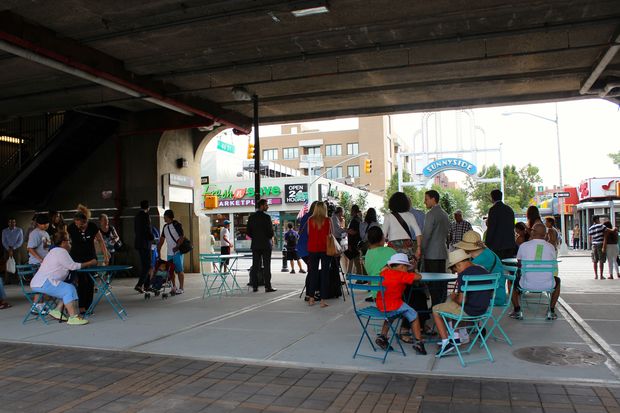
Three 7 train stations serve central Sunnyside: 33rd Street-Rawson Street, 40th Street-Lowery Street, and 46th Street-Bliss Street, with 52nd Street sitting at the Woodside border. The figure most often repeated for this neighborhood is a 15-minute ride to Manhattan.
What’s the actual commute time to Midtown Manhattan?On the 7 train from Sunnyside’s stations, expect roughly 15 to 25 minutes to Midtown depending on station, time of day, and express or local service.
Schools
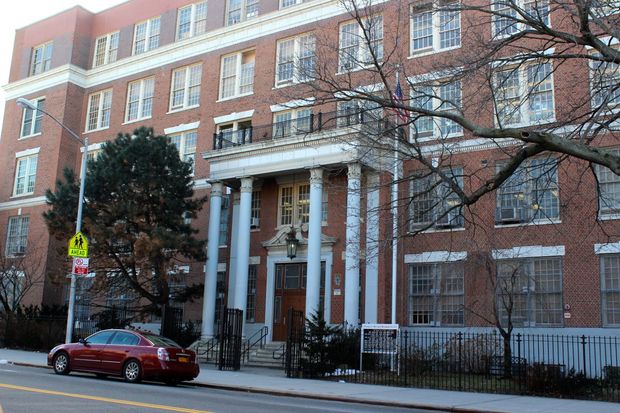
| School | Grades | GreatSchools rating | Note |
|---|---|---|---|
| PS 150Q Sunnyside | PK-6 | 7/10 | Gifted & Talented and dual-language English/Spanish programs |
| PS 199 Maurice A. Fitzgerald | PK-5 | 6/10 | |
| IS 125 Thomas J. McCann (Woodside) | 6-8 | 5/10 |
Zoning for New York City elementary schools runs by home address. Exact boundary lines for these three schools should be confirmed through the NYC Department of Education’s school zoning finder before treating any specific address as guaranteed for a given school.
Crime and safety, in context

Neighborhood crime figures repeated across older Sunnyside guides date to 2016 NYPD data and are too stale to guide a 2026 decision. Sunnyside falls under the NYPD’s 108th Precinct, which also covers Woodside and Jackson Heights. Current, address-level complaint data lives in the NYPD’s CompStat tool, not in a real estate guide.
Investment outlook: Sunnyside Yard and the boulevard corridor
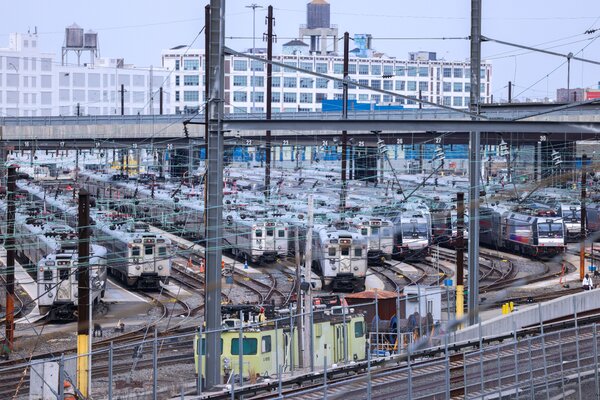
Sunnyside Yard: what’s confirmed
Sunnyside Yard is a 180-acre active rail yard owned by Amtrak and used by Amtrak, the LIRR, and NJ Transit. In 2020, the city and Amtrak released a master plan calling for a deck over the yard supporting 12,000 units of 100% affordable housing, 60 acres of open space, and a new Sunnyside Station.
What’s still just a proposal
The plan went largely dormant after 2020. In February 2026, Mayor Zohran Mamdani met with President Trump and asked the federal government for $21 billion to fund the deck and the 12,000 homes, according to New York YIMBY’s March 2026 reporting. As of that request, the project still lacked a construction start date.
The mistake buyers and investors most often make with Sunnyside Yard is pricing the platform into a near-term appreciation thesis. Treat it as a decades-scale, funding-contingent proposal, not a catalyst with a date attached.
Will the Sunnyside Yard project raise home values here?Not on any timeline current filings support. The 2020 master plan calls for 12,000 affordable homes and a new station, but as of the city’s 2026 request for $21 billion in federal funding, there is still no construction start date.
Limitations and risks: historic district rules, rent stabilization, flood exposure
| Factor | Why it matters | Current status | Action for the buyer |
|---|---|---|---|
| Sunnyside Gardens LPC review | Exterior changes need Landmarks sign-off, adding cost and time | Confirmed since June 26, 2007 | Budget for a Certificate of Appropriateness on any exterior renovation |
| Sunnyside Yard redevelopment | Often cited as a future value driver | Proposal stage, no construction date as of 2026 | Confirm funding status before underwriting appreciation |
| Rent stabilization exposure | Changes achievable rent and resale value on income property | NYU Furman Center places Sunnyside/Woodside among western Queens areas with above-average rent-stabilized concentration; building-level counts need a DHCR lookup | Pull the specific address’s registration history from DHCR before buying a multi-unit building |
| Flood exposure | Affects insurance and mortgage underwriting | Sunnyside’s residential core sits inland of the Newtown Creek/East River flood zones; a parcel-level FEMA determination was not verified here | Check the specific address against FEMA’s Flood Map Service Center before waiving flood insurance |
Of the four, only the Landmarks designation is a certainty every Sunnyside Gardens buyer will face. The other three are worth checking, not assuming.
Are Sunnyside’s older apartment buildings rent-stabilized?Some are. NYU’s Furman Center identifies Sunnyside and neighboring Woodside as part of the stretch of western Queens with an above-average share of rent-stabilized units, but confirming any specific building requires a DHCR building-registration lookup.
Who Sunnyside fits, and who it doesn’t
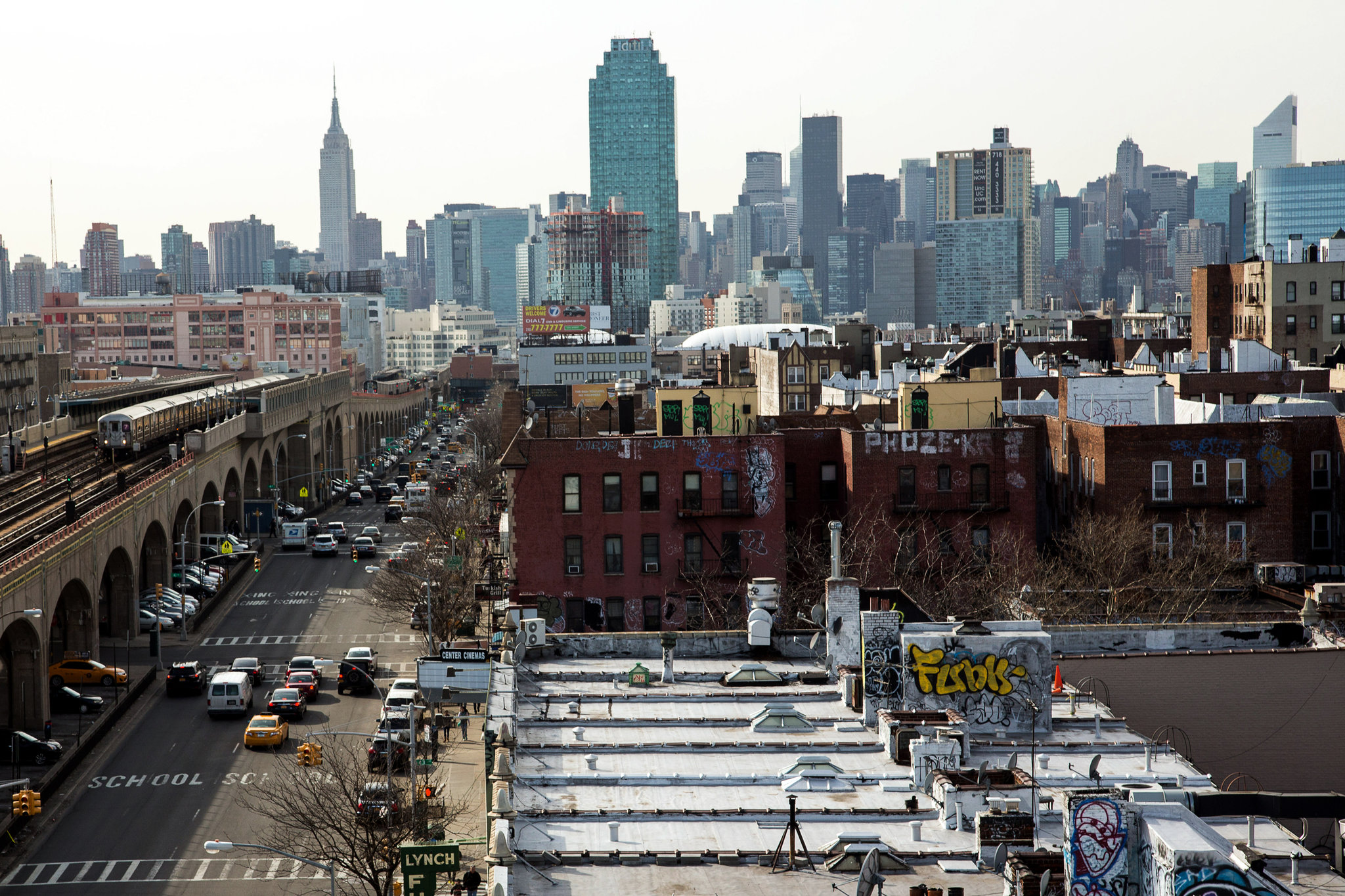
A board-tolerant buyer targeting a primary residence gets the most space for the money in the prewar co-op stock around the $430,000 median. An investor prioritizing simplicity over price does better in the smaller condo segment, which skips board review entirely. A family prioritizing school quality over unit price should look at PS 150Q’s 7-of-10 GreatSchools rating and dual-language program, though the zoned address needs confirming first. Anyone underwriting Sunnyside Yard as a near-term catalyst is pricing in a project that, as of its own 2026 federal funding request, still has no construction date.
Comments