

How Canyon Lake governs itself
Every home inside the gates comes with mandatory membership in the Canyon Lake Property Owners Association, a private, nonprofit mutual-benefit corporation formed under the California Corporations Code, distinct from the City of Canyon Lake itself. The current annual assessment is $4,260, payable in full or in 12 monthly installments of $355 plus a small processing fee, according to the Canyon Lake POA’s published FAQ page. For the fiscal year running May 2026 to April 2027, the POA board approved an operating budget with a net subsidy of $15,357,693, of which $2,800,000 goes to the Repair and Replacement Reserve, $2,100,000 to the Road Reserve, and $300,000 to the Capital Improvement Fund, per local reporting on the board’s vote.
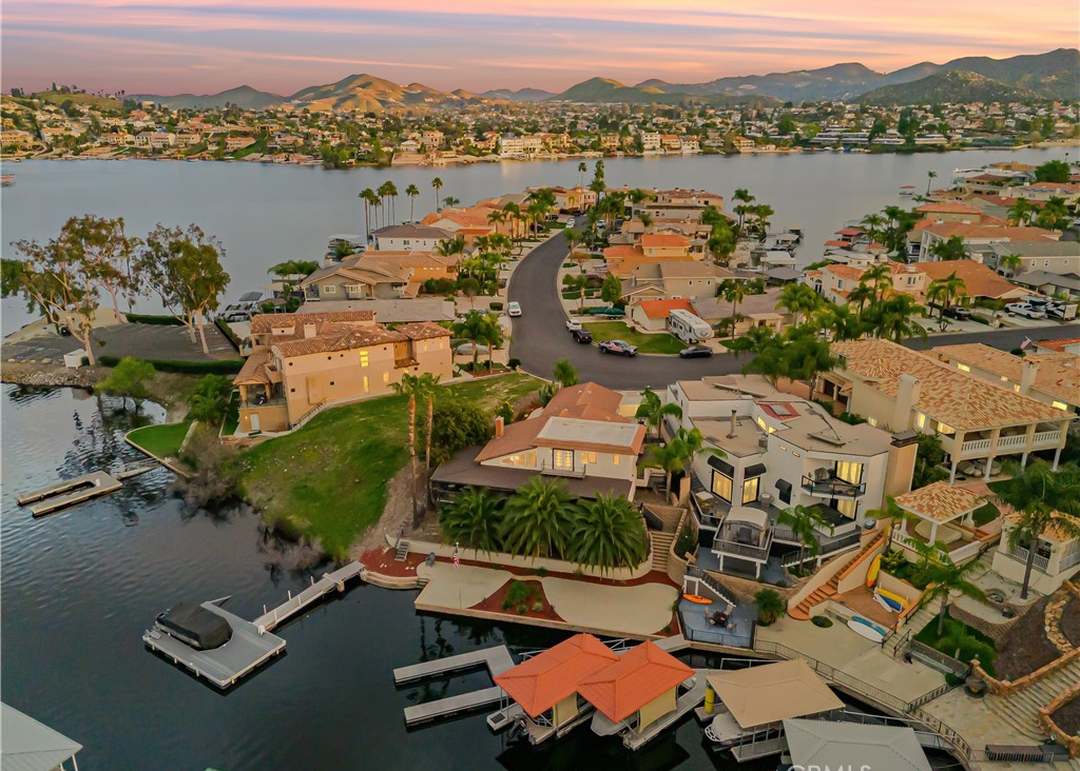
That last point matters more than it sounds: the lake itself is not owned by residents. It belongs to the Elsinore Valley Municipal Water District, which operates it as a drinking-water reservoir and leases the surface rights to the POA for recreational use. Owners fund the maintenance of a public utility asset they don’t hold title to, alongside their own private roads and common areas.
Architectural and use rules run through the same association, covering everything from AC-unit screening to vehicle types allowed on private roads; a resident who wants to add a dock or modify a lakefront structure needs sign-off from both the POA’s Architectural Control Committee and EVMWD, since the shoreline itself is EVMWD property under license to the POA.
On the public-safety side, the city has been operating under contract with the Riverside County Sheriff’s Department for decades. That ends August 1, 2026, when the City of Canyon Lake’s own police department begins operations under Chief James Rayls, sworn in mid-May after a 29-year career with the Sheriff’s Department, according to reporting on the department’s July open house. Buyers evaluating “gated and safe” as a selling point should treat this as a real structural change in how the city is policed, not a marketing detail.
What happens to my POA dues if I never use the lake? Membership and the assessment are mandatory for every property owner regardless of lake use; the due funds roads, common-area reserves, and the recreational lease itself, not a per-use amenity fee, so opting out of boating doesn’t reduce the bill.
What homes cost, by location inside the gates
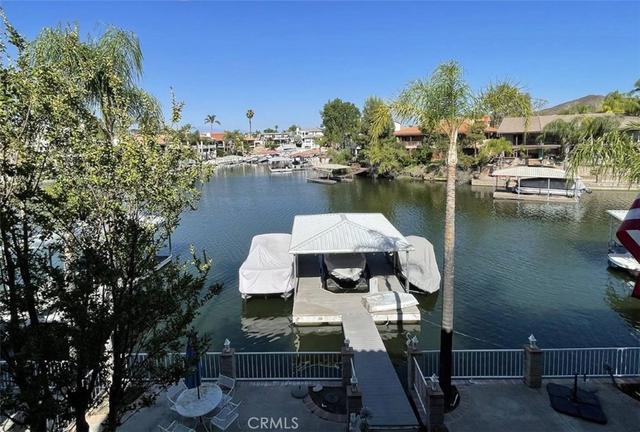
No single median tells a useful story in this market, because lot type moves price more than almost any other variable.
| Segment | Typical price point (May 2026) | What drives the premium | Key consideration |
|---|---|---|---|
| Waterfront, with dock | $889,000 median list (46 active listings) | Direct lake access, private dock, main-lake views | Requires EVMWD/POA shoreline license for the dock; insurance load rises with age |
| Single-family, non-waterfront | $797,594 median sale | Custom construction, larger lots, interior locations | Broadest inventory; least differentiated by amenity |
| Townhouse | $529,000 median sale | Lower maintenance, smaller footprint | Fewer architectural constraints than detached lots in some tracts |
| Condo | $354,000 median sale | Entry price point into the gates | Least lake-adjacent; often furthest from marina access |
Figures: Redfin housing market data and Redfin waterfront listings, May 2026.
The single blended figure of $774,536 sits between these segments and describes none of them well: it understates what waterfront buyers should expect to pay by well over $100,000 and overstates what a condo buyer needs. A golf-course-adjacent segment, which several buyers specifically ask about, isn’t tracked as its own MLS category here; agents quote it informally as a premium over the non-waterfront single-family median, but no published data source separates it out, so this page states that gap honestly instead of inventing a number for it.
Can I get a boat dock without buying directly on the water? Docks require shoreline access under an EVMWD/POA license, which in practice means owning a waterfront lot; interior-lot owners can store boats at community launch and storage facilities but don’t hold an individual dock license.
The lake itself: what to verify before you buy
Canyon Lake is not, legally, a private lake in the sense many buyers assume: EVMWD owns it and uses it as a drinking-water reservoir supplied by stormwater runoff from the San Jacinto River and Salt Creek, and the POA’s recreational lease coexists with that primary function. Water levels and quality can move for reasons tied to regional water supply, not just local weather. In late 2025, EVMWD and the POA jointly completed a golden algae treatment at two swimming areas; follow-up testing found no living algae cells, though a final sampling round was planned to check deeper water, per EVMWD’s own reporting on the treatment. Prospective waterfront buyers can ask the POA directly for the most recent water-quality testing results before closing rather than relying on a listing description.
Why do sources disagree about how big Canyon Lake actually is? The 383-acre figure comes from a dated 1968 engineering account of the original reservoir expansion; the roughly 400-acre figure comes from the POA’s current descriptive materials. Neither source publishes a recent hydrographic survey, so the true current figure likely sits between the two.
Risk and insurance considerations by home era
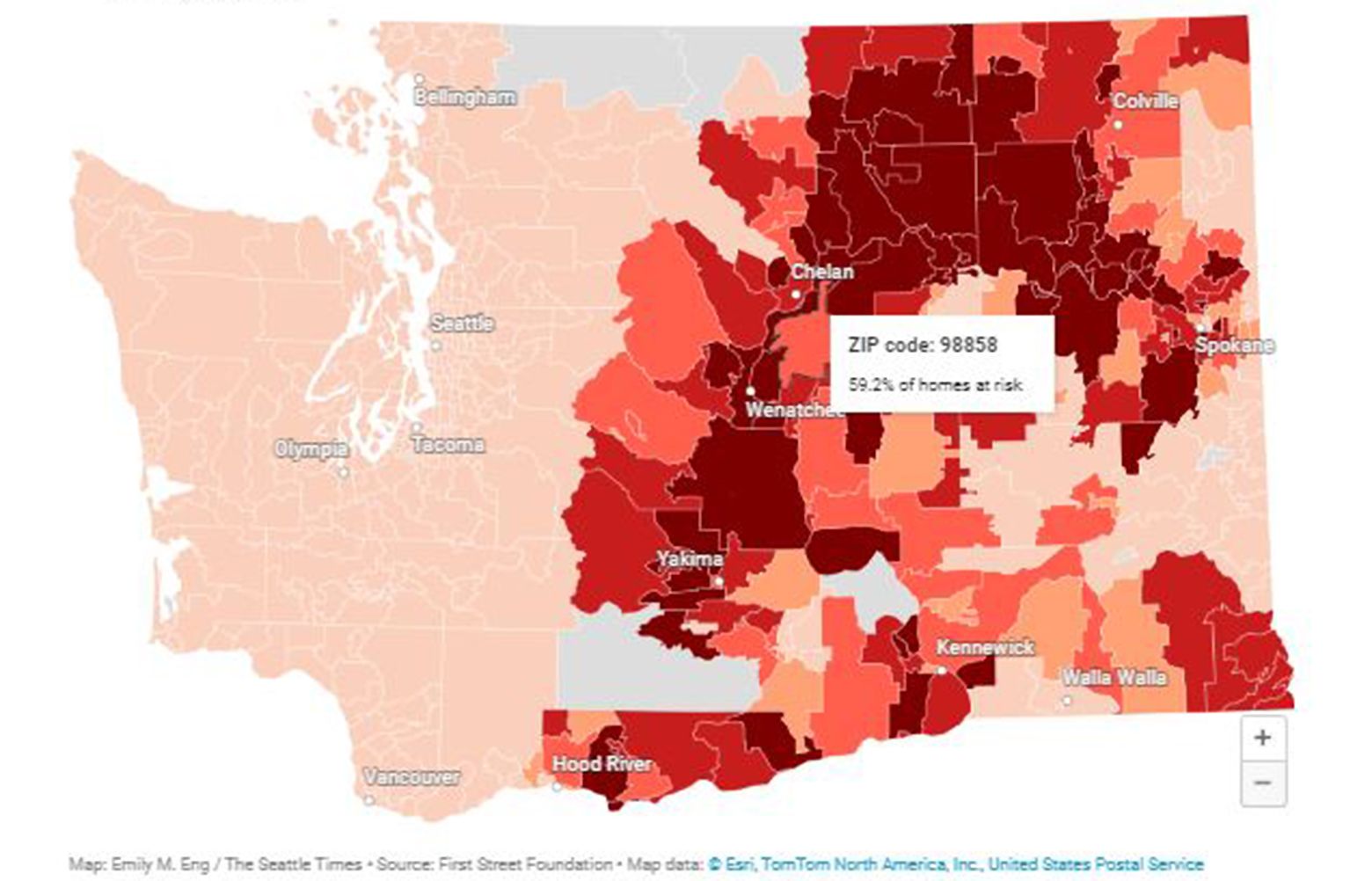
Two risk categories deserve more attention than any of the market’s existing guides give them. First, wildfire: independent risk modeling from First Street Foundation, published via Redfin’s market data, rates 99% of Canyon Lake properties as carrying some wildfire exposure over the next 30 years, an overall severe classification for the area, driven by the chaparral terrain surrounding the reservoir. Flood risk is comparatively lower: 12% of properties face a modeled severe flood risk over the same window, an overall minor rating for the city. Buyers should confirm current fire-insurance availability and pricing directly with a carrier rather than assuming standard homeowner coverage applies without a rider, since California’s broader wildfire-insurance market has tightened in recent years.
Second, home age. Canyon Lake’s original tract dates to 1968, and a meaningful share of the housing stock still carries original-era plumbing, electrical, and roofing. A pre-purchase inspection focused specifically on copper supply lines, panel capacity, and roof age is a reasonable ask for any home built before the 1990s in this community, given how much of the stock originates from that first development wave.
Buyers on waterfront lots carry one more layer: dock and shoreline structures sit on EVMWD-owned land under a POA license, and standard homeowner policies don’t automatically cover a private dock. Confirming what the existing dock license covers, and whether it transfers cleanly at sale, is worth a direct question to the POA’s Member Services department before closing.
Renting and investing in Canyon Lake
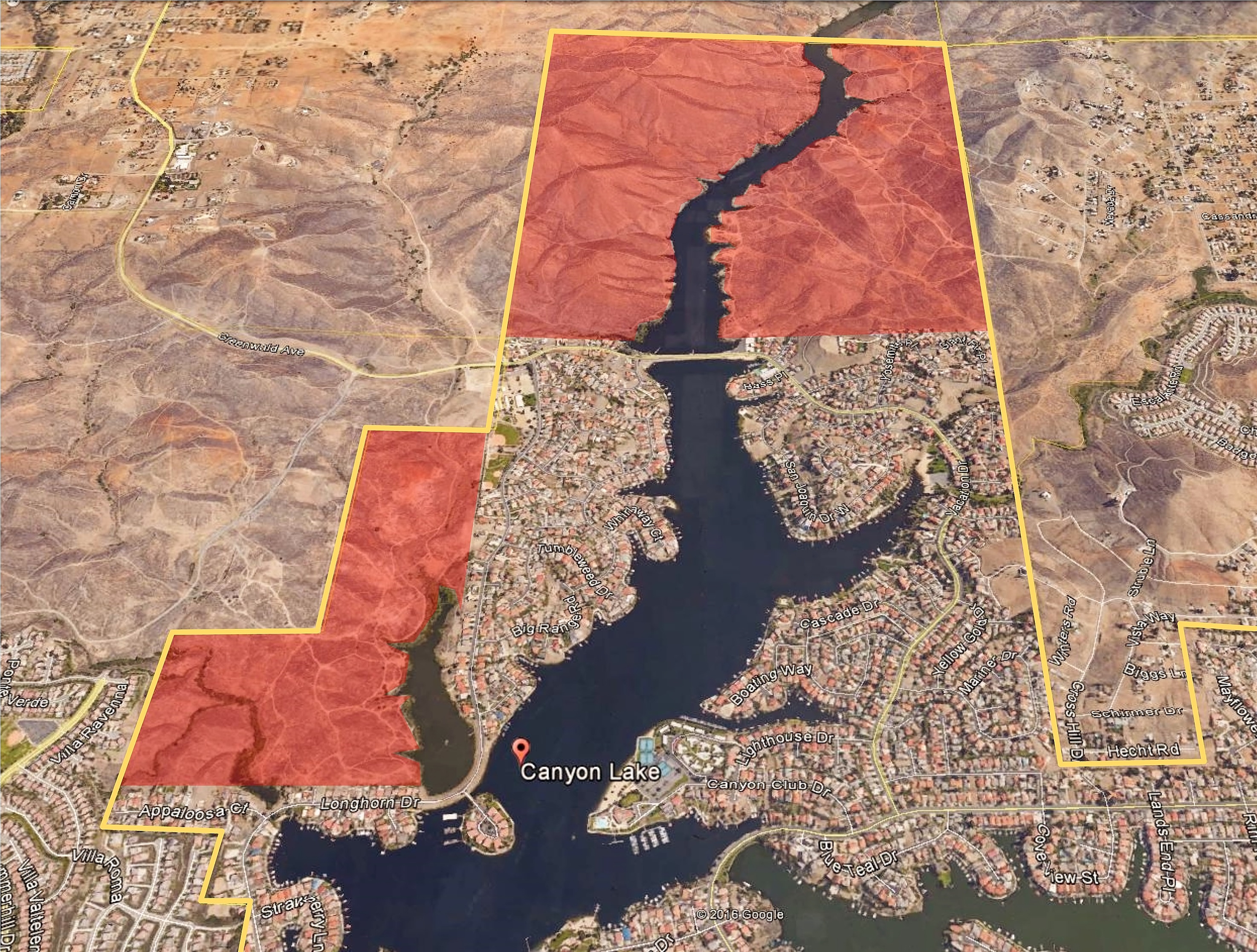
For the investor audience this guide is written for, one fact settles the question before any yield calculation matters: Chapter 5.25 of the Canyon Lake municipal code prohibits short-term vacation rentals citywide. This is a city ordinance, layered on top of whatever the POA’s own rules say about transient occupancy inside the gates, so a waterfront property that looks like an obvious weekend-rental play on paper is not a legal short-term-rental asset here.
Long-term rentals remain possible under a separate framework: the city’s Residential Rental Program, adopted under Ordinance No. 192, requires any property owner renting out all or part of a home to register that property and meet inspection and crime-free housing standards before leasing it. That’s a real compliance step, not a formality; property managers handling multiple units in the city need a registration per property, not a single blanket filing.
No sourced, current data on Canyon Lake-specific long-term rental vacancy rates or achieved rents was found during this research; an investor modeling cash flow here needs to pull comparable rent data independently.
Can I legally rent my Canyon Lake home on Airbnb? No. Chapter 5.25 of the municipal code prohibits short-term vacation rentals citywide; long-term rentals are legal but require registration under the city’s Residential Rental Program.
Lifestyle, briefly

Recreation centers on the lake itself: boating, water skiing, and fishing dominate, alongside an 18-hole golf course, an equestrian center, and community parks along the shoreline. The Lighthouse Restaurant and Bar sits among the handful of dining options inside the gates, a detail confirmed independently in current local listings data. Buyers weighing the lifestyle case for Canyon Lake against a non-gated Riverside County alternative are, in practical terms, weighing the governance and cost structure described above against a materially similar climate and commute.
Schools and commute

Canyon Lake sits within the Lake Elsinore Unified School District. Canyon Lake Middle School, serving grades 6 through 8, carries a GreatSchools rating of 5 out of 10, based on state test performance; elementary-age students typically feed from Tuscany Hills or Cottonwood Canyon elementary schools, with Temescal Canyon High School serving most Canyon Lake teenagers. Families weighing schools heavily should treat this as a starting point for their own district research, since attendance boundaries can shift by street.
Commute times vary sharply by destination: Canyon Lake sits closer to Temecula and the Inland Empire’s southern edge than to central Los Angeles or Orange County job centers, and no independent, sourced commute-time dataset specific to this city was found during this research; buyers targeting a specific employer should check their own route.
How it compares to nearby Southern California communities
Canyon Lake is sometimes discussed alongside nearby Riverside County developments like Tuscany Hills or Audie Murphy Ranch, which show up in aggregator “similar neighborhoods” tools. A buyer weighing those alternatives is really choosing between the cost and governance structure below and a simpler HOA with none of the lake-lease complexity.
| Rule or requirement | What it means for owners | Source |
|---|---|---|
| Mandatory POA membership, $4,260/year | Funds roads, reserves, and the EVMWD lake lease; applies to every owner regardless of lake use | Canyon Lake POA FAQs |
| Lake owned by EVMWD, leased to POA | Water levels and quality tied to regional water-supply operations, not just local weather | EVMWD, Canyon Lake page |
| Short-term rentals banned citywide | Chapter 5.25 of the municipal code; applies on top of any POA rule | City of Canyon Lake Code of Ordinances |
| City police department launches August 1, 2026 | Ends the Riverside County Sheriff contract; a genuine operational change | Canyon Lake Insider |
That trade-off, not the amenity list, is the actual decision for most buyers weighing Canyon Lake against a comparable gated tract nearby.
Comments