
Where South Jamaica actually is
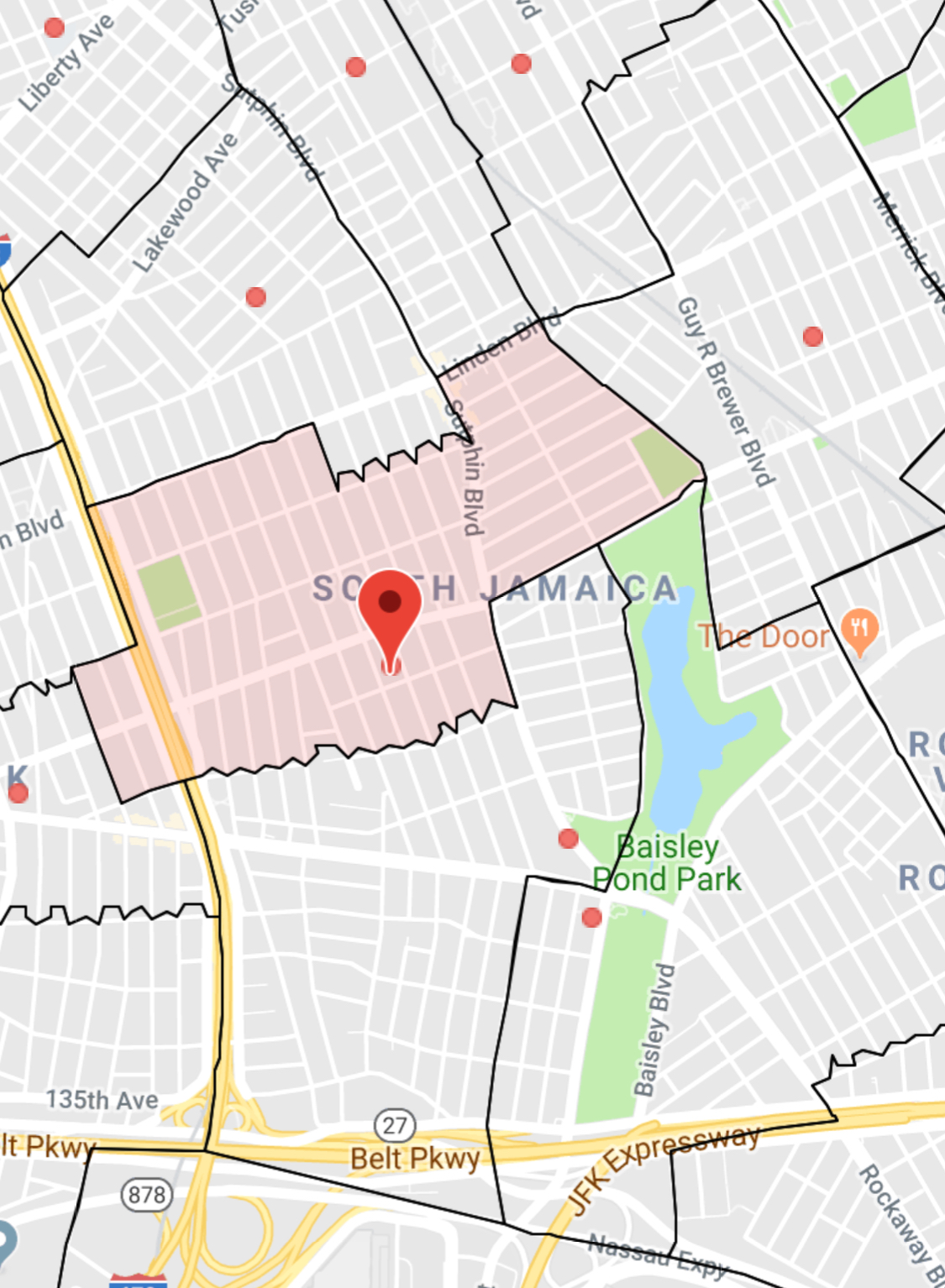
South Jamaica sits south of downtown Jamaica, bounded by the Long Island Rail Road Main Line and Jamaica Avenue to the north, the Van Wyck Expressway to the west, Rockaway Boulevard to the south, and Merrick Boulevard to the east. Four zip codes cover it: 11433 and 11435 north of Linden Boulevard, 11434 and 11436 south of it, with the east/west split falling at Sutphin Boulevard.
The confusion buyers run into isn’t really about the neighborhood’s edges; it’s about which population figure attaches to those edges. New York City redrew its Neighborhood Tabulation Area boundaries after the 2020 Census, requiring each new NTA to hold at least 15,000 residents. Under the pre-2020 boundary, South Jamaica’s NTA held roughly 32,000 people. Under the redrawn 2020 boundary, which folds in a wider stretch of the surrounding area to meet that population floor, the same-named NTA holds 270,688 residents as of 2020. Both numbers are official City Planning figures describing two different-sized areas that happen to share one name. Any source quoting a South Jamaica population anywhere between about 30,000 and 280,000 is very likely citing one boundary vintage or the other, not making an error.
Is South Jamaica the same neighborhood as Jamaica, Queens? No. South Jamaica is the area south of the LIRR Main Line/Jamaica Avenue line; “Jamaica” or “Downtown Jamaica” refers to the commercial core to its north, centered on Jamaica Avenue and the northern stretch of Merrick Boulevard.
What homes are selling for
Three sources, three different numbers, three different things actually measured. PropertyShark’s recorded-sale data puts the median at $660,000 for Q1 2026, up 8% year over year. Individual closed sales tracked by Redfin in January 2026 ranged from $400,000 to $940,000 within a few blocks of each other, mostly depending on square footage and renovation condition. Zillow’s automated Zestimate for the 11433 zip code has shown figures anywhere from roughly $627,000 to $859,000 across different snapshots, because a Zestimate is a computed valuation, not a closed-deed price, and it moves with model updates rather than transactions.
| Source | Figure | What it measures | Time window |
|---|---|---|---|
| PropertyShark | $660,000 | Recorded median sale price | Q1 2026 |
| Redfin | $400,000 to $940,000 | Range of individual closed sales | January 2026 |
| Zillow Zestimate | $627,000 to $859,000 | Automated valuation model, not a sale | Varies by snapshot |
A buyer pricing a specific offer should anchor to the recorded-sale figure; an automated estimate is a starting point for research, not a number to put in a contract.
Why do different sites report such different home prices for South Jamaica? Because “median sale price,” “range of recent closed sales,” and “automated valuation estimate” are three different statistics measuring different things. A recorded median from closed deeds is the most reliable figure for pricing an actual offer.
Zoning and multi-family development potential
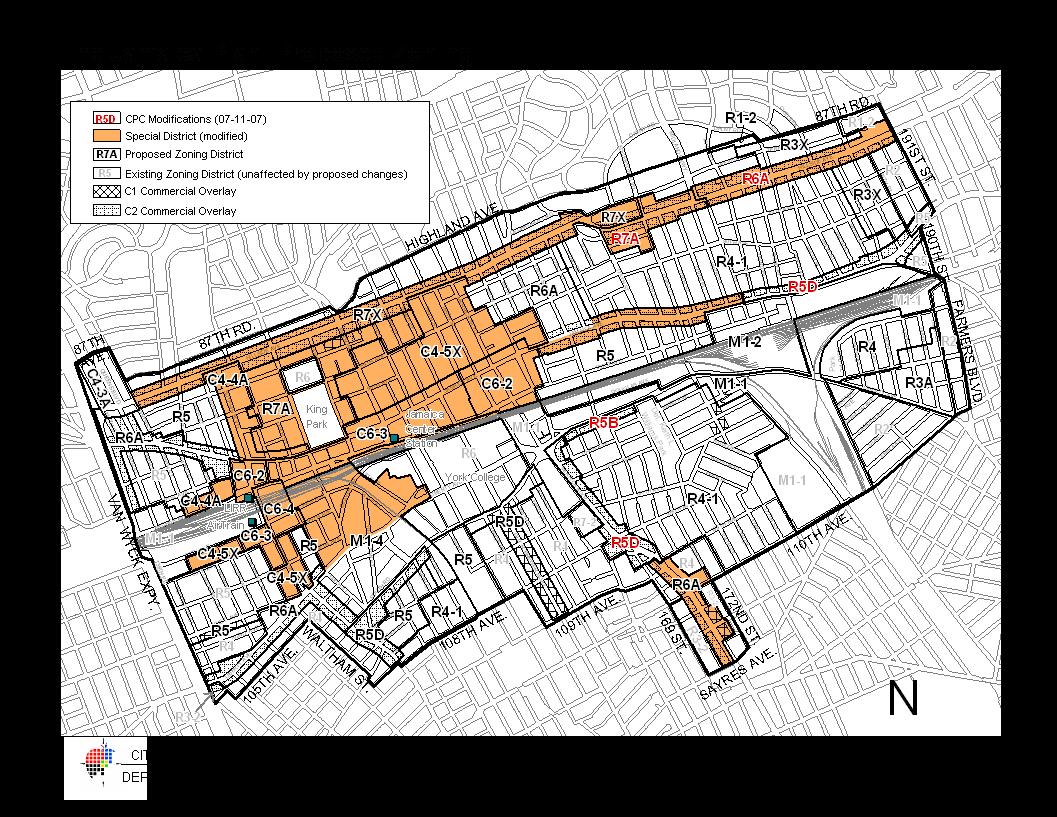
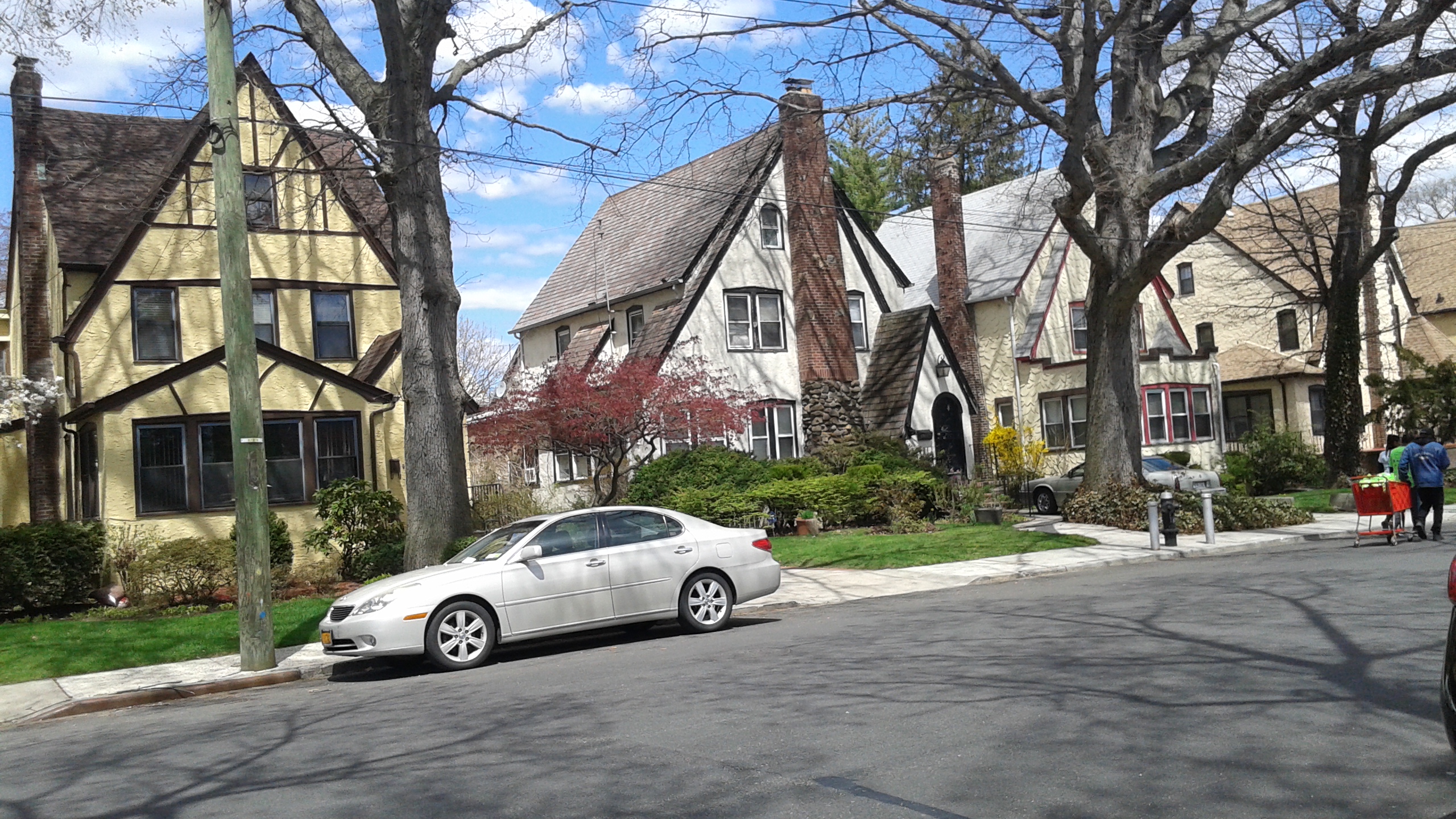
South Jamaica’s interior blocks are overwhelmingly low-density residential — one- and two-family homes on contextual R2, R3, and R4-type lots. Commercial overlays run along Merrick Boulevard, Jamaica Avenue, Sutphin Boulevard, and 147th Avenue, permitting ground-floor retail with residential above at modest floor-area ratios. The exception sits at the neighborhood’s northern edge, where parcels near Liberty Avenue and the Van Wyck Expressway carry R7A residential zoning with a C2-4 commercial overlay, opening the door to mid-rise multifamily construction.
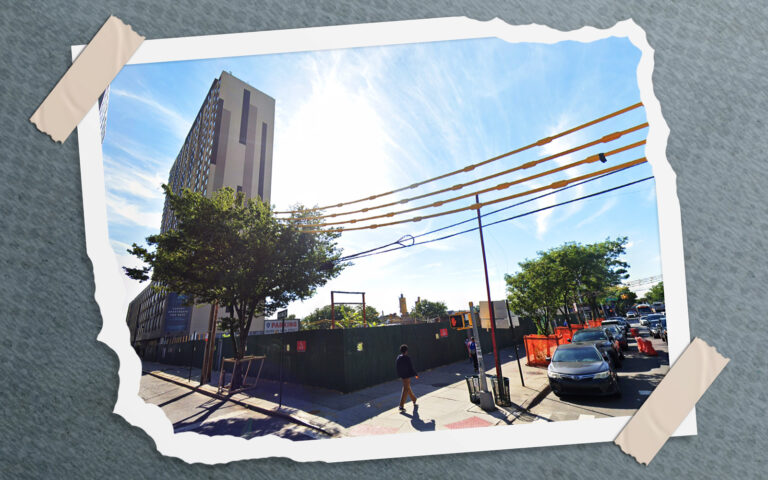
One active example illustrates the ceiling: a 3,639-square-foot corner lot on Liberty Avenue, zoned R7A/C2-4 with Mandatory Inclusionary Housing, currently permits up to 18,232 square feet of buildable area, roughly five times the lot’s footprint, with a portion of that floor area required to be set aside as affordable under MIH. An R2 or R3 lot two blocks away supports nothing close to it.
| Zoning designation | What it permits | Where it applies locally |
|---|---|---|
| R2 / R3-1 / R3A / R4-1 (contextual, low-density) | One- and two-family homes, floor-area ratios roughly 0.5 to 0.9 | Interior residential blocks across most of the neighborhood |
| C1-2 / C1-4 / C2-3 commercial overlays | Ground-floor retail with residential above; low floor-area ratio | Merrick Boulevard, Jamaica Avenue, Sutphin Boulevard, 147th Avenue |
| R7A with C2-4 overlay + Mandatory Inclusionary Housing | Mid-rise multifamily; the Liberty Avenue lot above reaches roughly a 5-to-1 buildable-to-lot ratio with an affordability set-aside | Northern edge near Liberty Avenue/Van Wyck Expressway |
A buyer comparing two lots on paper needs the zoning designation before the asking price means anything: an R3A lot and an R7A/C2-4 lot at the same price per square foot are not comparable investments.
Can I legally add a second unit to a 1- or 2-family home in South Jamaica? Only if the lot sits in an eligible zoning district (most R2 through R5 designations qualify; R1-2A, R2A, and R3A outside the Greater Transit Zone do not), you own and occupy the property, and the unit stays under 800 square feet.
Property taxes: what the sticker rate doesn’t tell you
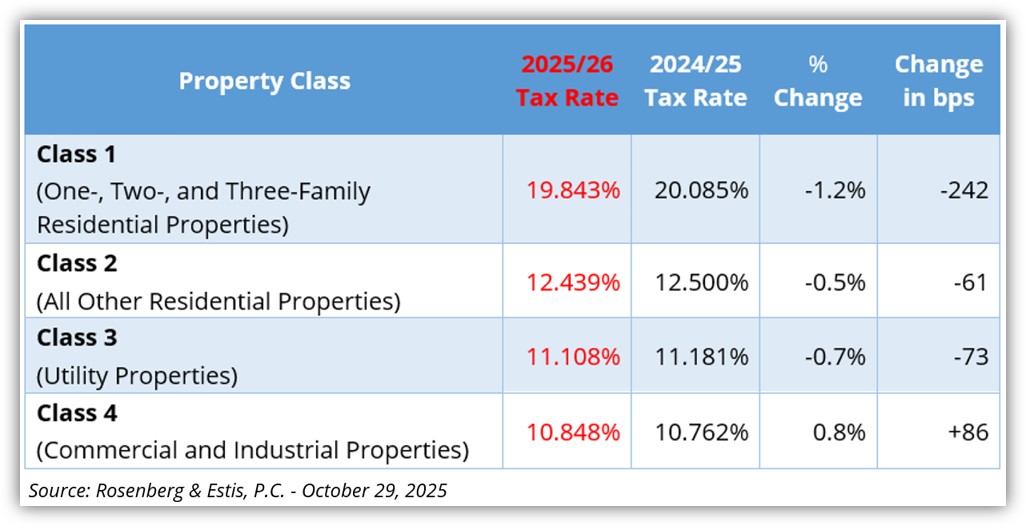
Most South Jamaica homes fall into New York City’s Tax Class 1 (one- to three-family homes), carrying an FY2026 rate of 19.843%. That rate applies only to assessed value, not market value, and assessed value for Class 1 property is set at 6% of market value, with annual increases capped at 6% and five-year increases capped at 20%, regardless of how fast the market moves. A $700,000 home therefore has a target assessed value near $42,000, producing a bill in the range of roughly $8,300 a year before any exemption. Multifamily buildings with more than three units generally fall into Class 2, assessed at 45% of market value at a 12.439% FY2026 rate, with its own 8%/30% growth caps for buildings of ten units or fewer.
The gap that trips up first-time buyers here is the distance between the sticker rate and the real bill: a 19.843% rate sounds close to a fifth of a home’s value, but it applies only to a 6%-of-market assessed figure, not the market value itself.
Rent stabilization exposure for multifamily buyers
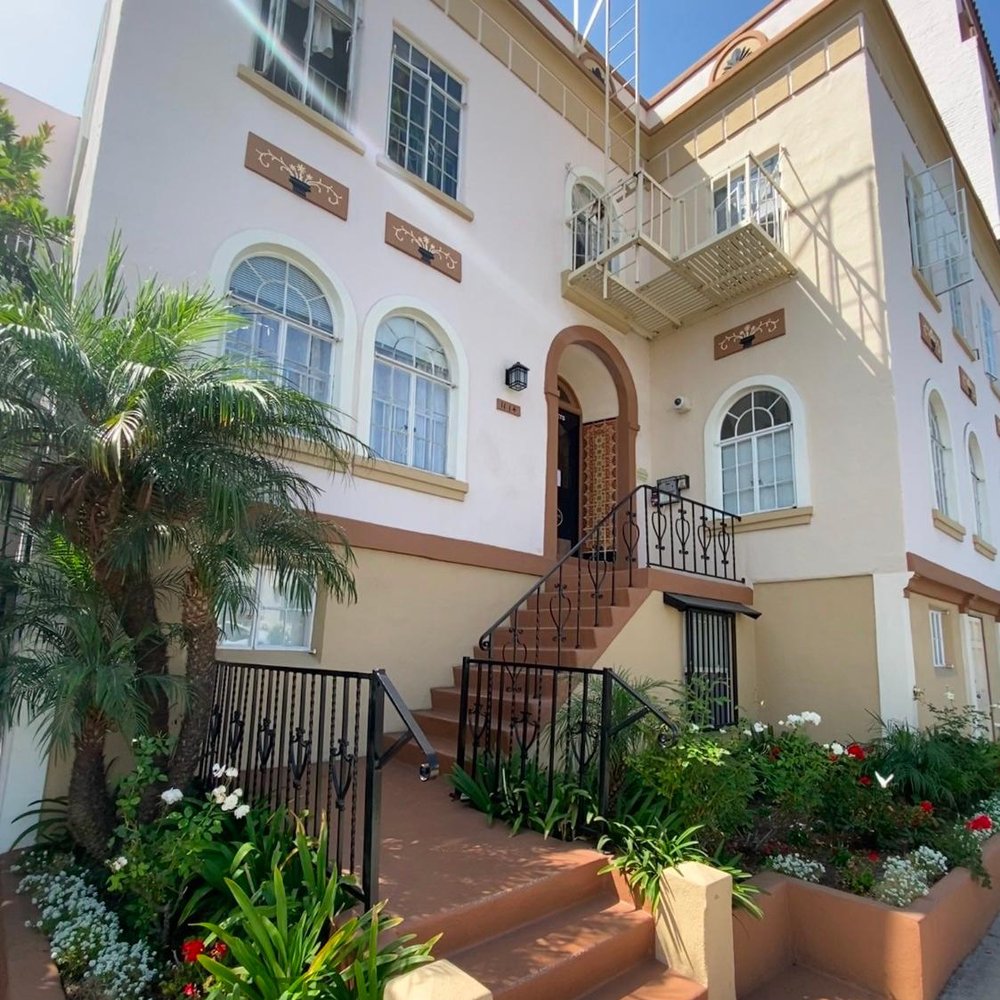
Anyone underwriting a South Jamaica multifamily purchase needs to check one thing first: is the building six or more units, built before 1974? If so, it is very likely rent-stabilized, and post-2019 law makes deregulation almost impossible for pre-1974 buildings. The 2019 Housing Stability and Tenant Protection Act eliminated the vacancy-bonus and high-income deregulation paths landlords previously used, and it capped individual-apartment-improvement rent recovery at $15,000 spread over 15 years, a fraction of what a full renovation costs. Rent increases instead track annual votes by the Rent Guidelines Board, typically in the low single digits. An owner who overcharges a stabilized tenant, willfully or not, faces treble damages on the overcharge.
None of this makes a stabilized building a bad investment. Many trade at cap rates in the 5.5% to 7% range specifically because of this constraint, but the purchase math has to model regulated rent growth, not market rent growth, for any pre-1974 building with six or more units.
Is a rental I’m looking at in South Jamaica rent-stabilized? If the building has 6 or more units and was built before 1974, assume yes unless the landlord can show otherwise; you can request the unit’s rent history directly from New York’s Division of Housing and Community Renewal.
Adding a second unit under City of Yes
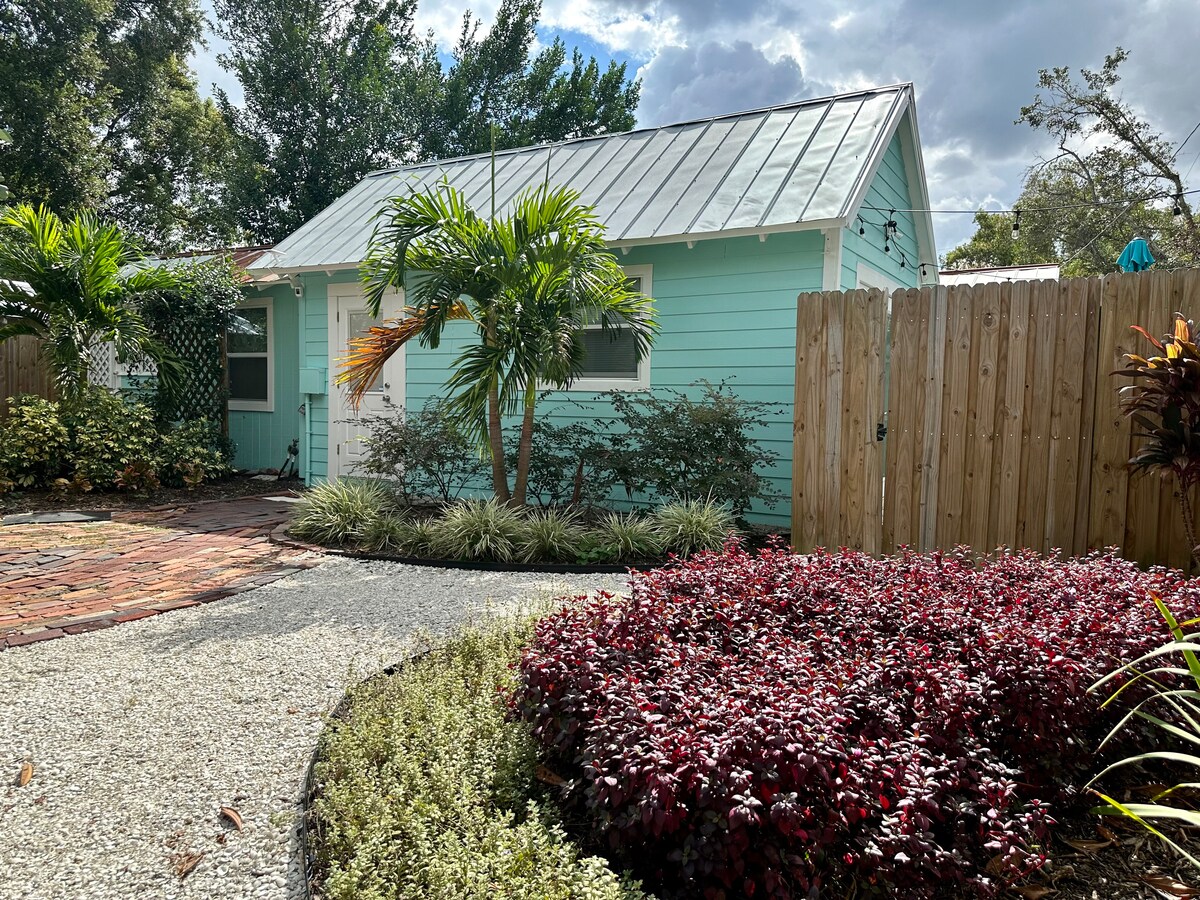
New York City adopted the City of Yes for Housing Opportunity zoning package on December 5, 2024, legalizing accessory dwelling units — basement conversions, garage conversions, attic conversions, and new detached backyard structures — on eligible 1- and 2-family lots, with applications opening through the city’s Department of Buildings starting in late 2025. The rules cap a unit at 800 square feet, require the owner to live on the property, and limit a detached structure to no more than a third of the required rear yard.
The catch homeowners in southeast Queens run into is eligibility, not desire: the reform excludes R1-2A, R2A, and R3A zoning districts outside a “Greater Transit Zone,” excludes historic districts, and excludes flood-prone basements. The Regional Plan Association’s analysis of the citywide rules estimates that only about 12% of the city’s 1- and 2-family lots actually clear every condition. For a South Jamaica homeowner weighing an ADU as rental income, the zoning-district check comes before any cost estimate.
Schools
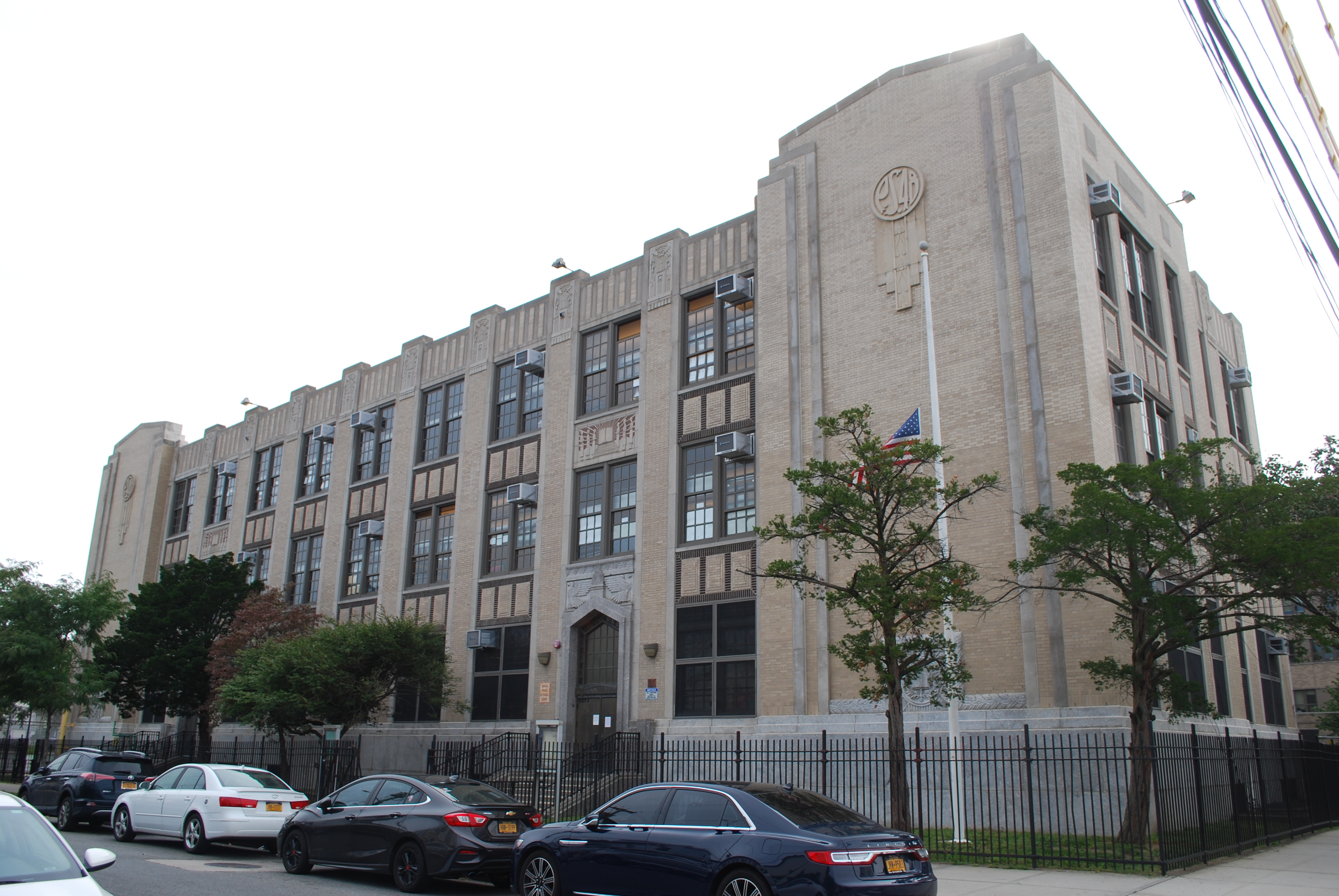
South Jamaica sits across several school zone boundaries, and different real estate sites list different elementary schools for the same block because the zones don’t line up cleanly with any of the neighborhood’s informal borders. Confirm zoning for a specific address directly with the New York City Department of Education rather than relying on a listing site’s default assignment.
Who this neighborhood suits
| Buyer type | What matters most | Where to look above |
|---|---|---|
| Owner-occupant, 1-2 family | Class 1 tax mechanics, STAR exemption eligibility, ADU income potential | Property taxes; Adding a second unit |
| Multifamily investor (pre-1974, 6+ units) | Rent-stabilization exposure, HSTPA-limited rent growth, realistic cap rate | Rent stabilization |
| Development/conversion investor | R7A/C2-4/MIH corridor sites, buildable-area math | Zoning and development potential |
An owner-occupant and a multifamily investor are underwriting two entirely different sets of numbers on the same block.
Comments