
How Selling Differs Across New York
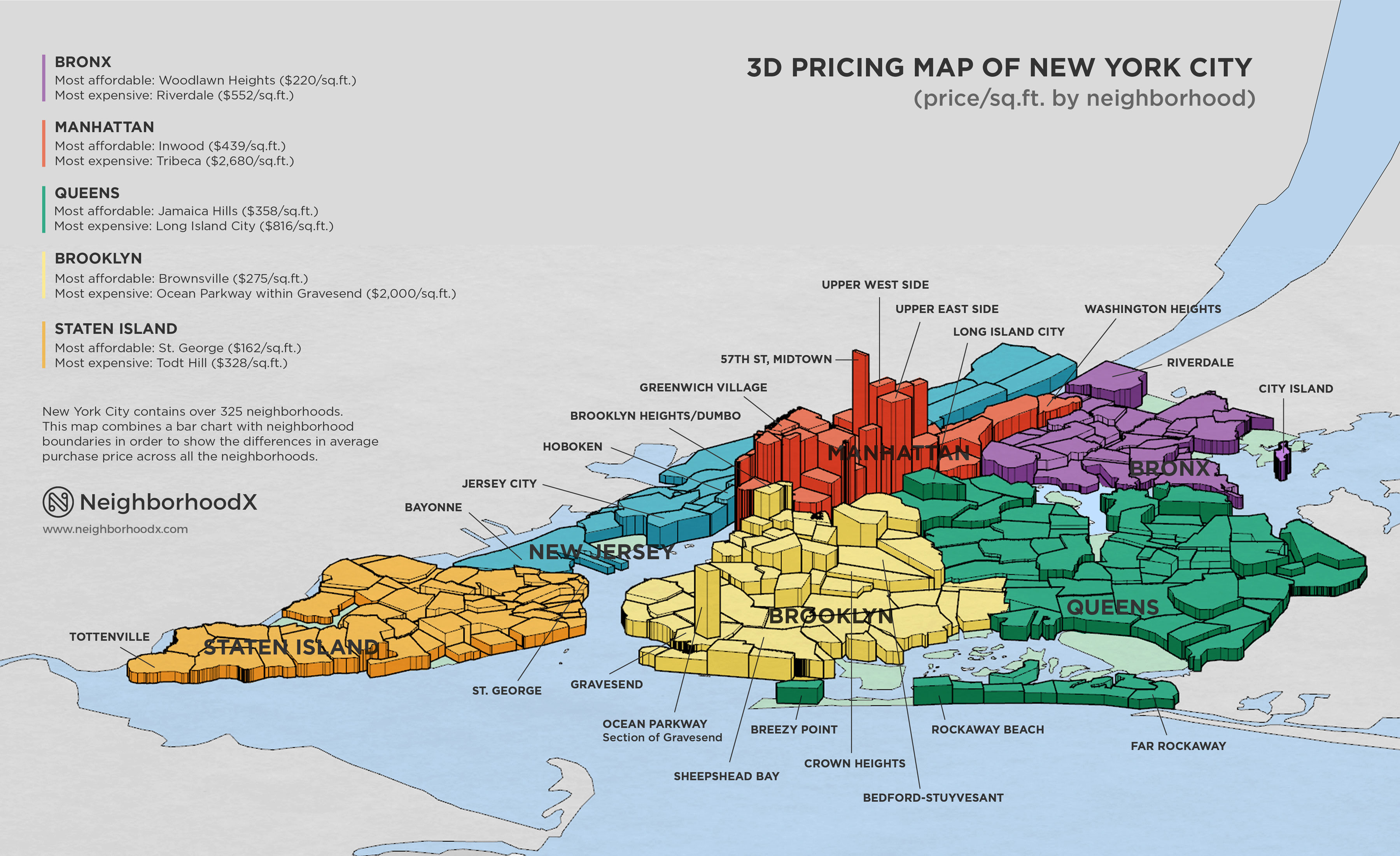
New York doesn’t run one selling process. It runs two, built on the same legal spine of attorney, disclosure, and transfer tax, but diverging sharply on cost, pace, and property type.
| Factor | Statewide / Upstate | New York City |
|---|---|---|
| Attorney fee (seller) | $1,500 to $2,500 flat, typical | $3,000 to $5,000, sometimes more |
| Transfer tax (seller-paid) | NYS 0.4% (0.65% at $3M and above) | NYS 0.4%/0.65% plus NYC RPTT 1% (1.425% above $500K) |
| Mansion tax (buyer-paid) | 1% at $1M and above, statewide | Same 1% floor, tiered to 3.9% at $25M and above |
| Median sale price, 2026 | Buffalo $205K, Rochester $165K, Syracuse $180K, Albany $254K | $876K |
| Median days on market | 12 to 33 days across upstate metros | 78 days |
| Co-op prevalence | Low; mostly single-family and condo stock | 70% to 75% of Manhattan buildings |
Sources: transfer and mansion tax rates from the New York State Department of Taxation and Finance and the NYC Department of Finance; price and days-on-market figures from Redfin’s city pages, pulled May and June 2026; attorney fee ranges from Moshes Law and Brick Underground; co-op share from Moshes Law.
The gap between a 12-day Rochester sale and a 78-day New York City one isn’t a quirk of one dataset. It reflects a genuinely different buyer pool, financing mix, and property type on each side of that line.
Choose How You’ll Sell
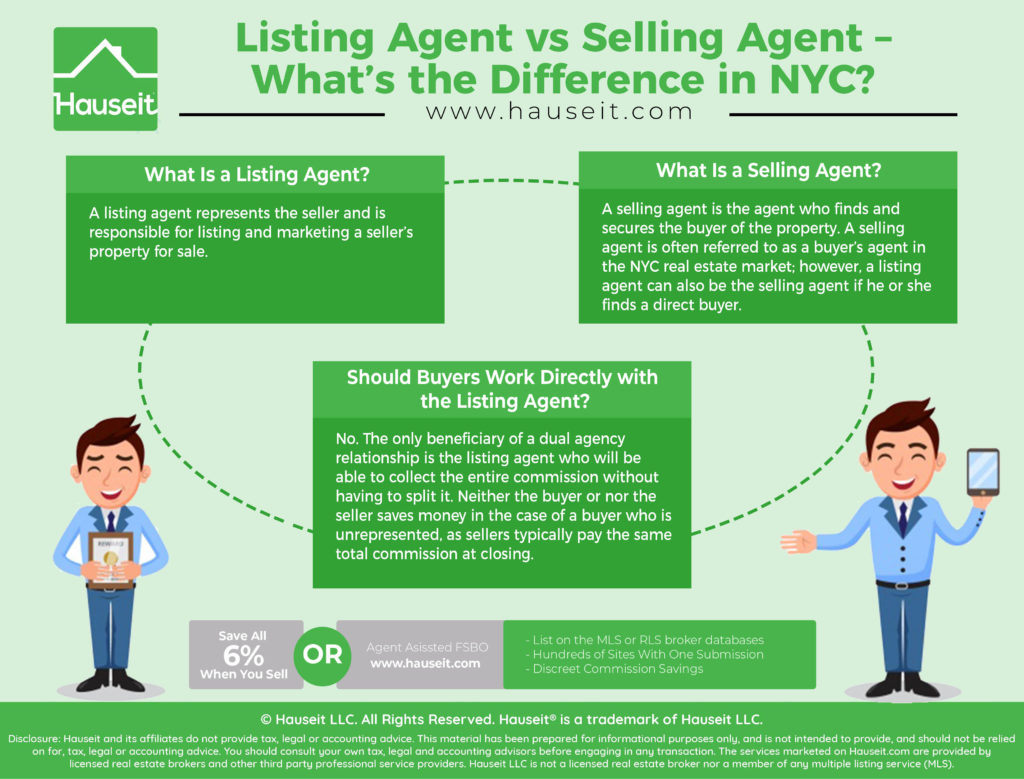
Co-op boards routinely reject cash-buyer and iBuyer offers, because most proprietary leases require the same board interview regardless of how the buyer is financing the purchase, so paying cash doesn’t skip that step the way it might in a single-family upstate sale. A full-service listing agent remains the statewide default. Flat-fee MLS listings work the same in New York as anywhere else, with one wrinkle: your attorney, not the flat-fee platform, still has to produce the disclosure statement and manage the closing, so the savings apply only to the marketing side of the deal.
Is the buyer’s agent commission still my responsibility as the seller in New York? Not automatically. Since the 2024 NAR settlement, buyer-agent compensation is negotiated directly between buyer and agent and can’t be advertised on the MLS. Most New York sellers still offer a concession to keep the buyer pool wide, but nothing obligates it.
Which Seller Situation Applies to You
- Standard arm’s-length sale. The path described throughout this page: disclosure statement, attorney-run closing, transfer tax, standard timeline.
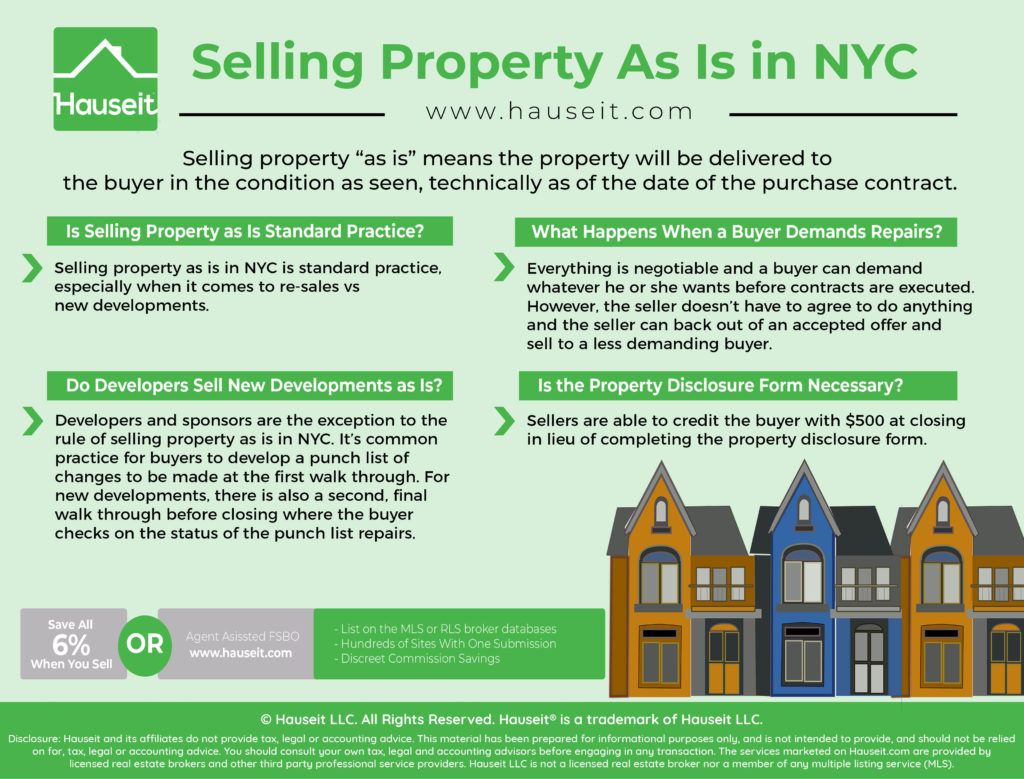
- Co-op sale. Add a board package and interview on top of the buyer’s mortgage underwriting. This historically ran 4 to 8 weeks, with Manhattan buildings trending toward 8 to 12 weeks. Starting July 28, 2026, a new NYC law forces co-ops with 10 or more units to confirm within 15 days that a package is complete and to decide, approve, approve with conditions, or deny, within 45 days after that, with at most one 14-day board extension. Buildings under 10 units, HDFCs, and Mitchell-Lama co-ops are exempt.
- Estate or inherited property. A transfer by a fiduciary administering an estate is exempt from the disclosure requirement entirely. Transfer tax still applies in full once the property sells, even though the disclosure obligation doesn’t.
- Relocated or non-resident seller. If you moved out of New York before selling, you must still file Form IT-2663 at closing, computing estimated New York tax on the gain at the top rate, 10.90% for 2026. If the sale qualifies for the federal principal-residence exclusion, no payment is due, but the form must still be filed to claim that exemption.
- Financially distressed sale. If the mortgage payoff exceeds what the sale will net, that’s a lender negotiation your attorney needs to start well before listing, not a checkbox at closing.
How much longer does a co-op sale take than a regular home sale in New York? Historically 4 to 12 weeks longer, concentrated in board review and interview scheduling. The new 45-day decision deadline, effective July 28, 2026 for buildings of 10 or more units, caps the review phase for the first time, though package preparation and the interview itself still add time on top of it.
Price Your Home
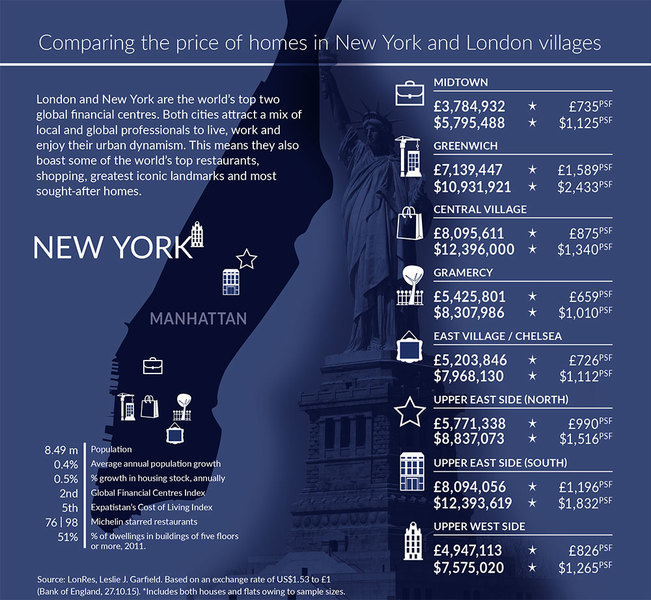
Start from a comparative market analysis weighted to where in the state you’re selling: a CMA built on citywide New York City comps is nearly useless for a Rochester listing, and the reverse is equally true.
| Market | Median sale price | Median days on market | As of |
|---|---|---|---|
| New York City | $876,000 | 78 days | May 2026 |
| Buffalo | $205,000 | 30 days | 3 months to May 2026 |
| Rochester | $165,000 | 12 days | 3 months to May 2026 |
| Syracuse | $180,000 | 33 days | 3 months to May 2026 |
| Albany | $254,000 | 17 days | March 2026 |
| Statewide | $526,267 | 37 days | May 2026 |
Source: Redfin city and state housing-market pages.
At the extreme top of the market, pace behaves nothing like these medians: an Upper East Side townhouse the Candy family bought for $48 million in 2022 sold for $55 million after six days on the market in March 2026, per CooperatorNews’s market roundup, a reminder that median days-on-market figures describe the bulk of the market, not its edges.
Time Your Listing
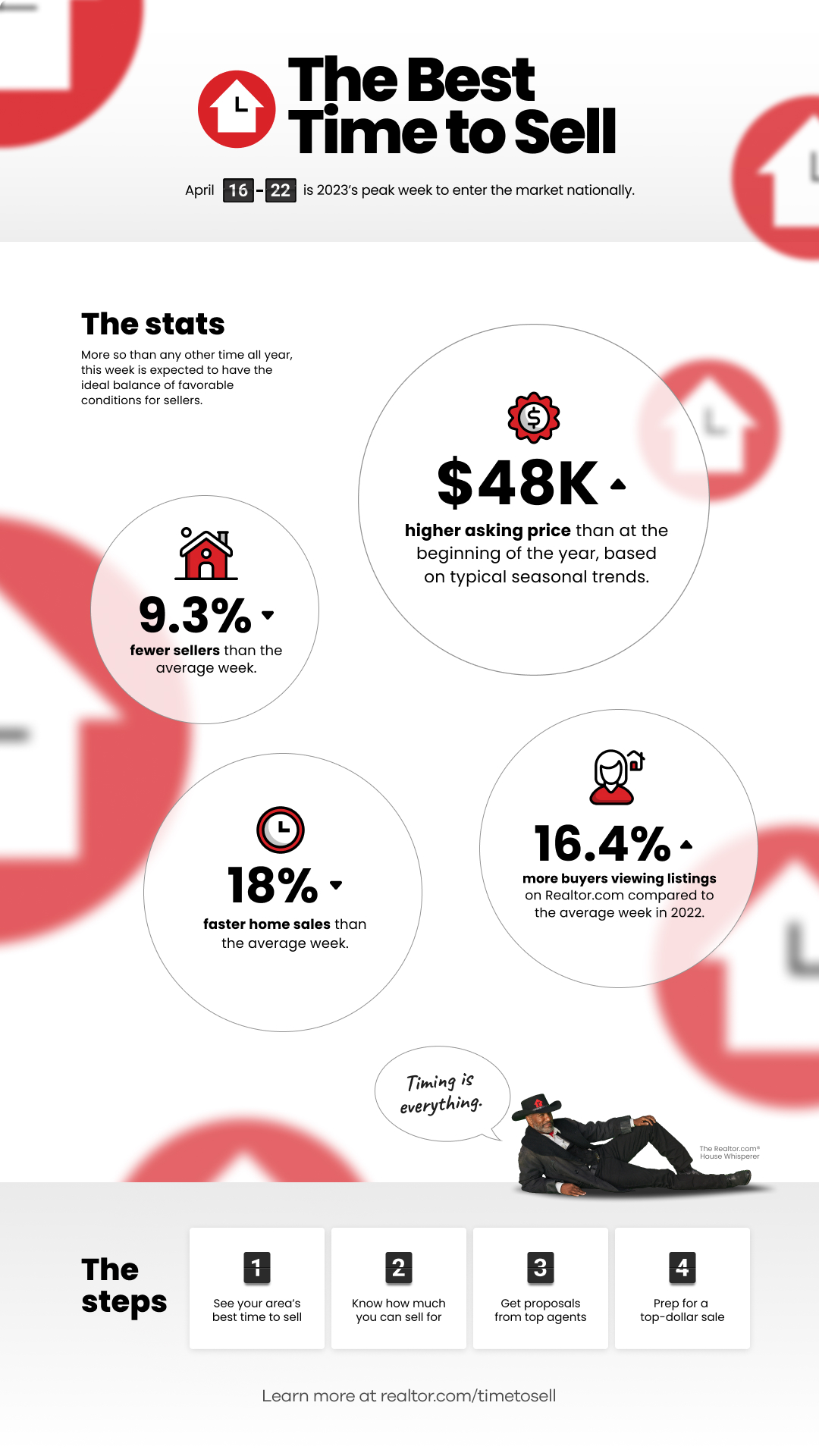
Several New York guides each state a different “best month” to list. The more honest answer is that pace tracks local inventory, not the calendar: Rochester’s 12-day median in spring 2026 reflects roughly 0.33 months of supply, while New York City’s 78-day median reflects roughly six times that much supply relative to demand. Check your specific market’s current months-of-supply figure before assuming a season will do the work for you.
Prepare and Market Your Home

Declutter, deep clean, and depersonalize; this part doesn’t change by state. What changes is which fixes pay for themselves. The 2025 Cost vs. Value report, filtered to the Middle Atlantic region that includes New York, gives a clearer answer than generic staging advice.
| Project | Middle Atlantic cost recouped |
|---|---|
| Garage door replacement | roughly 268% to 337% |
| Steel entry door replacement | roughly 216% to 220% |
| Manufactured stone veneer | roughly 201% to 208% |
| Minor kitchen remodel, midrange | roughly 107% to 113% |
| Vinyl siding replacement | roughly 96% to 97% |
| Midrange bath remodel | roughly 80% |
| Major kitchen remodel, midrange | roughly 49% to 51% |
Source: Zonda / Journal of Light Construction, 2025 Cost vs. Value Report, Middle Atlantic region.
Small, visible exterior fixes recoup more than large interior ones across nearly every project on this list; a full kitchen gut reads as a lifestyle decision at resale time, not a return-maximizing one.
Disclosure and Legal Requirements
Every New York seller of residential real property must complete a 56-question Property Condition Disclosure Statement and deliver it before the buyer signs a contract; the option to pay a $500 credit instead of the form was eliminated for transactions after March 20, 2024, per the New York State Bar Association. A knowingly false or incomplete statement exposes the seller to a buyer claim even after the deed transfers.
The disclosure obligation doesn’t end at signing. If you learn something that makes an earlier statement materially inaccurate, you must deliver a revised one as soon as practicable, right up until the transfer of title or the buyer’s occupancy, whichever happens first. After that point, no revision is required, but a false answer given earlier can still support a claim.
What happens if I find a problem with my house after I’ve already signed the disclosure? Deliver a revised statement as soon as practicable, as long as title hasn’t transferred and the buyer hasn’t moved in. Miss that window, or answer falsely in the first place, and a buyer can still bring a claim after closing.
Offers, Inspection, and Appraisal
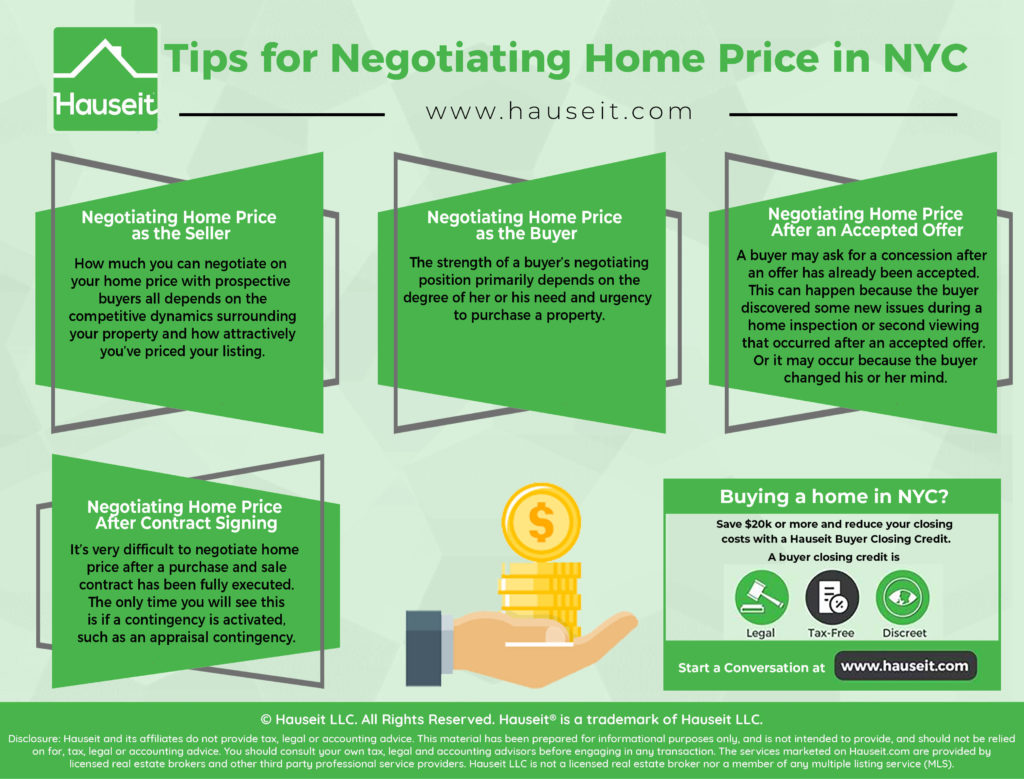
Evaluate offers on financing strength, contingencies, and closing timeline, not price alone; financing strength in a New York contract means confirming pre-approval type, down payment source, and the lender’s stated closing window, not just the letter itself. In a co-op sale, a financing contingency deadline that looks generous for a condo can collide with a board timeline that wasn’t finalized when the offer was accepted, so align the two before you accept rather than after.
Closing
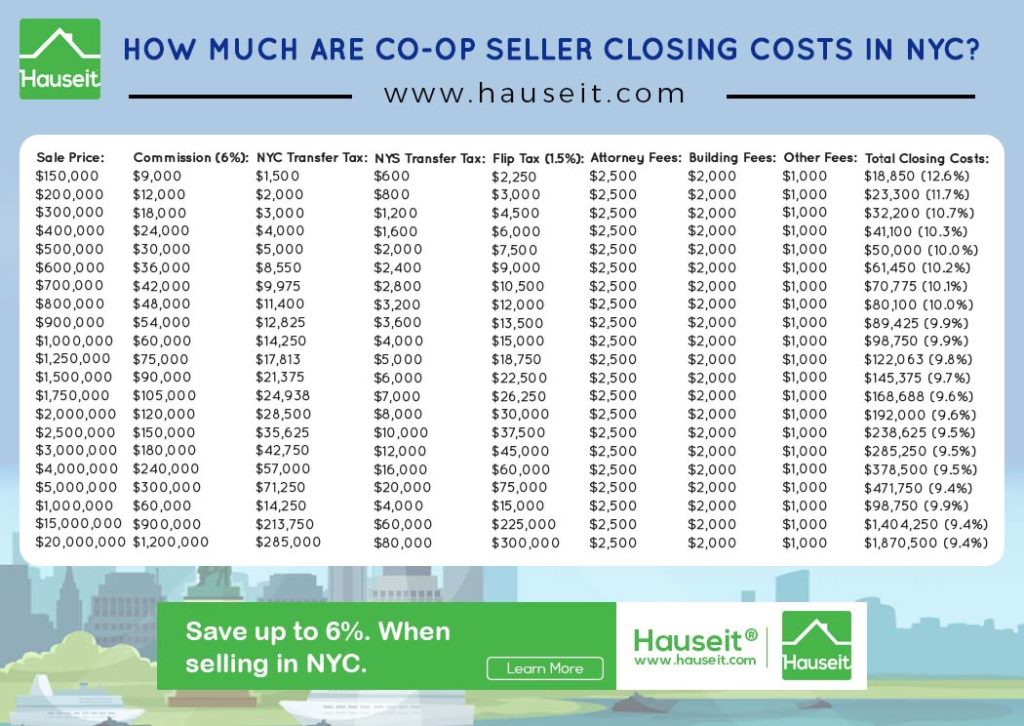
| Cost item | Typical rate | Who typically pays | NYC-specific variation |
|---|---|---|---|
| Agent commission | ~5.69% total, statewide average | Seller, by custom, not requirement | Northeast metro rates run lower per side per Fed data |
| NYS transfer tax | 0.4% (0.65% at $3M and above) | Seller | Same statewide |
| NYC transfer tax (RPTT) | n/a outside NYC | Seller | 1% at or under $500K, 1.425% above |
| Mansion tax | 1% to 3.9%, sales of $1M and above | Buyer | Applies statewide but the higher tiers concentrate in NYC |
| Attorney fee | $1,500 to $2,500 | Each side, own attorney | NYC runs $3,000 to $5,000 |
Sources: NYS Department of Taxation and Finance, NYC Department of Finance, Moshes Law, Brick Underground, Clever Real Estate.
Do I need a lawyer to sell my house in New York? Yes, as a practical matter statewide. New York doesn’t formally mandate an attorney in every county’s statute, but closings are customarily attorney-run everywhere in the state, and title companies and lenders generally require one, per LegalMatch’s overview of New York practice.
Taxes on Your Sale
You can exclude up to $250,000 of gain from federal tax, $500,000 filing jointly, if you owned and used the home as your main residence for at least 2 of the last 5 years, per IRS Topic 701. New York follows the same exclusion for state purposes.
If you’re a non-resident at the time of sale, Form IT-2663 requires estimated tax on the gain at New York’s top rate, 10.90% for 2026, paid when the deed is recorded, unless the sale qualifies for the principal-residence exclusion, in which case you still file to claim the exemption but owe nothing.
Do I still owe New York income tax on my home sale if I’ve already moved out of state? You must file Form IT-2663 regardless. Whether you owe tax depends on whether the federal exclusion applies to the sale; if it does, filing establishes the exemption rather than triggering a payment.
Common Mistakes
Pricing off a citywide or statewide average instead of the local comp set is the single most common upstate mistake; the price gap between Rochester and Albany alone runs 54%. In co-ops, accepting an offer without confirming the buyer’s board-package timeline against the financing contingency deadline creates the most common contract-to-close delay. On disclosure, treating the statement as a one-time form rather than a running obligation up to closing is what turns a fixable issue into a post-closing claim.
Comments