
What Rochdale Village Is (and Isn’t)
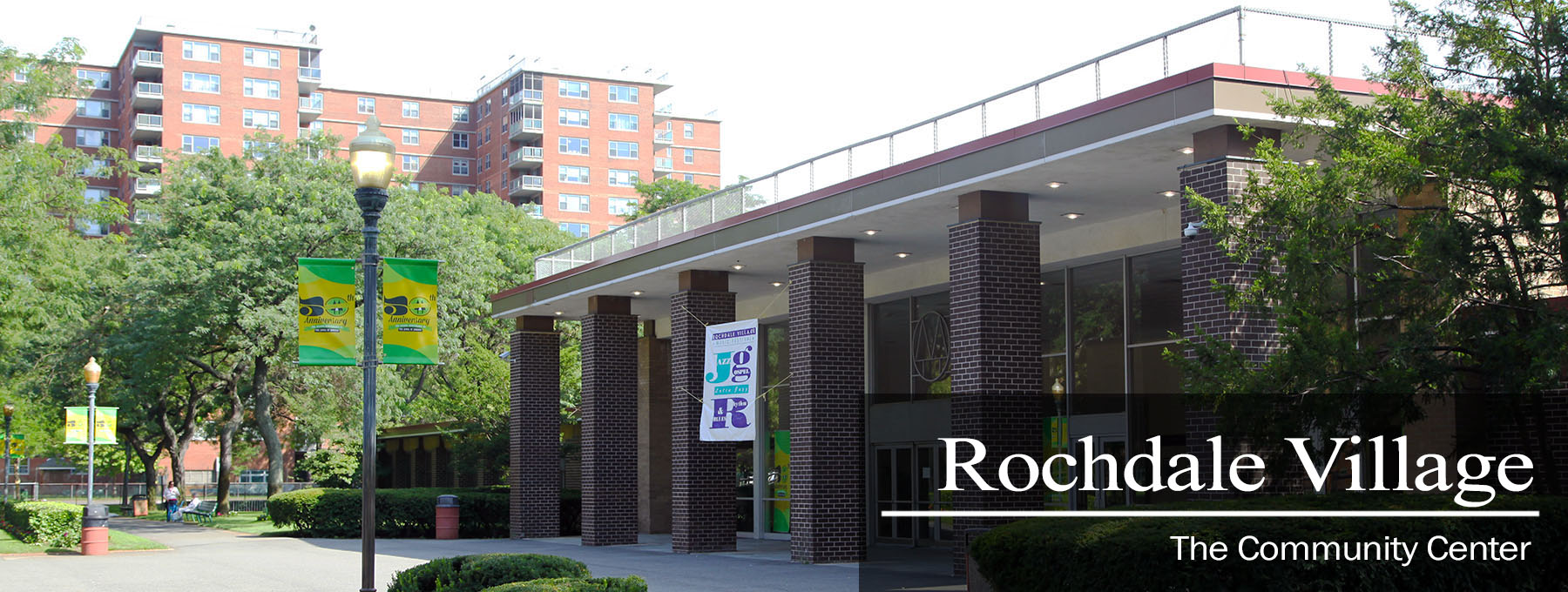
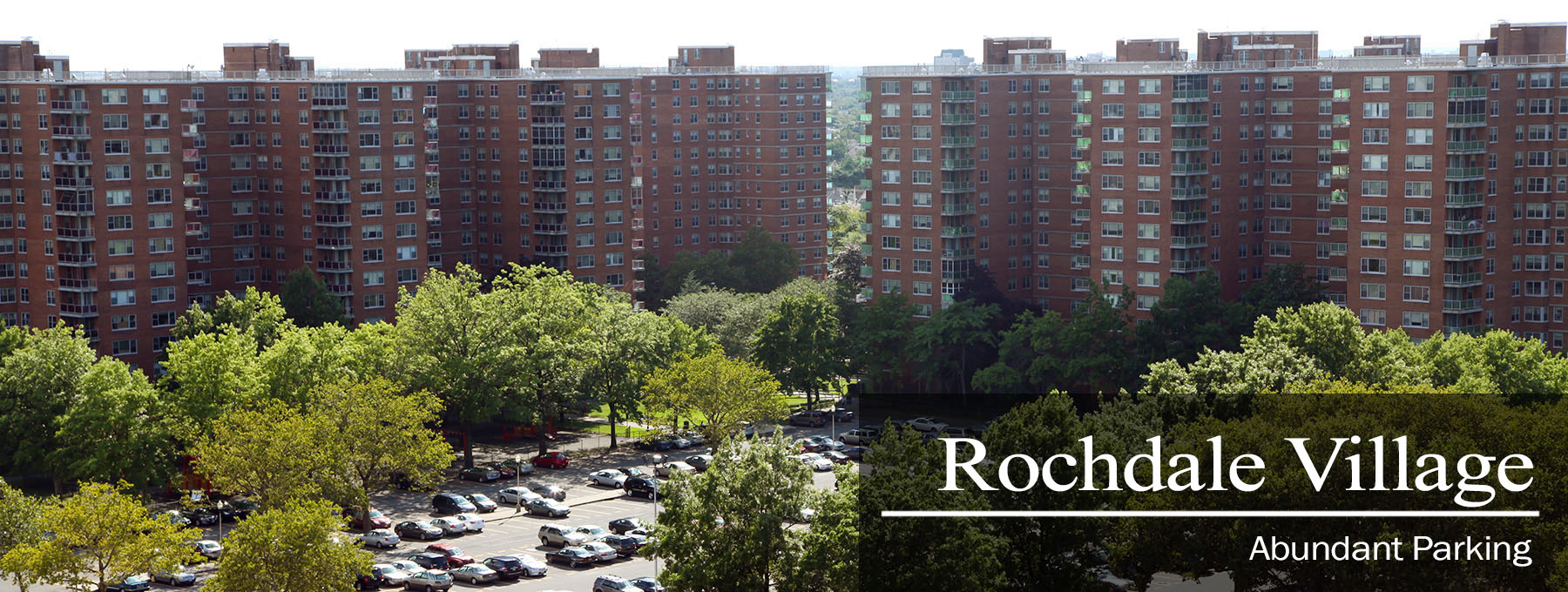
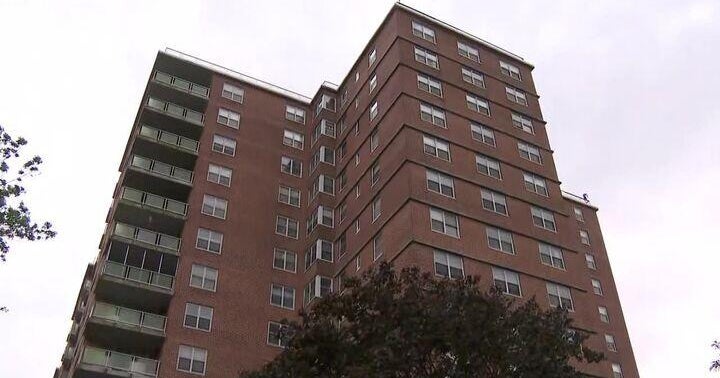
Rochdale Village is a 5,860-unit limited-equity housing cooperative built under New York’s Mitchell-Lama program, which caps both the price residents pay to buy in and the price they can later sell for. That cap is the reason every number on this page behaves differently from an ordinary Queens co-op or condo listing.
It is worth separating from “Rochdale,” the smaller surrounding neighborhood of single-family homes and market-rate condos that some real-estate sites blend into the same page. A market-rate condo listed as being in “Rochdale” is not a Rochdale Village share: it carries no income cap and can resell for whatever the market will bear.
The complex sits on the former site of the Jamaica Racetrack, which operated from 1903 until it closed in 1959, and opened in 1963 under architect Herman Jessor, working from a Le Corbusier-influenced plan for the United Housing Foundation. Robert Moses, who championed the project, once called it “the most significant multi-family cooperative” underway in the city at the time.
Eligibility and the Waiting List
Income limits, explained with a worked example
Rochdale Village admits applicants under an HCR income-limit formula: take the apartment’s annual carrying charge, add 6% of the purchase equity, add $120 for each room, then multiply the total by 7 for households of one to three people or by 8 for households of four or more.
The figures below are an illustrative calculation built from that published formula and Gothamist’s reported cost ranges, not an official Rochdale Village number for this specific apartment size; confirm the exact figure with the management office before applying. For a four-room apartment at the $1,400 monthly midpoint of the reported range: annual carrying charge of roughly $16,800, plus 6% of a $23,000 share ($1,380), plus $120 × 4 rooms ($480), for a combined basis of about $18,660. Multiplied out, that puts the maximum admitting income around $130,600 for a smaller household and $149,300 for a household of four or more.
Wait time by apartment size
| Apartment size (rooms) | Wait time – Live Here page | Wait time – FAQ page |
|---|---|---|
| 3 | 5 years | 36 months |
| 3.5 | 6 years | 36 months |
| 4 | 6 years | 36 months |
| 4.5 | 7 years | 48 months |
| 5 | 7 years | 48 months |
| 6 | 6 years | not listed |
| 6.5 | 6 years | not listed |
Rochdale Village’s own site carries two different wait-time estimates for the same apartment sizes, and they disagree for every size listed on both pages. Treat the longer, more detailed Live Here figures as current, and confirm an exact position through HCR’s Automated Waiting List system rather than either static estimate.
Applying means requesting a form from the Rochdale Village management office at 169-65 137th Avenue in Jamaica, or through HCR’s Mitchell-Lama Automated Waiting List portal, then tracking a position by application number once one is assigned.
How long is the waiting list really?
Depending on which of Rochdale Village’s own published estimates is used, 3 to 7 years for most apartment sizes. The two estimates disagree, so confirm the specific position through HCR’s Automated Waiting List system.
What It Costs to Buy and Live There
Buying in means purchasing a cooperative share for no more than about $23,000, then paying a monthly carrying charge of $1,000 to $1,800 depending on unit size.
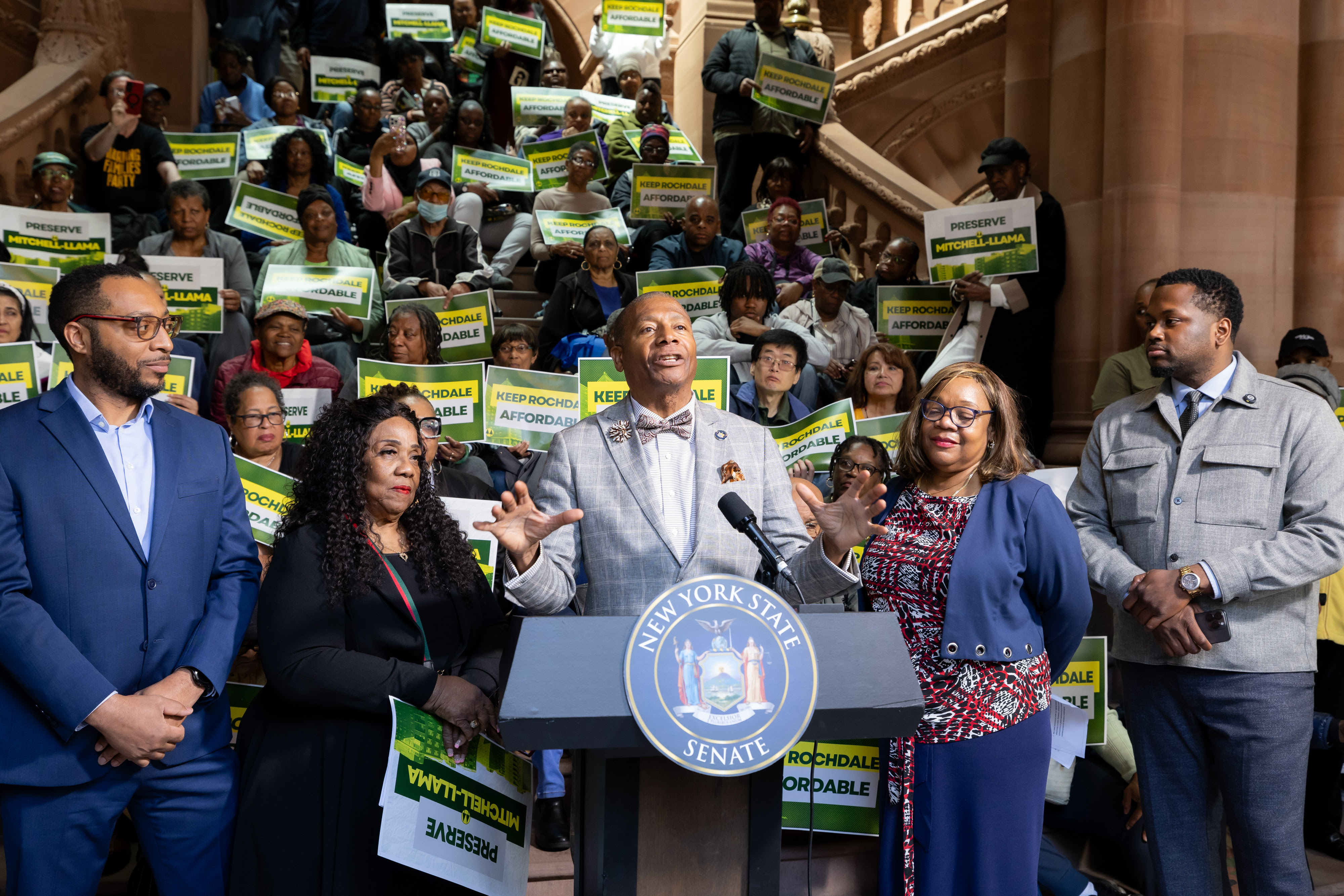
Those numbers are about to move. Rochdale’s volunteer board voted in January 2025 for a 22.3% carrying-charge increase, compared with only 3.7% the prior year, after the co-op projected an $11.4 million shortfall. HCR, which must approve the final figure, has been described by residents as floating increases as high as 57%; by September 2025 the agency’s actual proposal was reported closer to 22% to 30%. Board Chair Jean Hall has pointed to a roughly 180% rise in insurance costs and $27 million in mandated facade repairs as drivers of the gap, per the state senate’s account of the Albany meeting. Separately, the development owes more than $17 million in unpaid water bills dating to 2020, which HCR wants repaid within two years rather than the five-year schedule the board built its 22% figure around, which is the source of the increase’s severity.
Selling a share does not work like an open-market resale. Under the Mitchell-Lama structure, per the Private Housing Finance Law formula, a departing shareholder is paid their original purchase price, plus any capital assessments they contributed, plus their proportionate share of the mortgage principal the co-op has paid down since they bought in. The formula pays out cost basis and paid-down debt, so someone who bought in decades ago sells for a fraction of what a comparable market-rate unit fetches today: the mechanism was built to keep the next buyer’s price low, and it does exactly that at the seller’s expense.
Can I sell my Rochdale Village apartment for a profit?
In a limited sense. The formula returns the original purchase price plus paid-down mortgage principal and any capital assessments; it does not track the surrounding market’s value.
Is Rochdale Village a Good Investment?
Buying at Rochdale Village is a housing decision more than a wealth-building one. The comparison below sets the co-op’s cost structure against nearby market-rate alternatives, using property-type-specific medians rather than one blended neighborhood average.
| Property type | Typical price | Typical monthly cost | Appreciation potential |
|---|---|---|---|
| Rochdale Village share (Mitchell-Lama) | Up to ~$23,000 | $1,000 to $1,800 (pre-increase) | Capped: resale returns purchase price plus paid-down principal |
| Queens co-op, market-rate median | ~$330,000 to $345,000 | Maintenance varies by building | Open market |
| Queens condo, market-rate median | ~$654,000 to $665,000 | Common charges vary by building | Open market |
| Rochdale-neighborhood market-rate condo (surrounding area, not the co-op) | ~$682,500 median | Common charges vary by building | Open market |
A Rochdale Village share costs roughly a fourteenth of a market-rate Queens co-op’s median entry price, and about a thirtieth of a market-rate Queens condo’s. That gap is the entire trade a buyer makes: affordability now, in exchange for the appreciation an open-market purchase in the same borough could deliver later.
Is Rochdale Village considered a safe investment compared to a market-rate co-op?
It carries less exposure to foreclosure and market swings, since shares don’t trade on the open market. It also caps upside: a shareholder can’t capture neighborhood appreciation the way a market-rate co-op owner can.
Location and Transit
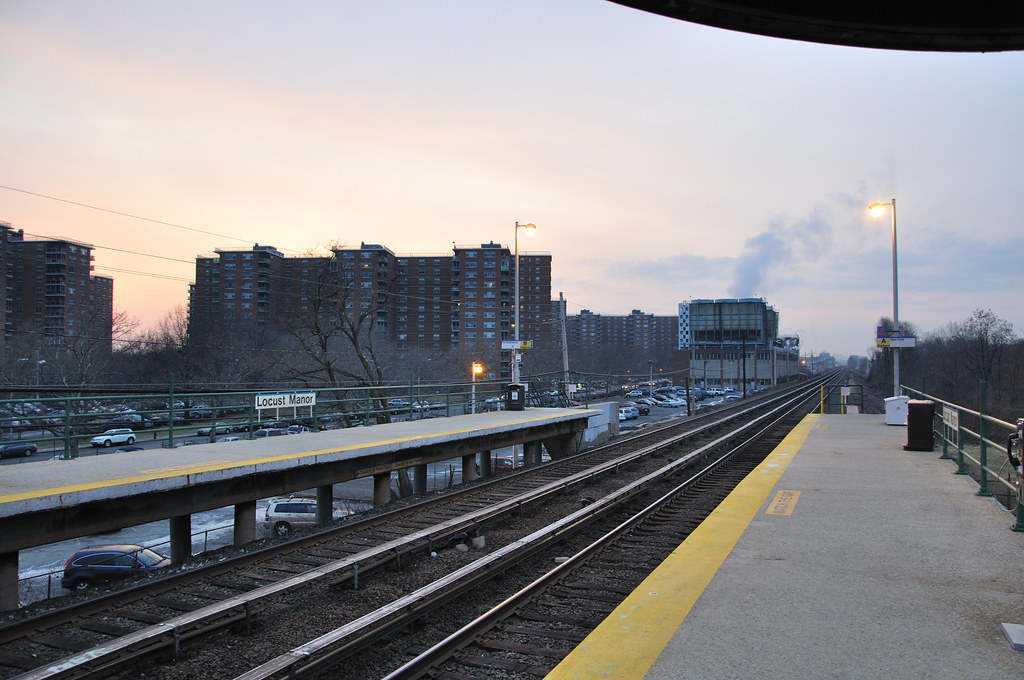
Rochdale Village sits on 120 acres in southeastern Queens, within walking distance of the Locust Manor LIRR station, about 40 minutes from Manhattan, and roughly a mile from JFK Airport, with direct access to the Belt Parkway.
Common Mistakes and Misconceptions

- Assuming the share can be resold on the open market. It can’t; it returns to the cooperative under the formula described above.
- Assuming the current carrying charge is a stable, long-term number. The 2025 increase shows charges can move sharply with insurance costs, deferred repairs, and HCR-mandated debt repayment schedules.
- Confusing “Rochdale” the surrounding neighborhood with Rochdale Village the cooperative. Only the latter carries income caps and resale restrictions.
- Treating either published wait-time estimate as fixed. Rochdale Village’s own site gives two different numbers for the same apartment sizes.
Renting, Subletting, and Transfers
Every Mitchell-Lama unit must be the shareholder’s primary residence, and the named leaseholder cannot collect payment from guests or other occupants for letting them stay, which functionally rules out subletting for income. A shareholder whose household has outgrown its unit can request an internal transfer to a larger apartment before an outside applicant on the waiting list is considered.
Can I rent out my unit?
No. The primary-residence requirement and the ban on collecting payment from occupants prohibit subletting for income.
Comments