
Where Ridgewood Is
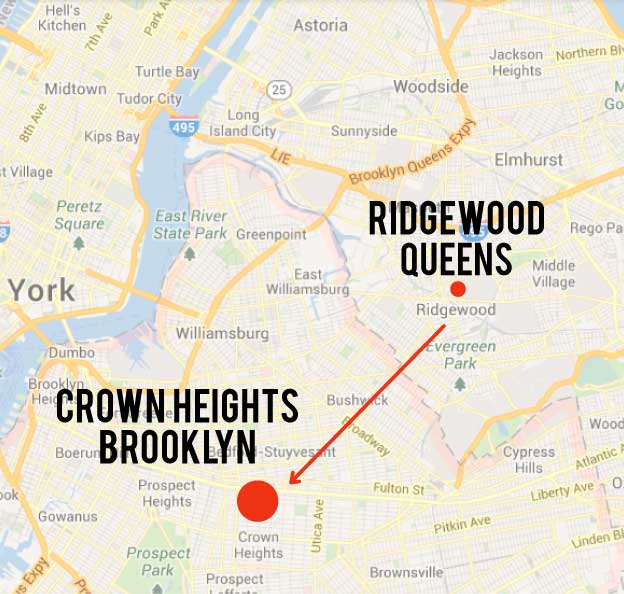
Ridgewood sits in western Queens, bordering Bushwick and East Williamsburg in Brooklyn along its western edge, with Maspeth, Glendale, and Middle Village to the east. Housing stock is dominated by small multifamily buildings from the early 1900s, and the neighborhood’s popularity as a lower-cost alternative to north Brooklyn is real but, as the next two sections show, no longer simple.
Current Pricing by Property Type
| Property type | Current price | Change | Source, date |
|---|---|---|---|
| All homes, median sale price | $1,300,000 | +6.0% YoY | Redfin, Jan. 2026 |
| Price per square foot, all homes | $843 | +15.9% YoY | Redfin, Jan. 2026 |
| Condo, median sale price | $502,000 | −19.6% YoY | PropertyShark, Sept. 2025 |
| Co-op, median sale price | $655,000 | not statistically reported | PropertyShark, Sept. 2025 |
The condo drop and the overall price-per-square-foot jump are not a contradiction: they reflect a small sample, PropertyShark logged just three trades in one recent month, in a market where townhouse and multifamily sales carry more weight than condos. Anyone quoting one blended Ridgewood price without naming the property type is quoting a number that could mean almost anything.
How much has Ridgewood appreciated recently? Redfin’s closed-sale data puts the median price up 6.0% year over year as of January 2026, but StreetEasy’s asking-price data showed a 2.9% dip during 2025 before that recovery. Both figures are accurate; they measure different points in the cycle.
Ridgewood vs. Bushwick, By the Numbers
| Neighborhood | Median sale price | Change | Source, date |
|---|---|---|---|
| Ridgewood | $1,300,000 | +6.0% YoY | Redfin, Jan. 2026 |
| Bushwick | $1,100,000 | +3.6% YoY | Redfin, Aug. 2025 |
A comparable East Williamsburg figure from a non-competitor source was not available at the time of writing; treat any three-way Ridgewood-Bushwick-East Williamsburg comparison you see elsewhere as unverified until it names a source.
Is Ridgewood cheaper than Bushwick? Not on purchase price, by current data. It runs about $200,000 higher at the median. Rent sits close to parity, with Ridgewood only slightly below Bushwick.
Buying in a Landmark District
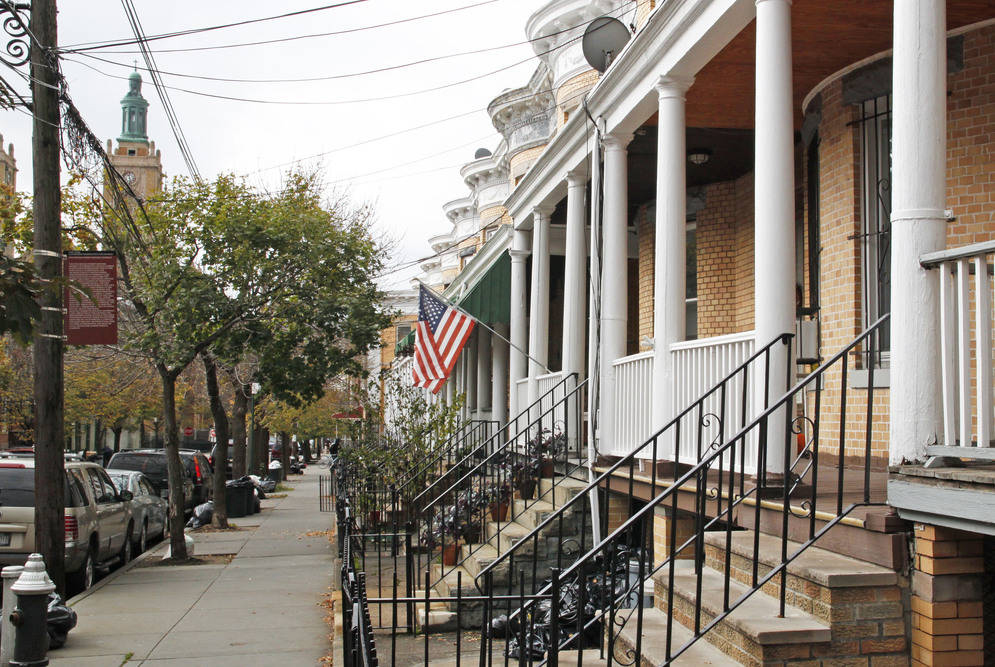
Ridgewood contains four separate historic districts designated by the NYC Landmarks Preservation Commission: Stockholm Street (2000), Ridgewood North (2009), Ridgewood South (2010), and Central Ridgewood (2014, covering 990 buildings). Inside any of them, exterior work, including windows, doors, stoops, railings, and paint color, requires LPC approval before a Department of Buildings permit will issue.
| Work type | Permit needed | Typical timeline |
|---|---|---|
| Interior work needing a DOB permit, no exterior change | Certificate of No Effect | 1 to 2 weeks staff level; up to 60 days if backlogged |
| In-kind window or door replacement, no DOB permit needed | Permit for Minor Work | Under 2 weeks, no LPC fee |
| Addition, demolition, or facade alteration | Certificate of Appropriateness | 2 to 3 months, public hearing required |
| Simple repairs (broken glass, same-color repaint) | None | N/A |
Certificate of Appropriateness and Certificate of No Effect applications carry a $50 fee for the first $25,000 of work, plus $3 for every $1,000 above that; Permit for Minor Work applications carry no fee. Owners can offset renovation costs through the New York State Historic Homeownership Rehabilitation Tax Credit: 20% of qualified rehabilitation expenditures, capped at $25,000 per year as of January 1, 2025, down from the previous $50,000 cap, with a $5,000 minimum project spend and a requirement that the property sit in a qualifying census tract.
Elaine and Joe Haufe, longtime owners in a Ridgewood historic district, used the program to restore their home’s brownstone facade and replace a period door; matching the door alone took four months of back-and-forth with LPC staff before approval, and their tax credit came to $10,000.
Do I need permission to replace my windows in Ridgewood’s historic district? Yes, if the property is in one of the four designated districts. In-kind replacement usually qualifies for a Permit for Minor Work instead of a full hearing, but LPC still has to sign off first.
Renting in Ridgewood Now
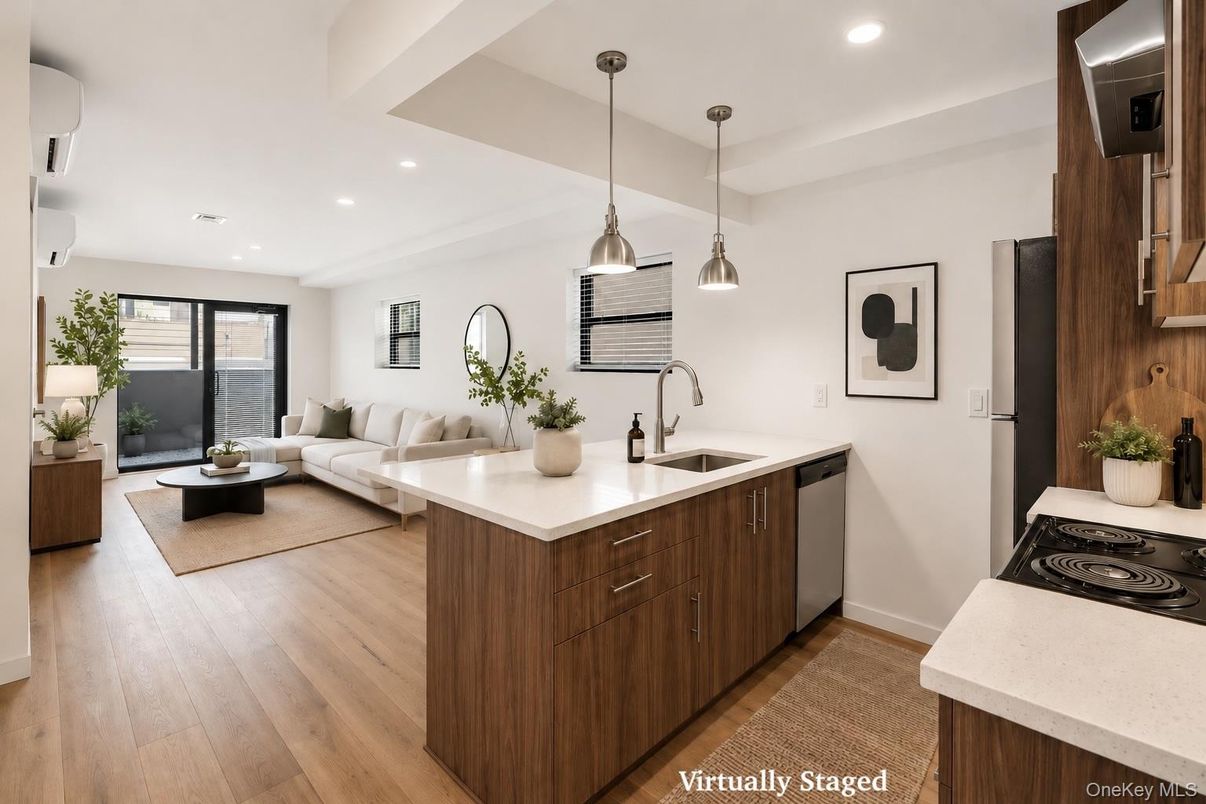
The FARE Act took effect June 11, 2025. Under it, whichever party hires a broker pays that broker; a landlord’s listing agent can no longer charge the tenant a fee, and violations carry fines of up to $2,000. Before the law, the average NYC renter paid close to $13,000 in upfront moving costs, broker fees included.
Current average rent in Ridgewood was $2,952 in September 2025, up 7.72% year over year, per M.N.S. Real Estate data. Studios averaged $2,599 that month, up from $2,236 a year earlier; one-bedrooms averaged $2,857, up from $2,773. StreetEasy’s separate asking-rent series shows Ridgewood’s median dipping to $3,205 in 2025 from $3,250 in 2024. Average and median rents are not the same measurement, and closed versus asking figures tell different stories in a market this size.
Who pays the broker fee now? Whoever hires the broker. If a landlord’s agent listed the apartment, the landlord pays. Tenants only pay if they hired their own broker.
Investing in Multifamily
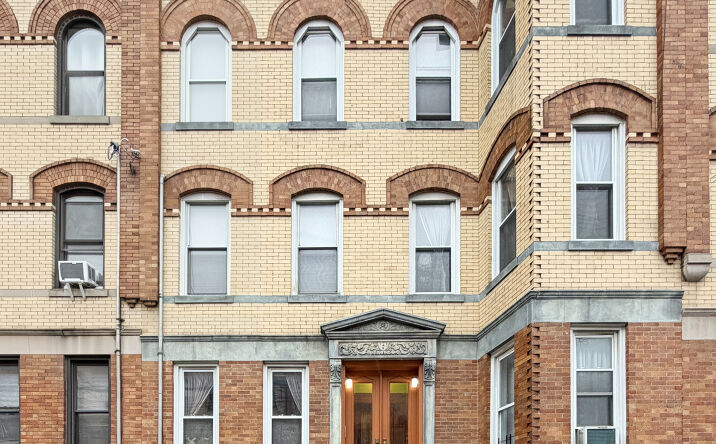
Ridgewood’s rent-stabilized housing stock has declined by nearly two-thirds since 2019. Registered rent-stabilized units in the neighborhood fell from 6,228 in 2019 to 2,149 in 2021, a 65% decline, per an analysis by THE CITY, most of it traced to owners using the state’s “substantial rehabilitation” exemption to remove entire buildings from regulation. That is a faster drop than the roughly 10% citywide decline over the same period. No 2025-dated, building-level count was independently available at the time of writing; treat any current-year percentage claim about Ridgewood’s stabilized stock as an estimate until DHCR or Rent Guidelines Board data updates it.
| Consideration | Rent-stabilized building | Free-market building |
|---|---|---|
| Achievable rent growth | Capped annually by the NYC Rent Guidelines Board | Set by market demand |
| Underwriting risk | Lower ceiling on NOI growth; regulatory exposure | Higher upside, higher rent volatility |
| Typical buyer | Long-hold investor, value-add via legal deregulation paths | Shorter-hold or owner-occupant-adjacent buyer |
| Cap rate context | Within the neighborhood’s 4.48% to 10.52% observed range | Same range, skewing toward the lower end for newer stock |
Cap rates for Ridgewood apartment buildings currently run 4.48% to 10.52%, a wide enough band that a building’s rent-regulation status affects the number more than its age or block does.
Is Ridgewood housing stock rent-stabilized? A meaningful share still is, though registered units fell sharply between 2019 and 2021. Confirm status building by building; do not assume from a listing’s “free-market” language alone.
Risks in Ridgewood’s Pre-War Stock
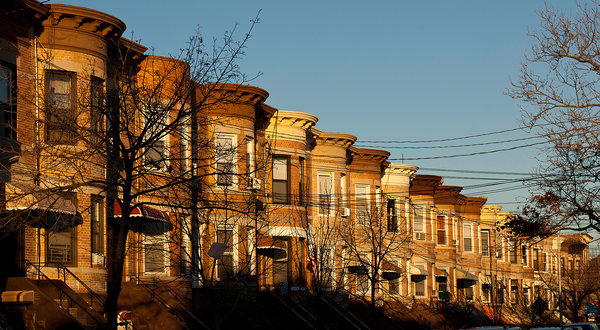
Ridgewood’s median building dates to 1938, and roughly 60% of its housing was built before 1940, per Census-derived data. Age brings compliance exposure that the pre-war charm framing common to most guides skips over. One current example: 614 Woodward Avenue was formally entered into the NYC Department of Buildings’ Unsafe Buildings Program in 2025, after accumulating more than 40 DOB violations, 67 OATH and Environmental Control Board violations, and over $529,875 in unpaid fines. A buyer evaluating any pre-war building here should pull the DOB violation history before going into contract, not after.
A second, unrelated risk sits outside the building itself: 21% of Ridgewood properties carry severe flood risk over the next 30 years, per Redfin’s flood-modeling data. Inventory has also stayed tight: 62 homes were listed for sale as of June 2025, and 80% of homes that sold that month went for below asking price, even as days-on-market figures elsewhere in the data set have ranged from 49 to 78 across recent months.
Neighborhood Fundamentals, Compressed
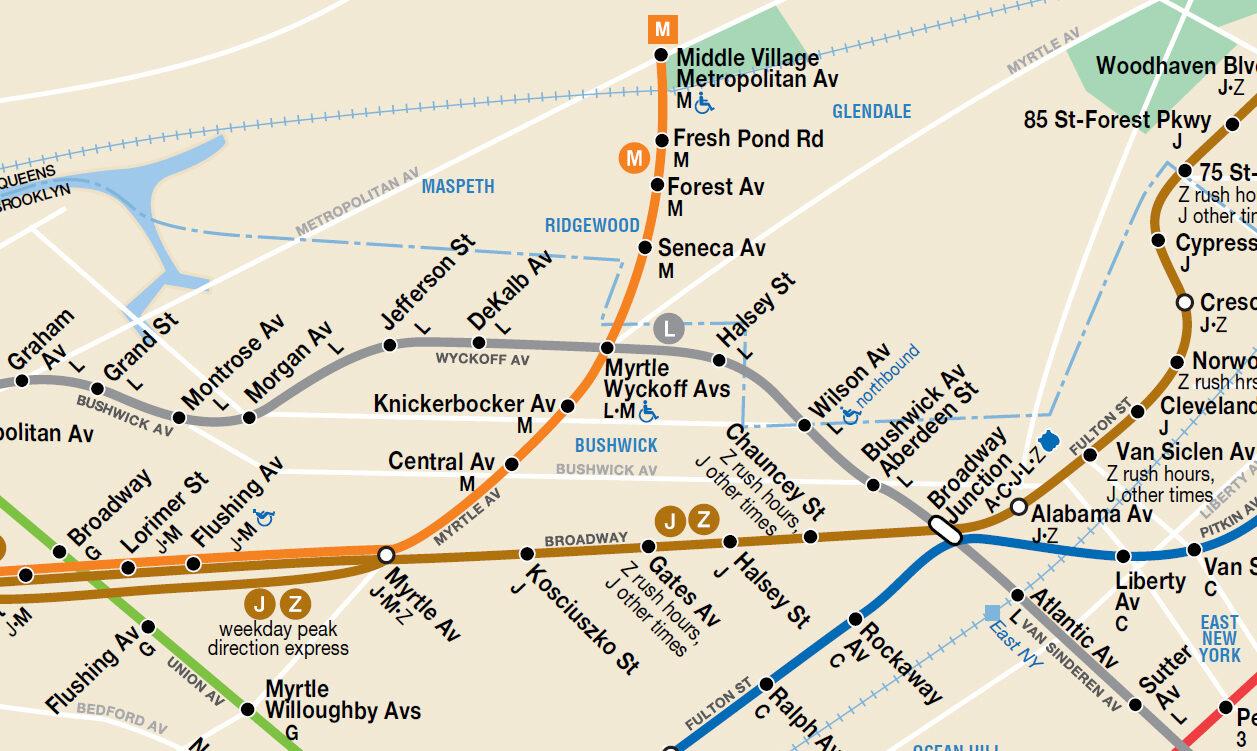
Transit runs on the M train through the neighborhood’s center and the L at Myrtle-Wyckoff and Halsey Street on its western fringe. Ninety-six percent of Ridgewood’s rental buildings hold fewer than 50 units, a small-building character that shapes everything from elevator access to how fast a landlord can respond to a repair request. Schools and parks exist at typical outer-borough density; neither is the deciding factor for most buyers weighing Ridgewood against its neighbors.
Comments