
Who Can Buy

U.S. citizens and foreign nationals alike can own real property in Puerto Rico without restriction; the mechanics of the transaction, not eligibility, are where deals go wrong. Every transaction is closed by a notary public who is also a licensed attorney, formalizing the deed and registering it with the Property Registry under a Torrens-derived system.
How Property Search Works Without an MLS
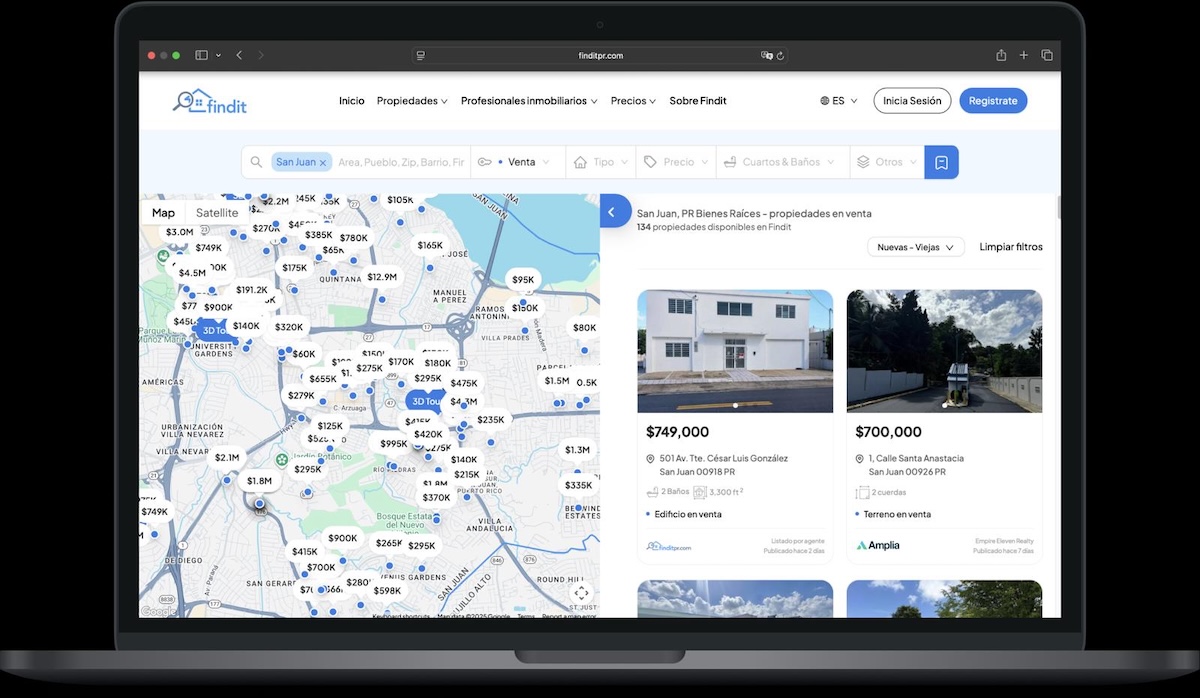
Puerto Rico has no single, mandatory MLS that every broker feeds. The Puerto Rico Realtors Association MLS partners with Stellar MLS, but participation isn’t universal among the island’s agents, and Zillow currently lists roughly 3,500 properties across the island, a fraction of true inventory. A buyer relying only on Zillow, Realtor.com, or Trulia will miss listings that circulate through direct broker relationships instead. Comparable-sales data compounds the problem: there is no county-record equivalent showing prior sale prices the way most U.S. states publish them, so buyers and appraisers commonly pay for subscription services such as TasaMax to reconstruct pricing history, and even those remain incomplete. Budget extra time for search, and treat any single portal as a partial view rather than the market.
Do I need a buyer’s agent if I’m working with the listing agent already? Dual agency is common in Puerto Rico and isn’t prohibited, but it means the same agent may represent both sides of the negotiation. If you want independent representation, say so explicitly and in writing before you make an offer, since the default assumption on the island is single-agent representation of the transaction.
Due Diligence and Title Risk

A title search establishes that the seller truly owns the property and that it carries no liens or encumbrances, and it is the closest thing Puerto Rico has to a mainland title company’s function, because copies of recorded documents can only be obtained from the parties to a transaction, the notary, or a notarial archive, not from a public records portal. Title insurance is optional in Puerto Rico rather than the default, so the pre-closing study is what protects the buyer, not an insurance policy that absorbs a bad find after the fact.
The sharpest version of this risk shows up in inherited property. Puerto Rico’s Civil Code defines forced heirs by statute, and the current Civil Code adds the surviving spouse to the first order of intestate succession alongside children. When an owner dies without a will, the property cannot be sold until a court issues a formal declaration of heirship, and that process can require published notice to other potential heirs before a judge will rule when the claimed relationship is distant. Every named heir, however many there are, has to sign off before a marketable title exists. A seller who says “the house has been in the family since my grandfather” is often describing exactly the kind of unresolved chain that stalls a closing for months.
Is there title insurance in Puerto Rico? It’s available but not standard practice; most transactions rely on the notary’s pre-closing title study instead. For a high-value purchase, ask your notary or attorney directly whether a policy is worth adding, since the cost is small relative to the exposure on properties with a complicated ownership history.
How long does it take to clear title on an inherited property before a sale can close? A straightforward, uncontested case can move in a matter of months once the declaration of heirship is filed; a case involving multiple heirs, no will, or disputed relationships routinely runs well past a year before every required signature is in hand.
Financing

Down payment expectations for non-resident buyers typically sit in the 20% to 30% range for conventional local financing, higher than the 3.5% minimum available to owner-occupant FHA borrowers who qualify. FHA loan limits are set by county rather than island-wide: San Juan county’s 2026 single-family limit is $385,250, while lower-cost counties such as Juana-Díaz sit at the federal floor of $356,362, a gap of just under $29,000 across the island. Puerto Rico has no counties designated as high-cost areas for conforming loans in 2026, so jumbo financing kicks in earlier here than in mainland high-cost metros.
Closing Costs, Reconciled
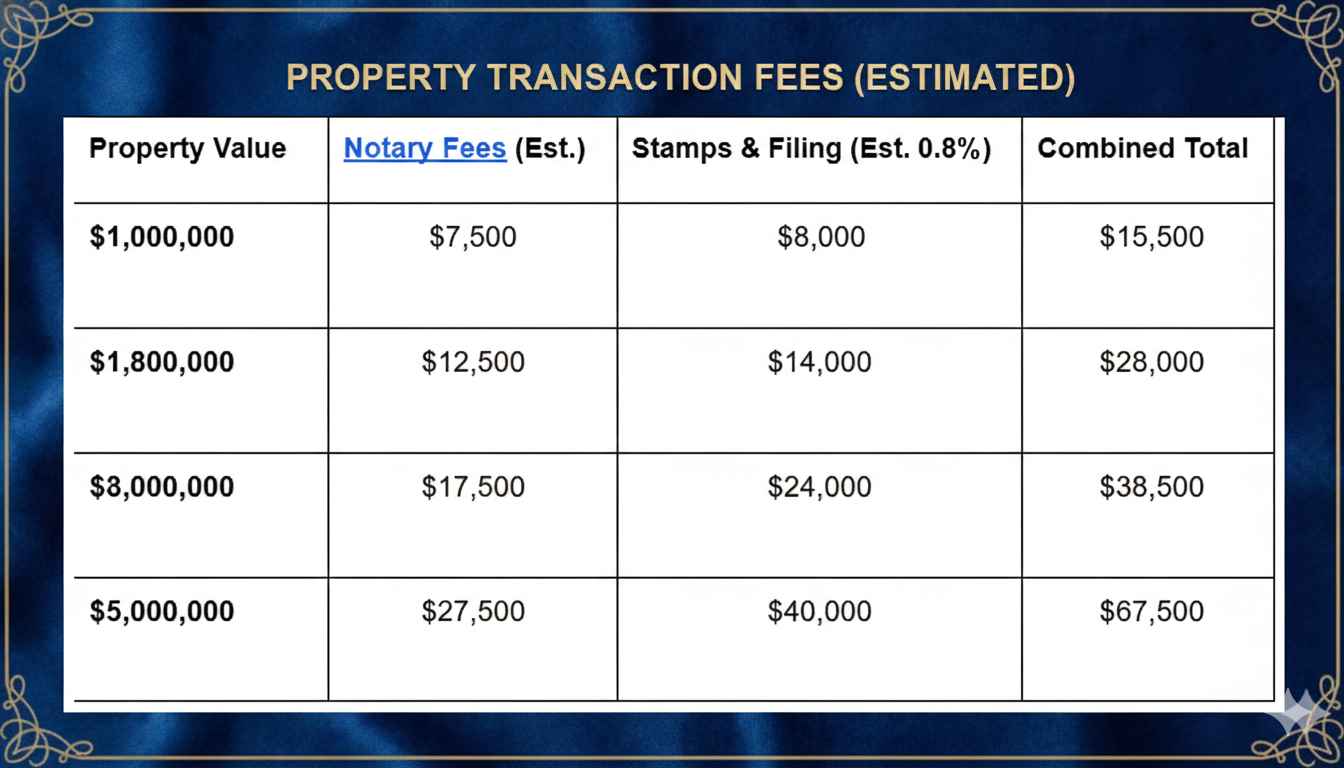
Four widely cited Puerto Rico buying guides give four different closing-cost ranges, and none of them state whether the number is buyer-only or the full transaction. The underlying legal costs are fixed by statute, so they don’t vary as much as the guides suggest once scope is defined.
| Cost item | Range | Who typically pays | Scope note |
|---|---|---|---|
| Notary fee | 0.5% to 1% of price | Negotiable; often split or seller-paid on the original deed | Buyer-side only if buyer requests additional notarial services |
| Stamp fees (Hacienda) | Roughly 0.1% of price, plus small fixed stamps | Buyer, for the certified copy | Buyer-side |
| Property Registry filing fee | $50 plus $4 per $1,000 above $25,000 | Buyer | Buyer-side |
| Real estate commission | 5% to 6% of price | Seller, usually split between listing and buyer brokers | Seller-side, not part of buyer closing costs |
| CRIM tax proration | Prorated to closing date | Buyer and seller, split by date | Not a fee; a settlement of existing tax owed |
Puerto Rico law fixes notary fees on instruments involving determinable value between $10,000 and $5,000,000 at no more than 1% and no less than 0.5% of that value, with a $250 floor. That statutory range, not the wider 1% to 2.5% figures repeated across buying guides, is the number to budget against for the legal fee itself.
A worked example makes the scope problem concrete: on a $250,000 deed, the buyer’s Internal Revenue stamp runs $251, the certified-copy Legal Assistance stamp is $25, and the Property Registry filing fee totals $950, before the notary’s percentage fee is added. None of the four guides analyzed for this article show that breakdown; they quote a bundled percentage instead.
Act 60: What Changed in 2026
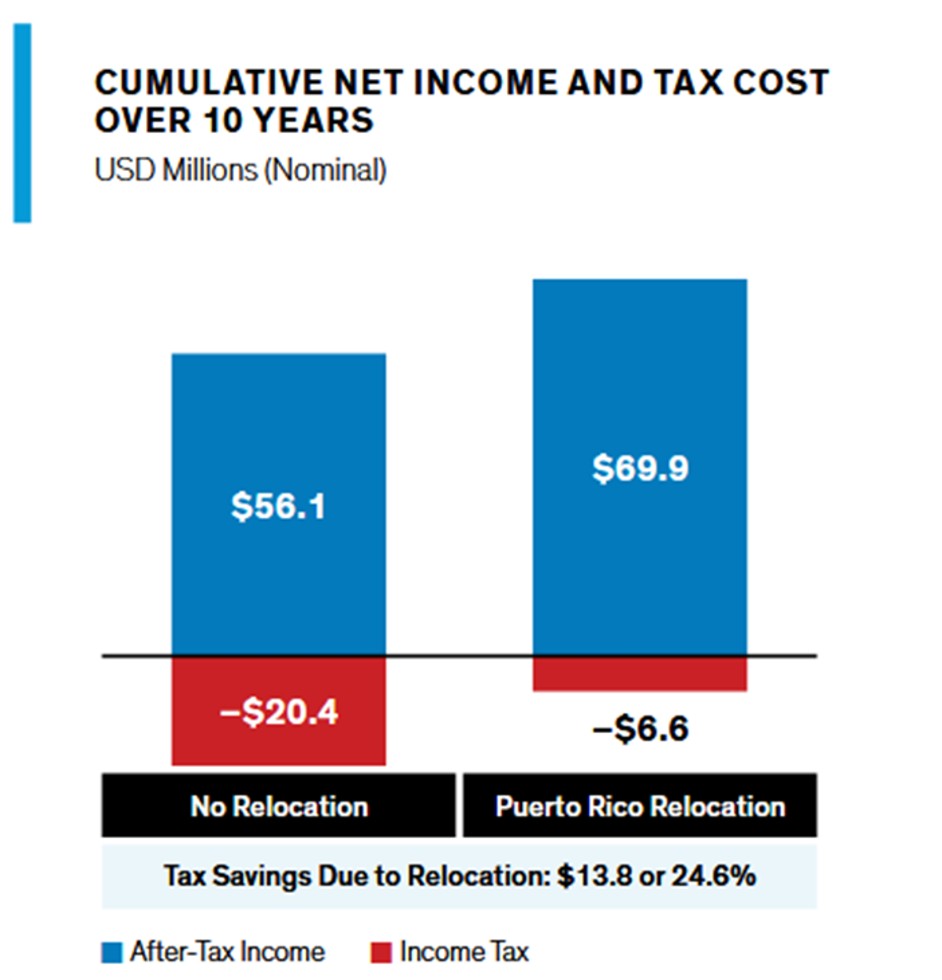
Act 60-2019 consolidated the island’s overlapping incentive laws, including Act 22 for individual investors and Act 20 for export-services businesses, into one statute on July 1, 2019. For years, the individual investor track offered a flat 0% Puerto Rico rate on qualifying capital gains, dividends, and interest. That changed with Act 38-2026, signed into law in March 2026.
| Act | Year | Status today | What it required |
|---|---|---|---|
| Act 22 | 2012 | Superseded | 0% rate on PR-source investment income for individual investors |
| Act 20 | 2012 | Superseded | 4% corporate rate for export-services companies |
| Act 60 | 2019 | Governing framework | Consolidated 20/22 and others; added mandatory charitable contribution and residency-purchase deadline |
| Act 38-2026 | 2026 | In force | Extends the program to 2055; 4% rate for applications filed on or after January 1, 2027; 0% still available for filings by December 31, 2026 |
A Chapter 2 decree holder currently pays a $5,000 annual Puerto Rico filing fee, plus a $10,000 annual charitable contribution split between organizations working to eradicate child poverty and any other qualifying Puerto Rico nonprofit. Buying real estate isn’t optional for most applicants either: the decree requires purchasing a principal residence in Puerto Rico within two years of the decree being granted, and it must serve as an actual primary residence, not a vacation property. Miss that window or misjudge the residency test, and the decree can be revoked; non-filers now face an automatic $1,000 fine with no discretionary review starting in 2026.
Do I have to buy property to keep my Act 60 status? Yes, for the Individual Resident Investor track. The decree requires purchasing and recording a principal residence within two years of approval, held individually, jointly with a spouse, or through a qualifying trust; renting indefinitely doesn’t satisfy the requirement.
Property Tax: Why Online Numbers Disagree
Puerto Rico’s property tax authority, CRIM, applies a municipal tax rate of roughly 8.03% to 11.83%, and taken at face value that looks far higher than the “low property tax” reputation Puerto Rico usually has. Both framings are correct, because they describe different bases.
Why do property tax estimates for Puerto Rico vary so much online? Sources quoting 8% to 12% are describing the millage rate applied to a decades-old assessed value, not an effective rate on market value; sources describing Puerto Rico taxes as low are describing the resulting dollar bill. Both numbers are accurate; they’re measuring different things.
Risk and What Guides Leave Out
Most buying guides sell the upside and treat risk as an afterthought. Hazard insurance is mandatory for any financed purchase, flood insurance may be required depending on FEMA flood-zone designation, and underwriters commonly request roof-age documentation and hurricane-mitigation certification before binding coverage, all of which affects both the closing timeline and the ongoing cost of ownership. A comprehensive, publicly sourced figure for typical hurricane-related loss exposure on residential property wasn’t available at a level of specificity worth repeating here; treat that as an open question for your insurer, not a gap this page fills with a guess. Get an insurance quote during due diligence, not after the purchase agreement is signed.
Short-term rental regulation is worth checking street by street, not island-wide, since municipal and community-association rules on vacation rentals vary and change; a property bought specifically for Airbnb-style income needs that check before closing, not after.
Common Mistakes
- Budgeting closing costs as a single bundled percentage. The notary fee, stamps, and registration fee are separate, statute-governed line items; price them individually against the table above.
- Assuming the Act 60 property purchase can wait. The two-year purchase deadline starts at decree approval, not at move-in, and missing it puts the decree itself at risk.
- Assuming the listing agent is working for you. Dual agency is the island’s default, not an exception; ask for independent representation in writing if you want it.
Comments