
What the rent figures measure, and why they disagree
The federal government and the listing platforms are measuring two different things, not disagreeing about the same one. HUD’s Fair Market Rent is calculated from Census American Community Survey data plus local rent surveys, and represents about the 40th percentile of gross rent for standard-quality units across the whole two-county metro area. It is recalculated every year and used to set Section 8 Housing Choice Voucher payment standards, a use that requires it to hold up to legal and financial scrutiny a marketing page does not.
| Source | Stated figure | What it measures | As of |
|---|---|---|---|
| HUD FY2026 Fair Market Rent | $1,777 (1BR) / $2,201 (2BR) | 40th-percentile gross rent, standard-quality units, entire metro | Effective October 1, 2025 |
| Listing platform A | $2,272 city average | Self-reported average of that platform’s active listings | Most recent site update |
| Listing platform B | $2,544 city average | Self-reported average of that platform’s active listings | Most recent site update |
| Listing platform C | $2,266 self-reported / $2,420 in its separate table | Active listings; the two figures come from the same site | Most recent site update |
The HUD figure is a floor built from the full housing stock, not a ceiling built from active vacancies. Budgeting close to the listing-platform numbers is the safer plan for a move-in-ready unit in a professionally managed building within a few weeks. Budgeting near the HUD figure makes more sense with flexibility on timing, building type, or income-restricted stock.
Which number should I budget with?
If you need to move within a few weeks and want a large, professionally managed complex, plan around the higher platform figures. If you have flexibility on timing and building type, HUD’s $1,777 to $2,201 range is a realistic floor for the broader market.
Where the price differs across the city
Southwest Rancho Cucamonga prices roughly 30% below the Etiwanda and Alta Loma foothill areas on a per-home basis, and rental stock in the same physical footprint tends to track that gradient. No independent, published dataset breaks out apartment rent by neighborhood here, so the table below uses Redfin’s neighborhood-level home-sale data as a labeled proxy for relative cost tier, not as a rent figure.
| Area | Median sale price | Price per sq ft | As of |
|---|---|---|---|
| North Etiwanda | $1.3M | Not published | May 2025 |
| Alta Loma | $928K | Not published | January 2026 |
| Southeast Rancho Cucamonga | $918K | $470 | October 2025 |
| Southwest Rancho Cucamonga | $647K | $423 | October 2025 |
Alta Loma and the Etiwanda foothill zones sit closer to the San Gabriel Mountains and skew toward larger, older, single-family-adjacent housing. The southwest corridor near Grove Avenue and the 60/10 interchange sits closer to Ontario and carries a newer mix of apartment communities alongside older garden-style stock.
Metrolink schedules shift modestly by season, and apartment move-in specials cluster around summer, when household moves peak nationally and turnover in family-sized units is highest. Winter tends to bring thinner inventory but softer pricing on the units that do turn over.
Before you apply
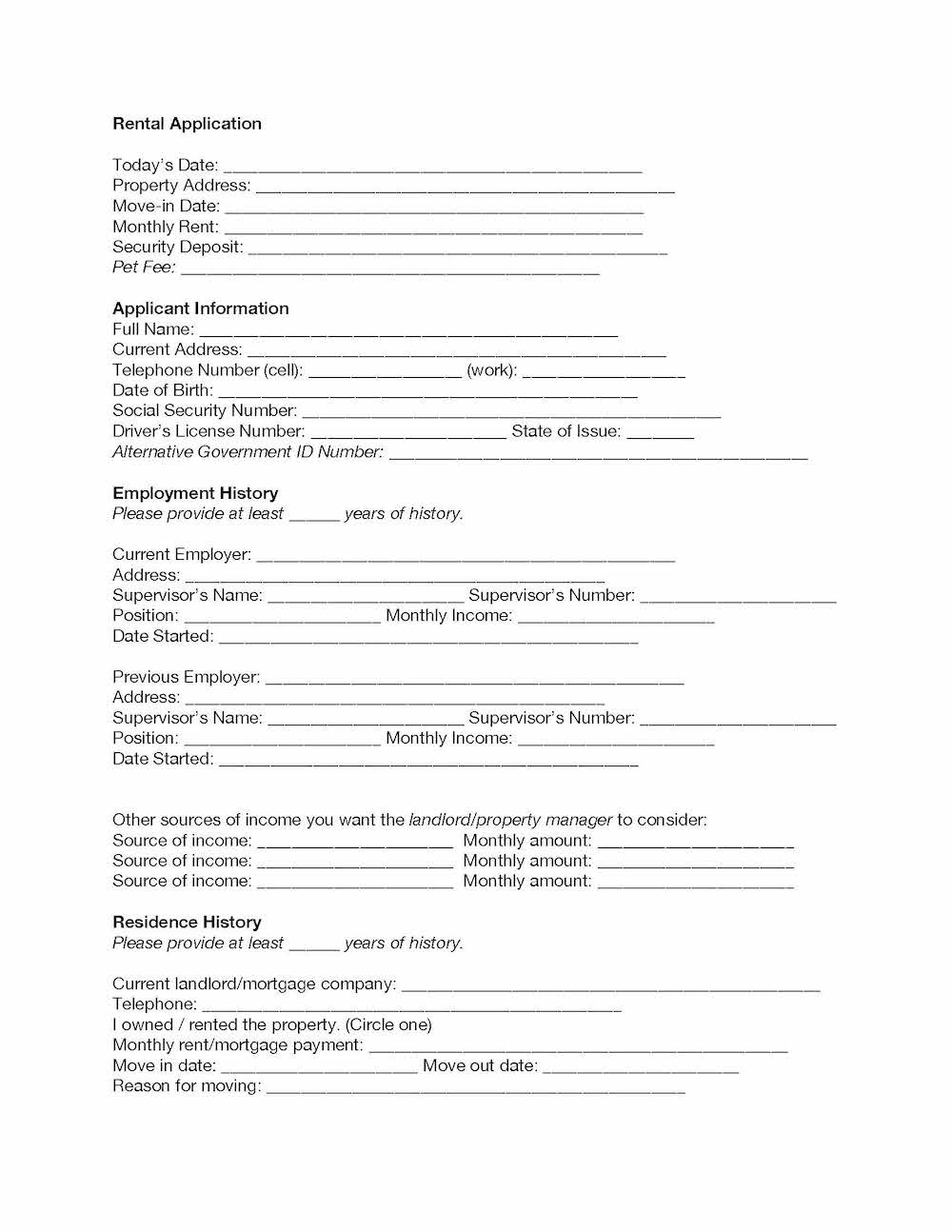
California’s security deposit cap changed substantially in 2024. Under the amended Civil Code §1950.5, most landlords cannot collect more than one month’s rent as a security deposit, regardless of whether the unit is furnished. A narrow exception lets small landlords, natural persons who own no more than two rental properties totaling four units or fewer, collect up to two months’ rent; the large, professionally managed complexes that dominate this market’s listings almost never qualify for that exception. If a deposit request exceeds one month and the landlord doesn’t fit the small-landlord exception, that’s worth asking about directly before signing.
- Deposit return timeline: landlords must send an itemized statement of any deductions, and return the remainder, within 21 days of move-out.
- Income screening: most operators require combined gross household income of 2.5 to 3 times the monthly rent, verified through pay stubs, tax returns, or bank statements.
- Portfolio-scale operators: several of the larger complexes in this market belong to a small number of regional and national operators, which tends to mean standardized, less negotiable screening criteria compared with a single-owner rental.
Villa Pacifica Senior Community on Baseline Road is one of the income-restricted properties the City of Rancho Cucamonga lists directly on its housing-resources page, alongside Day Creek Villas and Heritage Pointe Apartments. These operate on a separate track from market-rate pricing: San Bernardino County’s extremely-low-income threshold, 30% of area median income, for a four-person household sits at $26,500 a year, and eligible households typically pay a percentage of income rather than a fixed market rate.
How much deposit should I budget for?
Plan on one month’s rent unless the property explicitly qualifies as a small-landlord exception under state law, in which case it can legally ask for up to two.
Getting around without a car
Rancho Cucamonga carries a Walk Score of 41, in the car-dependent range, meaning most daily errands realistically require a vehicle regardless of which part of the city you live in. For the specific commute into Los Angeles, Metrolink’s San Bernardino Line runs a direct, no-transfer service from the Rancho Cucamonga station to LA Union Station, with trains close to hourly on weekdays and reduced frequency on weekends, covering the trip in about 70 to 90 minutes depending on the specific train.
Do I need a car to live here?
For daily errands, yes. The Walk Score of 41 confirms that. Metrolink solves the specific problem of a downtown LA commute without solving local mobility.
Renting versus buying here right now
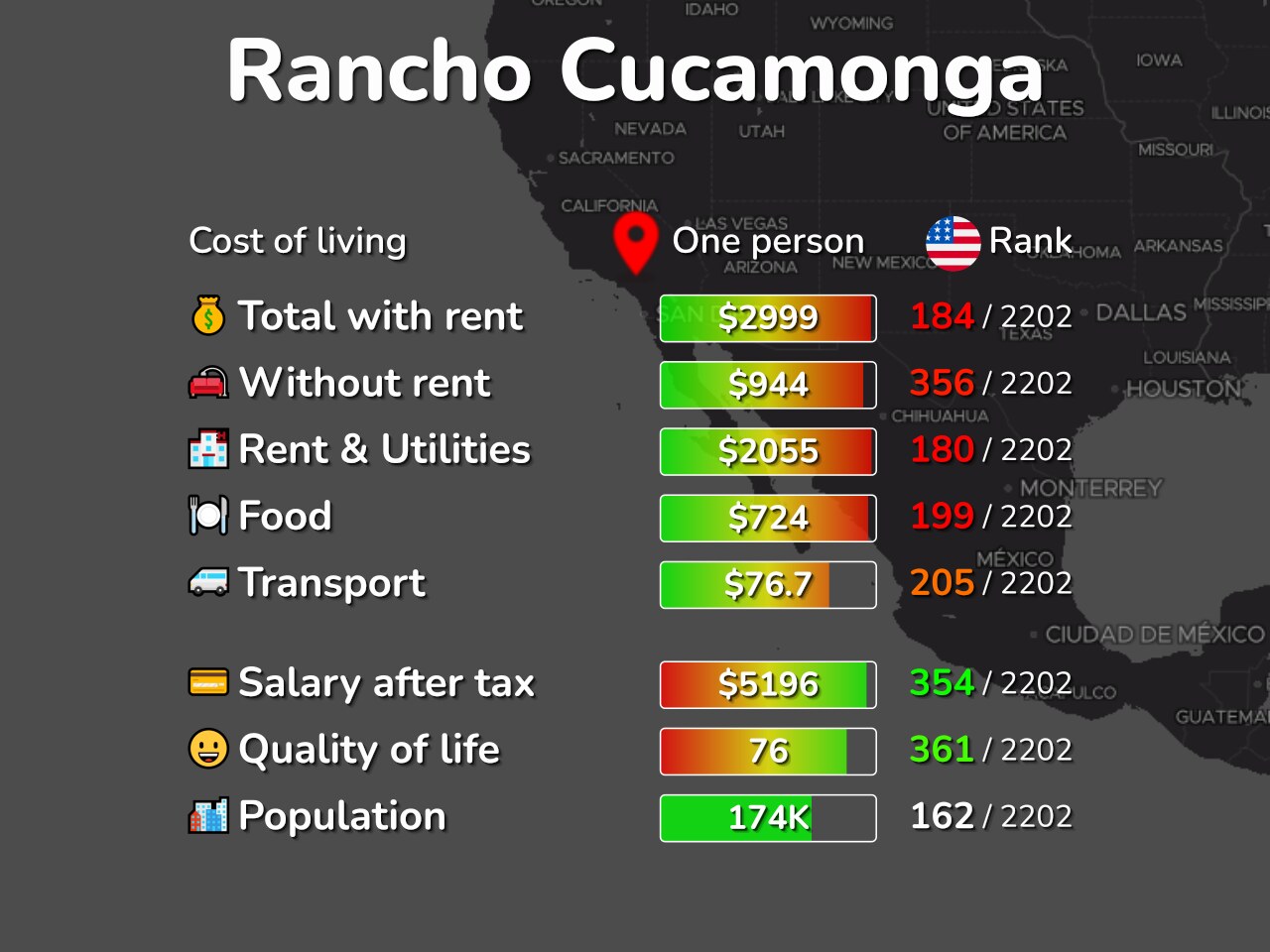
Rancho Cucamonga’s median home sale price was $764,542 in May 2026, down 4.4% from a year earlier. At the current Freddie Mac-reported 30-year fixed rate of 6.49%, a buyer putting 20% down on that median price finances close to $611,600, which works out to a principal-and-interest payment of about $3,860 a month, before property tax, insurance, or HOA dues where they apply. That’s well above HUD’s $2,201 two-bedroom benchmark, and above most of the platform-reported averages too.
The math only tightens with a meaningfully larger down payment, a below-median purchase such as one in the $647K Southwest sub-area, or a rate meaningfully below 6.49%.
Is it cheaper to rent or buy in Rancho Cucamonga right now?
At today’s $764,542 median price and 6.49% rate, financed principal and interest alone runs about $3,860 a month, well above both the HUD benchmark and the platform averages for a comparable two-bedroom rental.
Rent figures in this piece are estimates tied to the dates listed next to each source; verify against live listings before finalizing a moving budget, since active inventory shifts week to week.
Comments