
Where Prescott Is and What Sets It Apart
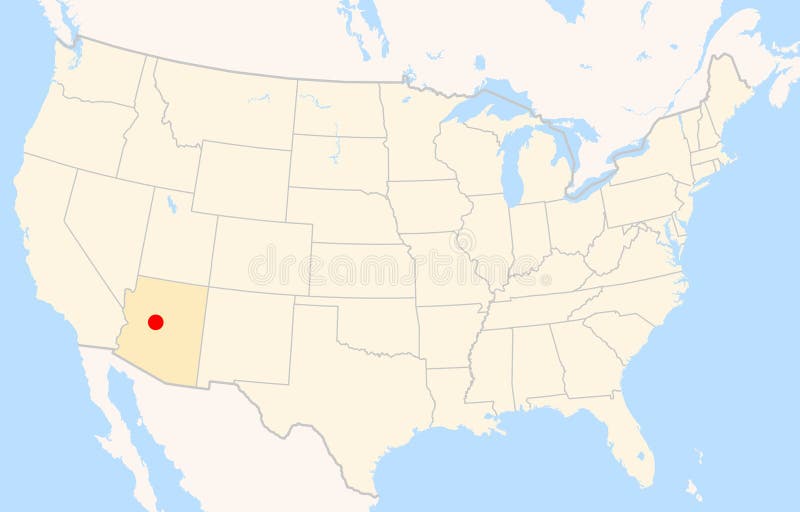
Prescott sits in the Bradshaw Mountains of central Arizona, about 100 miles north of Phoenix by road. It served twice as the Arizona Territorial capital, from 1864 to 1867 and again from 1877 to 1889, before the capital moved permanently to Phoenix. What distinguishes the city today is less that history than the demographic profile it produced: a small, older, tourism- and retirement-driven city where over 40% of residents are past 65.
Two mix-ups are worth clearing up first. Prescott is not Prescott Valley, a separate, faster-growing incorporated town immediately to the east with its own government and a younger population profile. And Prescott, Arizona is not the only Prescott in North America: a town of 4,078 people, per the 2021 Canadian census, sits on the Saint Lawrence River in Ontario, unrelated in founding or history.
Is Prescott, AZ the same as Prescott Valley?No. They’re adjacent but separate incorporated municipalities in Yavapai County with different governments, tax bases, and growth rates; Prescott Valley has grown faster and skews younger.
Climate and When to Go
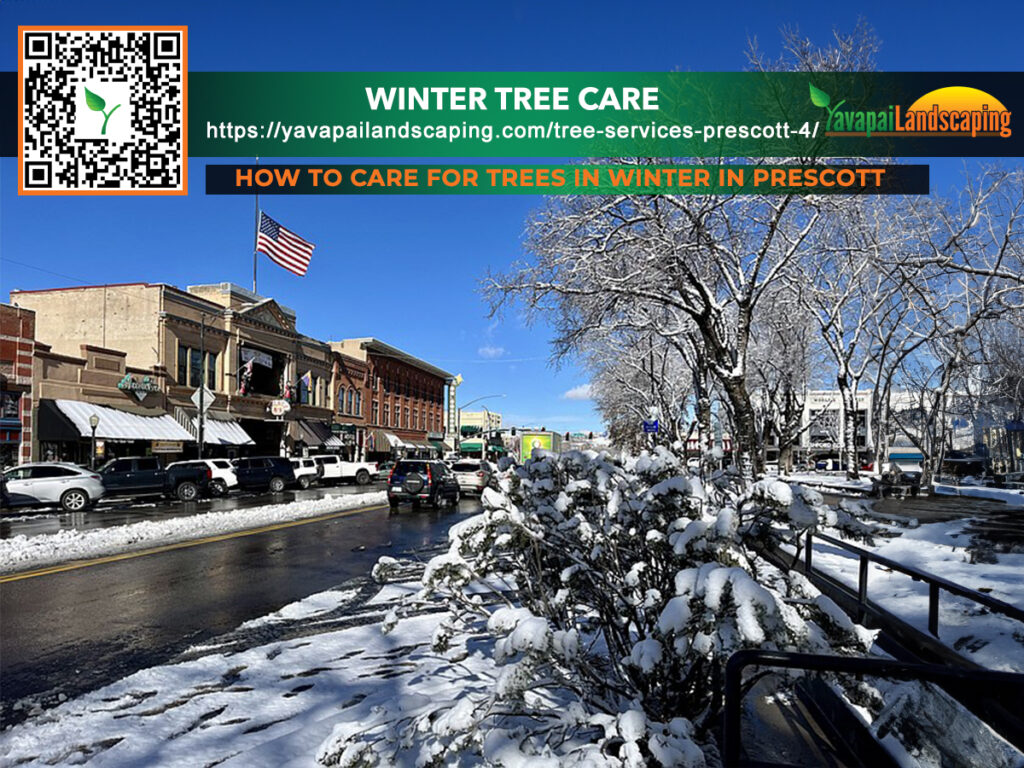
Prescott has a Mediterranean climate with a pronounced summer wet season: the North American Monsoon typically runs from mid-June through September, concentrating most of the year’s rain into a few weeks rather than spreading it evenly. Average annual precipitation for 1991–2020 was 16.46 inches, per NOAA climate-normal data cited in the city’s meteorological record. Snow falls most winters, averaging about 10.2 inches a season, but rarely lingers long at this elevation and latitude.
| Season | Typical high/low | What actually happens | Visitor implication |
|---|---|---|---|
| Winter (Dec–Feb) | Low 50s°F / low-to-mid 30s°F | Occasional snow, clear cold nights | Pack layers; downtown paths can ice over after storms |
| Spring (Mar–May) | 60s to high 60s°F / high 30s to 40s°F | Driest stretch of the year | Best mix of mild weather and low humidity |
| Monsoon summer (Jun–Sep) | Upper 80s to low 90s°F / 50s°F | Afternoon thunderstorms, flash-flood risk in drainages | Plan outdoor activity for mornings; watch weather radar in July–August |
| Fall (Oct–Nov) | 60s to 70s°F / 30s to 40s°F | Second-driest stretch | Comparable to spring for hiking and lake access |
The monsoon’s concentration is the detail that actually shapes a Prescott trip: because most of the year’s rain falls in roughly ten weeks, spring and fall stay drier and more predictable than the annual precipitation total alone would suggest.
Does it snow in Prescott, AZ?Yes, most winters, averaging about 10.2 inches a season, but at 5,374 feet it typically melts within a few days rather than building up for the winter.
Cost of Living and Moving to Prescott
Median household income in Prescott is $70,874 and per-capita income is $50,060, both 2020–2024 averages from the U.S. Census Bureau, above the surrounding metro average and below the statewide Arizona median. Median home value stands at $564,100, with 68% of housing units owner-occupied and median gross rent at $1,395. The average commute runs 19.0 minutes, shorter than in most Phoenix suburbs.
| Metric | Prescott (city) | Notes |
|---|---|---|
| Median household income | $70,874 | 2020–2024 ACS average |
| Median home value | $564,100 | 2020–2024 ACS average |
| Median gross rent | $1,395/month | 2020–2024 ACS average |
| Owner-occupied rate | 68.0% | vs. renter-occupied 32.0% |
| Poverty rate | 11.7% | 2020–2024 ACS average |
| Mean commute time | 19.0 minutes | workers age 16+ |
The table doesn’t show why this matters on its own: 40.6% of Prescott’s population is 65 or older, against a statewide median age in the high 30s. That skew changes what “cost of living” means here in practice, with fewer school-age households pulling on the housing market, but higher demand on healthcare capacity and a smaller working-age labor pool relative to total population than a younger city carries.
Is Prescott, AZ a good place to retire or relocate to?For retirees, the age profile (40.6% of residents are 65+) means services and amenities are already built around an older population. For working-age relocators, the trade-off is a 19-minute average commute against home values above a $564,100 median and a smaller local job market than Phoenix offers.
Visiting Prescott
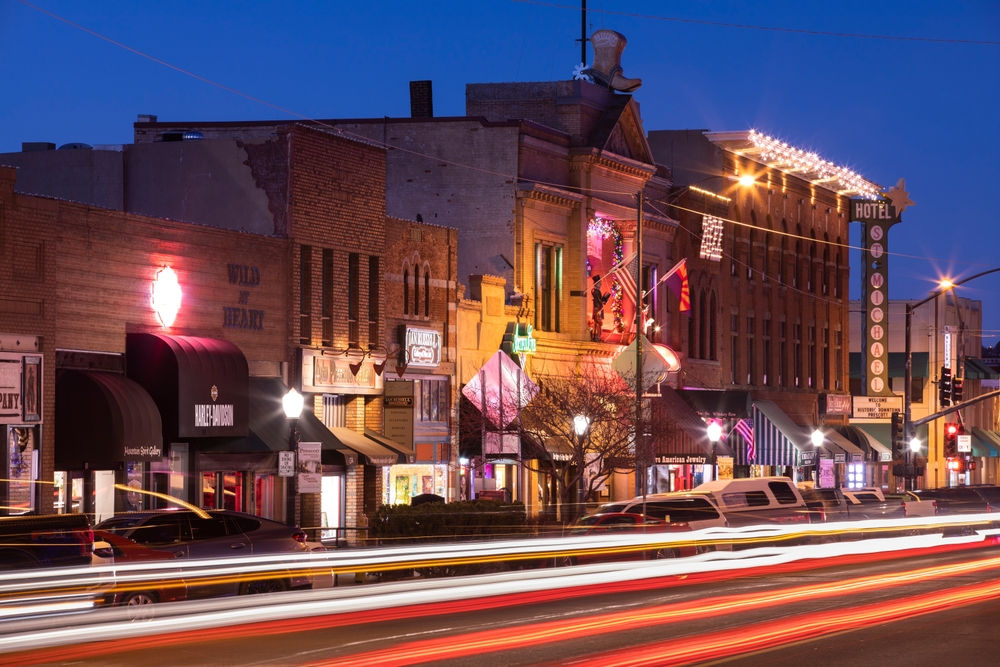
Whiskey Row, the row of 19th-century saloon buildings facing Courthouse Plaza downtown, is Prescott’s most photographed block and the anchor of most visits. The outdoor draws that fill out the climate table above cluster around a handful of small reservoirs, Watson Lake and Lynx Lake among them, set against the granite formations of the Granite Dells.
Sedona is about 67 to 70 miles northwest, roughly a 1 to 1.5-hour drive; Jerome, the hillside former mining town, is about 35 miles northeast over Mingus Mountain. Air access improved in October 2025, when Ernest A. Love Field (PRC) added a second daily United Express flight to Denver, alongside its existing daily Los Angeles route, the airport’s only two commercial connections at publication time.
Risks and Limitations
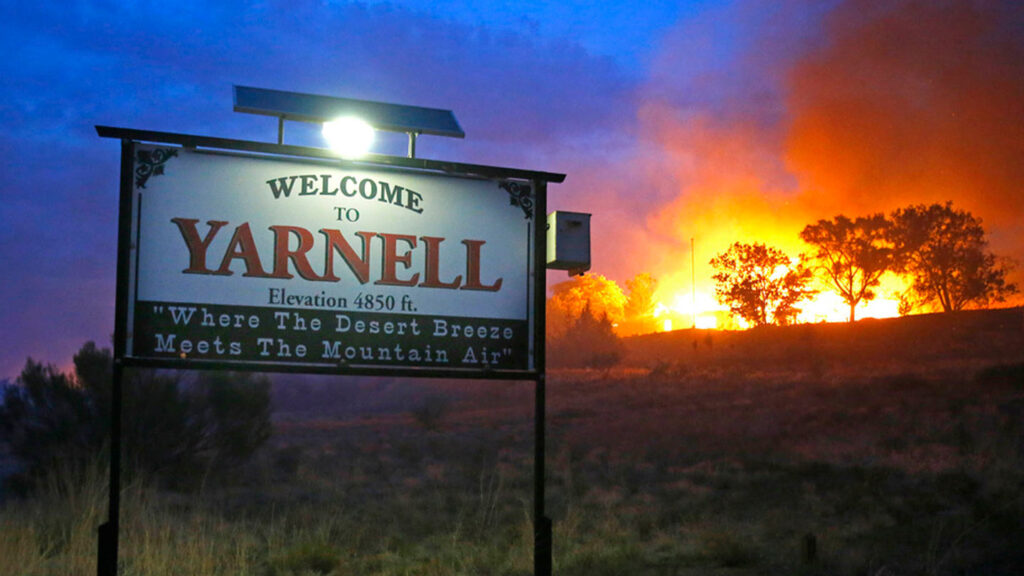
Prescott’s fire history is not incidental to the region’s identity. On June 30, 2013, 19 members of the Granite Mountain Hotshots, a crew within the Prescott Fire Department, were killed when a wind shift from a thunderstorm outflow trapped them during the Yarnell Hill Fire near Yarnell, about 30 miles southwest of the city; the fire burned roughly 8,400 acres and damaged or destroyed nearly 130 buildings before full containment on July 10, 2013.
What’s the population of Prescott, AZ?48,420, per the Census Bureau’s July 2025 estimate. Figures around 47,400 that appear elsewhere use a 2020–2024 five-year survey average rather than this more current annual estimate; both are legitimate, just different vintages of the same measurement.
Comments