
Palos Verdes Estates and the Three Other Cities on the Peninsula
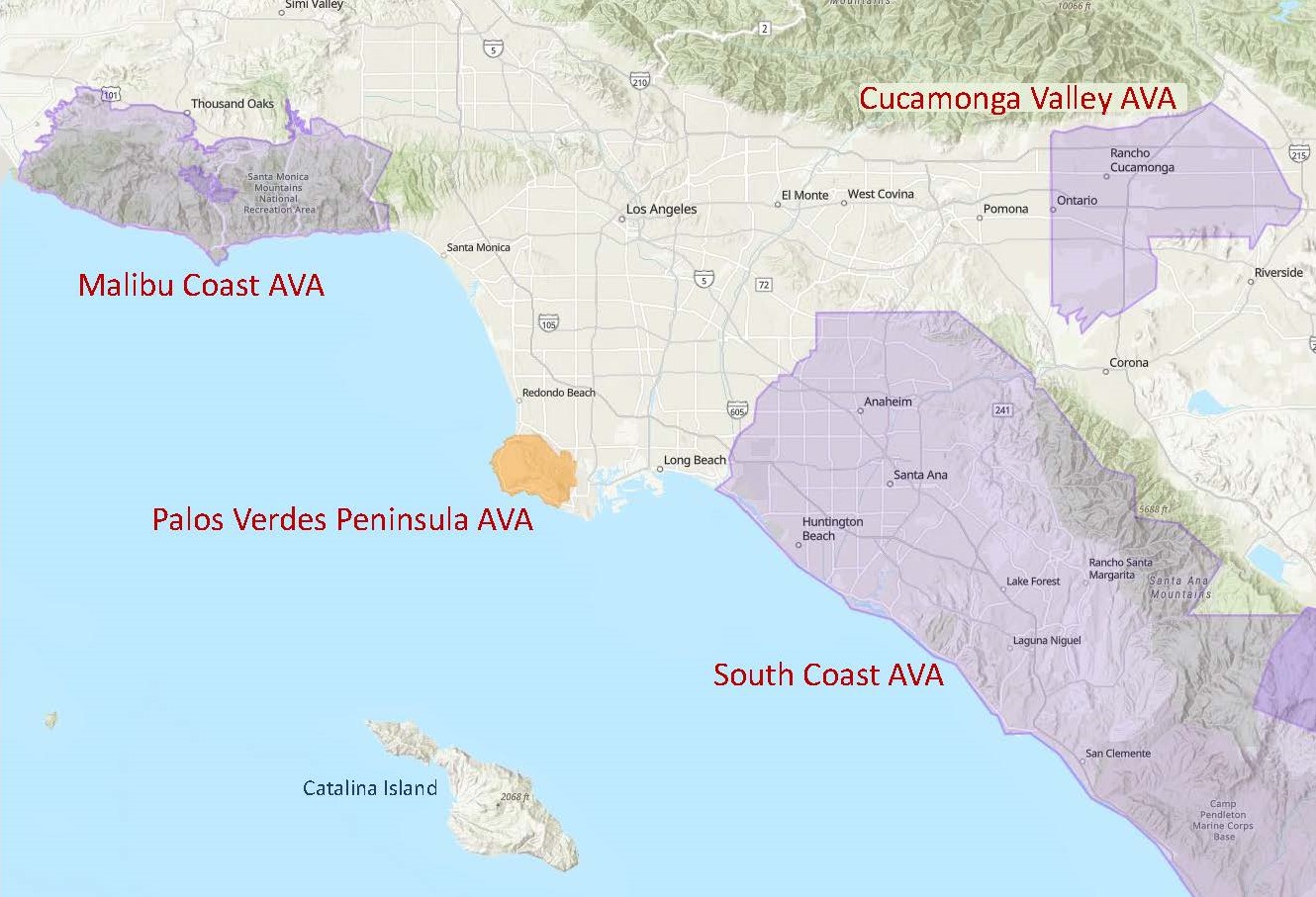
Palos Verdes Estates is one of four separate incorporated cities on the Palos Verdes Peninsula, and it is the only one where essentially every exterior change to a home requires sign-off from a private architectural body called the Art Jury, on top of standard city permitting.
| City | Incorporated | Architectural review | Police | 2020 Census population |
|---|---|---|---|---|
| Palos Verdes Estates | Dec. 20, 1939 | Art Jury (PVHA), citywide | Own city police department | 13,347 |
| Rancho Palos Verdes | Sept. 7, 1973 | City design review; only the Miraleste neighborhood falls under PVHA/Art Jury | Contracts LA County Sheriff | 42,287 |
| Rolling Hills | 1957 | Private HOA (Rolling Hills Community Association) | Contracts LA County Sheriff | ~1,900 |
| Rolling Hills Estates | 1957 | City planning and design review board | Contracts LA County Sheriff | ~8,000 |
Source for incorporation dates and governance: City of Rancho Palos Verdes. Buyers who search “Palos Verdes real estate” routinely land on listings in Rancho Palos Verdes, a city more than three times larger by population and governed by an entirely different, city-run design review process than the one that actually applies inside Palos Verdes Estates.
Is Palos Verdes Estates the same as Rancho Palos Verdes?
No. They are two of four separate incorporated cities on the same peninsula, with different governments, different police coverage, and different architectural-review authorities. Rancho Palos Verdes is roughly three times larger by population and was incorporated 34 years later.
The Palos Verdes Homes Association and the Art Jury
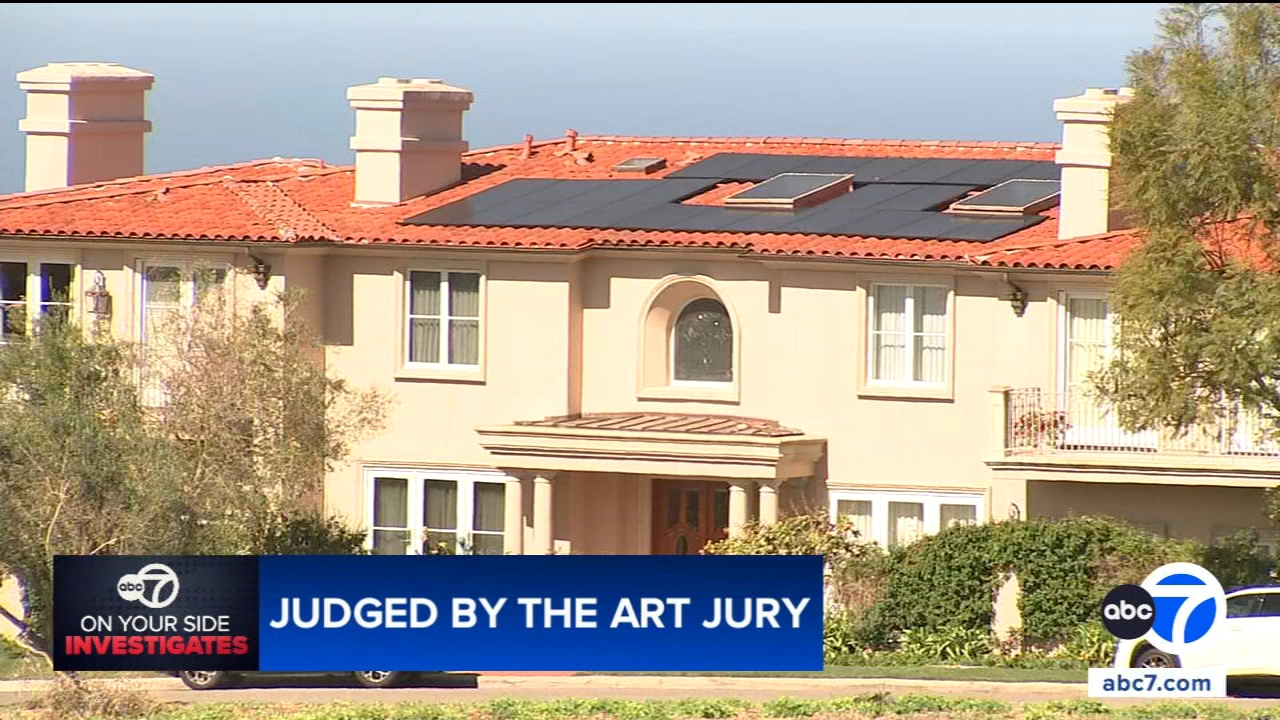
The Palos Verdes Homes Association (PVHA) and its six-member Art Jury board predate the city itself: the underlying deed restrictions were recorded in 1923, sixteen years before Palos Verdes Estates incorporated in 1939, according to the Palos Verdes Homes Association’s history page. Every property owner in the city is automatically a PVHA member, and the review obligation transfers with the title itself, so a new owner inherits it automatically at closing.
Review is typically required for:
- Any exterior repaint or re-roof, even using the same material or color family.
- Additions and second stories that change exterior walls, rooflines, or setbacks.
- New construction, ADUs, and detached garages.
- Fences, walls, hedges, and hardscape or landscape changes visible from the street.
- Window and door replacements, including garage doors.
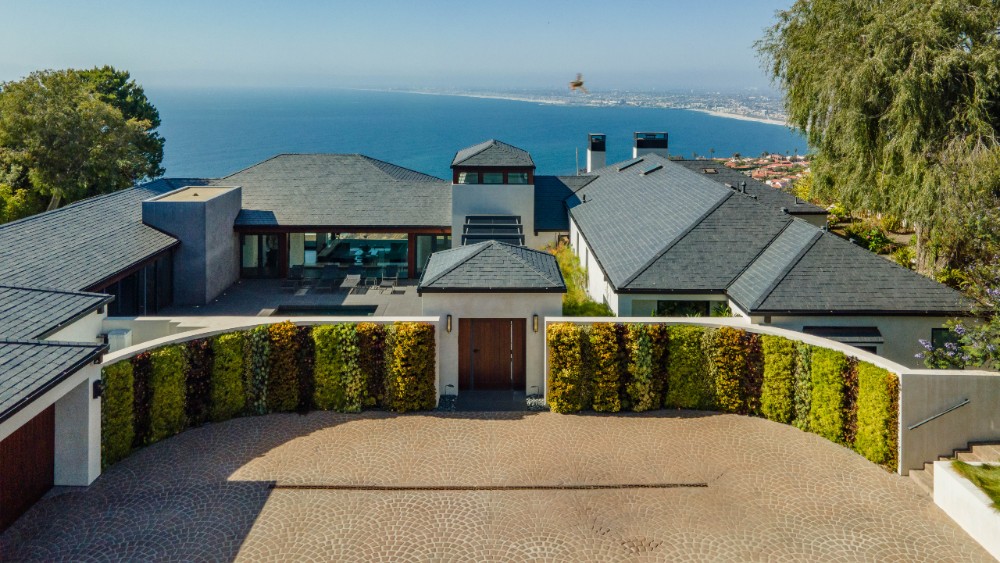
Simple projects can clear review in 2 to 8 weeks; larger remodels, new homes, or grading work often take 3 to 9 months across multiple review cycles, and this runs on a track separate from city permits: PVHA approval does not substitute for a city building permit, and most projects need both, according to the Mackenbach Group’s breakdown of the process. Art Jury members recuse themselves from reviewing their own projects, and the only qualification to serve is owning property in Palos Verdes Estates or the Miraleste area of Rancho Palos Verdes, as PVHA explains on its FAQ page. Project-specific review fees, separate from city fees, have been estimated by one local contractor at roughly $1,000 to $15,000 depending on scope; this figure comes from that contractor’s practical experience, and PVHA does not publish a public fee schedule to confirm it independently.
This creates one concrete risk for buyers: unpermitted or unapproved prior exterior work is a real transaction issue. New owners inherit liability for any open Art Jury violations that existed at the time of sale, so due diligence here should include a compliance check with PVHA in addition to a standard home inspection.
Do I need Art Jury approval to repaint my house or replace the roof?
Yes. Repainting and re-roofing both count as exterior changes and require Art Jury review before work begins, even if the new color or material matches what is already there.
Current Market Conditions
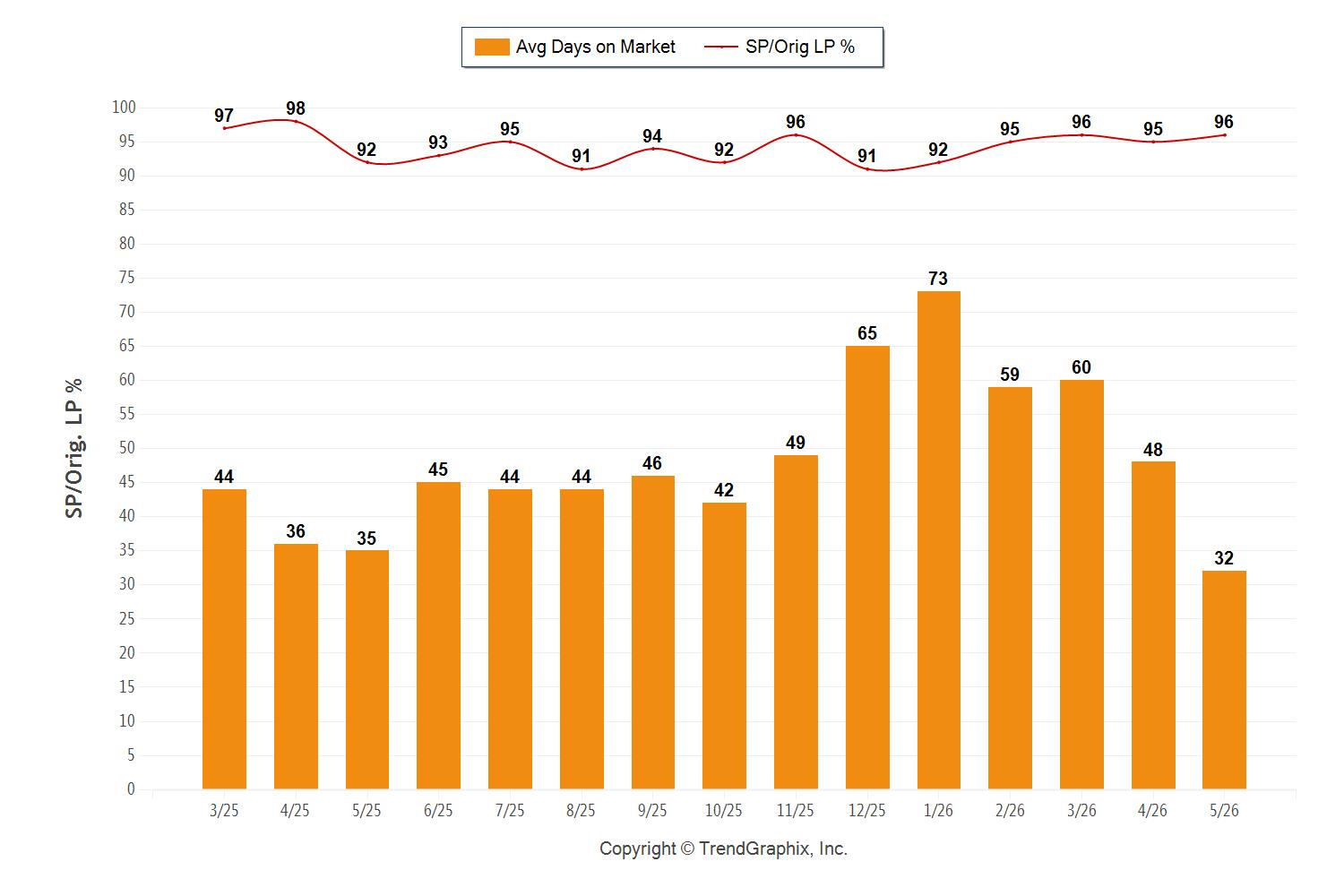
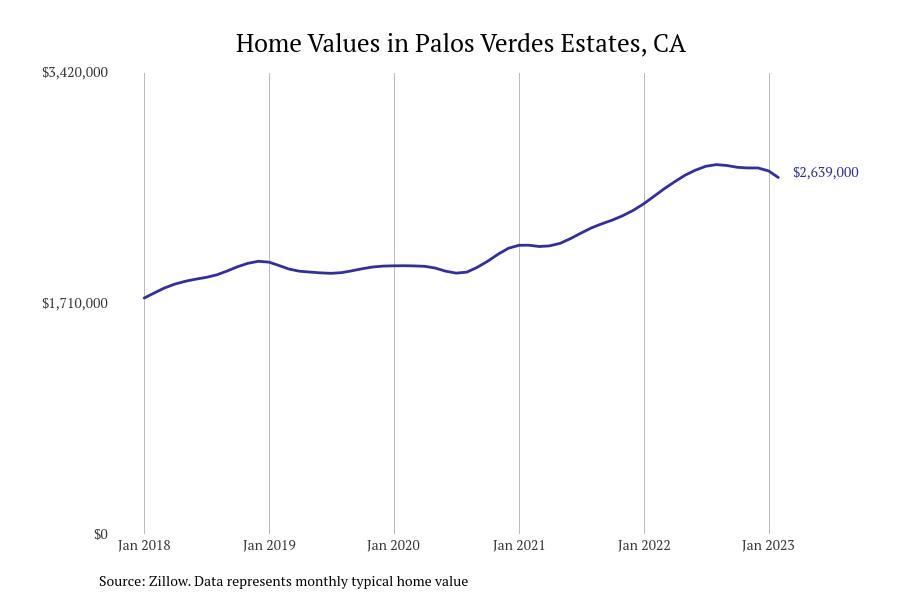
As of February 2026, the median sale price in Palos Verdes Estates was $2,435,000, and Houzeo’s dated MLS-fed tracker shows homes averaging 99 days on market.
| Metric | Feb. 2026 | Year over year |
|---|---|---|
| Median sale price | $2,435,000 | +0.08% |
| Days on market | 99 | slower pace than a year earlier |
| Months of supply | 7.4 | up from 4.3 |
| Active listings | 37 | down 0.33% |
| Sale-to-list ratio | 97.69% | down 1.79 points |
| Homes sold over asking | 0% | down from 20% |
Source: Houzeo. A separately tracked, rolling-month feed showed a $2.8 million median around the same period, up 32.3% year over year, as tracked by Redfin. Zillow’s index-based estimate, built from a continuous model of values across the whole market, put the typical home value at $2,732,527, per Zillow. None of these three numbers is wrong. They measure different things: a monthly median of a handful of closings, a rolling trend line, and a model-based index, and in a market this thin that difference alone can look like a double-digit swing from one month to the next.
Neighborhoods Inside Palos Verdes Estates
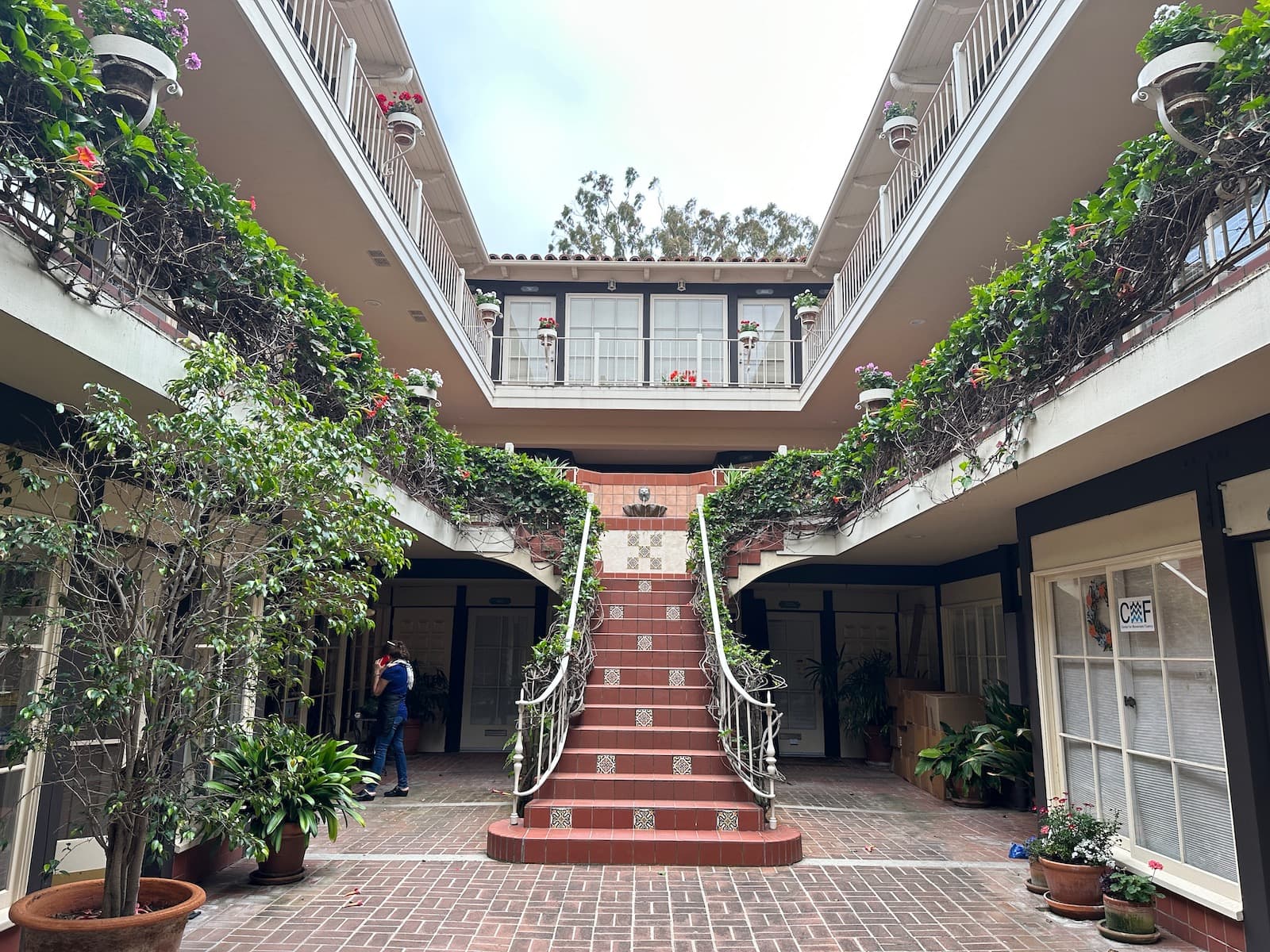
Several named residential areas make up the city, most prominently Malaga Cove and Lunada Bay, each built around a historic landmark or natural feature.
Malaga Cove is the historic and commercial center, anchored by Malaga Cove Plaza. Construction on the first building, the Gardner Building, began in late 1924 and was completed for $51,000, dedicated in a public ceremony on September 13, 1925, according to the California Office of Historic Preservation’s nomination record; the plaza was added to the National Register of Historic Places in 2021, as recorded by the Historical Marker Database. Further south, Lunada Bay centers on Lunada Bay Park, a blufftop greenbelt restored with native plants in partnership with the Palos Verdes Peninsula Land Conservancy.
A genuine gap in public data: no county-assessor breakdown of housing build eras by sub-neighborhood, comparing Malaga Cove against Monte Malaga or Valmonte, turned up in this research. Buyers who need that level of detail should pull assessor records directly for the specific parcel.
What’s the difference between Malaga Cove and Lunada Bay as places to live?
Malaga Cove is the historic commercial and civic core, built around the 1920s plaza and library. Lunada Bay is residential, built around a blufftop park and surf access.
Schools
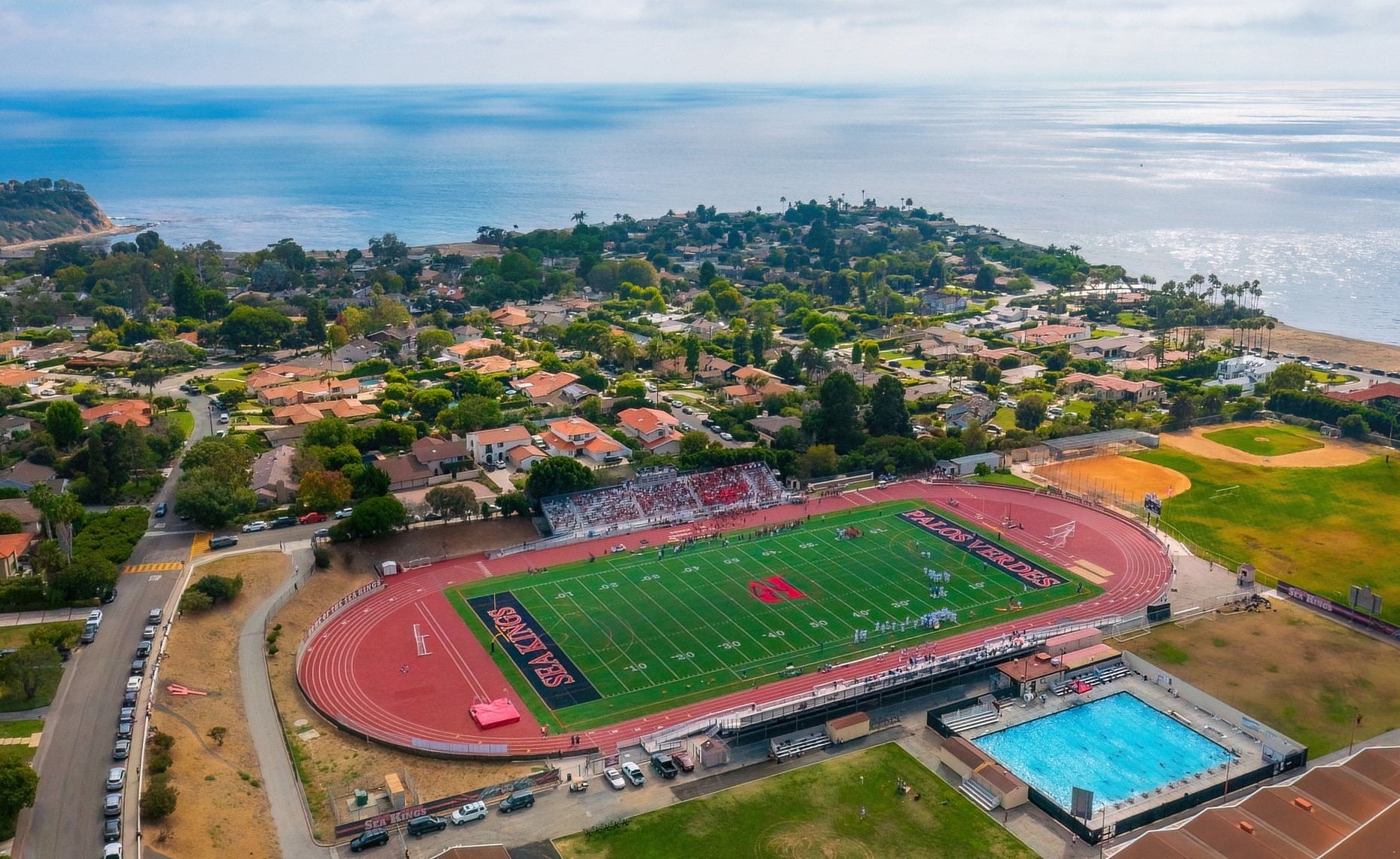
Palos Verdes Peninsula Unified School District ranked #3 among Los Angeles-area districts and #7 statewide in Niche’s 2026 rankings, with Palos Verdes Peninsula High School ranked #25 among California public high schools and #203 nationally the same year, per Niche’s district ranking and high school ranking.
| Metric | PVPUSD | California |
|---|---|---|
| Math proficiency | 74% | 34% average |
| Reading proficiency | 80% | 47% average |
| Graduation rate | 98% | not broken out in this source |
| Spending per student | $14,060 | $18,396 state median |
Source: Public School Review. The district clears the state average on both proficiency measures while spending less per student than the state median, a combination that undercuts the assumption that stronger test scores simply track higher per-pupil budgets.
Why do the school ranking numbers I see for Palos Verdes look so different across sites?
Different ranking organizations use different methodologies and years, and some real estate sites repeat old, undated figures without checking them. Confirm a ranking’s publication year before comparing it to a current source.
Daily Life Without a Commercial Center
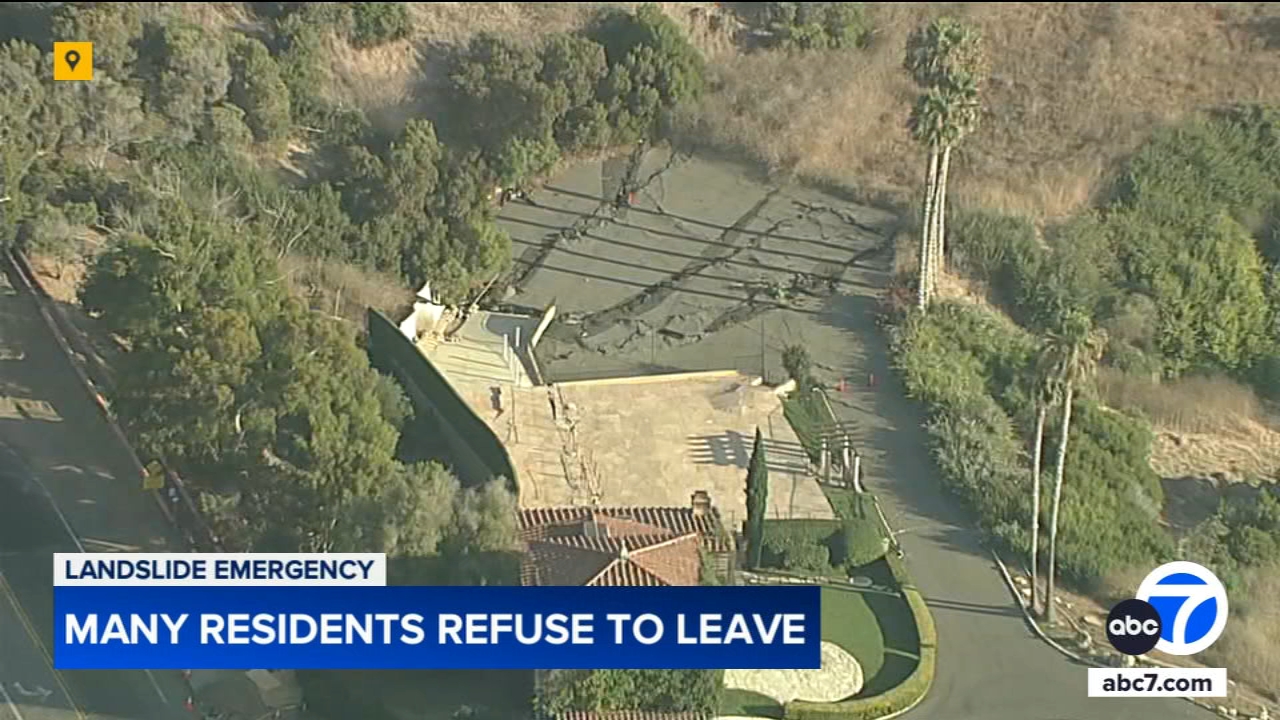
The city runs its own municipal police department and has no traffic lights anywhere within its limits, according to Wikipedia’s article on the city, which cites municipal records. There is very little retail or commercial space inside city limits, so groceries, restaurants, and most day-to-day errands mean a short drive into Malaga Cove’s small shopping area or into neighboring Torrance, Redondo Beach, or Rancho Palos Verdes.
Land Movement, Wildfire Risk, and Insurance Coverage
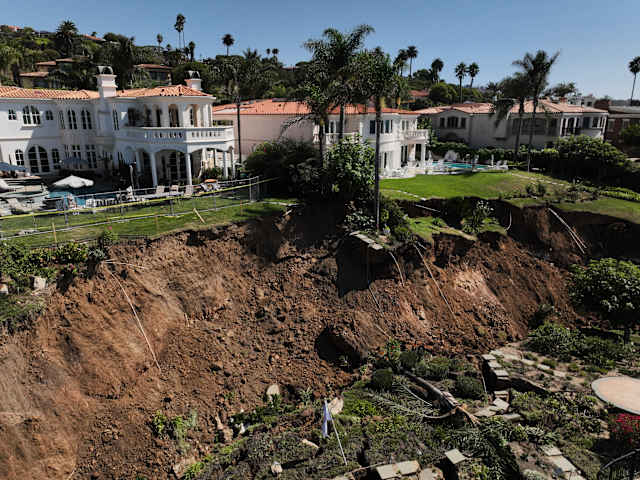
Buyers researching this peninsula should not confuse Palos Verdes Estates with the active landslide zone next door. The Portuguese Bend Landslide Complex, the subject of a California state of emergency declared in 2024 and a federally funded buyout program now underway for some affected homeowners, sits within Rancho Palos Verdes, not Palos Verdes Estates, per the City of Rancho Palos Verdes. Separately, roughly 58% of properties across the wider Palos Verdes Estates market area carry a “moderate” wildfire risk rating under First Street’s model, as tracked by Redfin.
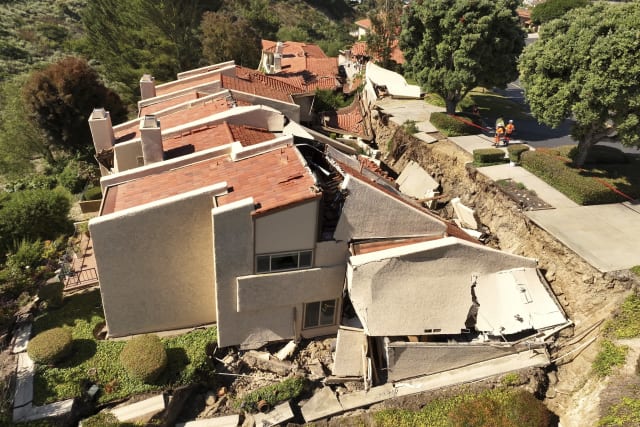
What applies regardless of which of the four Peninsula cities a buyer is looking at: standard California homeowners insurance policies exclude damage from earth movement, including landslides, across the entire state. This exclusion applies statewide, independent of city limits or distance from any mapped landslide zone, according to CBS News Los Angeles. Buyers should ask about supplemental coverage options and review natural hazard disclosures for any property on the Peninsula.
Does my homeowners insurance cover landslide or land movement damage on the Palos Verdes Peninsula?
No. Standard California homeowners policies exclude earth movement, including landslides, statewide, regardless of which of the four Peninsula cities the property sits in.
Common Mistakes and Misconceptions
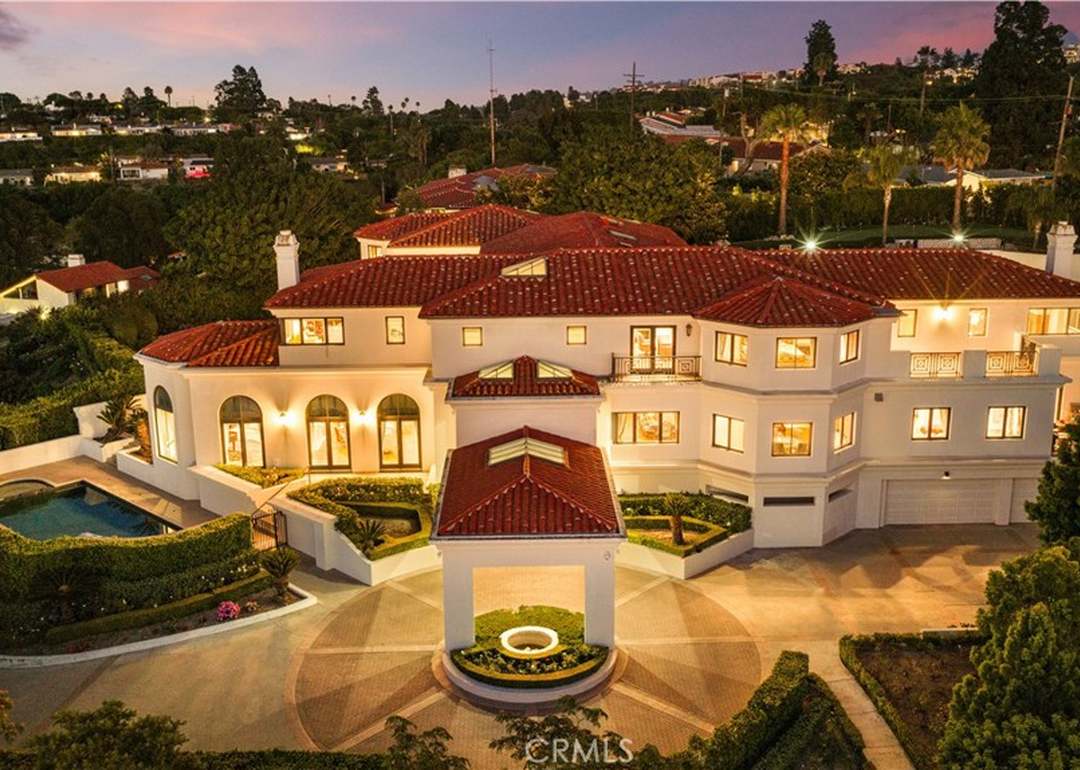
The single most common mistake is treating “Palos Verdes” real estate listings as interchangeable across the four cities, when governance, price bands, and even police coverage differ by city. A close second is repeating population or school-ranking figures pulled from an uncredited or outdated source; both numbers flagged above are widely circulated and both are checkable against a dated, named source in minutes. Anyone planning a remodel should confirm Art Jury requirements with PVHA and city permitting requirements with the City of Palos Verdes Estates as two separate steps, before writing an offer contingent on renovation plans.
Comments