
What Makes a Building a Brownstone
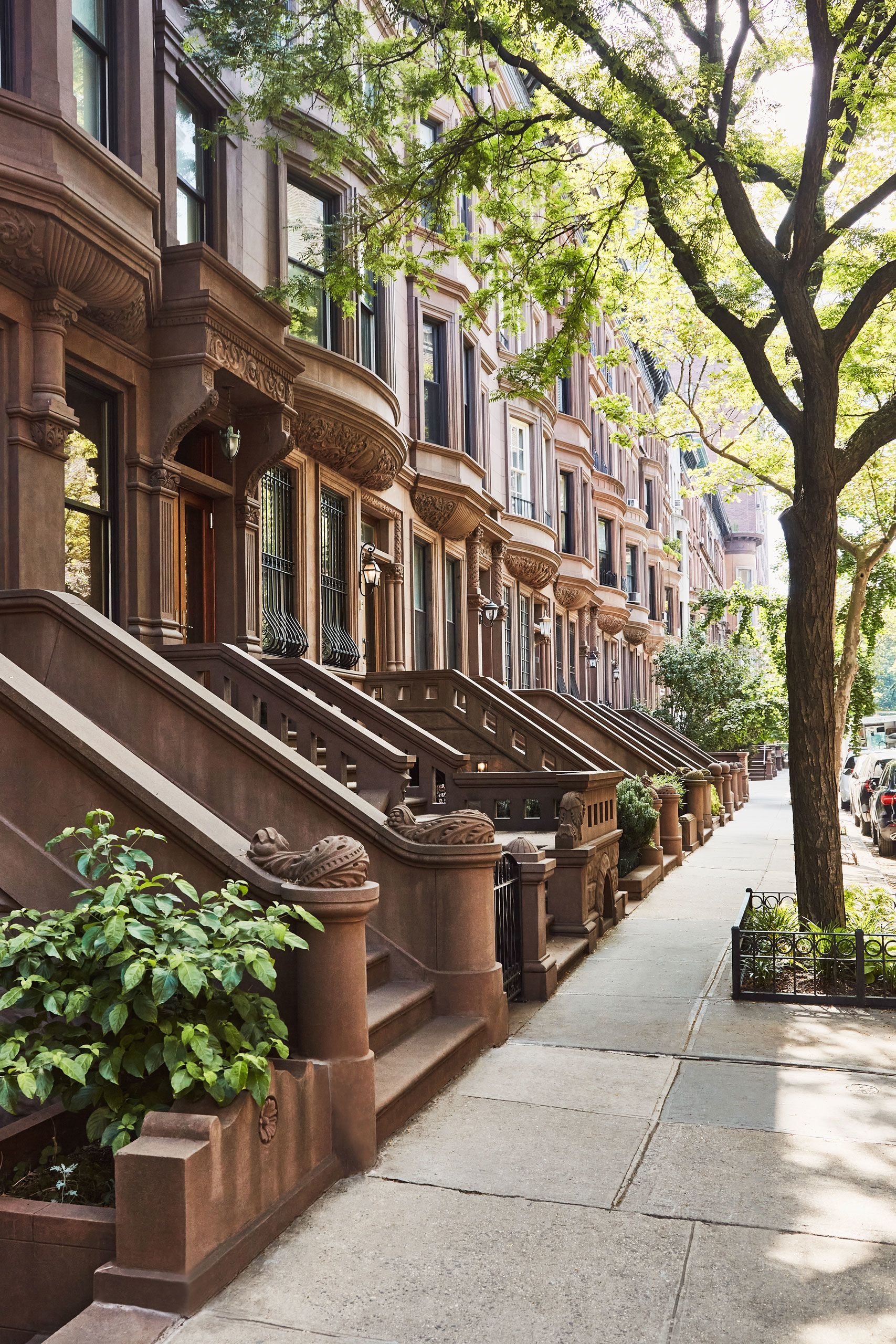
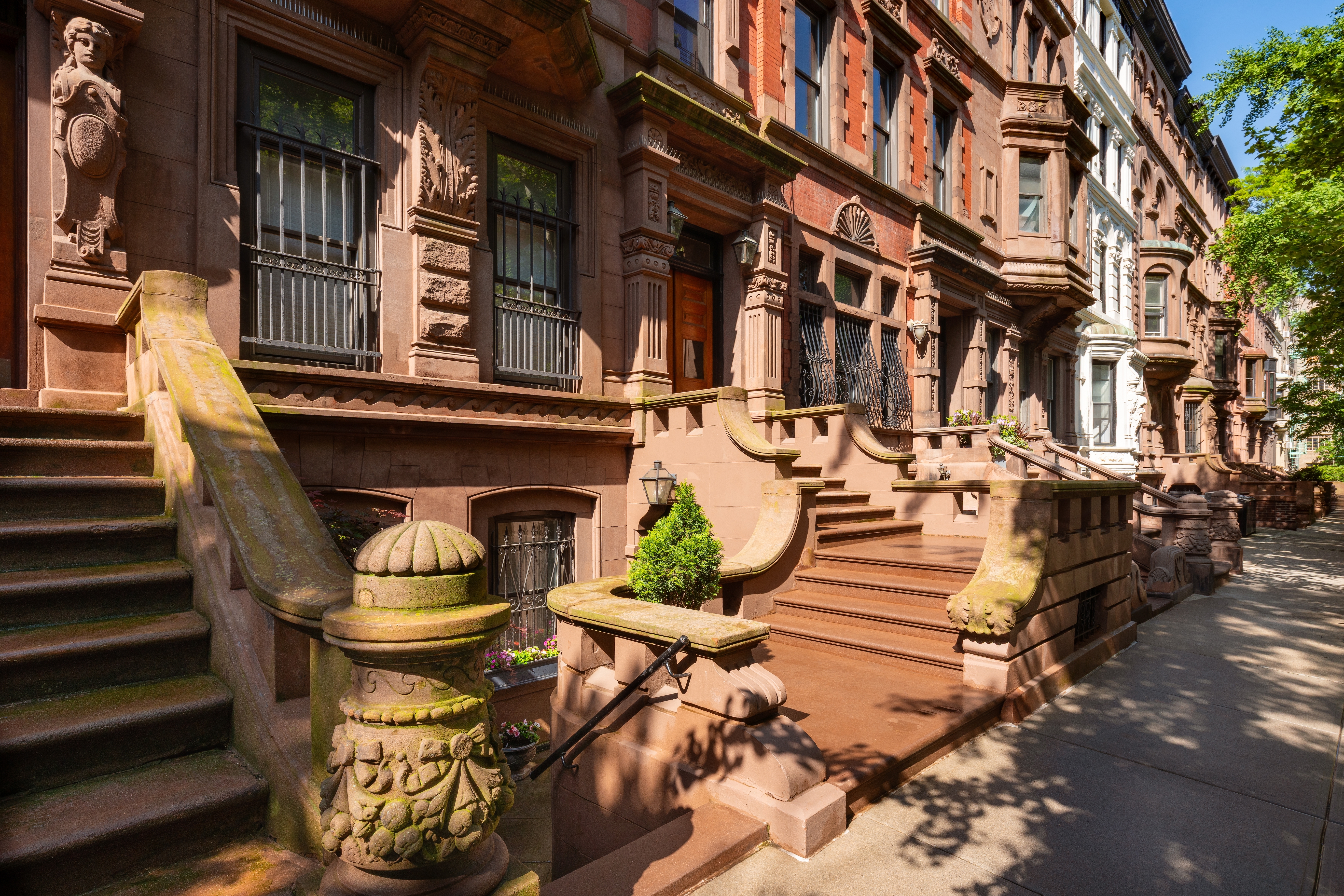
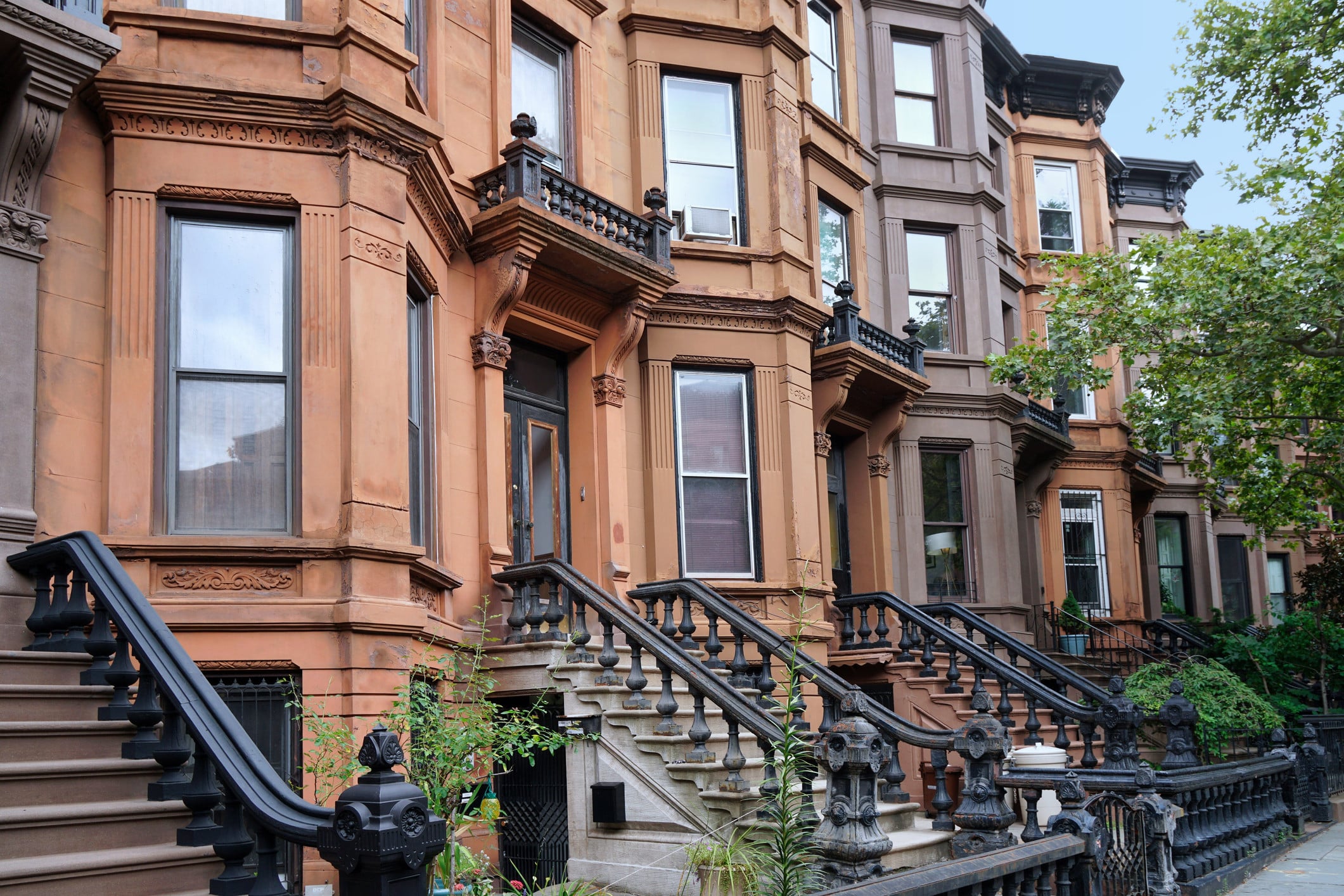
Brownstone is a building material, not an architectural style. The word describes a reddish-brown sandstone facade applied to a row-house or townhouse structure, a construction pattern that spread through Brooklyn and Manhattan from the 1840s onward and effectively stopped after the 1910s as tastes and construction methods shifted. A wave of demolitions in the mid-twentieth century, followed by a preservation movement that produced NYC’s Landmarks Law in 1965, protected most of the surviving stock from further loss.
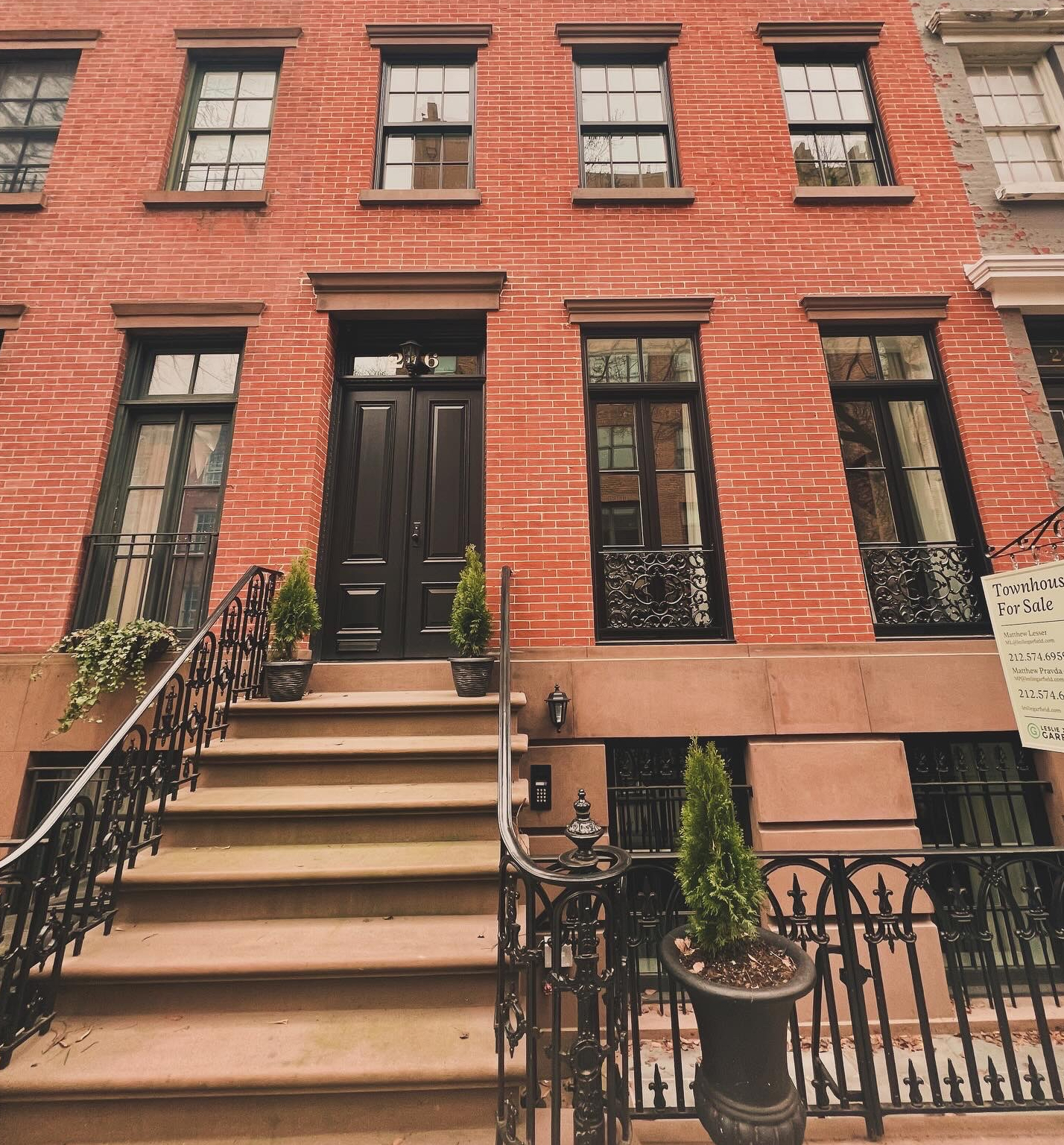
“Townhouse” and “rowhouse” are the broader categories a brownstone sits inside. A rowhouse is any narrow, attached single-family or small multi-family building built shoulder-to-shoulder with its neighbors; a townhouse is the same structural idea, used more loosely and often for detached or semi-detached versions too. A brownstone is a rowhouse or townhouse with that specific sandstone face; a brick or limestone building of the same era and layout is a rowhouse but not, strictly, a brownstone. In everyday NYC listing language the terms blur, and sellers apply “brownstone” to buildings with brick or limestone facades because the word carries market value the material description doesn’t always earn.
Is a limestone or brick rowhouse the same thing as a brownstone?
Structurally, yes: same one-to-four-story attached layout, same era, same parlor-floor plan. The difference is strictly the facade material. Listings use “brownstone” loosely; the sandstone face is what technically earns the name.
Brownstone vs. Co-op vs. Condo vs. Rental Building
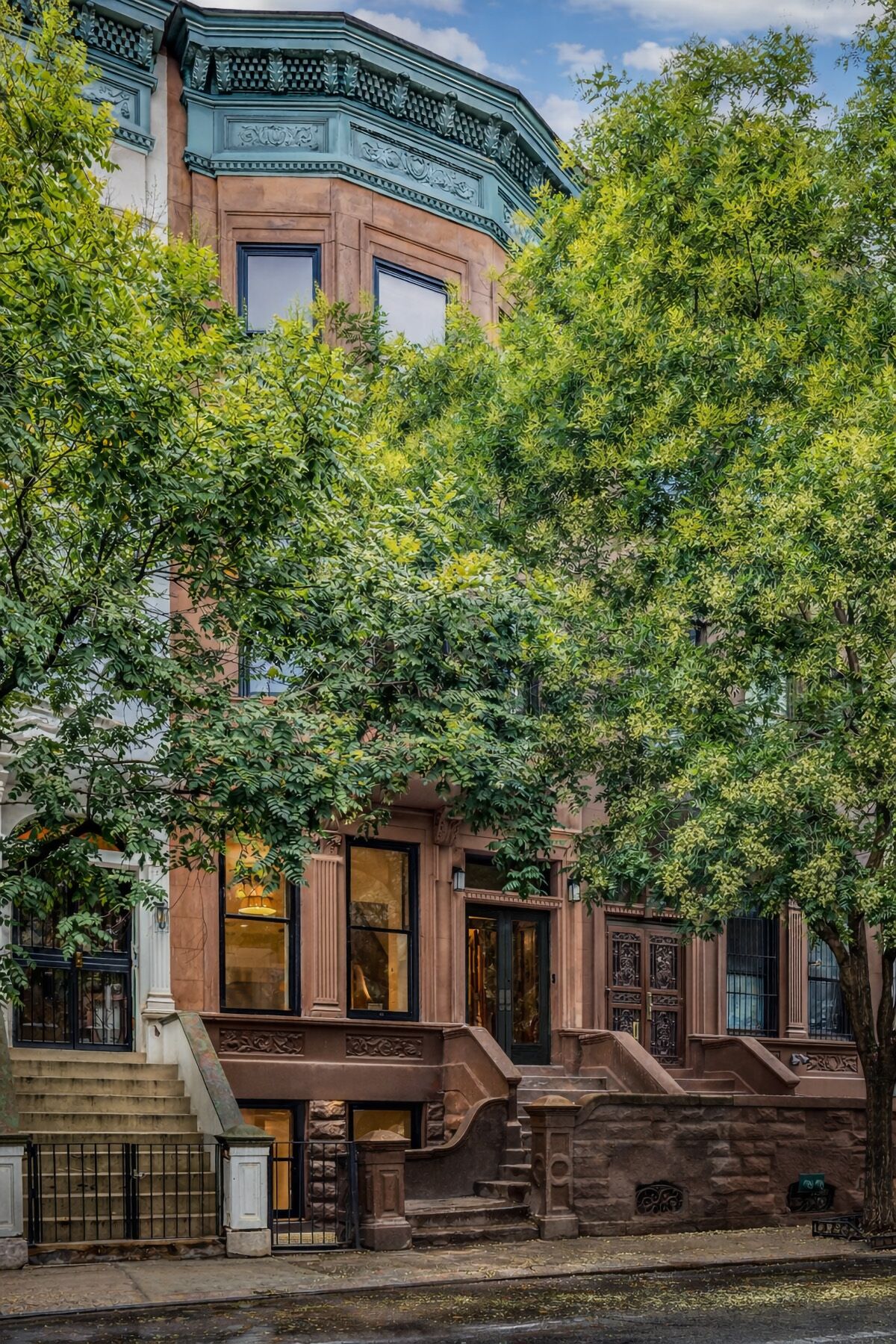
The four property types a NYC buyer typically weighs against each other differ on more than price. Financing path, who has to approve your purchase, and who controls what you can change all shift by type, and those shifts, not the facade, usually decide which one fits a given buyer.
| Property type | Facade / structure | Typical financing path | Approval before you can buy | Renovation authority |
|---|---|---|---|---|
| Brownstone (1–4 family) | Sandstone-faced rowhouse | Jumbo or conventional mortgage; FHA available for owner-occupied 1–4 unit | None – no board | Owner decides interior; LPC review required if in a historic district |
| Condo | Any; often brick or glass | Conventional mortgage | Condo board reviews financials, doesn’t approve the buyer | Owner controls unit interior; building manages exterior/common areas |
| Co-op | Pre-war brick common | Conventional mortgage; co-op board sets its own debt-to-income and reserve rules | Co-op board interview and approval required | Board approval required even for interior renovation in most buildings |
| Multi-family rental building (5+ units) | Varies | Commercial or multi-family investment loan | None for the buyer, but existing leases transfer | Owner decides, subject to rent-regulation status of existing tenancies if any |
A brownstone is the only one of the four with no purchase-approval gatekeeper and no shared building to negotiate with. The tradeoff is that the owner alone carries every maintenance and capital cost a condo or co-op board would otherwise pool across residents.
Do I need board approval to buy a brownstone?
No. A single-family or owner-occupied multi-family brownstone has no co-op or condo board; the seller and the buyer’s lender are the only approvals involved.
What Brownstones Cost Right Now
| Area / tier | Typical price | As of | Source |
|---|---|---|---|
| Northwest Brooklyn, single-family (Park Slope, Cobble Hill, Boerum Hill, Fort Greene) | $3.135 million median | Q4 2025 | Miller Samuel for Douglas Elliman, via Brownstoner |
| Northwest Brooklyn, two-family | $3.402 million median | Q4 2025 | Same |
| Brooklyn borough-wide, 1–3 family | $1.18 million median | Q4 2025 | Same |
| Park Slope townhouses, per-transaction average | $1.88 million | Q1 2025 (27 transactions) | Leslie Garfield data via Brownstoner |
| Central Harlem, all home types | $875,000 median | 3 mo. ending May 2026 | Redfin |
| Harlem townhouses for sale | $1.9 million median listing | May 2026 | Redfin |
The northwest Brooklyn brownstone corridor and Central Harlem sit roughly $2 million to $2.5 million apart on typical price, a gap wide enough that “a brownstone costs about $X” is close to meaningless without naming the tier. Two-family configuration in prime Brooklyn commanded a small but consistent premium over single-family in the same quarter, reflecting rental-income potential priced directly into the sale.
Regulation and Renovation
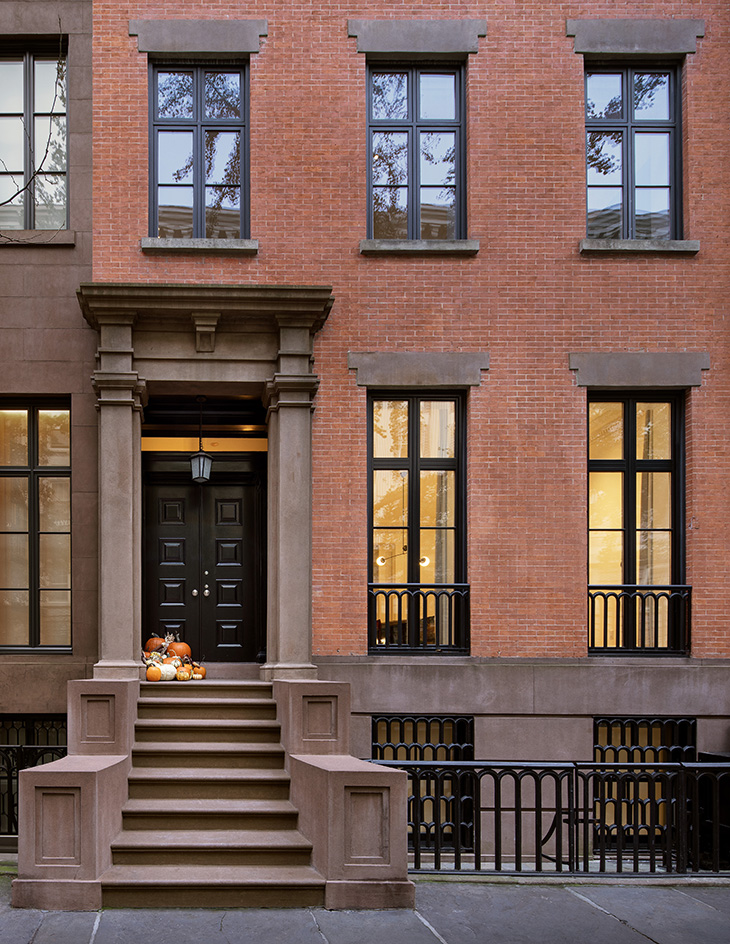
Not every brownstone sits in a historic district
Landmark status is not automatic. New York City’s Landmarks Preservation Commission oversees more than 38,000 protected properties, the majority inside 157 designated historic districts, but a meaningful share are individually designated landmarks standing outside any district, and plenty of pre-war rowhouses sit in neither category (NYC Landmarks Preservation Commission). Brooklyn Heights became the city’s first historic district on November 23, 1965 (NYC LPC designation record), and the assumption that old equals landmarked has been wrong for the sixty years since.
The state historic tax credit
New York State’s Historic Homeownership Rehabilitation Tax Credit covers 20% of qualified rehabilitation expenses, capped at $25,000 per residence per year, a figure cut down from a $50,000 cap effective January 1, 2025 (NYS Office of Parks, Recreation and Historic Preservation). Three conditions gate eligibility: the home must be listed individually or as a contributing building in the State or National Register, it must sit in a Qualified Census Tract, and the project must total at least $5,000 with a minimum of 5% spent on exterior work. The 20% federal historic credit is a separate program and doesn’t apply here at all – it’s reserved for income-producing property, not an owner-occupied home (NYS Parks). A brownstone in a gentrified Brooklyn or Harlem census tract that no longer qualifies as low-income can lose eligibility for the state credit even while sitting inside a historic district that visually qualifies it.
Can I get a tax credit for restoring a brownstone?
Only the New York State Historic Homeownership credit applies to an owner-occupied home: 20% of costs, capped at $25,000 a year, and only inside a Qualified Census Tract. The federal 20% credit is for income-producing property only.
The Financial Mechanics of Ownership
Property tax class
NYC assigns every brownstone to Tax Class 1, the same class covering all one-to-three-family homes citywide. Class 1 uses a 6% assessment ratio against market value, with assessed-value increases capped at 6% a year and 20% over five years regardless of how fast the market moves; the FY2026 Class 1 rate is 19.843% applied against that capped assessed value. Co-ops and condos fall into Class 2, assessed at 45% of market value, with a lower FY2026 rate of 12.439% applied against a much larger base (mechanics summarized by a Brooklyn brokerage’s DOF-sourced guide; rates verified against nyc.gov by HelpNewYork.com). The net effect: a Class 1 brownstone in a fast-appreciating neighborhood often carries a lower effective tax burden than a comparably-priced Class 2 condo, precisely because the 6%/20% cap decouples the tax bill from the market’s actual pace.
| Situation | What changes for you |
|---|---|
| Inside a historic district vs. not | Exterior work needs LPC Certificate of Appropriateness or No Effect inside a district; no such review outside one |
| Single-family vs. 2–4 unit | Multi-unit adds landlord obligations and Certificate of Occupancy scrutiny if renting units out |
| In a Qualified Census Tract vs. not | Determines eligibility for the state 20% homeowner tax credit |
| Owner-occupant vs. buying to rent | Rental income can count toward FHA qualifying income; owner-occupancy is required to use an FHA loan at all |
Financing
FHA loans allow as little as 3.5% down with a 580 FICO score, but they’re capped: the 2026 limit for a one-unit property in any of the five NYC boroughs is $1,249,125, up from $1,209,750 in 2025, with higher ceilings for 2-to-4-unit purchases (HUD-sourced county limits reported by AmeriSave and Alpine Banker). Against the Brooklyn-wide $1.18 million median, that limit covers a below-median purchase; against a $3.1 million northwest Brooklyn single-family, it covers roughly a third. FHA borrowers must occupy the property, which rules out pure-investment brownstone purchases under this program entirely.
Insurance
Coverage on a brownstone is written against rebuild cost, not purchase price, and those two numbers routinely diverge because land value in prime Brooklyn or Harlem can be most of the sale price while the structure itself is a fraction of it. When rebuild cost exceeds market value, insurers commonly move a historic home to an HO-8 policy, which pays actual cash value on a shorter list of named perils rather than full replacement cost (Liberty Mutual). Ordinance-or-Law coverage is worth adding separately, since a standard policy pays to restore what existed, not to bring the rebuilt structure up to current code (Distinguished’s brick-and-brownstone insurance guide). No publicly documented figure for how much more a historic-material rebuild policy costs than a standard one turned up in research for this page, so that number is left unstated rather than estimated.
Facade condition drives much of the eventual repair bill. Repointing mortar joints on a standard 20-by-40 Brooklyn rowhouse ran $8,000 to $18,000 in 2026 pricing, while a full stone-to-stone restoration ran $85,000 to $250,000 or more, according to a Brooklyn restoration contractor (MLM Construction Group). A separate renovation guide puts a full facade restoration at $30,000 to $80,000 (Harvard Cooper Associates), a range wide enough on its own to justify a pre-purchase facade inspection rather than a guess.
Do brownstones really pay lower property taxes than apartments?
Often, yes, but not because of the building type itself. It’s the 6% assessment ratio and 6%/20% annual cap on Class 1 that keeps the tax bill from tracking a fast-rising market value the way Class 2’s 45% ratio does.
Common Buying Mistakes
Two mistakes recur specifically with brownstones and not with condos or co-ops, because both stem from the owner carrying full building responsibility with no board or management company checking the work in advance.
- Buying without verifying the Certificate of Occupancy matches actual unit count. A brownstone configured and rented as a legal three-family needs a C of O that says three-family; a mismatch discovered after closing can force a costly conversion or block rental income entirely. NYC’s Department of Buildings maintains a public records portal for this exact check, and it costs nothing to run before an offer goes in.
- Skipping a title search deep enough to catch open permits and liens. Older buildings accumulate decades of unclosed permits and occasional liens that a standard title search can miss if it isn’t scoped for a pre-war property specifically; resolving one after closing routinely adds weeks to months of delay before a renovation permit can be pulled.
What’s the biggest thing people get wrong when buying a brownstone to rent out?
Assuming the Certificate of Occupancy matches how the building is actually being used. A brownstone advertised and rented as a legal two- or three-family needs a C of O to match; verifying it before closing is a records search, not a negotiation point.
Is a Brownstone Right for You
The right fit depends on which of three roles you’re playing. An owner-occupant buying single-family gets full control and full cost exposure, with the Class 1 tax cap working in their favor over time. An owner-occupant who also rents a unit gets rental income offsetting the mortgage, but takes on landlord obligations, and the Certificate of Occupancy check above becomes non-negotiable rather than optional. A pure investor buying to rent out every unit loses access to FHA financing, which requires owner occupancy, and faces the fastest-moving segment of the market: two-family prime-Brooklyn prices rose faster than single-family in the same Q4 2025 data, pulled up by exactly this kind of rental-income demand.
Comments