
What Naperville apartments cost right now
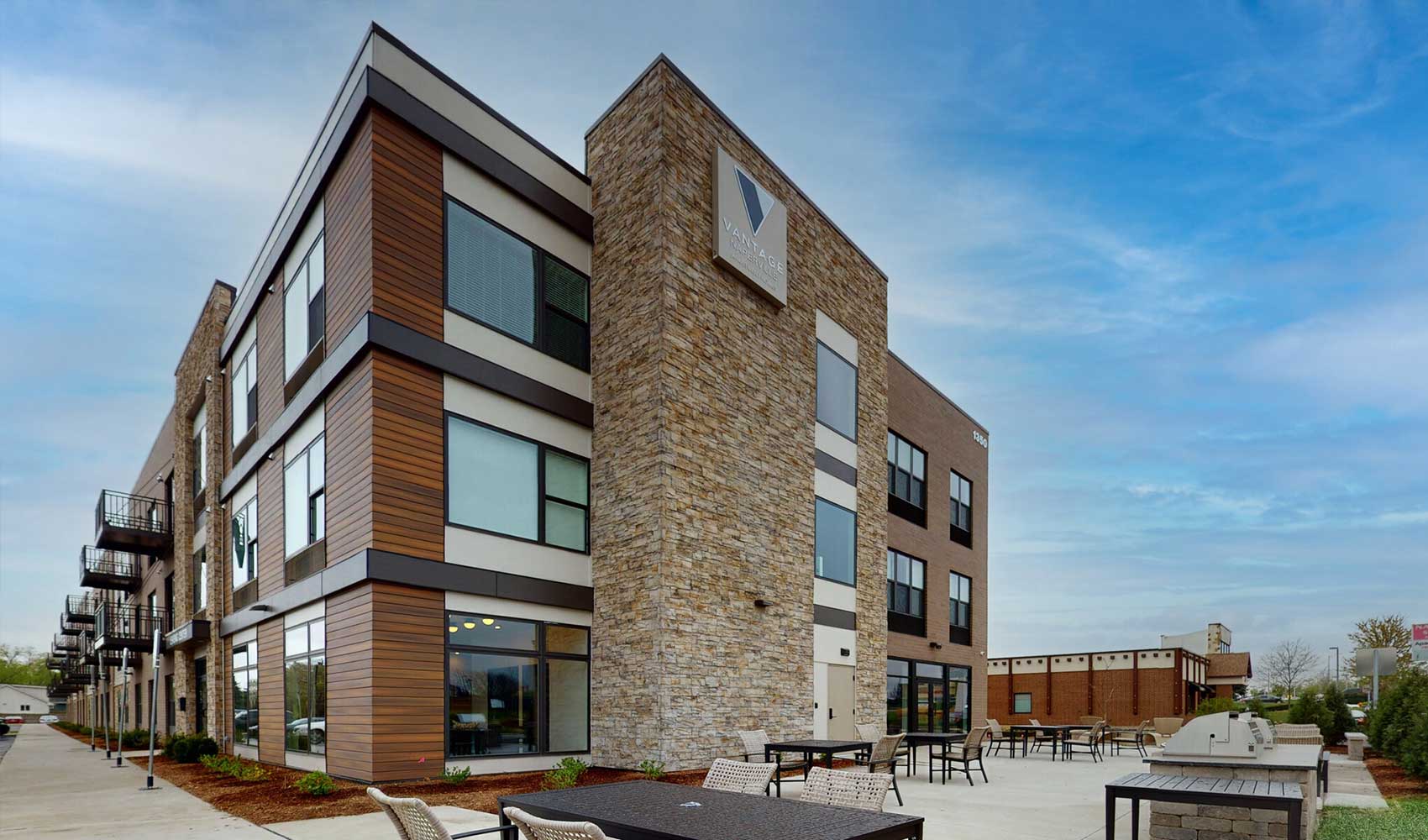
Search for “average rent in Naperville” and four legitimate sources will hand you four different numbers: $1,768 from CoStar’s Apartments.com data (June 2025), $2,121 from RentCafe’s Yardi Matrix tracking of buildings with 50 or more units (July 2026), $2,500 from Zumper’s rolling 30-day marketplace average (June 2026), and $2,600 as RentHop’s median of all currently listed units. None of these is wrong. They’re measuring different populations. The Yardi Matrix number only covers large, professionally managed apartment communities. Naperville’s rental stock, per the Chicago Metropolitan Agency for Planning’s June 2026 community snapshot, is only 20.1% buildings of five or more units; a large share of what actually gets rented in this city is single-family homes, townhomes, and small multifamily conversions, which is exactly what the marketplace-median sites (Zillow, RentHop, Zumper) fold in and RentCafe does not. That’s the entire explanation, and it means the “right” number depends on what you’re renting.
By bedroom count, the institutional-building numbers for July 2026 are:
| Unit type | Avg. size | Avg. rent | $ per sq ft |
|---|---|---|---|
| Studio | 481 sq ft | $1,717 | $3.57 |
| 1-bedroom | 770 sq ft | $1,887 | $2.45 |
| 2-bedroom | 1,072 sq ft | $2,280 | $2.13 |
| 3-bedroom | 1,330 sq ft | $2,916 | $2.19 |
Source: RentCafe / Yardi Matrix, buildings of 50+ units, updated July 10, 2026.
Cost per square foot drops steadily from studio to two-bedroom, then ticks back up for three-bedrooms, a sign that three-bedroom units in this market skew toward newer, amenity-heavy buildings rather than older stock with simply more rooms.
If your search includes single-family rentals, expect the number to land closer to Zillow’s citywide median of $2,400 or RentHop’s $2,600, both pulled from active listings across all property types rather than a fixed building sample.
Why do different sites list different average rents for Naperville? They’re sampling different populations of rental units, not different points in time. RentCafe’s number covers only buildings with 50 or more units; Zillow, Zumper, and RentHop pull from all active listings, including single-family homes, which push the median higher because houses generally rent for more than apartments of comparable bedroom count.
Rent by square foot: which “average” is the better deal
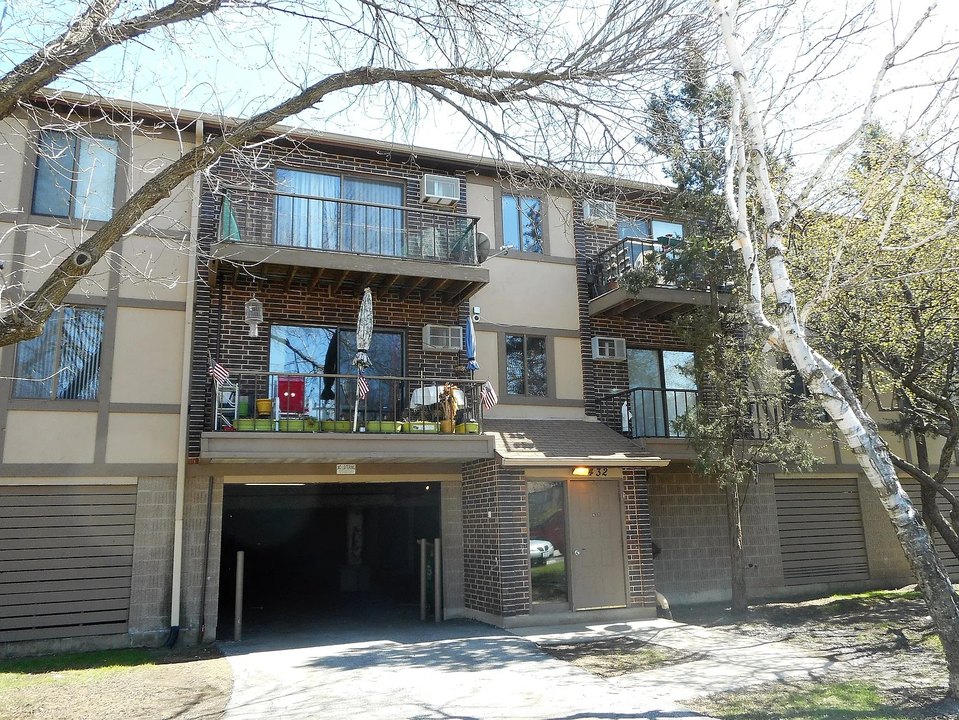
None of the major listing sites divides rent by square footage, so a $1,824 one-bedroom and a $1,741 studio look like an $83 difference instead of what they actually are: a $2.45-per-square-foot unit against a $3.57-per-square-foot unit. Using the table above, the two-bedroom tier is the most space-efficient bracket in the current Naperville market at $2.13 per square foot, with the one-bedroom tier close behind at $2.45. Studios carry the highest per-square-foot premium of any bedroom count, which tracks with a broader Chicago-suburb pattern: small units absorb a disproportionate share of a building’s fixed costs (entry, kitchen, bathroom) relative to their footprint.
Naperville’s newest supply illustrates the premium-building effect directly. The Atlas Naperville, a 236-unit development at Route 59 and 75th Street approved by City Council on April 7, 2026, carries projected rents of $1,725 to $2,465 across its mix of studios, one-bedrooms, and two-bedrooms, above the citywide institutional averages above for every comparable unit type.
Is a smaller unit near downtown a better deal than a larger unit near Route 59? Not automatically. Downtown Naperville commands the highest per-square-foot premium in the city because of walkability and Metra access, so a smaller downtown unit can cost more per square foot than a larger unit farther out. The comparison that matters is $/sq ft plus your actual commute pattern, not headline rent alone.
Choosing a neighborhood by what matters to you
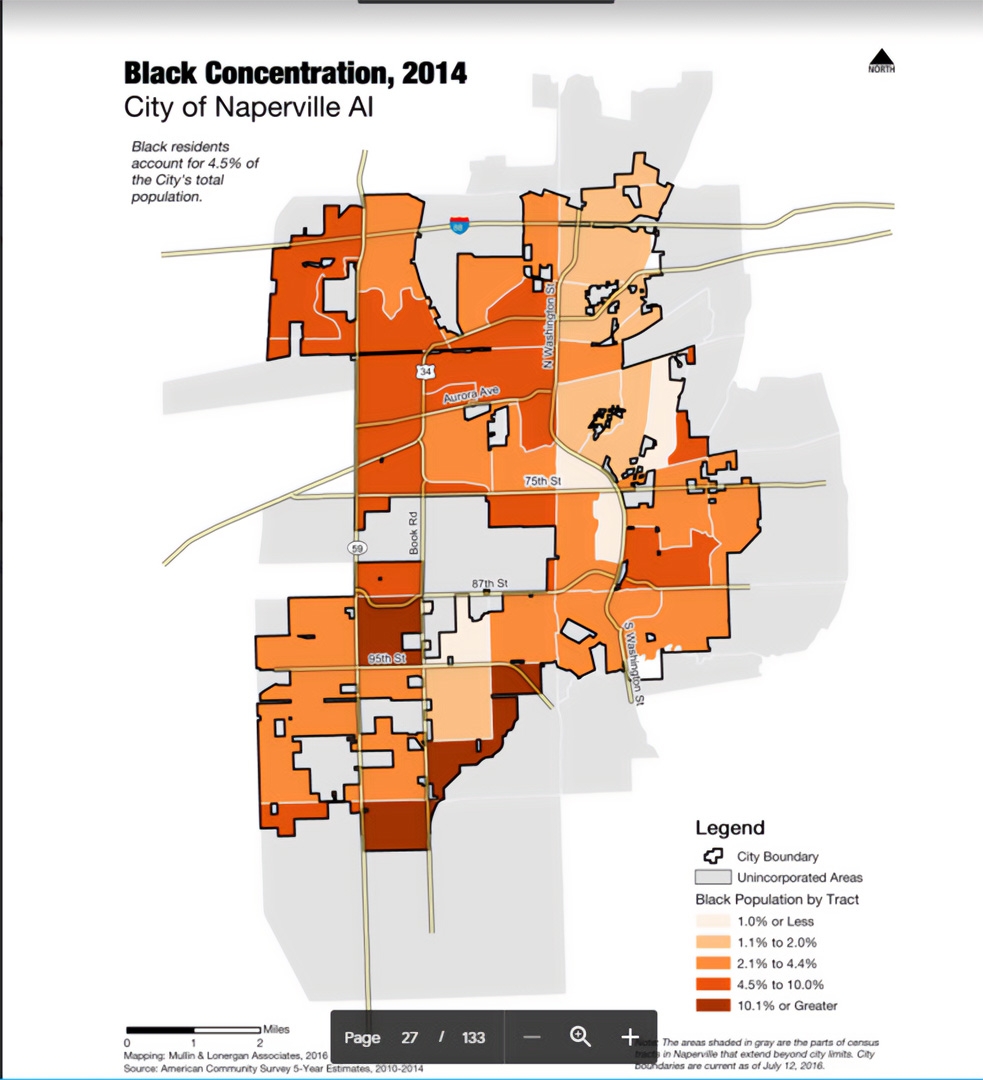
Every major rental site names Naperville’s neighborhoods. None of them says which one fits a given priority. Using neighborhood-level one-bedroom data, here’s how six of them actually differ:
| Neighborhood | Typical 1BR rent | Best for | Key tradeoff |
|---|---|---|---|
| Downtown Naperville | $2,342 | Walkable-downtown-first, Metra commuters | Highest rent in the city; limited parking |
| Tamarack Fairways | $2,100 | Newer-construction-first, families needing space | Farther from Metra and downtown retail |
| Country Lakes | $1,918 | Amenity-focused renters | More car-dependent |
| Brookdale | $1,900 | Balanced budget and commute | Fewer walkable amenities than downtown |
| River Run | $1,823 | Value near established infrastructure | Older building stock on average |
| Cress Creek | $1,695 | Budget-first renters | Longest drive to downtown and the Metra |
Source: Rent.com neighborhood rent data, 2026.
A renter prioritizing car-free commuting has a straightforward answer here: downtown, at a real price. A renter prioritizing square footage per dollar should look at Cress Creek or River Run first and expand the search radius from there.
When to start looking: timing in the Naperville market
Naperville rents follow the same seasonal curve as most Chicago-area suburbs: RentHop’s data shows an average 3.4% drop between summer peak pricing and the slower winter months, with less competition from other renters during that window. A flexible move date is worth real money here.
What Illinois and DuPage County law requires before you sign
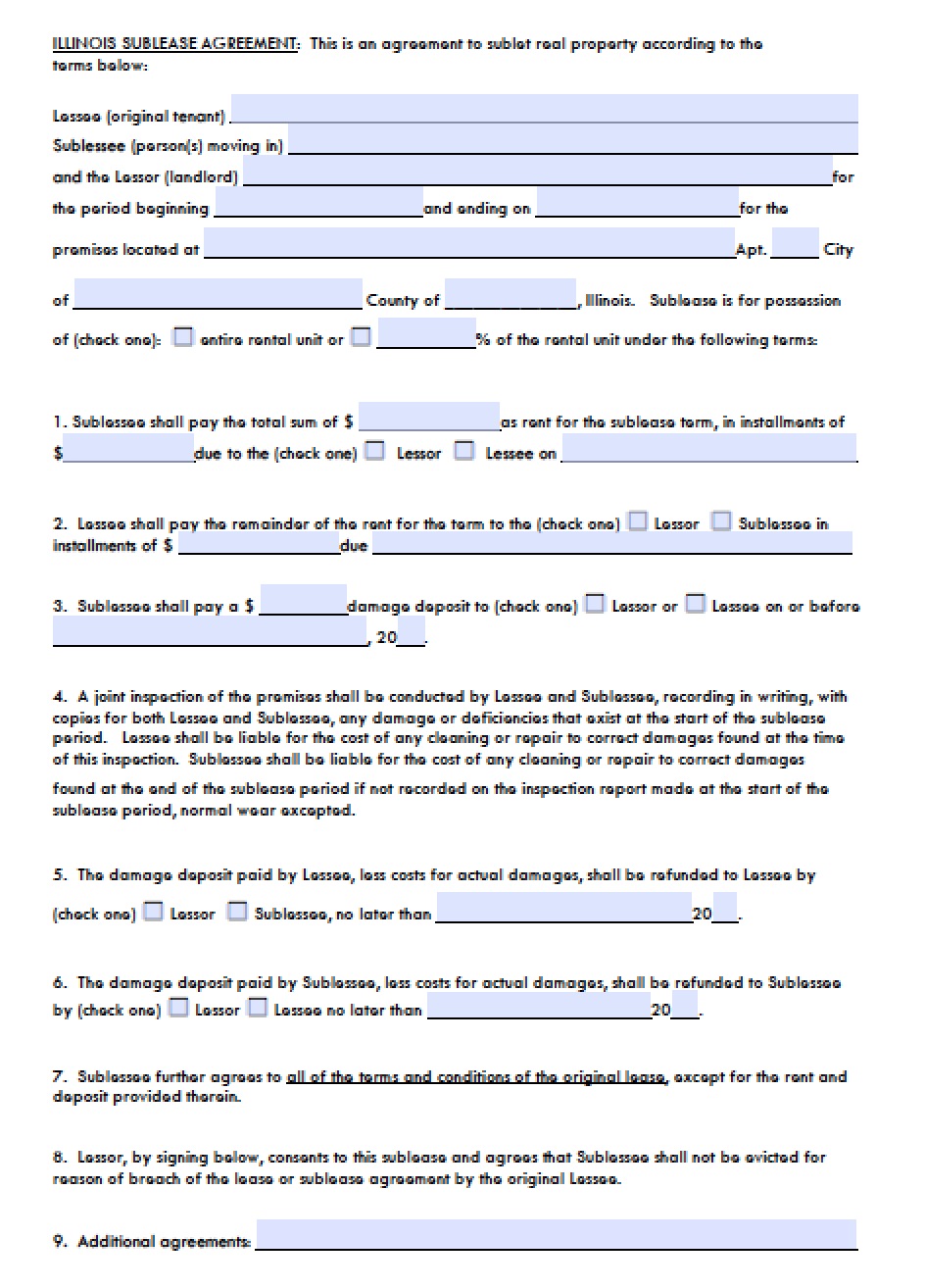
Naperville has no separate local landlord-tenant ordinance, unlike Chicago’s RLTO or Cook County’s RTLO; leases here run entirely on statewide Illinois law, and eviction filings for Naperville addresses go through the DuPage County Circuit Court in Wheaton.
| Rule | What Illinois law says | Citation |
|---|---|---|
| Security deposit return | 45 days after move-out; if deductions are made, an itemized statement with receipts is due within 30 days | 765 ILCS 710/1 |
| Deposit amount cap | No statewide dollar cap outside Chicago’s separate local ordinance | 765 ILCS 710/1 (statute sets no statewide cap) |
| Notice to end a month-to-month lease or raise rent | 30 days’ written notice from either party | 735 ILCS 5/9-207 |
| Rent control | Banned statewide; no municipality, Naperville included, may enact it | 50 ILCS 825/5 |
| Short-term rentals | Prohibited citywide since September 1, 2020 | Naperville Ordinance 20-087 |
How much notice does an Illinois landlord have to give before a rent increase or non-renewal? Thirty days for a month-to-month tenancy, under 735 ILCS 5/9-207. Fixed-term leases simply end on their stated date with no additional notice required, and neither DuPage County nor the City of Naperville extends that window beyond the state minimum.
For landlords and investors: what Naperville rents mean for yield
Naperville’s Zillow Home Value Index sits at $531,099 as of May 31, 2026. Against RentCafe’s citywide average rent of $2,121 a month ($25,452 a year), that works out to a gross rent multiplier around 20.9, or a gross yield near 4.8% before taxes, insurance, HOA dues, vacancy, and maintenance are subtracted, all of which run meaningfully higher here than in a lower-cost submarket given Naperville’s home-price level. That’s a back-of-envelope estimate, not a net return, and it varies by property type and neighborhood.
Twenty-five percent of Naperville’s occupied housing is renter-occupied, per the Chicago Metropolitan Agency for Planning’s June 2026 snapshot of 2020-2024 Census data, a smaller renter share than DuPage County overall (26.9%) or the seven-county Chicago region (35.2%). Median household income in Naperville is $155,105, well above the county and regional medians.
Does Naperville’s rental market currently favor tenants or landlords? Supply is loosening after a multi-year gap. Hines’ senior managing director noted the Naperville submarket had received no new institutional multifamily supply since 2022 before the firm broke ground on a 306-unit building at 1200 Diehl Road in late 2025. Combined with the 236-unit Atlas approval and a 297-unit CityGate II proposal moving through zoning in June 2026, several hundred new units are entering the pipeline at once, a shift that tends to soften landlord pricing power over the following one to two leasing cycles as buildings compete to fill up.
How Naperville compares to Wheaton and Aurora
| City | Avg. rent | Vs. Naperville | Renter-occupied share |
|---|---|---|---|
| Naperville | $2,121 | – | 25.2% |
| Wheaton | $2,098 | 1.1% lower | 27% |
| Aurora | $1,846 | 13% lower | 33% |
Source: RentCafe/Yardi Matrix (Wheaton) and Point2Homes (Aurora, RentCafe-sourced).
Wheaton is functionally a price match for Naperville. Aurora is the only genuine budget move among the three, and it comes with a materially older building stock.
Is it cheaper to rent in Naperville or a nearby DuPage suburb like Aurora or Wheaton? Wheaton runs close to Naperville, $2,098 against $2,121 by RentCafe’s tracking. Aurora runs meaningfully lower, around $1,846 by the same measure, though Aurora’s rental stock skews toward older buildings and a lower median household income, so the price gap isn’t purely a location discount.
Comments