
Current market conditions: what the numbers actually say
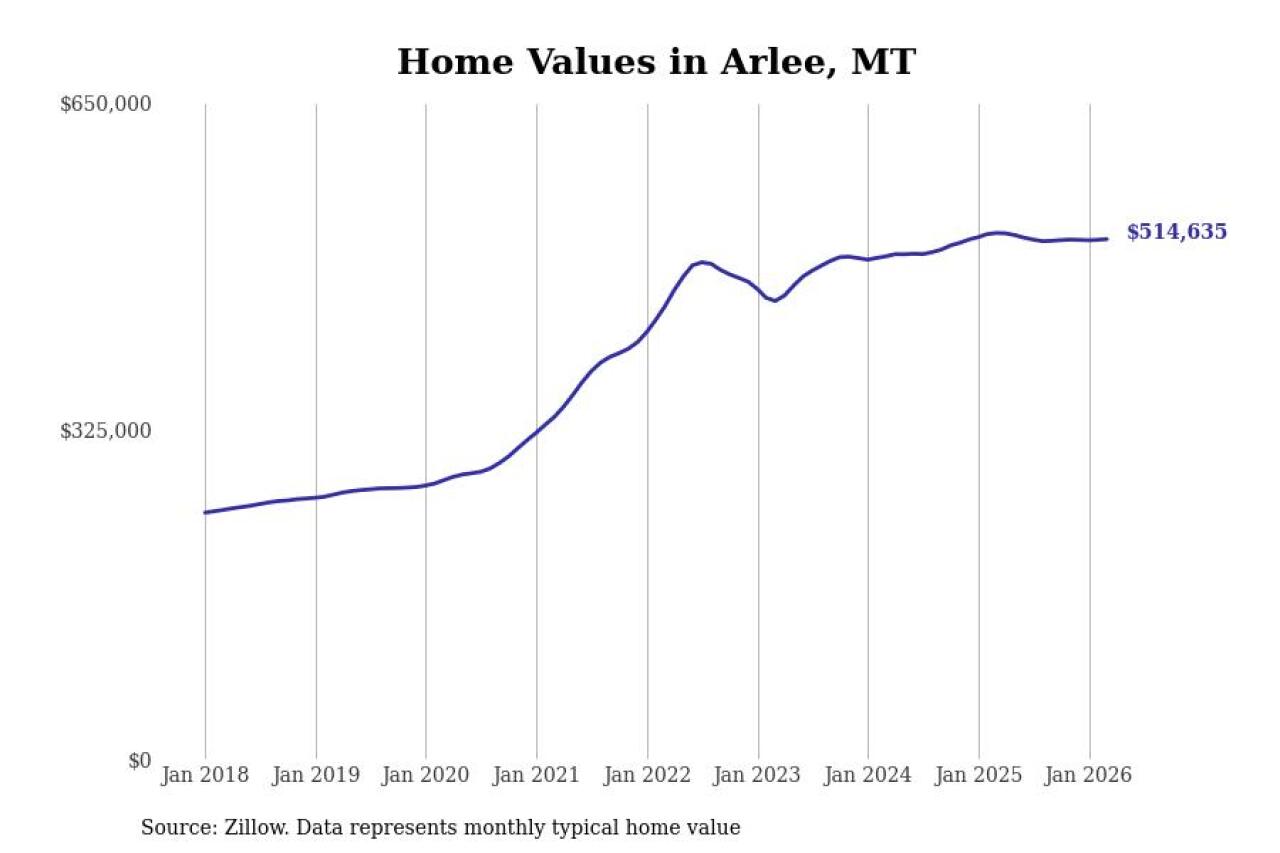
Three independent trackers read Mountain Home’s market differently, and the gap is informative rather than a contradiction.
| Source and metric | Value | Period / notes |
|---|---|---|
| Redfin, median sale price | $228,000, up 5.1% year over year | January 2026; 125-day median days on market vs. 64 days a year earlier |
| Zillow, average home value | $236,547, up 1.5% year over year | Estimate-based, not a sold-price figure |
| Zillow, neighboring lake-town averages | $209,333 (Bull Shoals) to $265,789 (Norfork) | Current listing data across the Bull Shoals to Norfork corridor |
The spread exists because Redfin’s number is a median of closed sales, Zillow’s is a modeled estimate across the whole housing stock, and list prices quoted elsewhere reflect what sellers are asking, not what buyers are paying. A buyer should anchor to the sold-price figure and treat list prices as a ceiling, not a target.
Why do different sites show different median prices for Mountain Home? Because they measure different things: closed sales, modeled estimates across all homes, and active list prices. Redfin’s $228,000 median sold price is the closest read on what buyers are actually paying.
What waterfront costs versus what inland costs
| Proximity type | Typical price range | Example |
|---|---|---|
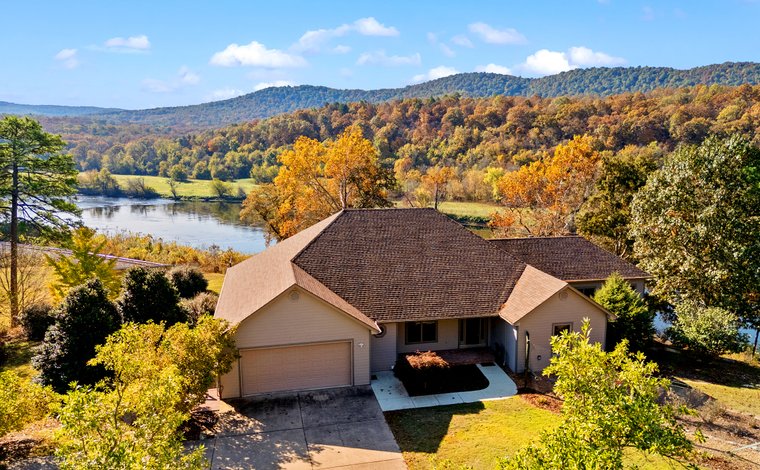
| Channel-front, Bull Shoals Lake | $60,000 to $200,000 | Smaller lots, narrower water access |
| Main-lake frontage, Bull Shoals Lake | $200,000 to over $1,000,000 | Full lake access and larger acreage |
| City-wide, non-waterfront | $228,000 median, sold | Redfin, January 2026 |
| Neighboring lake towns, all inventory | $209,333 to $265,789 average | Bull Shoals through Norfork |
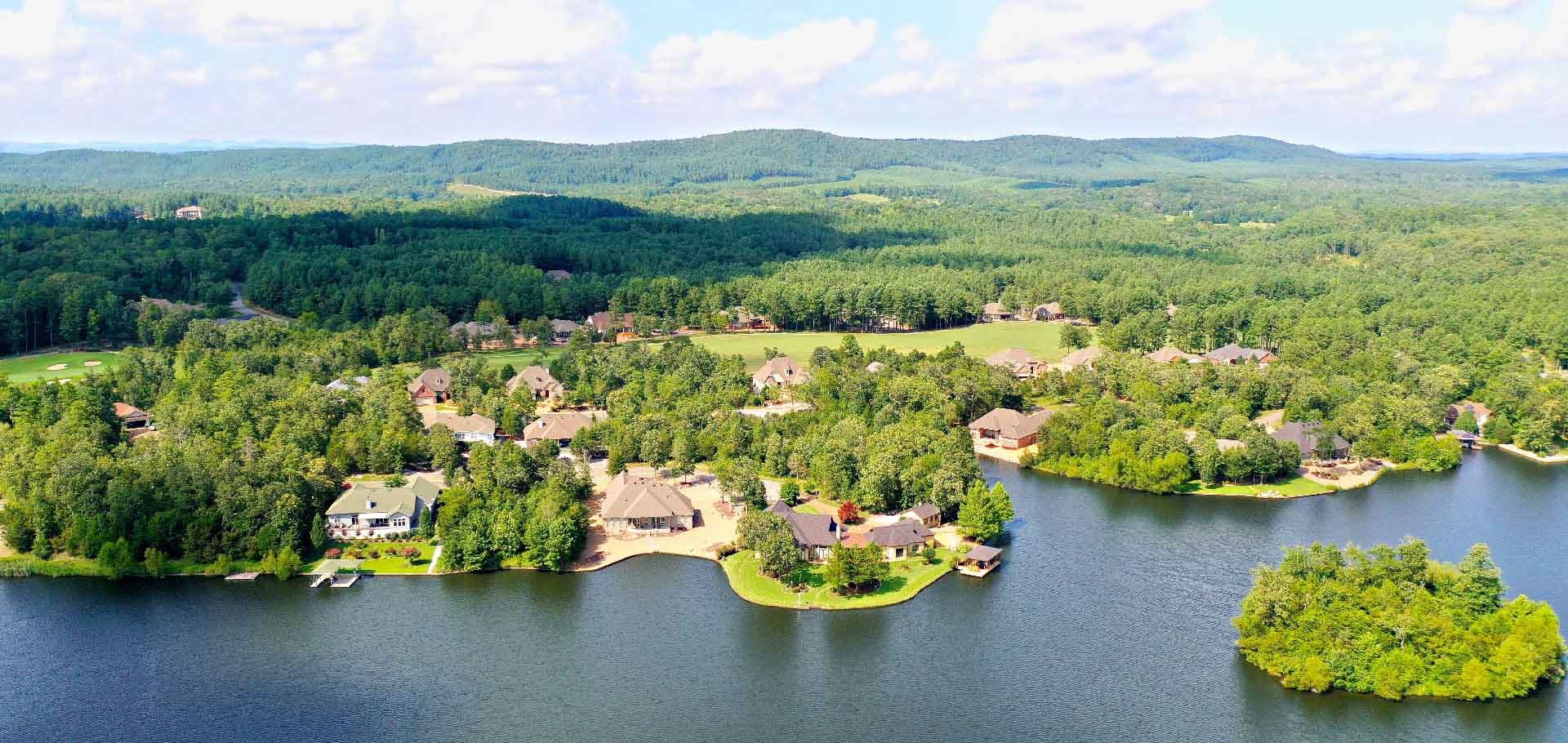
A currently active listing illustrates the top end: 639 Sycamore Springs Circle in Mountain Home, a six-bedroom, six-bath, 5,684-square-foot home on 3.05 acres of lake frontage, is listed at $1,900,000. The premium is not a smooth curve. It jumps hardest between channel access and true main-lake frontage, and buyers shopping by ZIP-level averages alone will miss it, since neighboring lake towns’ overall averages stay within a few thousand dollars of the city median even though individual waterfront parcels inside those same towns range across a million-dollar spread.
Is a lake view the same as lakefront for pricing purposes? No. View-only lots price closer to the city-wide inland median. Channel-front access starts the real premium at roughly $60,000, and main-lake frontage is what pushes a property past $200,000 and, for larger homes, past $1,000,000.
Buying as an owner-occupant versus an investor
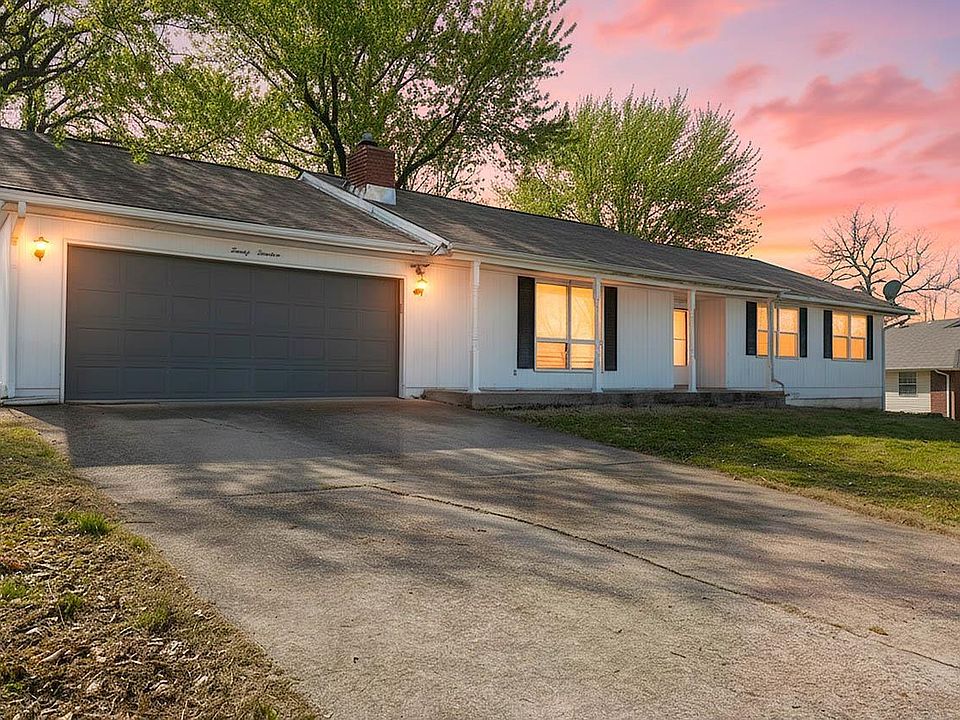
- Owner-occupant priority: the $228,000 city-wide median is the realistic anchor, not the $244,900 list price; school zoning and commute to Baxter Regional Medical Center or the Arkansas State University-Mountain Home campus matter more than waterfront access for most owner-occupants.
- Investor priority: whether the specific property can legally run as a short-term rental under Municipal Code Chapter 14.28, and whether it sits inside the 11% of citywide properties carrying meaningful flood risk, since insurance cost eats directly into net yield.
A retiree buying a permanent residence and an out-of-state investor buying a rental are often bidding on the same listing for entirely different reasons, and the number that matters most to one, waterfront access, may barely register for the other, while the number that matters most to the investor, STR legality, rarely appears on a standard listing sheet at all.
The cost of owning beyond the purchase price

| Cost category | Typical figure | Notes |
|---|---|---|
| Property tax, effective rate, Mountain Home | 0.49% | Lowest rate inside Baxter County; Salesville, by contrast, runs 1.02% |
| Homestead credit | Up to $600 per year | Requires primary-residence status; assessed value capped at 5% annual increase |
| Flood insurance, NFIP, low-risk zone | Often under $400 per year | Voluntary outside a mapped high-risk zone |
| Citywide flood exposure | 11% of properties at risk of severe flooding over 30 years | City-wide figure, not lake-specific |
Flood insurance is federally required only if a property sits in a mapped Special Flood Hazard Area and carries a federally backed mortgage. Outside that zone it’s voluntary, but skipping it is a real gamble: low- and moderate-risk zones still account for more than 20% of national flood insurance claims. Assessment mechanics matter too: Baxter County assesses at 20% of market value, reassesses every four years, and caps annual homestead increases at 5%, so a newly purchased home is reassessed at full value at the point of sale, and the buyer’s first-year bill can run higher than the seller’s last one.
Do I need flood insurance if I’m not directly on the lake? Not legally, unless the property sits in a mapped high-risk zone with a federally backed loan. Practically, it’s worth pricing anyway, since low-risk zones still generate over a fifth of all NFIP claims nationwide.
Running the investment math
Public data doesn’t publish a Mountain Home-specific capitalization rate, so the more transparent move is to build a gross rent multiplier from two independently sourced numbers: the $228,000 median sold price and a $769 median monthly asking rent. That works out to a multiplier around 24.7, meaning it would take close to 25 years of gross rent, before any expenses, to recoup the purchase price on a straight buy-and-hold basis. That’s a long payback window, and it puts the weight of the investment case on appreciation and short-term rental income rather than long-term lease cash flow alone.
Short-term rental performance tells a different story: one STR-focused data platform puts the median host revenue in Mountain Home at $22,036 per year, with an average daily rate of $175 and 46% occupancy.
| Strategy | Revenue signal | Basis |
|---|---|---|
| Long-term rental, buy-and-hold | About 24.7x gross rent multiplier | $228,000 sale price divided by $769/month rent times 12 |
| Short-term rental | $22,036/year median host revenue | $175 ADR, 46% occupancy |
| STR cost of compliance | $50/year business license plus 1.5% tourism tax | On top of state, county, and municipal lodging tax |
For a $228,000 property, $22,036 in gross STR revenue is roughly 9.7% of purchase price before expenses, cleaning, management, and vacancy are subtracted, a materially different starting point than the long-term multiplier suggests.
Short-term rental rules, spelled out
Short-term rentals are legal citywide under Mountain Home Municipal Code Chapter 14.28, adopted by unanimous city council vote in October 2022. Operators need a $50-per-year city business license, an annual fire safety inspection, and an initial building inspection. Properties inside platted subdivisions zoned residential cannot post advertising yard signage, though a small entrance placard naming the property is allowed. Every listing must display the city license number, and operators collect a 1.5% local tourism tax in addition to standard state, county, and municipal taxes.
Can I legally run an Airbnb in Mountain Home? Yes, citywide, under Municipal Code Chapter 14.28. It requires a $50/year business license, fire and building inspections, and collection of a 1.5% tourism tax on top of other lodging taxes.
Financing friction the portals don’t mention
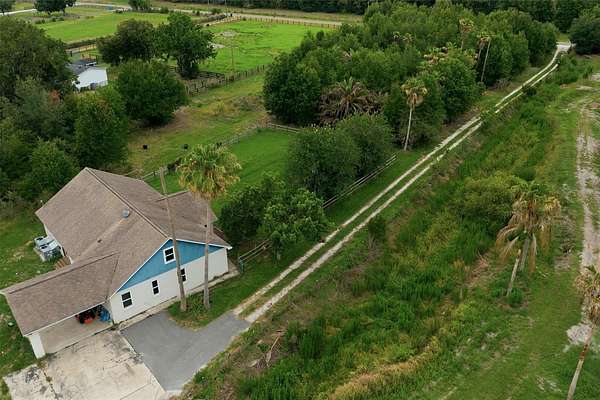
Rural inventory around the lakes includes older manufactured homes and properties on well and septic systems, both of which can trigger different underwriting than a standard conventional mortgage; manufactured homes in particular are frequently financed as chattel loans rather than real-property mortgages. Specific local rate spreads for these loan types were not available from a citable public source at the time of writing. A buyer considering this type of property should confirm current terms directly with a lender.
Best time to buy or list

Short-term rental demand peaks from June through August, when lake tourism is highest. That doesn’t necessarily translate into the best time to buy, since seller motivation and inventory levels move on their own schedule.
Settling in after closing

- Transfer utilities before closing day.
- Schedule a chimney and HVAC inspection if the home has sat vacant.
- Rekey the locks immediately after closing.
- Confirm trash and recycling pickup days with the city.
None of this is specific to Mountain Home.
Comments