
Where the boundary actually falls

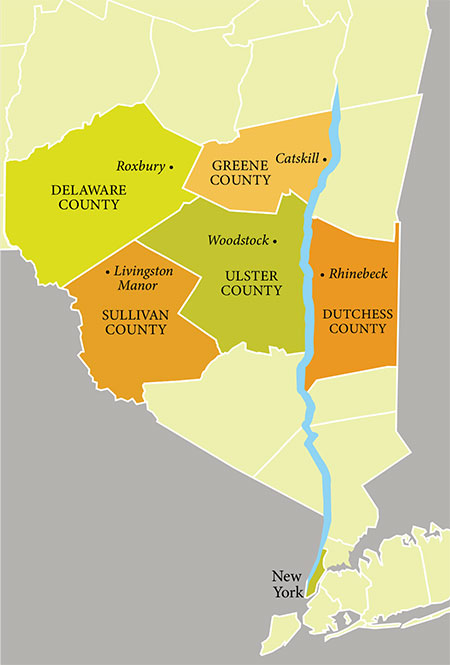
Two government sources define this region differently, and neither is simply wrong: they’re answering different questions. The Hudson River Valley National Heritage Area, the federal body responsible for the region’s historic-site designations, names only Westchester and Rockland, placing Putnam in the Middle Hudson Valley alongside Orange, Dutchess, and Ulster. The New York Metropolitan Transportation Council, a regional government planning body, uses a three-county version in its transit and demographic work, folding Putnam in. If a source doesn’t specify which definition it’s using, the two-county version is the one tied to an actual federal designation, and the safer default.
Is Putnam County part of the Lower Hudson Valley?
Depends which government body is asked. The Hudson River Valley National Heritage Area places Putnam in the Middle Hudson Valley. The New York Metropolitan Transportation Council includes it in a three-county Lower Hudson Valley for transit and demographic planning. Both are current, real government definitions.
Counties and towns
| County | Representative towns | Known for | Included in “Lower Hudson” by |
|---|---|---|---|
| Westchester | Yonkers, Tarrytown, Sleepy Hollow, Ossining, Croton-on-Hudson, Peekskill | Rockefeller-era Hudson riverfront estates, the Old Croton Aqueduct Trail, Metro-North’s Hudson Line | NHA and NYMTC (both) |
| Rockland | Nyack, Piermont, Suffern, Stony Point | Palisades cliffs, artist communities along the river, the Rockland side of Bear Mountain State Park | NHA and NYMTC (both) |
| Putnam | Cold Spring, Garrison, Carmel, Brewster | Hudson Highlands terrain, lower housing density than Westchester, Metro-North’s Harlem and Hudson lines | NYMTC only; the NHA places it in the Middle Hudson Valley |
Westchester carries most of the region’s population and nearly all of its named historic estates; Putnam is the one county whose membership genuinely depends on which source is consulted.
What’s the difference between the Lower and Middle Hudson Valley?
The Middle Hudson Valley (Putnam, Orange, Dutchess, and Ulster under the National Heritage Area’s definition) trades Westchester’s density and estate architecture for the Hudson Highlands and the Catskill foothills. Putnam sits on the seam between the two, which is exactly why its classification is disputed.
Getting there
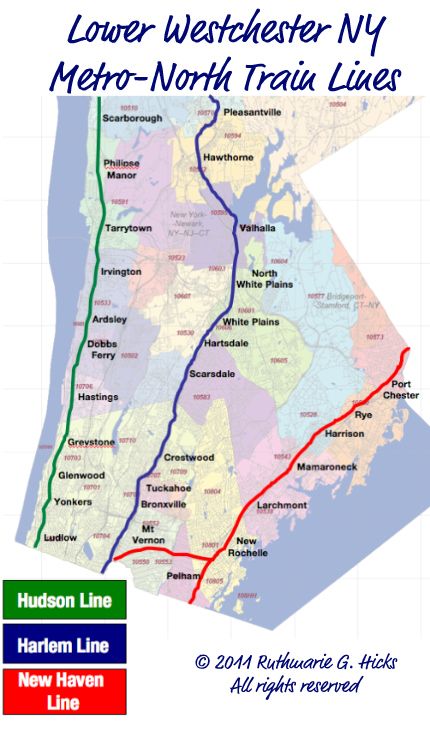
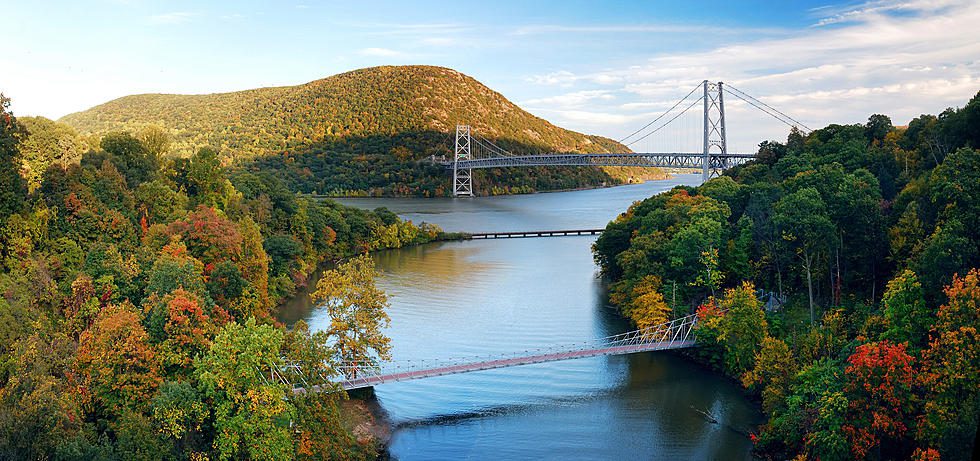
Westchester towns run on Metro-North’s Hudson, Harlem, and New Haven lines into Grand Central. Rockland County has no Grand Central service at all: per Rockland County’s own transportation page, it’s reached by NJ Transit’s Pascack Valley Line, serving the Spring Valley, Nanuet, and Pearl River stations, or the Main/Bergen/Port Jervis Line from Suffern and Sloatsburg, both terminating at Hoboken with a transfer required for Manhattan. Bear Mountain State Park, which sits mostly in Rockland with its summit extending into Orange County, is roughly a 50-mile drive from New York City and has no direct rail option; the Palisades Interstate Parkway or a bus-and-transfer trip are the only ways in.
For a single day trip, Westchester’s rail towns are the simpler target. For house-hunting, the practical split is Westchester’s commuter-rail towns against Rockland’s car-dependent ones, since only one side of the river reaches Grand Central directly.
Is there a direct train from Rockland County to Grand Central?
No. Rockland’s Metro-North-branded stations, Spring Valley, Nanuet, and Pearl River, run on NJ Transit’s Pascack Valley Line to Hoboken, not to Grand Central. Reaching Manhattan requires a transfer at Hoboken or Secaucus.
What the region is known for
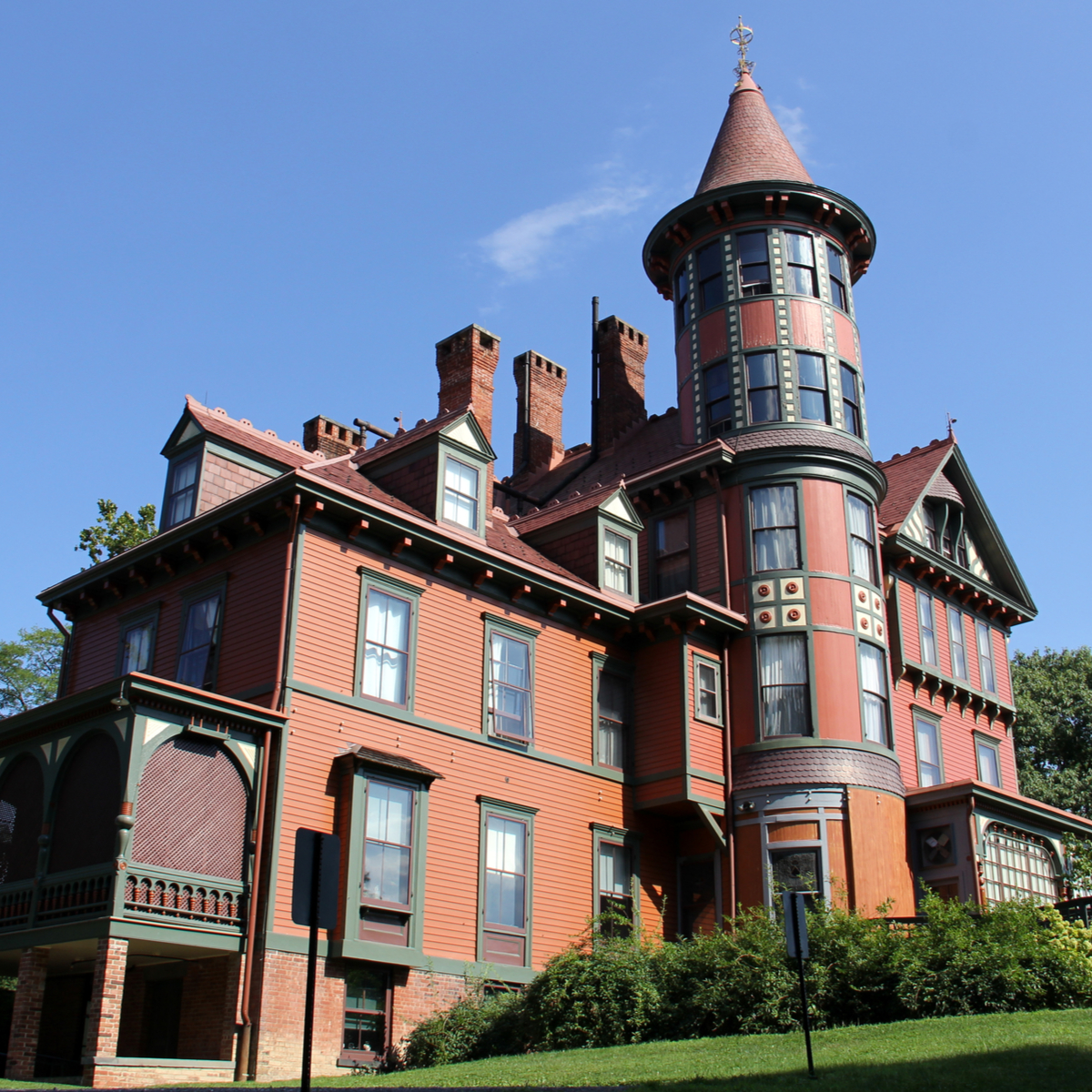
The area’s historic-estate reputation traces to a handful of 1700s Dutch landholding families and, later, Gilded Age industrialists who built along the river’s east bank. The New Croton Dam, completed in 1906 after 14 years of construction, was the tallest dam in the world at the time; its workforce included stonemasons recruited specifically from southern Italy for the project.
Things to do
| Site | County | Hours | Admission | Why it’s notable |
|---|---|---|---|---|
| Bear Mountain State Park (Trailside Museum & Zoo) | Rockland (park extends into Orange) | Apr 1 to Nov 30: 10am to 4:30pm; Dec 1 to Mar 31: 10am to 4pm | $10 cash-only vehicle fee | 50-mile drive from NYC, no rail access; Iona Island lot closed for construction through spring 2026 |
| Croton Gorge Park / New Croton Dam | Westchester | Dawn to dusk, year-round | Free | 297-foot masonry dam, tallest in the world at its 1906 completion; direct access to the Old Croton Aqueduct Trail |
| Philipsburg Manor | Westchester | Fri to Sun, May 8 to Sep 27 and Nov 1 to 29; added weekdays in October, weekends in December | $18 adult, $15 senior, $13 child (2026) | Restored 1750s mill complex; interprets the lives of the enslaved workers who ran it |
| Kykuit, the Rockefeller Estate | Westchester | Tours suspended for all of 2026 | 2025 season: $75 adult / $20 child | The region’s signature estate, currently unvisitable |
Philipsburg Manor and Croton Gorge Park are the dependable picks for 2026; the other two carry real access limits that change how a visit should be planned this year.
Can I still tour Kykuit in 2026?
No. The Rockefeller Brothers Fund suspended public tours for all of 2026, announced December 23, 2025. Historic Hudson Valley expects updated information beginning in early 2027.
When to go and what’s closed right now
Bear Mountain’s Perkins Memorial Drive and Tower run April through late November, weather permitting; its swimming pool was delayed into the 2026 season by construction and is expected to open July 4. Philipsburg Manor’s season runs May through December with real gaps in between rather than a continuous run. Build a trip around what’s open on the specific date, not around the season generically.
Comments