
Keaau at a glance for real estate decisions
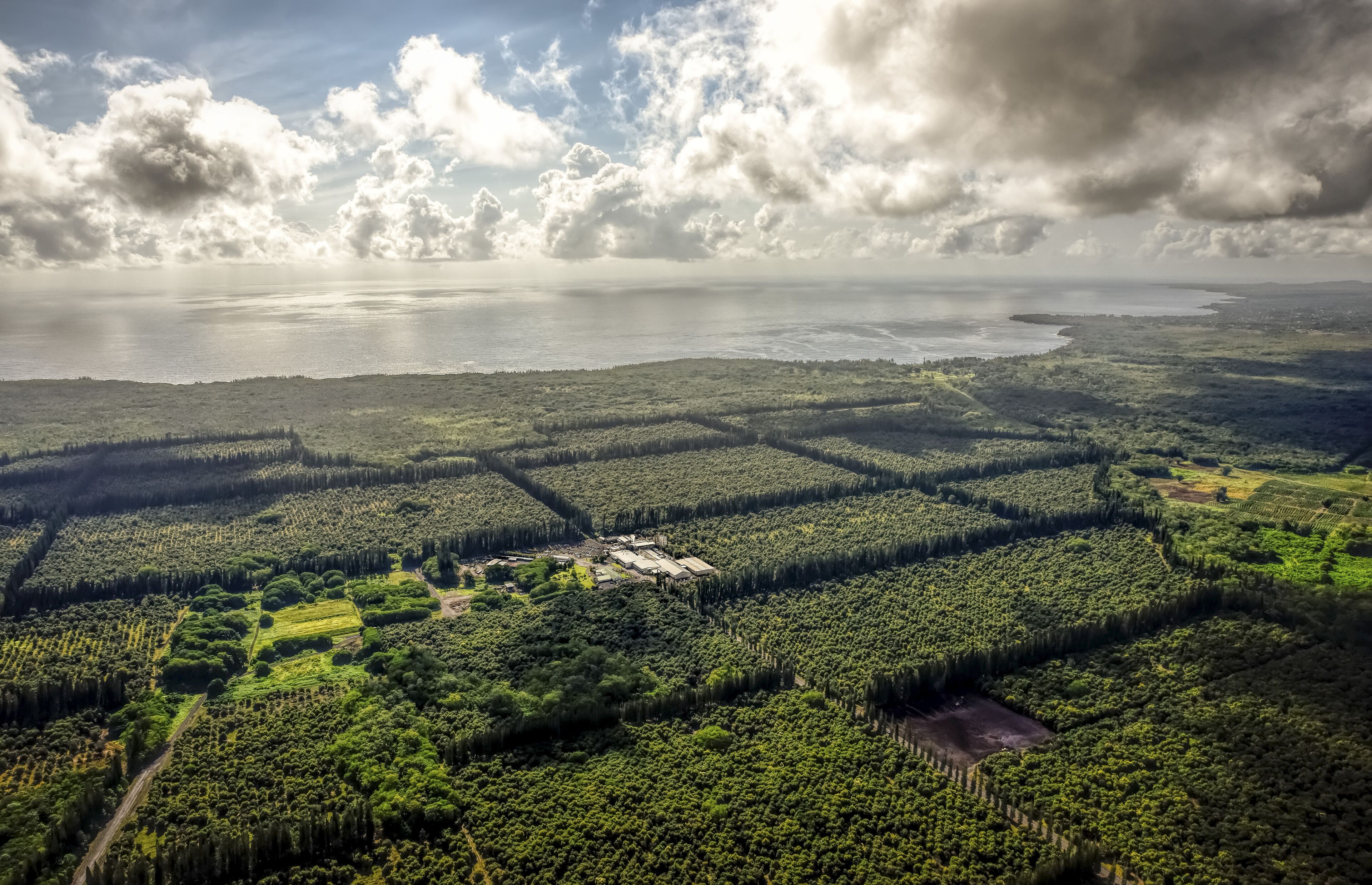
Keaau sits on Highway 130 southeast of Hilo, in the Puna District, and functions as the gateway to a string of large subdivisions built on former agricultural land: Hawaiian Paradise Park, Orchidland Estates, Hawaiian Acres, and Fern Acres. What most buyers actually purchase here isn’t a “Keaau house” in the suburban sense. It’s a parcel in one of these subdivisions, each with its own lot size norms, road-maintenance arrangement, and water source, and the differences between them affect financing more than they affect lifestyle.
The town core itself has county water and paved roads. Once you move into the surrounding subdivisions, catchment water and privately maintained roads become the default, not the exception, and that shift is what the next two sections cover.
Subdivisions compared
| Subdivision | Typical lot size | Road status | Annual road/HOA cost | Lava zone |
|---|---|---|---|---|
| Hawaiian Paradise Park | ~1 acre (down to ¼ to ½ acre near the coast) | Main roads paved, side roads graded | ~$396/yr, may rise 10%/yr for paving | 3 |
| Hawaiian Acres | ~3 acres | Private, graded, some rough | $30/yr (voluntary) | 3 |
| Orchidland Estates | 1 to 3 acres | Mostly graded, some paved main roads | $85/yr + $100/yr paving fee | 3 |
| Fern Acres | ~2 acres | Mostly paved, private | $110/yr + $30/yr dues | 3 |
Source for all rows: Bizwala subdivision directory, cross-checked against the Hawaiian Paradise Park Owners Association FAQ.
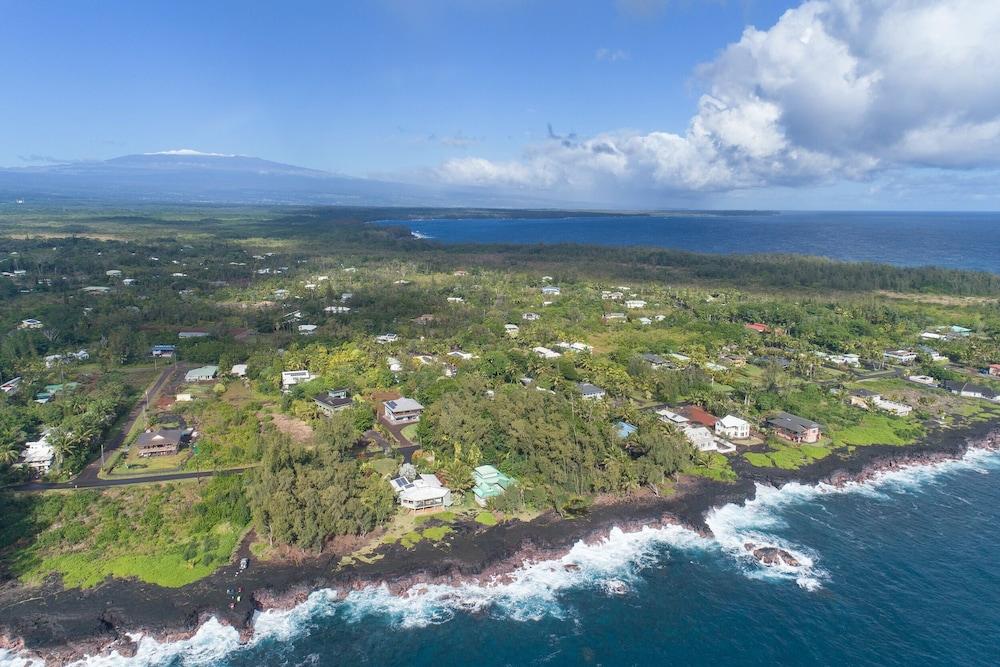
Hawaiian Acres offers roughly three times the land of HPP for a tenth of the annual carrying cost, on rougher private roads instead of HPP’s paved main routes. A typical one-acre HPP lot measures about 322.67 by 135 feet, per the association’s own FAQ, and most catchment tanks on these lots hold at least 10,000 gallons.
What’s the difference between Hawaiian Paradise Park and Hawaiian Acres?HPP has smaller lots (around 1 acre), paved main roads, and a formal owners’ association with dues near $396 a year. Hawaiian Acres has roughly triple the land per lot, rougher private roads, and only $30 a year in voluntary dues: a tradeoff between access and acreage more than a difference in price tier.
The risk factors nobody puts in the listing
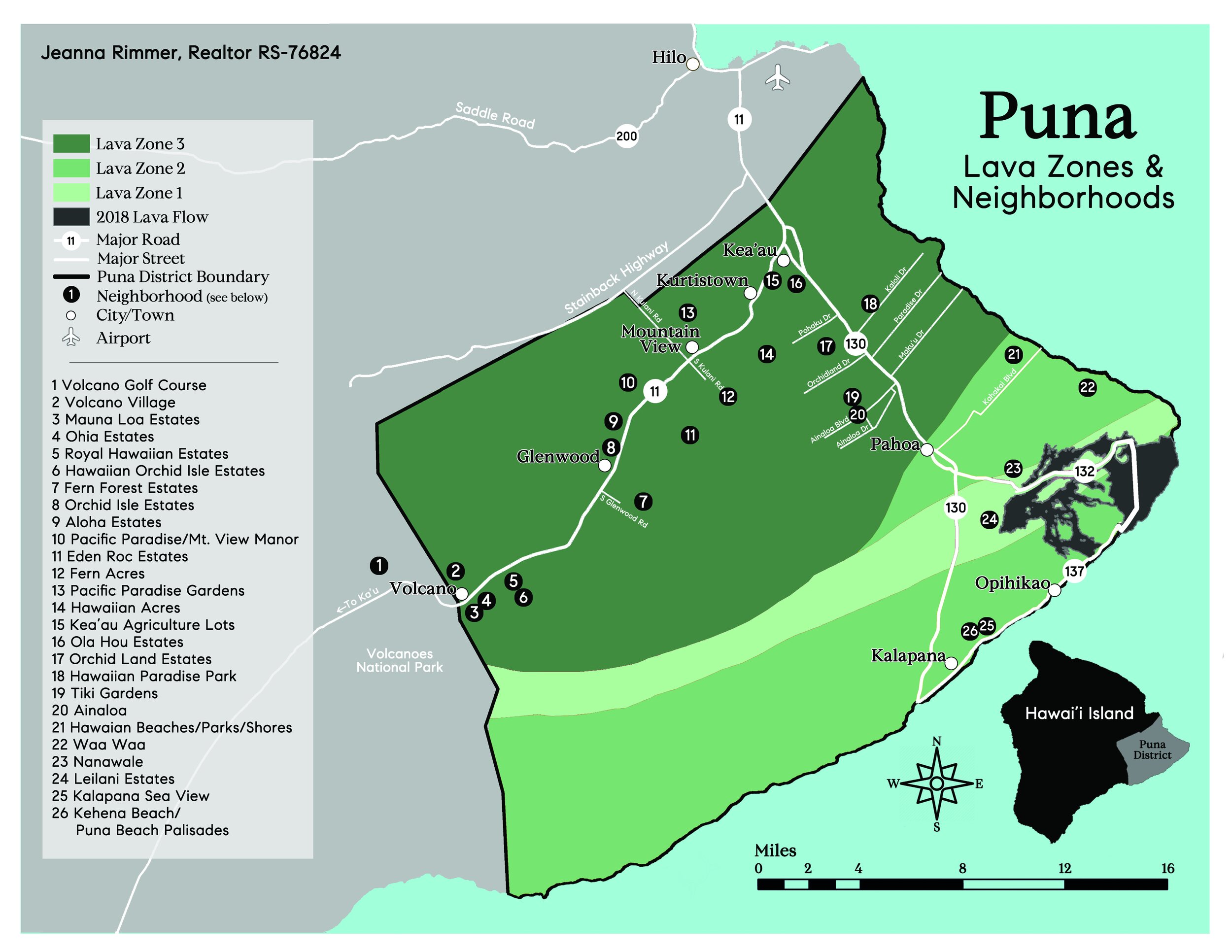
Every subdivision above sits in USGS Lava Zone 3, the zone directly downslope of Zones 1 and 2, where flows from 1955 onward cover only about 7% of the land (USGS). This matters because Zone 3 is the practical dividing line for financing on the Big Island: conventional insurers and standard mortgage programs generally serve Zone 3 and up, while Zones 1 and 2 (lower Puna areas like Leilani Estates and Kalapana) are largely limited to the state-created Hawaii Property Insurance Association, which caps dwelling coverage at $450,000 regardless of a home’s actual value (HPIA). One brokerage estimate puts Zone 3 homeowners insurance around $1,400 a year against roughly $6,000 a year in Zone 1 to 2 for a comparable home (Hawaii Life), a single broker’s estimate worth treating as directional rather than a filed rate.
| Risk factor | Typical Keaau-area condition | Financing/insurance implication |
|---|---|---|
| Lava zone | Zone 3 across HPP, Orchidland, Hawaiian Acres, Fern Acres | Conventional insurance and standard mortgage programs generally available; confirm with your lender, since underwriting varies by program |
| Water source | Catchment tank is the default outside the town core | VA loans require a lender-ordered water-quality lab test under VA Circular 26-14-4; conventional/FHA lenders confirm the water meets EPA standards where no local standard applies |
| Flood exposure | 38% of Keaau properties (211 total) face major flood risk over 30 years | Get a parcel-specific flood report before waiving an inspection contingency |
| Road access | Several subdivisions rely on graded, privately maintained roads | The ongoing HOA/road fee is a real carrying cost; unusual access can complicate appraisal on some loan programs |
Flood-risk row sourced to Redfin/First Street; catchment financing row to VA Circular 26-14-4.
Does catchment water affect my ability to get a mortgage?Not automatically, but it adds a step. VA loans require a lender-ordered lab test of the catchment water under a standing VA circular, and conventional or FHA lenders need confirmation the water meets EPA drinking-water standards where no local health authority regulates it. Budget for the test and expect it as a closing condition.
What it costs to buy here now

| Metric | Value | Source | As of |
|---|---|---|---|
| Median sale price | $502,000 (down 3% YoY) | Homes.com | 2026 |
| Average home value | $462,507 (down 1.6% YoY) | Zillow | 2026 |
| Median sale price | $500,000 (up 66.7% YoY, small-sample volatility) | Redfin | Jul 2025 |
| Days on market | 84 to 89 days (vs. 58 national) | Redfin / Homes.com | 2026 |
| 30-year fixed rate | 6.49% | Freddie Mac PMMS | Week of Jul 9, 2026 |
Running the math on the $502,000 Homes.com figure: a 20% down payment leaves a $401,600 loan. At 6.49% over 30 years, principal and interest run about $2,535 a month, or $30,420 a year. Under the standard 28%-of-income guideline, that requires about $108,640 in household income, against an average Keaau household income of $95,000. That gap is what separates a comfortable purchase from a stretch here.
Why do homes here sit on the market longer than the national average?Keaau’s 84 to 89 day average is well above the 58-day national figure, largely reflecting the area’s supply of large-lot, catchment-water properties, which pull from a smaller pool of ready buyers and lenders than move-in-ready homes on county water.
Investing and renting in Keaau

New unhosted short-term vacation rentals are barred in single-family and agricultural zones under Hawaii County’s Bill 108 and Rule 23, unless the property already holds a Nonconforming Use Certificate predating the 2018 ordinance (Hawaii County Planning). HPP, Orchidland, Hawaiian Acres, and Fern Acres are agricultural or single-family zoned, so a listing advertising an “active STVR permit” needs that certificate verified directly with Planning by tax map key.
The rules just tightened further. Bill 47, effective July 1, 2026, requires annual registration for all short-term rentals, hosted units included, at $250 for hosted and $500 for unhosted properties, with fines up to $10,000 for operating unregistered (Awning). Statewide transient accommodations tax rose to 11% on January 1, 2026 (Hostaway), on top of general excise tax, so model rental income against an 18 to 19% combined tax burden before assuming a permitted unit pencils out.
Can I legally rent my Keaau-area property short-term?Only if it’s zoned resort or commercial, or holds a Nonconforming Use Certificate predating Bill 108. As of July 1, 2026, even a grandfathered unit needs Bill 47 registration on top of the certificate to operate legally.
Common mistakes buyers and investors make here
- Assuming catchment water finances like county water. It doesn’t automatically disqualify a loan, but it adds a lab-test condition and a signed acknowledgment step that catches unprepared buyers at closing.
- Treating “1 acre” as one fixed thing. HPP lots shrink to a quarter or half acre near the coast, and several subdivisions layer on septic requirements and variable power-connection fees that change the real build-out cost.
- Taking an “active STVR permit” claim at face value. Verify the Nonconforming Use Certificate directly with Hawaii County Planning by tax map key, and confirm current Bill 47 registration status.
- Ignoring exactly which side of the Zone 2/3 line a parcel sits on. Two lots that look identical in listing photos can face completely different insurance markets.
Schools and daily life

Public school attendance for the Keaau area runs through Hawaii’s Department of Education complex system, with the specific school assigned by parcel address rather than by subdivision name. Buyers who need a specific school should confirm the boundary for the exact parcel, since subdivision-wide claims about school assignment are frequently imprecise.
Comments