
The math that defines affordable
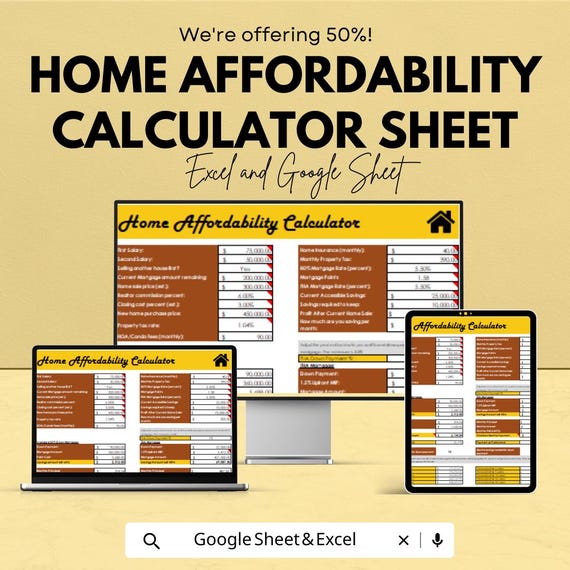
Two ratios do the real work: the front-end ratio (housing payment over gross income, target 28%) and the back-end ratio (all debt payments over gross income, target 36%). Lenders will approve higher numbers, sometimes past 43% on FHA files with compensating factors, but a higher ratio does not make the home more affordable. It makes the loan approvable while leaving less monthly margin. A buyer earning $85,000 a year clears the 28% line at a housing payment near $1,983 a month, which at 6.5% and 10% down supports a purchase price closer to $315,000, well under the national median.
Is a cheap house always a good deal? Not if the total monthly cost erases the savings. A home priced $60,000 below the median can still fail the affordability test if it sits in a high property-tax county or a state with insurance premiums running two to three times the national average; run the full PITI number, not just the purchase price, before treating a low price as a deal.
Where below-market homes come from

Below-market inventory clusters into a handful of real categories. Each pairs with a financing reality covered in the next section, not with generic encouragement to act fast.
Stale listings
Homes on market past 30 to 45 days typically see sellers grow more open to negotiating; days-on-market data from the National Association of Realtors consistently shows list-to-sale price gaps widening the longer a property sits. A specific negotiation percentage circulates widely in real estate content. Treat it with caution.
Foreclosures and short sales
In a foreclosure, the lender has repossessed the home and sells it as-is, typically through an REO listing or auction, with no seller disclosures and no pre-purchase interior access at auction. A short sale requires the lender’s approval on top of the seller’s, which routinely adds 60 to 90 days to closing.
FSBO and off-market leads
Homes sold without an agent, or never formally listed, skip marketing costs the seller might otherwise pass into the price. Door-knocking in a target neighborhood, direct mail to absentee owners, and county property-tax delinquency lists are the practical ways buyers surface these before they hit an MLS.
Vacant and inherited homes
Probate records, obituary notices, and city vacant-property registries point toward homes an heir may want to sell quickly rather than maintain from a distance. These deals move slowly because heirs often need probate court approval before a sale can close.
Alternative property types
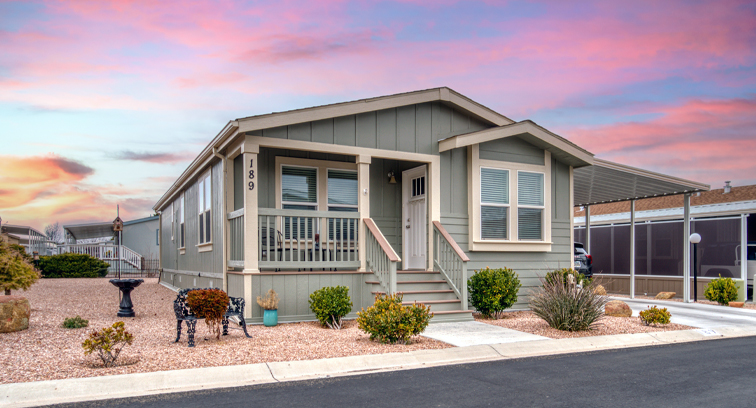
Condos, co-ops, manufactured homes, and small multi-unit properties, where a buyer occupies one unit and rents the others, typically list for less than comparable detached single-family homes in the same area. Manufactured homes carry a financing detail worth knowing before making an offer on one.
Are manufactured homes actually a cheaper way to own? Often yes on price, but the financing can erase part of the savings. The Consumer Financial Protection Bureau found about 42% of manufactured-home purchase loans are chattel loans, secured by the home but not the land, and chattel loans typically carry higher interest rates and fewer consumer protections than a standard mortgage. If you own or plan to buy the land under the home, ask your lender specifically about a real-property mortgage instead of a chattel loan before comparing rates.
This is the deliberately compact stretch of the page: the categories above cover the mandatory core, but the real decision-support work happens in financing eligibility and cost, not in a longer tactics list.
Whether you can finance what you find

A home you can find is not automatically a home you can finance. Distressed and off-market properties routinely fail standard appraisal requirements before a buyer ever gets to underwriting.
| Property condition | Compatible financing | Why |
|---|---|---|
| Move-in ready | FHA, VA, USDA, conventional | Meets standard appraisal and safety requirements with no added process |
| Light cosmetic repairs (paint, flooring, fixtures) | FHA, VA, USDA, conventional, or FHA Limited 203(k) | Doesn’t trigger the health-and-safety failures that block standard underwriting |
| Repairs needed to pass appraisal (roof, HVAC, plumbing) | FHA Standard or Limited 203(k) | A 203(k) loan requires at least $5,000 in eligible repairs and keeps the combined purchase-plus-repair cost within the area’s FHA loan limit, per HUD.gov, letting one loan cover both |
| Major structural or safety issues, uninhabitable | FHA Standard 203(k) with a HUD-approved consultant | Standard loans and most conventional programs won’t close until the home is habitable; 203(k) finances the fix as part of the purchase |
| HUD-owned distressed inventory (Good Neighbor Next Door) | FHA with as little as $100 down | HUD requires a second silent mortgage for the 50% discount, forgiven with no interest or payments after three years of owner-occupancy |
An FHA 203(k) does not remove the credit-score floor: it still needs the same 580-plus score for 3.5% down, or 500 to 579 for 10% down, calculated against the combined purchase-and-repair total instead of the purchase price alone.
Can I use an FHA loan on a foreclosure or major fixer-upper? A standard FHA 203(b) loan, no. The home has to meet FHA’s minimum property standards at appraisal, which most foreclosures and heavy fixer-uppers fail. An FHA 203(k) solves this by financing the purchase and the repairs in one loan, with a $5,000 minimum repair cost and a HUD consultant required for structural work.
Assistance programs and their real numbers
| Program | Down payment | Fee/credit note | Requirement | Best for |
|---|---|---|---|---|
| FHA | 3.5% at 580+ credit, 10% at 500-579 | 1.75% upfront MIP plus 0.55% or higher annual MIP | Primary residence | Buyers with limited savings or imperfect credit |
| VA | 0% | 2.15% funding fee on first use with no down payment, per the Department of Veterans Affairs; veterans with a service-connected disability rating are exempt | No income cap; eligible service members, veterans, or surviving spouses | Qualifying military borrowers |
| USDA | 0% | 1% upfront plus 0.35% annual guarantee fee | Household income at or below 115% of the area median; eligible rural or suburban address | Low-to-moderate-income buyers outside dense metro cores |
| Good Neighbor Next Door | As low as $100 with FHA | 50% list-price discount, silent second mortgage | Full-time teacher, law enforcement officer, firefighter, or EMT; 3-year occupancy | Buyers in one of the four eligible professions willing to commit to three years |
| State/local down payment assistance (example: Ohio) | 3% of price on conventional loans, 3.5% on FHA/VA/USDA through OHFA’s Your Choice! program | Forgiven after 7 years in the home | County-level income and purchase-price limits | First-time buyers under the local income ceiling |
On Ohio’s March 2026 median sale price of $262,900, OHFA’s 3.5% assistance figure works out to about $9,200 toward a down payment or closing costs, forgiven in full if the buyer stays put for seven years. Every state runs its own version of this kind of program with different percentages, income caps, and forgiveness periods. Verify the current figures for your state’s housing finance agency before budgeting around any specific number, including this one.
What a low price can hide
- Title defects or unresolved liens. A search reveals unpaid contractor liens or unclear ownership history; resolve through title insurance and a clean title search before closing, never after.
- Unpermitted work. A finished basement or added bedroom with no permit on file can mean the square footage doesn’t legally count, which affects both appraisal and future resale; check permit history with the local building department.
- Insurance non-renewal risk. If a carrier recently dropped coverage on the home or in the surrounding area, treat that as a cost signal, not a rumor; ask the seller for their current policy’s renewal history.
- Foundation and structural cracks dismissed as cosmetic. A structural engineer’s opinion costs a few hundred dollars and can prevent a five-figure mistake; a standard home inspector is not qualified to make this call.
- HOA special assessments pending but not yet billed. Request HOA meeting minutes from the past 12 months, not just the current dues statement, since a special-assessment vote can predate the bill by months.
The real monthly cost beyond the mortgage
| Cost component | Typical range | Notes |
|---|---|---|
| Property tax | About 0.5% to 2.5% of home value per year | No single national figure applies; confirm the local county rate before making an offer |
| Homeowners insurance | National average near $2,395 to $2,490 a year for $350,000 to $400,000 in dwelling coverage, per LendingTree’s analysis of Quadrant Information Services data | Ranges from about $801 a year in Hawaii to $5,298 to $7,255 a year in Oklahoma |
| Maintenance reserve | 1% to 4% of home value per year | Roughly 1% is typical for a newer home in good condition, per HomeAdvisor and Angi’s State of Home Spending research; older homes with deferred repairs sit at the higher end |
| HOA dues (if applicable) | Varies by community | Confirm current dues and any pending special assessments directly; not disclosed consistently in listings |
How much of my income should really go toward my house payment? About 28% of gross monthly income for the full housing payment (principal, interest, tax, insurance, HOA), and no more than 36% once every other debt payment is added. Lenders will sometimes approve higher ratios; that expands what you can borrow, not what you can comfortably afford.
Matching the strategy to the buyer

| Buyer profile | Best-fit programs and tactics | Skip this |
|---|---|---|
| First-time occupant buyer, limited savings | FHA plus a state down payment assistance program; stale listings and light-repair homes | Foreclosure auctions requiring cash and no inspection |
| Veteran or active-duty service member | VA loan first, GNND if in an eligible profession | Any option requiring a down payment before checking VA eligibility |
| Risk-tolerant, hands-on buyer | FHA 203(k) fixer-uppers, off-market and probate leads, short sales | Move-in-ready homes at full market price |
| Rural or small-town buyer under the income cap | USDA zero-down financing | Homes outside USDA-eligible ZIP codes |
| Teacher, firefighter, EMT, or law enforcement officer | Good Neighbor Next Door, if a listed property fits the target area | Any plan requiring a move within three years |
A buyer who mixes these profiles, a veteran teacher considering a HUD-owned fixer-upper, for instance, can in principle stack VA financing with the GNND discount. Confirm with a HUD-registered broker whether the specific listing supports that combination before writing an offer.
Comments