
Where Fresh Meadows Sits
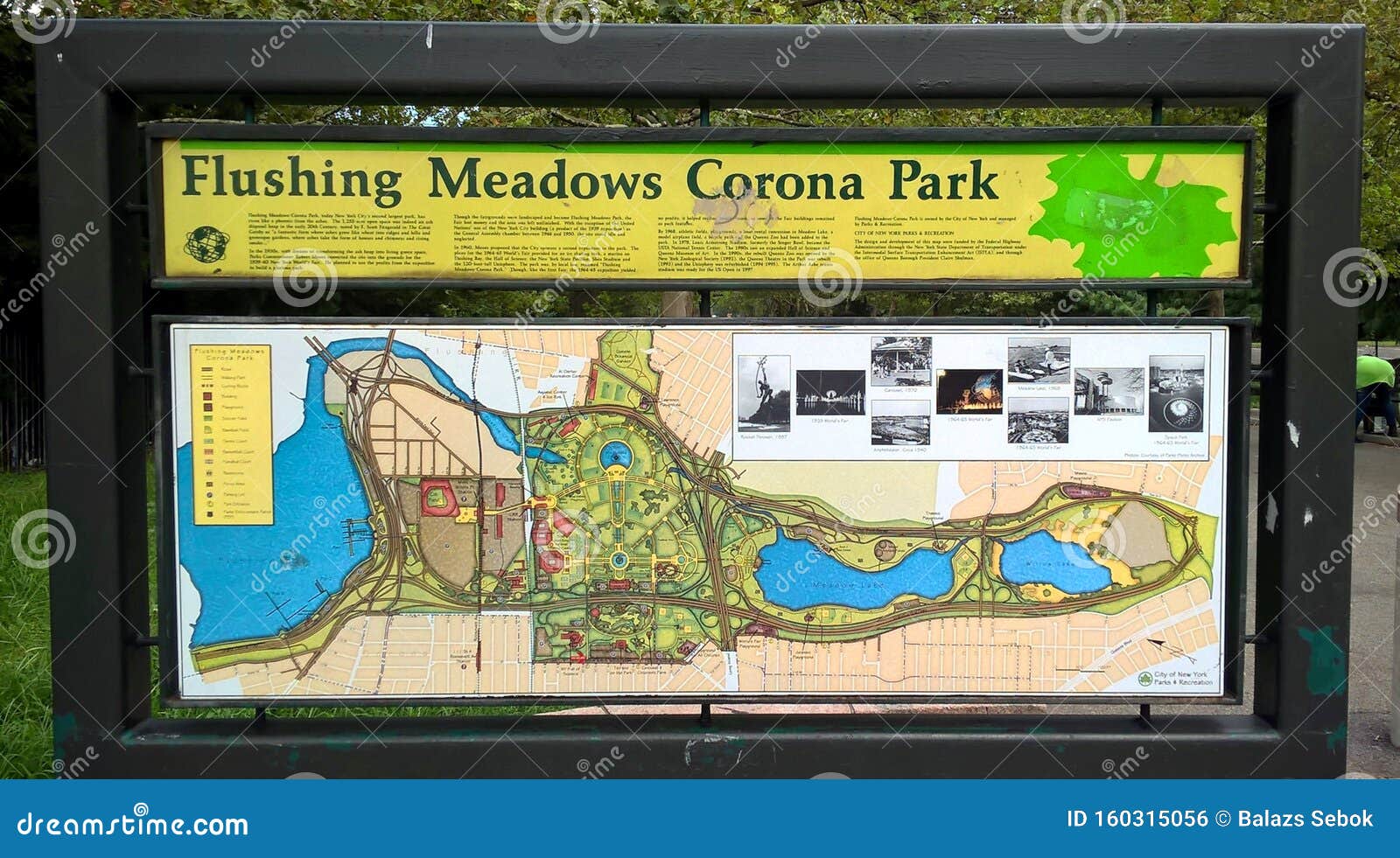
Fresh Meadows occupies the northeastern part of Queens, bordered by the Horace Harding Expressway and Auburndale to the north, Cunningham Park and the Clearview Expressway to the east, the Grand Central Parkway to the south, and Hillcrest, Utopia, and St. John’s University to the west, with ZIP codes 11365 and 11366 inside Queens Community District 8. The name predates the Revolution: colonial-era freshwater springs fed the local wetlands, distinguishing them from the salt marsh that gave the broader Flushing Meadows their name, and for a century afterward most of the land stayed farmland under the local name “Black Stump,” after a burned tree stump once used to mark property lines.
What matters more for a buyer than the origin story is that “Fresh Meadows” covers at least three distinct built environments, not one. The original planned development covers roughly 147 of the neighborhood’s 636 acres and is legally protected from major alteration. The single-family blocks surrounding it were deliberately downzoned in the 2000s to stop teardown-and-rebuild projects. A smaller pocket near the Long Island Expressway carries denser R3-2 and R4 zoning where redevelopment is easier. Grouping these into one market, the way most listings pages do, hides the decision that actually matters: which of the three you’re looking at.
Housing Stock and Ownership Structures
Housing here splits three ways: the postwar garden-apartment and co-op complex built by New York Life Insurance Company starting in the late 1940s, single-family Capes, Colonials, and Tudors on the surrounding blocks, and a smaller number of condo conversions and multi-family row houses along 188th Street and near the Union Turnpike shopping strip. Co-ops make up the largest share of entry-level inventory; single-family detached houses carry the highest price tag.
Buying Into a Co-op
Roughly three-quarters of New York City’s housing stock overall is cooperative, according to a 2026 NYC buyer guide from AskDoss, and Fresh Meadows leans further into that pattern than most outer-borough neighborhoods this heavy on single-family inventory. A co-op purchase means buying shares in a corporation rather than a deed, and it comes with a board package, a financial review, and usually an interview before closing. Financed co-op purchases typically close in 90 to 120 days, against 60 to 90 days for a comparable condo, mainly because of that board-approval step. Most co-op buildings also charge a flip tax on resale, commonly 1% to 3% of the sale price and customarily paid by the seller according to Hauseit’s flip-tax data, on top of the mortgage-recording tax that condo and house buyers pay instead. Down payment expectations run higher too: many boards want 20% to 25% or more, plus one to two years of liquid reserves after closing.
What’s the difference between buying a co-op and a condo here? A co-op buyer needs board approval and should budget three to four months to close, plus a possible 1% to 3% flip tax on resale; a condo buyer skips the interview, closes faster, and instead pays New York’s mortgage-recording tax up front if financing.
What the Zoning Permits, and Where
This is the piece most guides to the neighborhood skip. The original 1949 development sits inside a Special Planned Community district, so redevelopment or demolition within that footprint requires a special permit – the reason the garden-apartment complex has kept its low-rise, landscaped layout for more than 75 years instead of being replaced piecemeal. The surrounding single-family blocks tell a different story: in the 2000s, local civic groups pushed to downzone roughly 83 blocks from R2 to R2A specifically to stop what one Fresh Meadows Homeowners’ Civic Association leader, quoted in the Queens Gazette, called the arrival of oversized new construction. R2A caps the floor-area ratio at 0.5, requires a 40-foot minimum lot width, and limits lot coverage to 30% of the zoning lot, according to PropertyShark’s zoning reference. A smaller strip near the Long Island Expressway and parts of 185th Street still carries R3-2 or R4 zoning, which permits denser, multi-family construction and is where most of the neighborhood’s actual teardown activity happens.
Can I tear down or expand a house in Fresh Meadows? On most single-family blocks, no: R2A zoning limits new construction to roughly the scale of the existing houses. Near the Long Island Expressway and on some R3-2 or R4 parcels, denser rebuilds are legally possible, which is why that’s where new construction actually clusters.
What Homes Are Selling For

Every dollar figure on this page needs a date attached, because the sources disagree by tens of thousands of dollars and dozens of days depending on what they measure.
| Source | Period | Median price | Days on market |
|---|---|---|---|
| Redfin | January 2026 | $995,000 | 52 |
| PropertyShark | Most recent monthly update | $975,000 | Not stated |
| QNS, citing NYC Department of Finance data | Q1 2026 | $1,205,000 | Not stated |
| Rocket Homes | February 2025 | $999,000 | 63 (average listing age) |
| Bizzarro Agency, active listings | June 2026 snapshot | $614,500 (median list, mixed stock) | 113 (average, currently active listings) |
Three different measurement methods produce these five numbers: closed-sale medians pull from MLS records directly; the Department of Finance figure runs highest because it captures every closed sale in a rolling quarter, including large single-family homes that never reach a public MLS feed; and the 113-day figure runs highest on the other axis because averaging the age of everything currently sitting on the market weights toward listings that haven’t sold yet, which is a different statistic than days-on-market for homes that did sell. A buyer comparing a listing’s asking price against “the median” should confirm which of these five questions the comparison is actually answering.
A live example from the same June 2026 window: a two-bedroom, one-bath house at 6741 197th Street, 1,024 square feet, was listed asking $840,000, below every median above, since this is an asking price on an active listing rather than a closed sale, and single-family medians skew toward larger, better-located lots.
Renting and Investing
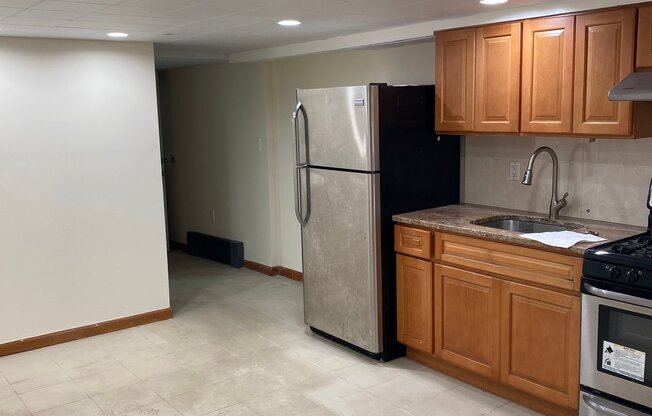
Average rents by unit size, as of a March 2026 ApartmentFinder pull, run $1,776 for a one-bedroom, $2,101 for a two-bedroom, and $2,292 for a three-bedroom. A separate May 2026 survey of two-bedroom listings shows a wider range, $2,200 to $6,000, averaging $3,049. That gap sits between the neighborhood’s older garden-apartment and co-op stock and its handful of newer, amenity-heavy rental buildings; an investor pricing a unit should know which pool a given building falls into before anchoring to either figure.
The ownership-structure choice above compounds directly into rental strategy. Co-op buildings commonly restrict subletting to one or two years total, or one year out of every three to five, and some ban it outright, which removes the option of buying a co-op purely as a rental play unless the specific building’s proprietary lease says otherwise. Condos carry no such restriction as a rule, part of why condo inventory, though scarcer here, draws a broader buyer pool that includes investors and pied-à-terre purchasers.
Is Fresh Meadows a good rental investment? Only on the condo or two-family side of the market: co-op subletting restrictions rule out most of the building stock as a straightforward buy-to-rent play, and rents on the older co-op-heavy blocks run well under the $3,049 average pulled from newer buildings.
Schools in District 26
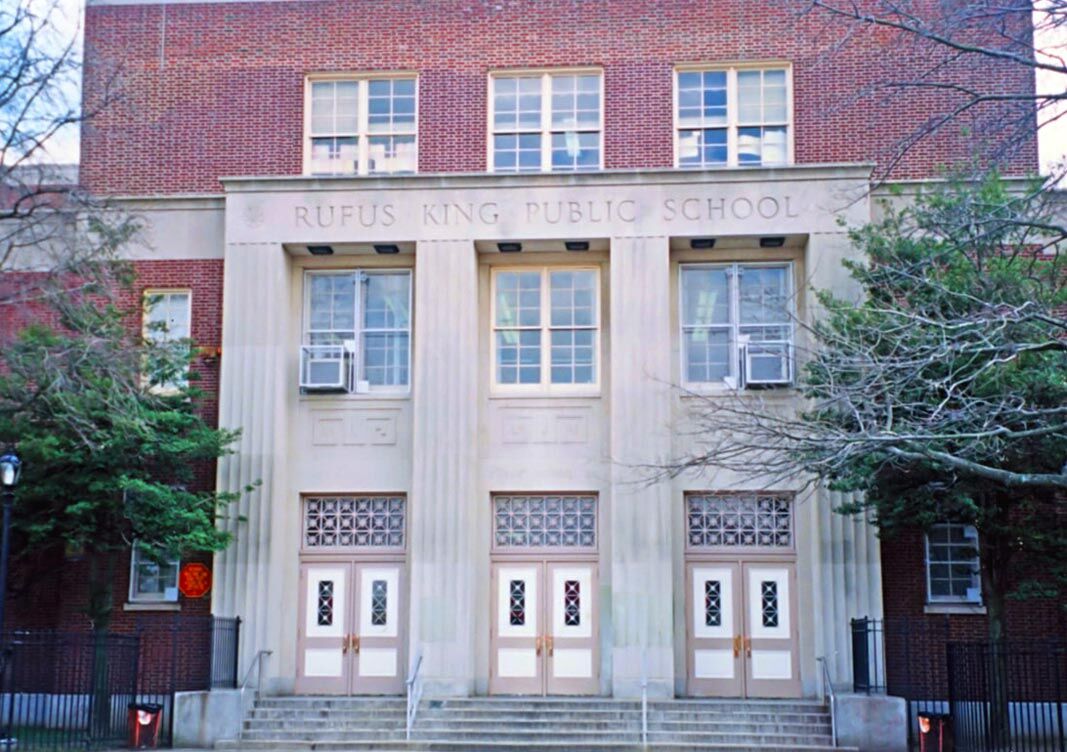
Fresh Meadows falls inside Community School District 26, feeding into P.S. 26 Rufus King (pre-K through grade 5), J.H.S. 216 George J. Ryan (grades 6 to 8), and Francis Lewis High School. St. Francis Preparatory School, a private Catholic high school, also draws students from across the neighborhood and beyond it. Current numeric GreatSchools or NYC Department of Education ratings for these schools were not confirmed in this research pass; a buyer for whom school zoning is decisive should check current ratings and, more importantly, the exact zoned-school boundary for a specific address directly against the DOE’s maps before making an offer, since district lines don’t reliably follow the same borders as neighborhood listing descriptions.
Which schools does my address feed into? Zoning for P.S. 26, J.H.S. 216, and Francis Lewis follows NYC DOE boundary maps, not neighborhood borders, so confirm the zoned school for a specific address on the DOE’s own school zoning tool rather than assuming from the listing description.
Getting Around Without a Subway
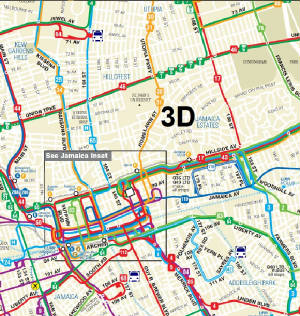
No subway line reaches Fresh Meadows directly, and that single fact reshapes the commute math for anyone weighing this neighborhood against a subway-adjacent alternative.
| Mode | Route | Off-peak time to Midtown | Peak time |
|---|---|---|---|
| Local bus + subway | Q46 to Union Turnpike (E/F) | ~15 min to the station, plus subway time | Longer with bus bunching |
| Express bus | QM1 / QM1A | 45 to 65 minutes direct | 60 to 75 minutes |
| Driving | LIE or Grand Central Pkwy | 20 to 30 minutes | 45 to 75 minutes |
For someone commuting five days a week without a car, the express bus is the realistic option, landing in the same 45-to-75-minute band as driving in traffic. That means the no-subway fact is not automatically a dealbreaker for a Midtown commuter, but it is a hard filter for one specific profile: a car-free buyer who needs a door-to-door commute under 30 minutes on a fixed schedule. That buyer should treat this neighborhood as a no regardless of how the housing numbers look.
Is Fresh Meadows a good fit if I don’t drive? Only if a 45-to-75-minute one-way commute by express bus is acceptable; anyone needing a sub-30-minute car-free commute to Midtown should look at a subway-adjacent Queens neighborhood instead.
Parks and Daily Life

Cunningham Park runs along the neighborhood’s eastern edge, 358 acres with tennis courts and ball fields. The Long Island Motor Parkway, a private toll road built in 1908 and closed to cars since 1938, now serves as a paved biking and walking trail through part of the park. Union Turnpike carries most of the neighborhood’s retail, anchored by a shopping center with a Kohl’s.
How the Neighborhood Got Its Shape
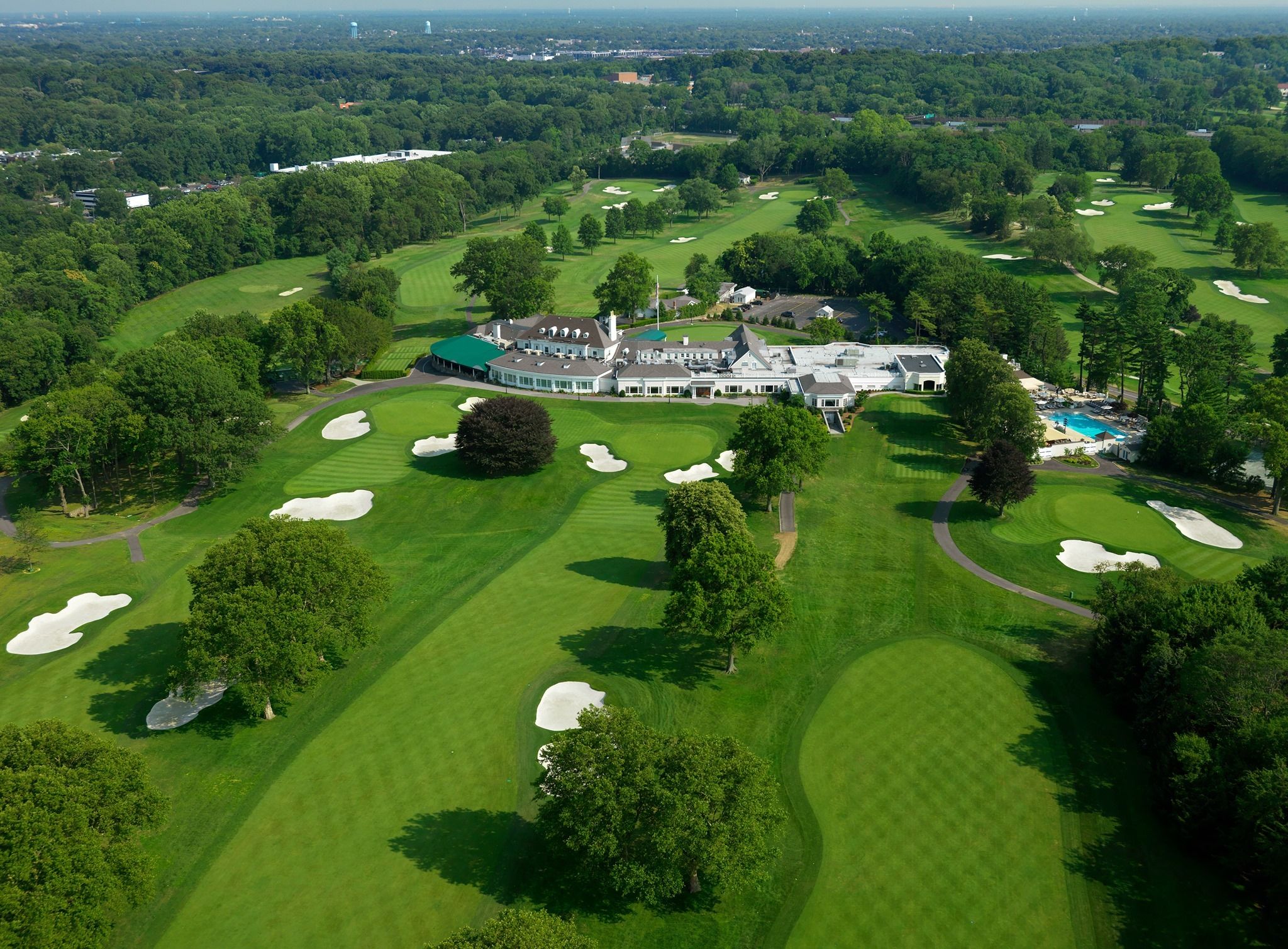
Two structures created almost everything visible in Fresh Meadows today, and one of them is a golf course most guides to the area never mention. The Fresh Meadow Country Club opened in 1923 on land here, its course designed by golf architect A. W. Tillinghast according to the New York State Golf Association’s club history, and it hosted the 1930 PGA Championship, won by Tommy Armour, and the 1932 U.S. Open, won by former club professional Gene Sarazen. In 1946 the club sold the property and relocated to Nassau County; New York Life Insurance Company bought the land and built the garden-apartment and co-op complex that still anchors the neighborhood.
Architecture critic Lewis Mumford, writing his New Yorker “Skyline” column, is reported by a 2025 neighborhood-history essay to have called the resulting development one of the more positive examples of large-scale community planning built in the country at that time. The development changed hands again in 1972, when real-estate investor Harry Helmsley acquired it, the same year he bought the similarly insurance-company-built Parkchester complex in the Bronx.
Farming persisted on a fragment of the original land longer than almost anywhere else in the city: the Klein family worked a two-acre remnant of what had been a 200-acre farm until early 2004, when it was sold, ending what the NYC Parks Department’s own history of Farm Playground records as the last commercial farm operation within the five boroughs.
Who Fresh Meadows Suits
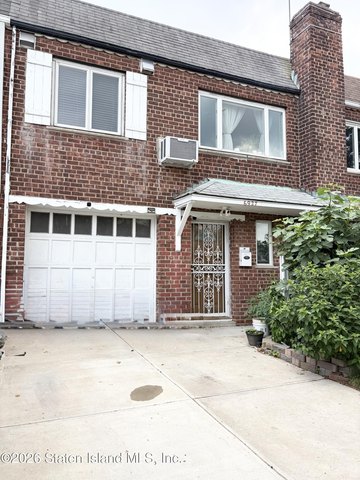
Match the sub-area choice above to what matters most. A buyer prioritizing fixed monthly costs and comfortable with board approval fits the co-op stock inside the planned development. A buyer who wants room to renovate or expand should look at the R3-2 or R4 pockets near the LIE, not the R2A blocks, where expansion is capped by design. An investor building a rental portfolio should default to condo or two-family inventory for the subletting reasons already covered above. One timing note the earlier sections don’t cover: anyone on a tight closing deadline should weight that toward condo or house purchases specifically, since the 90-to-120-day co-op board process can eat most of a 90-day deadline before the deal even reaches closing.
Nearby Alternatives
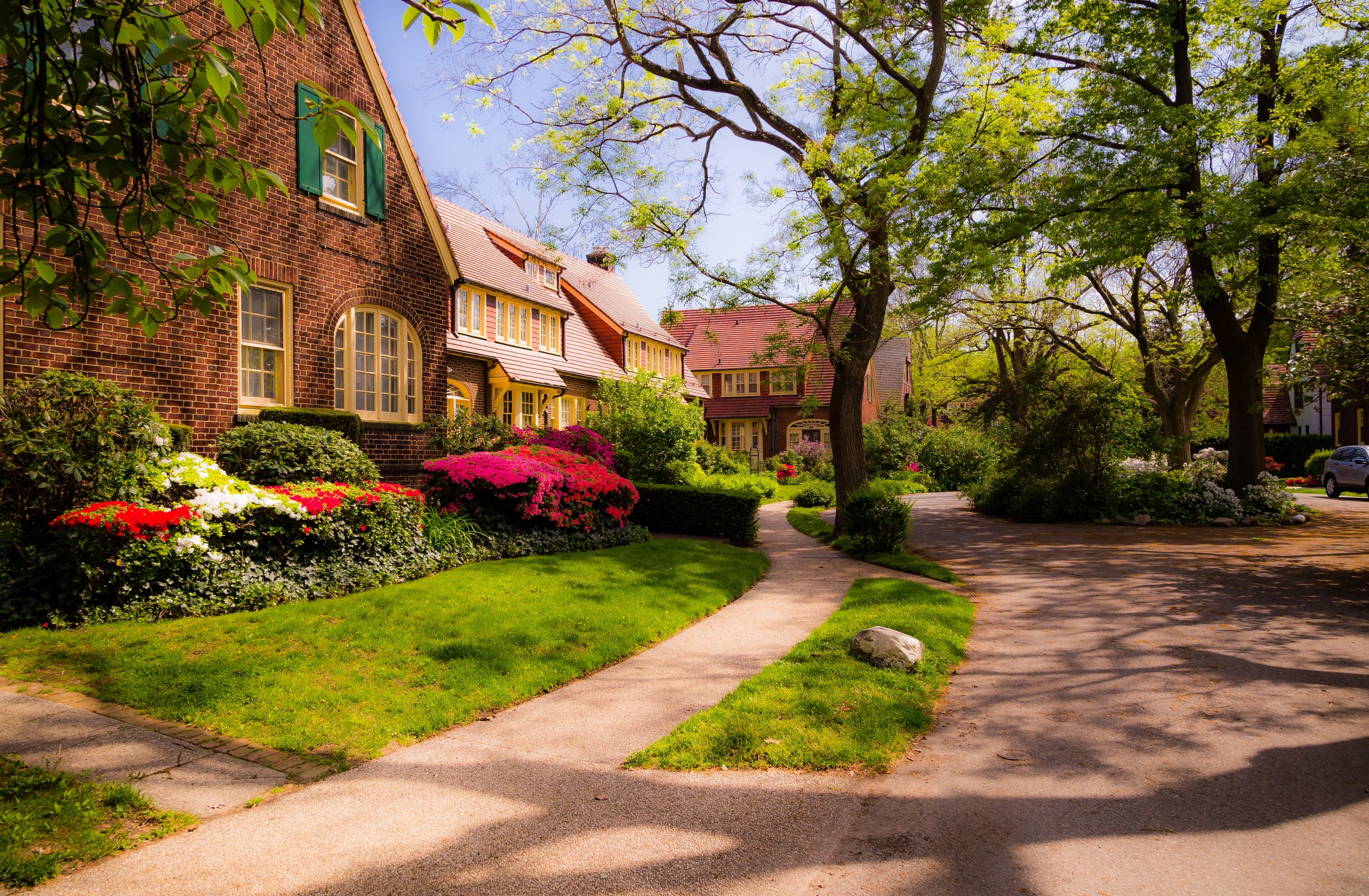
Buyers who find the commute math unworkable typically look next at Bayside or Auburndale, both closer to LIRR service, or at Forest Hills for direct subway access, though a 2026 market comparison shows Forest Hills at a lower reported median sale price with a much sharper year-over-year increase, reflecting a tighter, faster-moving market rather than a cheaper one.
Comments