
Governance and what “unincorporated” changes
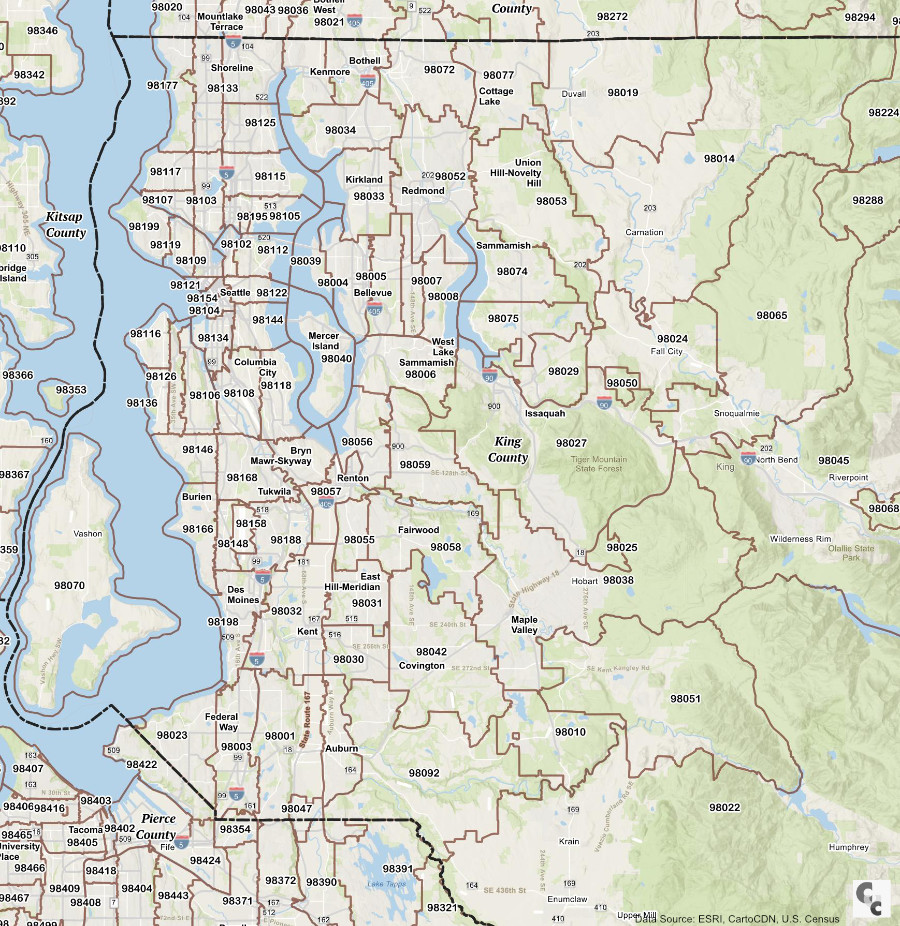
Fall City has never incorporated as a city. That single fact cascades into almost everything else here: there is no city council, no city hall, and no city police force. Law enforcement runs through the King County Sheriff’s Office, and land-use permitting runs through King County’s Department of Local Services rather than a municipal planning office. For a buyer, a zoning or building-permit question goes to the county, not to a Fall City office, because none exists.
Is Fall City a real city, or just a ZIP code?
It is a real, named community with its own ZIP code and its own fire district, but it is not incorporated. King County provides the governmental functions a city would otherwise handle: policing, permitting, and road maintenance.
Housing costs right now, and why the numbers swing so hard
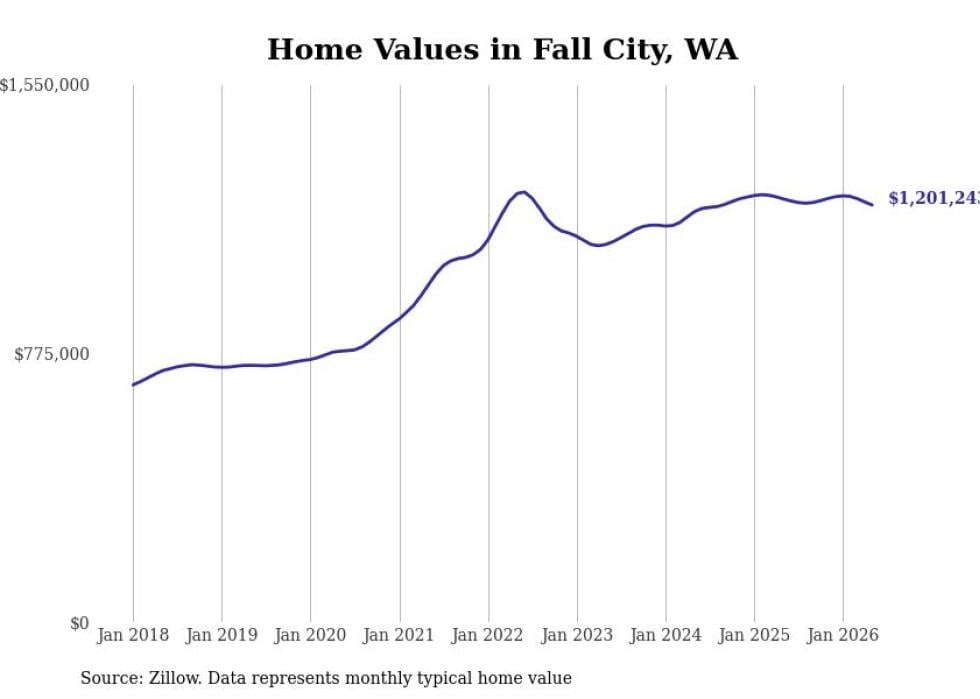
The Census Bureau’s ACS-based estimate of median property value for Fall City sits near $1.01 million as of 2024. Closed-sale data tells a noisier story: one recent monthly reading put the Fall City median sale price at $1.39 million, up 95.4% year over year, while the broader 98024 ZIP showed a median of $1.8 million with homes selling in about a week. Both figures are accurate and both are misleading read alone.
Read any single monthly median as a snapshot of a thin market. It is not a trend line.
The commute, honestly
The Census Bureau’s ACS estimates the mean travel time to work at 30.1 minutes, a little above the Seattle-Tacoma-Bellevue metro average. What that single number can’t show is the gap between a 20-minute off-peak run to Issaquah and a much longer crawl into downtown Seattle on I-90 during the evening peak. No public agency publishes an official Fall-City-to-destination, peak-versus-off-peak travel-time table, so check the specific route on a live mapping service at the actual time of day you’d be driving it, instead of trusting the distance in miles.
How does the drive to Seattle or Bellevue actually feel at rush hour?
I-90 across Lake Washington and through the Eastside interchanges is the main chokepoint. Drive time on this corridor depends heavily on time of day: a route that takes 30 minutes at mid-morning can take considerably longer during the evening peak. Test the drive yourself at your real commute hour before assuming an average applies.
Fall City vs. its neighbors
| Town | Recent median sale price | Distance to Seattle | Best fit for |
|---|---|---|---|
| Fall City | $1.39M single-month reading (small sample); $1.01M ACS-based value | 25 mi | Acreage, river access, privacy |
| Snoqualmie | $914,500 | 30 mi | Walkable downtown, newer construction |
| North Bend | $1.2M (only 4 sales that month) | 30 mi | Mountain recreation, small-town core |
| Duvall | $891K, 3-month trailing average | 28 mi | Lower price point, still rural feel |
| Carnation | $784K one-month reading (down 40.3% YoY) vs. $865K current listing median | 27 mi | Most affordable entry point in the valley |
Fall City’s ACS-based property value tracks close to North Bend’s recent sale prices and well above Duvall’s or Carnation’s, largely because Fall City has less commercial development to absorb and a smaller, more rural lot stock. A buyer who wants walkable retail will find more of it in Snoqualmie or North Bend.
How does Fall City compare to Snoqualmie or North Bend for a first-time buyer?
Snoqualmie and North Bend both have small downtown commercial cores with shops and restaurants within walking distance of some neighborhoods. Fall City has no equivalent walkable center, so daily errands generally mean a drive.
What to check before you buy
Flood risk
The Snoqualmie and Raging Rivers both flood seasonally, and National Weather Service river-forecast categories explicitly describe “major” and “near-record” flooding stages that inundate farms, residential areas, and roads from Fall City downstream through Carnation and Duvall. Roughly a third of properties in the 98024 ZIP carry a flagged severe-flood-risk designation looking 30 years out, per Redfin’s First Street-sourced data cited above. Before writing an offer, use King County’s iMap floodplain tool to check whether a specific parcel sits inside a FEMA-mapped Special Flood Hazard Area, and ask the county’s River and Floodplain Management Section (206-477-4812) for any elevation certificate on file.
Septic and well systems
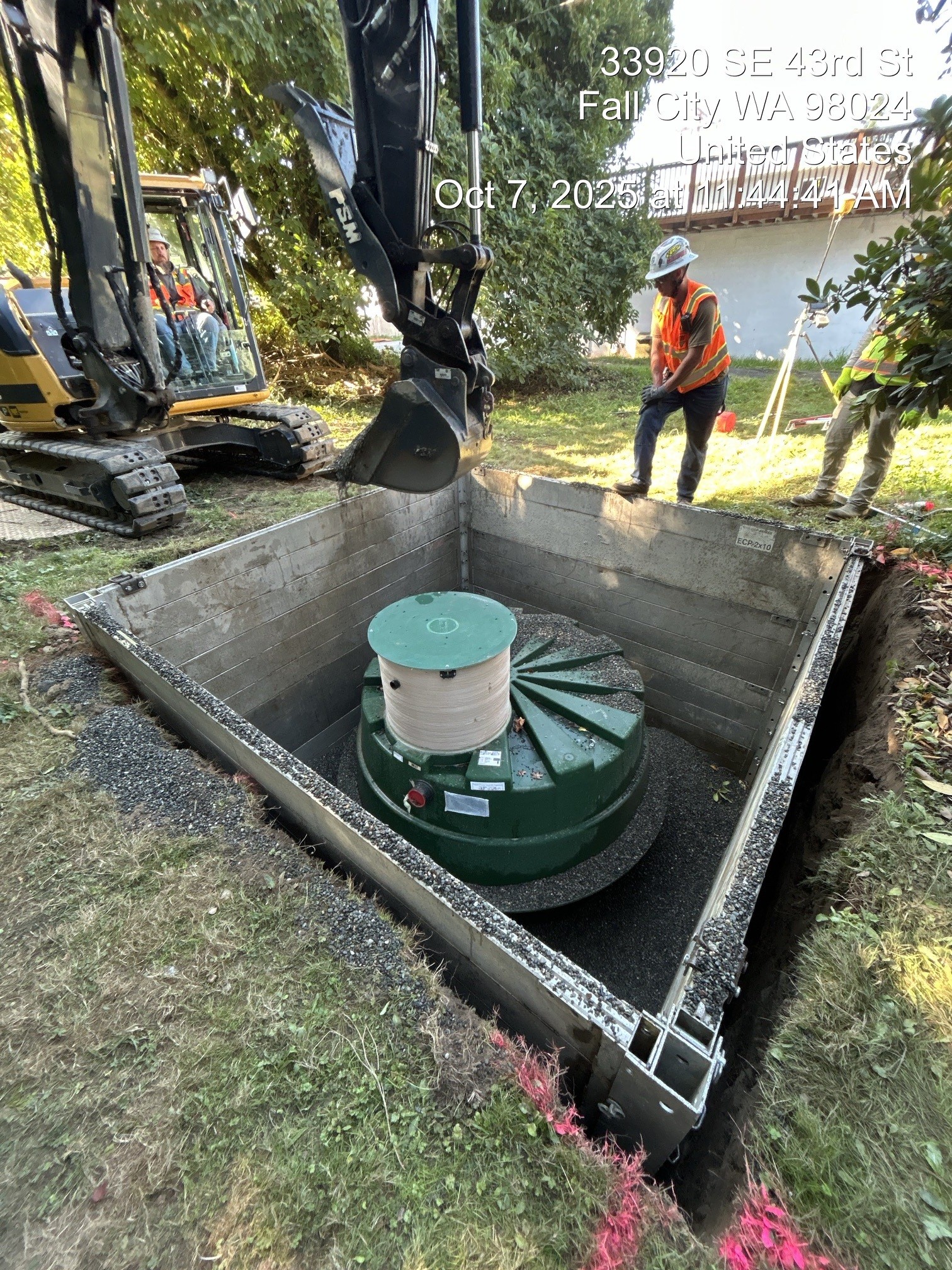
Most rural Fall City parcels run on private well water and an on-site septic system. King County’s on-site sewage program oversees roughly 85,000 such systems countywide, and the county revised its septic code effective April 1, 2025. A new or replacement well requires a private well source-site approval that stays valid for two years from the date it’s issued. Soil type on the parcel also determines what kind of septic system is legally possible: some soil classifications require a mound or sand-filter system instead of a standard gravity field, which changes both the cost and the buildable footprint of a lot.
Fire response
Fall City has no municipal fire department. King County Fire District 27 covers a 22-square-mile service area from a single station and serves roughly 6,400 people with a mostly volunteer force supplemented by career and paid-per-call staff. Rural properties farther from that one station can see longer response times than a suburban home surrounded by multiple stations, worth asking about directly when comparing homeowner’s insurance quotes.
| Item to check | Why it matters | Where to check it |
|---|---|---|
| FEMA flood zone / SFHA status | Determines mandatory flood insurance and buildability near the rivers | King County iMap; River and Floodplain Management Section |
| Septic system age, type, and soil report | Soil type dictates whether a standard, mound, or sand-filter system is required | King County On-Site Sewage Program permit records |
| Private well approval status | New or replacement wells need county sign-off before drilling | King County Public Health Permit Center |
| Fire district response time to the specific parcel | Distance from the single station affects both safety and insurance cost | King County Fire District 27 |
How bad is the flood risk near the rivers?
It is real and seasonal, not hypothetical: National Weather Service forecast categories for this stretch of the Snoqualmie River name Fall City specifically in their flood-stage descriptions, and King County maintains historical flood photos and elevation certificates for many affected parcels.
Who Fall City fits, and who it doesn’t
- Fits: buyers who want acreage and don’t mind a private well and septic system, households where at least one commute is two to three days a week rather than daily, and anyone who values river or forest access over walkable retail.
- Doesn’t fit: anyone who needs a daily five-day commute into downtown Seattle without a long time buffer, households unwilling to budget for septic and well maintenance, buyers who want a walkable town center with shops nearby, and anyone uneasy about owning in a flood-adjacent river valley without first checking FEMA zone status.
Schools
| School | Grades | Rating | Note |
|---|---|---|---|
| Fall City Elementary | K–5 | Ranks in the top 4% of Washington elementary schools, per SchoolDigger | Smallest elementary enrollment in the district |
| Chief Kanim Middle | 6–8 | 7/10 GreatSchools, Niche A | 65% math / 75% reading proficiency |
| Mount Si High School | 9–12 | District’s comprehensive high school | Students matriculate here after Chief Kanim |
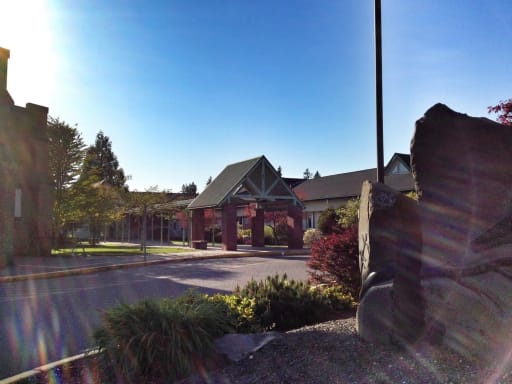
Both Fall City schools post stronger results than most state peers; the real planning question for a family isn’t school quality but whether a future commute to Mount Si, several miles away in Snoqualmie, fits a teenager’s after-school schedule.
Daily life without a downtown
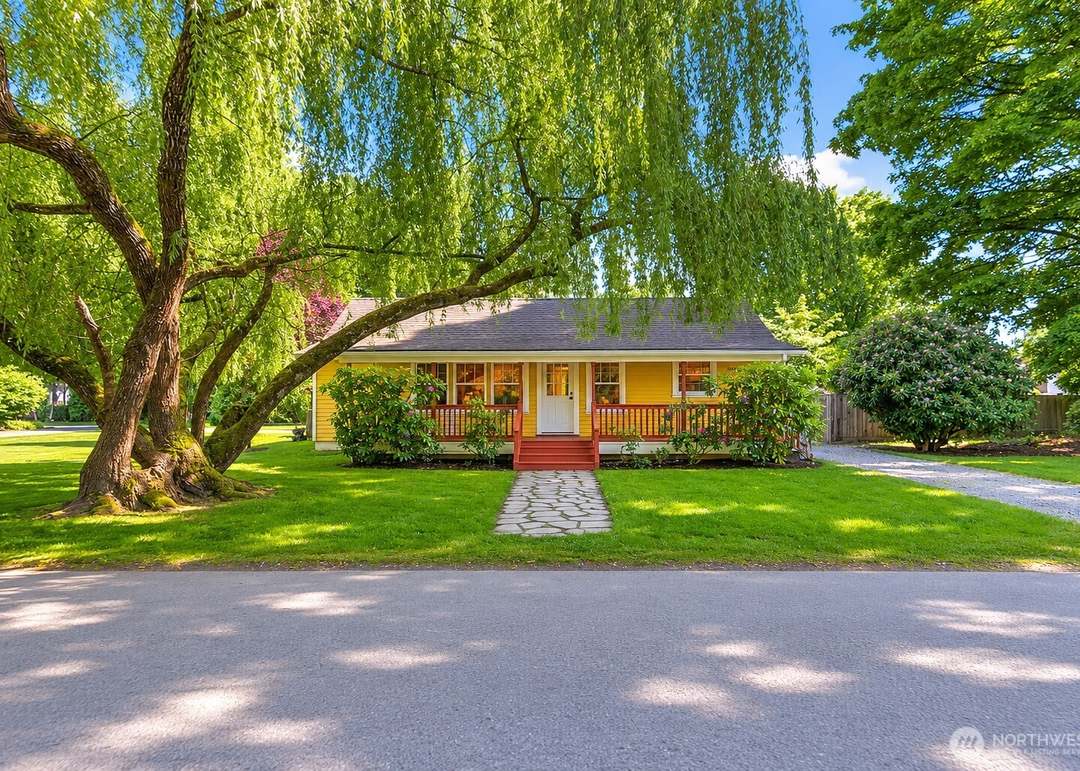
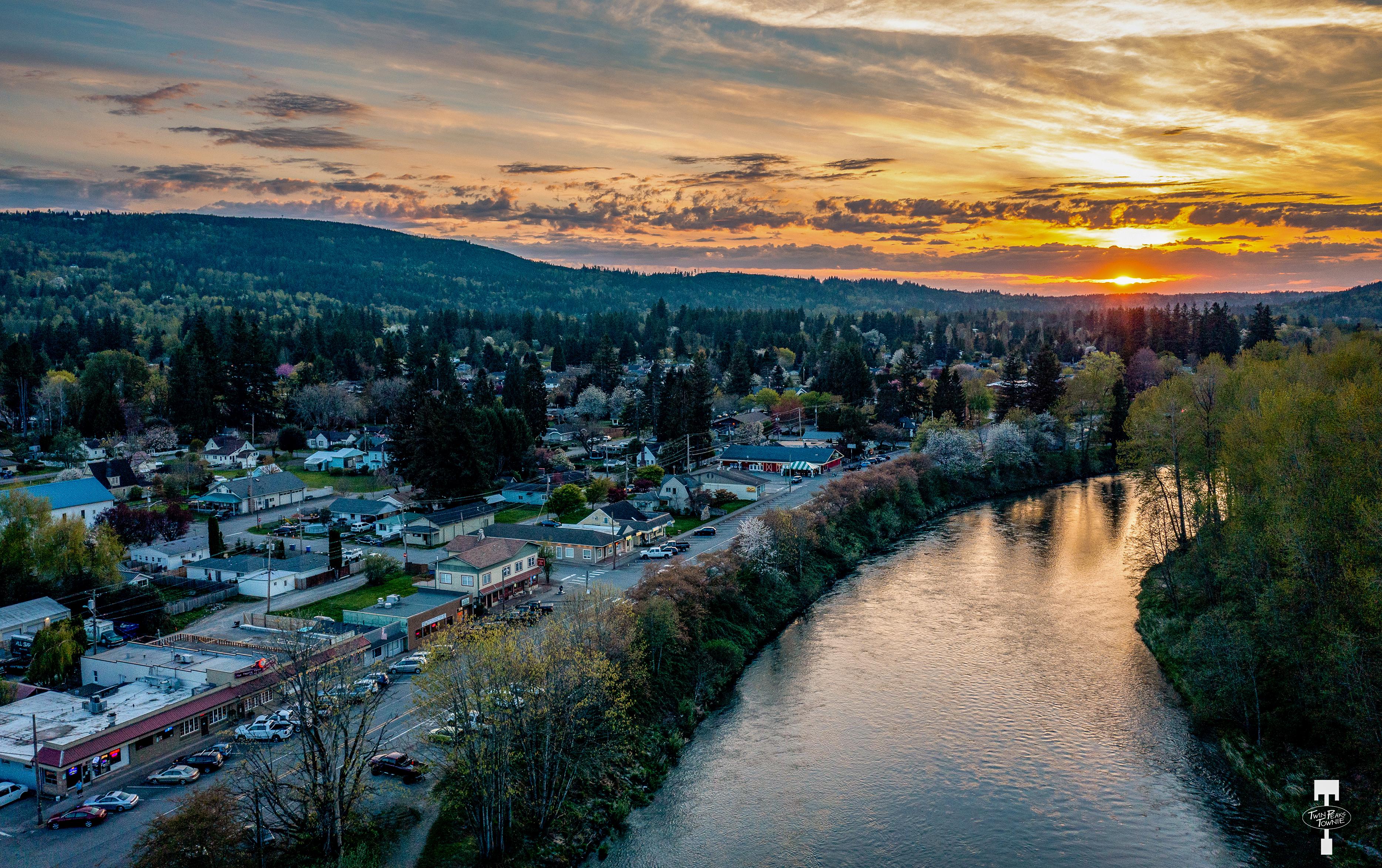
Fall City has no walkable commercial core comparable to Snoqualmie’s or North Bend’s. Groceries, coffee, and most errands mean a short drive rather than a walk. One notable exception sits on Preston-Fall City Road: the Fall City Roadhouse Restaurant & Inn, operating since 1916, whose exterior stood in for the Bang Bang Bar across the *Twin Peaks* pilot, *Fire Walk With Me*, and the 2017 revival.
Is Fall City walkable, or do I need a car for everything?
You’ll need a car for nearly everything. There’s no grocery store, pharmacy, or retail cluster within walking distance of most residential parcels.
Comments