
Where the City Limits Actually Are
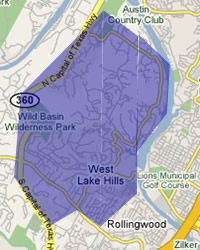
West Lake Hills incorporated in 1953, and its zip code, 78746, is shared with Rollingwood and pockets of unincorporated Travis County. A 78746 address on its own confirms nothing about jurisdiction: to check full-purpose city limits, the city points residents to a county jurisdiction-lookup map, where a matching parcel reads “West Lake Hills Full Purpose,” according to the city’s own building and development FAQ. Properties outside that boundary sit in the Extra Territorial Jurisdiction, where the city enforces only its subdivision and sign ordinances, and Travis County Water Control and Improvement District #10 and Emergency Services District #9 govern the rest.
The independence itself has been tested in court. In 1969, a group of Travis County residents sued over the city’s boundaries, and in 1970 the Texas Court of Civil Appeals ruled the incorporation invalid, finding the city had encroached on Austin’s boundary and under-provided infrastructure, as Austin’s NPR station KUT reported. City officers kept working through the ruling, and the incorporation was later restored. It’s a specific, dated reminder that “independent city” is a legal status that has been challenged once already, not a permanent given.
Does a 78746 mailing address mean a property is inside West Lake Hills city limits?
Not automatically. Rollingwood and unincorporated Travis County share the same zip code. Confirm status through the jurisdiction-lookup tool the city links from its FAQ page before assuming any tax, service, or school-zoning fact tied to city limits.
What You Can Build: Impervious Cover, Setbacks, and the Variance Process
The single most decision-relevant fact for anyone planning to expand or rebuild is impervious cover, and it’s the one figure every competitor guide reviewed for this piece skipped entirely.
| Rule | Threshold | Condition | Where it’s codified |
|---|---|---|---|
| Impervious cover | 25% maximum | Single-family lots of 0.5 acre or larger | Code of Ordinances, Art. 22.03, Div. 8 |
| Impervious cover bonus | Above 25%, case by case | Smaller lots connected to central wastewater | Code of Ordinances, Art. 22.03, Div. 8 |
| Setbacks | Vary by district and lot size | All zoning districts | Code of Ordinances, Art. 22.03, Div. 8 |
| Variance timeline | ZAPCO meets the third Wednesday monthly; applications due about 45 days earlier | Any variance request | City FAQ, Building & Development |
| Formal zoning determination | $50 fee, written request | Any owner wanting a binding answer | City FAQ, Building & Development |
Sourced from the City of West Lake Hills FAQ on impervious cover and the FAQ on the variance process.
The practical constraint is timing: a variance runs through ZAPCO first, then either City Council or the Board of Adjustment, and the roughly 45-day lead time means it cannot be resolved inside a typical 30-day option period on a purchase contract. Anyone buying a lot planning to exceed the 25% cap needs to start that clock before closing, not after.
Do I need a variance to add square footage on a smaller lot?
Only if the addition would push impervious cover past 25% and the lot doesn’t qualify for the central-wastewater bonus. Request a written zoning determination ($50) from Building & Development before making an offer contingent on expansion.
The Market Right Now
The two most recent, independently sourced datasets for this pocket of the city don’t agree, and no competitor guide reviewed here says so out loud.
| Metric | Figure | Source | Period |
|---|---|---|---|
| Median sold price | $1,895,000 | Orchard | Trailing 30 days, 2026 |
| Median days on market | 71 | Orchard | Trailing 30 days, 2026 |
| Months of supply | 11.58 | Orchard | Trailing 30 days, 2026 |
| Sale-to-list ratio | 90.83% | Orchard | Trailing 30 days, 2026 |
| Sale-to-list ratio | 82.7% | callkent.com | January 2026, 2 closings |
| Median effective property tax rate | 1.50% | Ownwell | Current |
Both sale-to-list figures come from real closings. The gap is a sample-size problem: the callkent figure is built from two transactions in a single month, while the Orchard figure rolls up a fuller trailing window, and on a market this thin, one well-negotiated or badly-negotiated closing can move the ratio by several points either way.
Is West Lake Hills’ property tax really the lowest in Texas?
No. It’s low for the Austin metro, but smaller Hill Country villages like Briarcliff and Point Venture charge less than half the West Lake Hills municipal rate.
Buying to Rent: A Structurally Thin Market
Investors weighing a buy-and-hold rental here should look at occupancy, not just price. Of the roughly 1,208 occupied housing units in West Lake Hills, only about 9.7% are renter-occupied, and roughly 10.1% of all units sit vacant, per the Census Bureau’s 2019-2023 American Community Survey estimates. That’s a small, illiquid rental pool: there aren’t many comparable rentals to price against, and a single unit coming onto or off the market can swing the local comp set noticeably.
How thin is the rental market here, really?
Under 10% of occupied homes are renter-occupied. The comparable-rental data is sparse enough that pricing a new listing here means looking at Rollingwood and Lost Creek comps too, not West Lake Hills alone.
How It Compares to Rollingwood
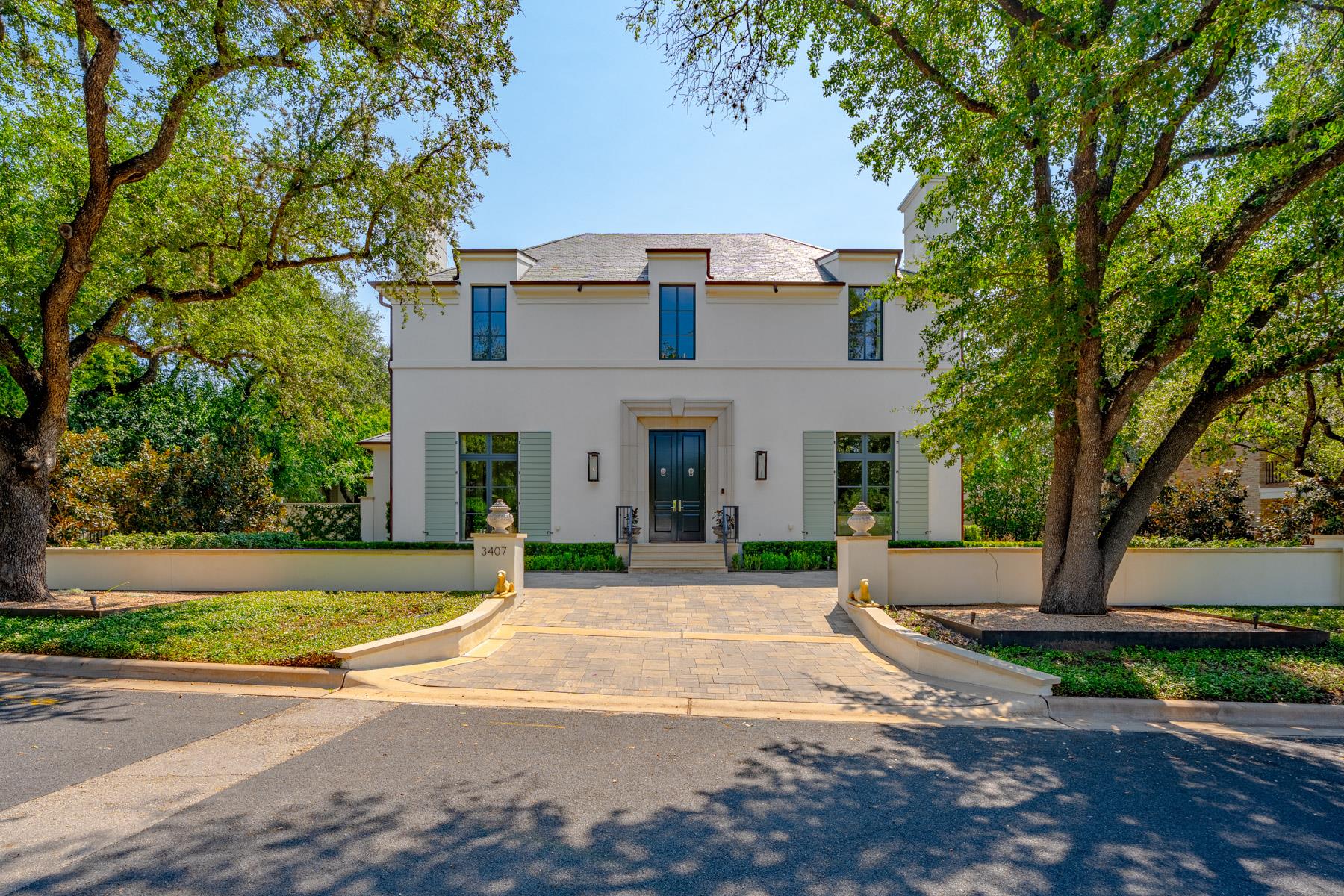
| Factor | West Lake Hills | Rollingwood |
|---|---|---|
| City tax rate (2025-26) | $0.176783/$100 | $0.202039/$100 |
| Price per square foot (Q2 2026, trailing 24 mo) | $655 | $897 |
| Fire service | Own department | Contracted |
| Notable subdivision HOA | Davenport Ranch (grants Austin Country Club access) | None documented in this research |
Data from the Keenan Group’s 78746 neighborhood comparison and the tax rate schedule cited above.
West Lake Hills buys more house per dollar and a lower city tax line, while Rollingwood offers a flatter, more walkable lot for a higher per-square-foot price. Full subdivision-by-subdivision HOA status beyond Davenport Ranch would require pulling individual HOA filings or county deed records, so treat that column as a starting point, not a complete map.
Schools and the Tax Bill

Eanes ISD covers the entire city, and its $0.8322 rate is by far the largest line on any tax bill here, more than four times the city’s own municipal rate. That single fact explains most of the gap between West Lake Hills’ low city rate and its high total bill.
Infrastructure: What the 2021 Bond Actually Funded
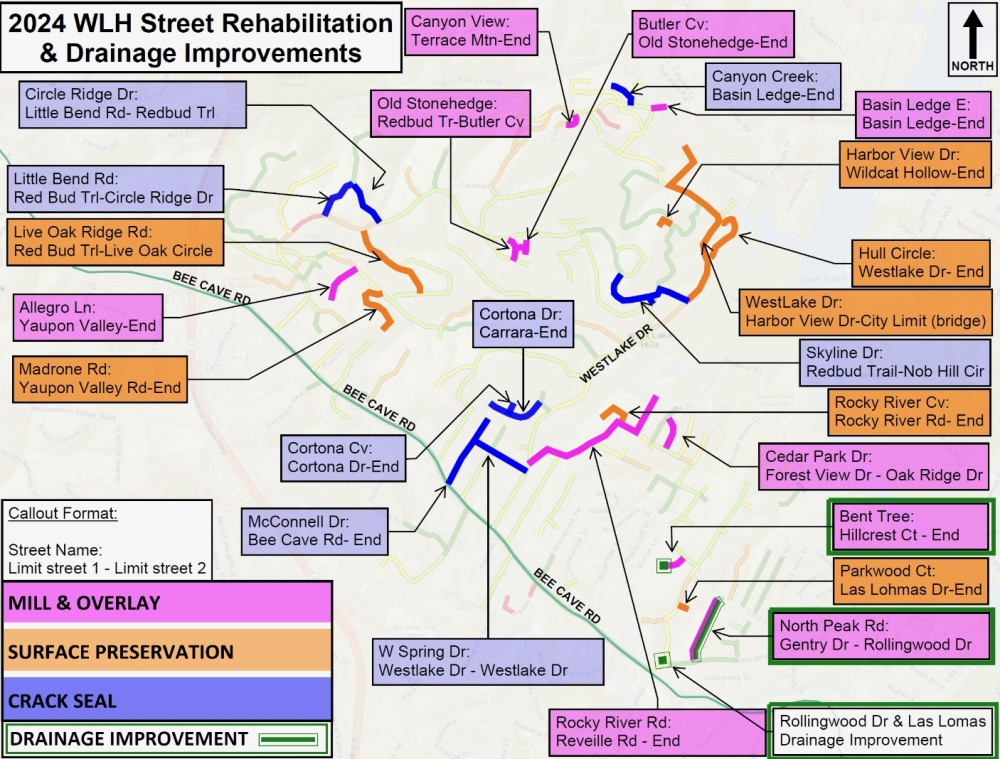
Civic infrastructure is one area where a page can be genuinely hard to replace, because the record is public and dated. On November 2, 2021, voters approved a $25 million bond in two parts. Proposition A, $13.2 million, replaced a City Hall and police complex that had wood rot, flooding, and no fire sprinklers. Proposition B, $11.8 million, funded road and drainage work on six streets, including a chronically flooded low-water crossing on Camp Craft Road at Eanes Creek. The bond carries a 25-year term.
Comments