
Who North Loop Fits (and Who It Doesn’t)

North Loop isn’t a fit for everyone searching for apartments here, and it’s worth ruling yourself in or out before touring anything.
- You need rent under $1,500. No dated, credible source in this analysis shows a studio below $1,513.
- You want a yard, a garage, or a zoned neighborhood public school. Housing here is almost entirely condos, lofts, and apartments.
- You require guaranteed, included parking. Target Field’s 20,000 nearby spaces are built for event traffic, not daily residents.
- You want one flat, predictable housing cost. HOA dues vary by hundreds of dollars a month, and special assessments happen.
It’s a good fit if you work downtown and want to walk or ride light rail instead of driving, if you like historic architecture and are willing to budget for HOA dues, or if you don’t mind gameday noise in exchange for being three blocks from Target Field.
What You’ll Actually Pay to Rent
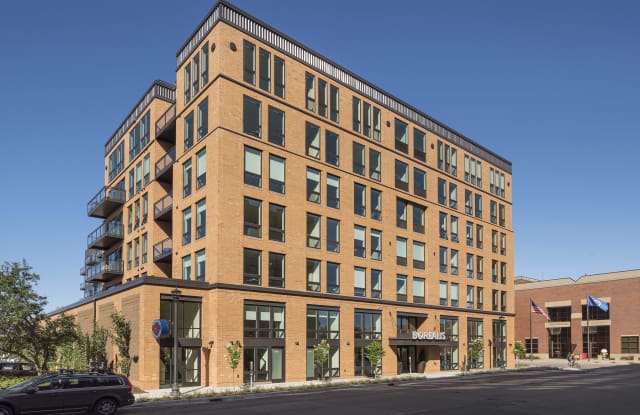
Two sources publish current, dated rent averages for North Loop with a stated methodology: Apartments.com’s live listing data and RentCafe’s Yardi Matrix analysis, dated March 2026.
| Unit size | Apartments.com | RentCafe / Yardi Matrix | Spread |
|---|---|---|---|
| Studio | $1,569 | $1,513 | ~4% |
| 1 bedroom | $2,025 | $1,887 | ~7% |
| 2 bedroom | $3,614 | $2,776 | ~30% |
| 3 bedroom | $6,348 | $4,355 | ~46% |
The gap between these two sources widens with unit size: about 4% apart at studio, but 30 to 46% apart at two- and three-bedroom sizes. Apartments.com prices its live listing inventory directly, while the RentCafe figure comes from Yardi Matrix’s analysis of buildings with 50 or more units citywide; a handful of large luxury units can pull a live-inventory average up sharply in a small sample, which matches the pattern of the spread growing with unit size.
Why do rent estimates for North Loop vary so much between sites?
Each site samples a different set of buildings and dates its data differently: live listing inventory versus a citywide analysis of larger buildings versus smaller, undisclosed samples on other sites.
Buying Instead of Renting: The HOA Math

Condo and loft prices span a wide range. Entry-level one-bedrooms start around $300,000, the neighborhood’s median resale price sits at $395,000 with a price per square foot of $343, and larger lofts or penthouses run past $1,000,000. A separate market read puts the median home price at $379,900, a close corroboration of the Redfin figure.
Almost every condo here carries a homeowners association fee, and the amount depends heavily on building type, according to Minneapolis condo advisors and a separate local buyer’s guide.
| Building type | Typical monthly HOA | What it usually covers |
|---|---|---|
| Historic warehouse conversion, minimal amenities | Under $300 | Basic common-area upkeep; heat, cable, or internet often billed separately |
| Mid-rise with elevator, modest amenities | $300 to $600 | Elevator service, insurance, common utilities, limited shared amenities |
| Luxury high-rise with concierge, pool, garage | $600 to $1,000+ | Staffing, amenity operations, larger insurance and reserve requirements |
A low fee on a historic conversion isn’t automatically the better deal. Buildings with older freight elevators and original masonry still need reserves for those repairs; thin dues today can turn into a special assessment later.
Is North Loop worth the HOA fees?
It depends what the fee funds. A sub-$300 fee on a historic conversion can mean thinner reserves for big repairs, while a $300 to $600 mid-range fee in an elevator building usually already covers them. Ask for the last two to three years of association budgets before buying; the monthly number alone won’t show you that.
Rent vs. Buy: The Real Monthly Numbers

The figures below assume a 20% down payment and a 30-year fixed loan at 5.75%, the middle of the mid-5% to low-6% range local brokers were forecasting for 2026 buyers. They exclude property taxes, insurance, and maintenance beyond HOA dues, so treat them as a floor, not a full budget.
| Tier | Purchase price | Comparable rent | Est. monthly ownership (P&I + HOA) |
|---|---|---|---|
| Entry 1BR condo | ~$300,000 | $1,887 to $2,025 (1BR) | ~$1,701 to $2,001 |
| Median condo/loft | ~$395,000 | $2,776 to $3,614 (2BR) | ~$2,144 to $2,444 |
| Larger loft/penthouse | $1,000,000+ | No dated rental equivalent | ~$5,268 to $5,668+ |
At the entry tier, the ownership estimate lands within a few hundred dollars of the top of the one-bedroom rent range, before taxes or insurance. That gap widens fast once price and HOA amenities scale up together.
History in Brief
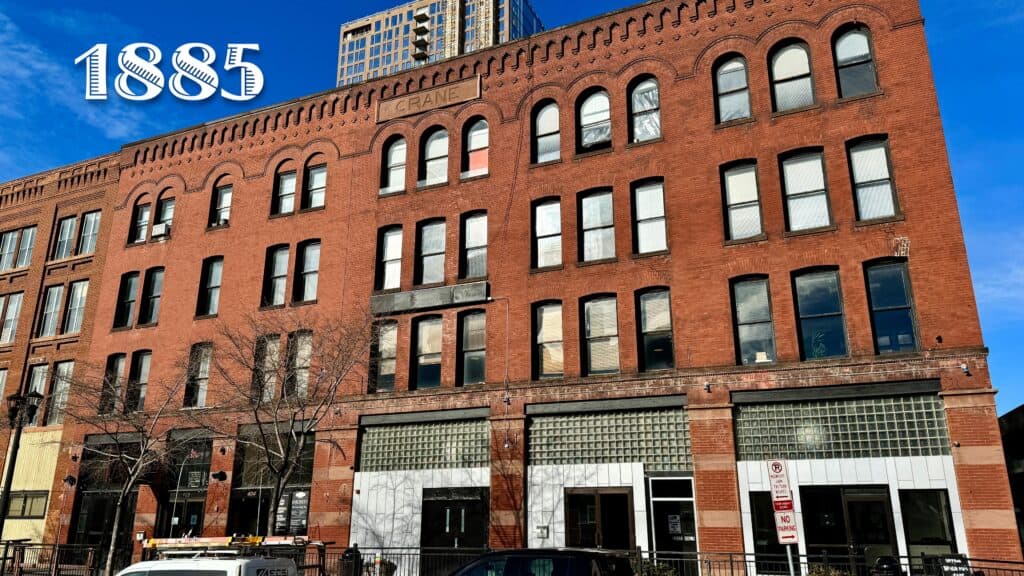
The neighborhood took its current shape from two decisions two decades apart. The roughly 30-block Warehouse Historic District, bounded by 1st Avenue North, 1st Street North, 10th Avenue North, and 6th Street North, went on the National Register of Historic Places in 1989, after a local landmark designation in 1978. Target Field opened three blocks south on April 12, 2010, and its arrival is the reason the neighborhood now has a direct light-rail stop and 20,000 nearby parking spaces.
Getting Around Without a Car (and When You’ll Want One Anyway)
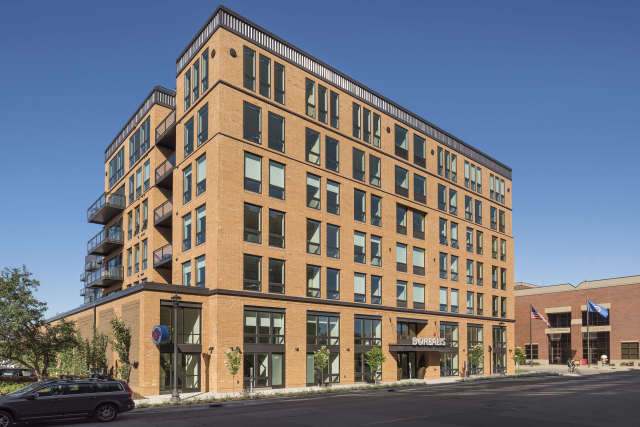
Walk Score rates North Loop 84 out of 100, the 12th most walkable neighborhood in Minneapolis, with 129 restaurants, bars, and coffee shops in the area and an average of 8 reachable within a five-minute walk. The Blue and Green Lines both stop at Target Field Station; Blue Line trains run about every 12 to 15 minutes, and the ride to downtown takes under 30 minutes, with the Warehouse District to MSP Airport trip clocking in around 25 minutes. Fare is $2 off-peak and $2.50 at rush hour.
Where a car earns its keep is grocery runs to a full-size store and Twins gamedays. Target Field itself supplies 20,000 parking spaces within five blocks of the ballpark, a number sized for event traffic, not daily residents.
Can you live in North Loop without a car?
Yes, for daily life. Walking, transit, and light rail cover work commutes, groceries, and dining within a five-minute radius for most residents; a car becomes useful mainly for large grocery trips and avoiding gameday congestion.
The Trade-offs Nobody Puts in the Listing

- Schools are charter, not zoned. The nearest options are Twin Cities International Elementary and Minnesota International Middle Charter School, not a neighborhood public school assignment.
- Housing stock is almost entirely multi-family. Single-family homes with yards are essentially absent from the neighborhood.
- Prices are moving unevenly. North Loop home prices were up 31.7% year over year as of March 2026, even as price per square foot fell 17.5%, a sign that smaller or cheaper units drove recent sales more than broad appreciation.
- Gameday demand is real but unquantified here. Twins home games bring competition for street parking and added noise; no sourced figure for exactly how much street parking tightens on game nights was found, so treat it as a known friction point rather than a number.
Is North Loop good for families?
For families wanting a zoned public school or a yard, North Loop is a compromise: the closest school options are charter, and the housing stock is overwhelmingly condos and apartments.
Where to Look Once You’ve Decided

Inventory here splits mainly into historic warehouse conversions and newer mid-rise or luxury buildings, each with its own HOA and price profile. Compare at least two dated sources side by side before treating any single site’s number as final, and don’t average them together, since the sampling behind each one is different.
Comments