
Why rent listings for the same city disagree by hundreds of dollars
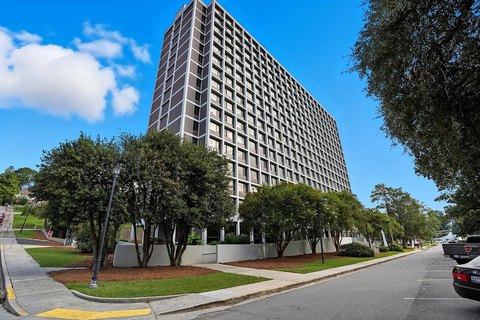
HUD’s Fair Market Rent is the 40th percentile of gross rents in Richland County: the threshold below which about 40 percent of standard-quality units rent, not an average of everything currently listed. A listing site’s “average rent” is a different measurement entirely, built from whatever units happen to be vacant and advertised that week, which skews toward newer, amenity-heavy buildings rather than the full housing stock.
Base rent vs. total monthly price
Many listing platforms show two separate numbers on a unit’s page: a base rent and a total monthly price that folds in mandatory fees, trash valet, pest control, sometimes a technology package or a parking fee. Budgeting off the base rent alone can understate a lease’s true monthly cost by $50 to $150, depending on the building’s fee structure.
Why do apartment listing sites show different average rents for the same city?Each site averages only its own active listings, a different population than HUD’s government-surveyed 40th-percentile rent. Neither number is fabricated; they measure different things.
True monthly cost, beyond the rent line
| Cost component | Typical range | Note |
|---|---|---|
| Base rent (1BR, county FMR) | $1,110 | HUD FY2026, 40th percentile |
| Mandatory building fees | $25 to $75/month | Trash valet, pest control, tech package; ask for the itemized total before signing |
| Summer electricity (June to September) | $180 to $260/month | Based on South Carolina’s EIA-sourced average bill and Dominion’s summer on-peak schedule |
| Renters insurance | $12 to $20/month | Market-quoted range; not government-set |
Summer electricity alone can add $70 to $150 to a given month, a swing larger than the gap between most of the neighborhoods below.
Choosing a neighborhood
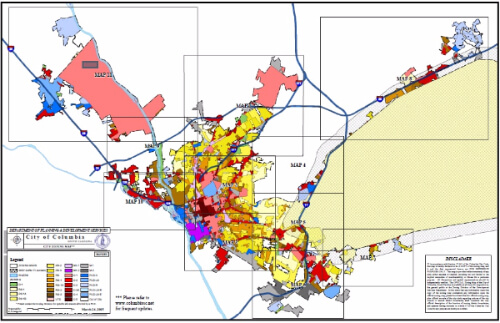
Columbia’s submarkets split more by commute and flood exposure than by any single price tier. HUD doesn’t publish neighborhood-level rent, so the table below uses relative price tier rather than invented dollar figures.
| Neighborhood | Price tier vs. county FMR | Who it suits | Commute to USC/downtown | Key tradeoff |
|---|---|---|---|---|
| The Vista | Above | Young professionals, no car dependency | 5 to 10 min | River-adjacent; flood exposure in low-lying blocks |
| Five Points | Above | Students, nightlife-oriented renters | 5 to 15 min walk/bike | Heavy parking pressure and noise on home football Saturdays |
| Shandon / Rosewood | Above | Families, long-term renters | 10 to 15 min | Oldest housing stock; expect older wiring and HVAC |
| Olympia-Granby | Near | Mixed; mill-village character | 10 to 20 min | Same river-adjacent flood exposure as the Vista on some blocks |
| Northeast Columbia / Sandhill corridor | Below | Fort Jackson-affiliated families, commuters with a car | 25 to 35 min | Longest commute of the group; lowest flood exposure |
By renter type
A car changes the calculus more than any single neighborhood label: Fort Jackson-affiliated renters gain the most livable square footage per dollar by pushing northeast, where a commute becomes the tradeoff instead of flood exposure. Anyone without reliable transportation should weight the Vista and Five Points far above their price tier suggests, since walkability there substitutes for a car.
Flood, traffic, and other neighborhood-specific risk factors
Game days bring a predictable, dated disruption. USC’s 2026 home schedule opens with three straight Saturdays, Sept. 5, Sept. 12, and Sept. 19, and Williams-Brice Stadium is one of the largest venues in the Southeastern Conference, which means Five Points and the streets around the stadium see heavy parking pressure and noise on each of those dates.
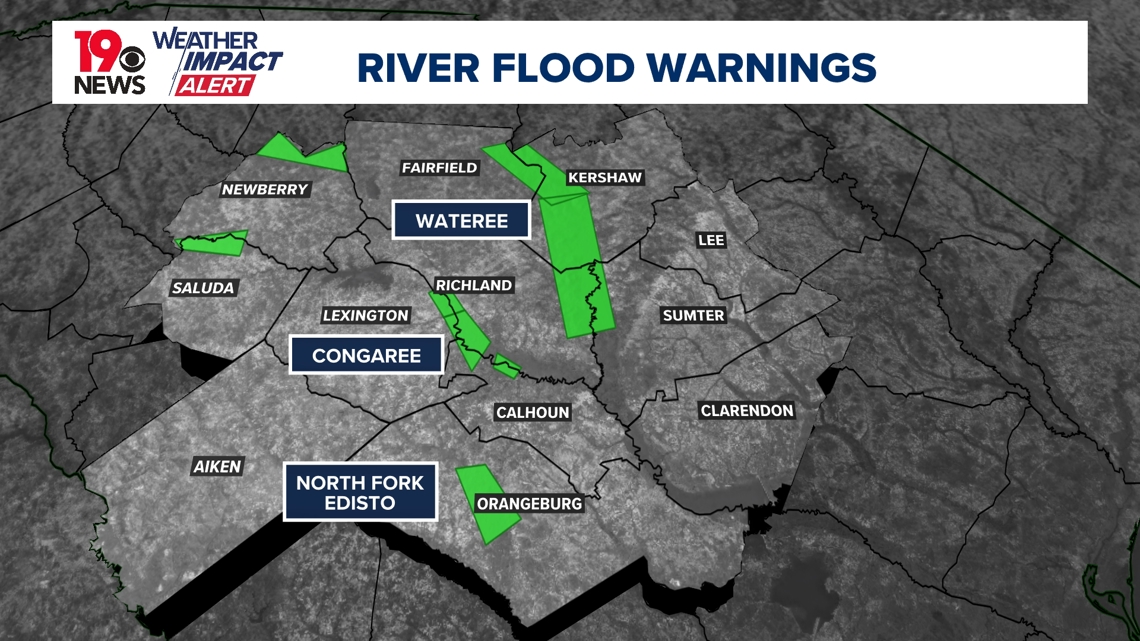
Columbia sits at the confluence of the Broad, Saluda, and Congaree rivers. In October 2015, a historic statewide flood pushed the Congaree River to a crest near 31.8 feet and caused dozens of dam failures across the region, with the Gills Creek watershed among the hardest-hit areas of the city, according to the National Weather Service’s post-event assessment. In September 2024, remnants of Hurricane Helene pushed the same river back toward that 2015 crest.
Is downtown Columbia or the Vista at flood risk?Checking a specific address against FEMA’s flood map service before signing a lease is the only way to confirm parcel-level risk in the river-adjacent blocks named above.
When to start looking
USC’s fall 2026 semester begins Aug. 18, a Tuesday, and the university’s Columbia campus enrollment topped 40,000 students for fall 2025, including a record incoming class. Fort Jackson adds a second, less visible pressure point: the post trains roughly 35,000 basic-training and 8,000 advanced-individual-training soldiers a year, arriving on a rolling schedule rather than one seasonal wave.
How far ahead should I start looking near USC’s fall move-in?By late spring for an August lease start. Waiting until July means competing against move-in demand from a campus of more than 40,000 students.
What you’ll need to apply and sign a lease
South Carolina law sets no cap on a security deposit; most landlords charge the equivalent of one to two months’ rent, a market norm rather than a statutory figure. Once you move out, S.C. Code §27-40-410 requires the landlord to return the deposit, or an itemized list of deductions, within 30 days of the tenancy ending and possession being delivered. A landlord who misses that window or withholds in bad faith owes up to three times the amount wrongfully withheld, plus attorney’s fees.
| Requirement | Typical standard | Source |
|---|---|---|
| Security deposit cap | None set by state law; 1 to 2 months’ rent is the market norm | S.C. Code §27-40-410 (silent on amount) |
| Deposit return window | 30 days after move-out and possession delivered | S.C. Code §27-40-410(a) |
| Bad-faith penalty | Up to 3x the amount wrongfully withheld, plus attorney’s fees | S.C. Code §27-40-410(b) |
| Income-to-rent multiplier | Commonly 3x monthly rent | Industry convention, not South Carolina law |
Can I get my full security deposit back in South Carolina?Yes, minus lawful deductions for unpaid rent or damage beyond normal wear and tear. The landlord must send an itemized statement within 30 days or forfeit the right to withhold anything.
Common mistakes renters make in Columbia
The three mistakes that cost Columbia renters the most money: budgeting off the base rent instead of the total monthly price, missing the 30-day deposit-return window because no forwarding address was left in writing, and underestimating the summer electric bill in a building with older HVAC.
Comments