
Two-bedroom apartments in the Tuscaloosa, AL HUD Metro FMR Area carried a federally published rent estimate of $1,138 a month for fiscal year 2025, up from $1,125 the year before. One-bedroom units ran closer to $922, three-bedroom units to $1,450. Bedroom count is not the variable that moves price the most here. Whether a unit is leased per bedroom on the University of Alabama’s August-to-August academic calendar, or per unit on a standard 12-month lease, changes the price more than one extra room does. A $499 listing near campus is very often one bedroom priced separately inside a shared unit.
How the Academic Calendar Sets Prices
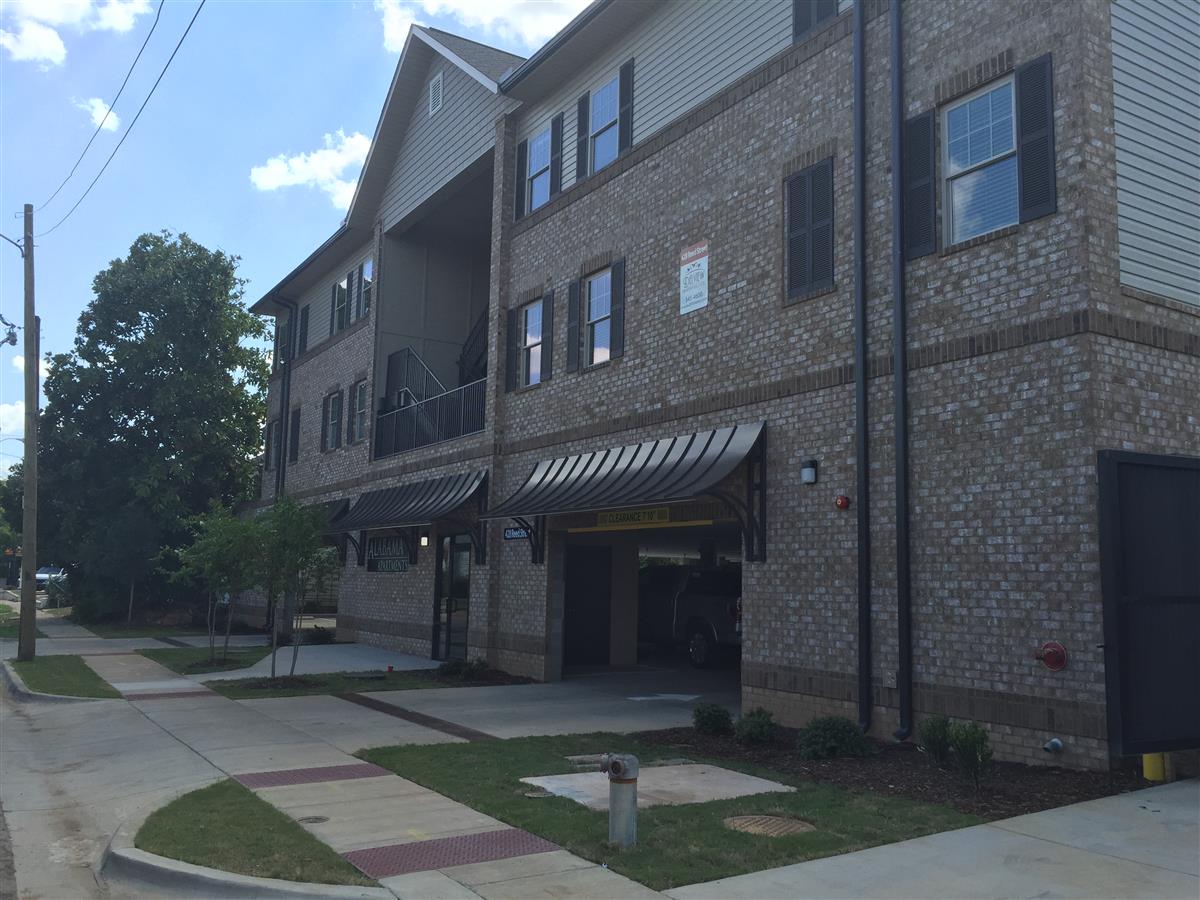
Most Tuscaloosa leases near campus begin on August 1, with move-in clustering in mid-August to line up with the start of the fall semester. The University of Alabama’s off-campus housing resource notes that a lease is commonly written for 12 months, but rent is often collected over 11 or 11.5 months of that term, since many tenants do not occupy the unit through the full summer. Move-out clusters at the end of July, and a tenant can still owe that final month’s rent even after moving out. Security deposits near campus typically cap at one month’s rent, consistent with state law (see the table below).
This calendar matters for search timing, not just budgeting. Units close to campus with resort-style amenities are frequently claimed many months before the August start, so a renter searching in July for an August lease is choosing from what’s left, not from the full inventory. Units further from the core campus area, or in older buildings, hold availability later into the summer.
Because the academic calendar drives so much of the demand near campus, the two ends of the city do not really behave like one market. Turnover is fastest and prices firmest close to the Quad in the two months before fall semester; it softens noticeably once the semester is underway and near-campus units that didn’t lease sit longer.
Is Tuscaloosa a renter’s or landlord’s market right now?
It depends more on timing and distance from campus than on a citywide average. Close to the University of Alabama, the weeks before the August lease start favor landlords, since most nearby units get claimed early. Elsewhere in the city, and near campus once the semester has started, listings sit longer and renters have more room to negotiate.
Per-Bedroom vs. Per-Unit Pricing

Listings in Tuscaloosa mix two pricing formats, and they are not always labeled clearly.
The mistake this causes is comparing a $625-a-bedroom listing against a $1,850-a-unit listing as if they were competing offers for the same thing. They usually aren’t. A four-bedroom unit at $625 a bedroom totals roughly $2,500 for the whole apartment, well above that $1,850 unit-priced comparable. Before ruling a listing in or out on price alone, multiply the per-bedroom rate by the bedroom count before setting it against a per-unit listing.
What’s the difference between per-bedroom and per-unit pricing?
Per-unit pricing quotes one rent for the whole apartment, split among roommates by agreement. Per-bedroom pricing quotes and often contracts each room separately, so each tenant is responsible only for their own portion. Multiply a per-bedroom rate by the bedroom count to compare it against a per-unit listing.
What HUD’s Numbers Say About Rent by Size
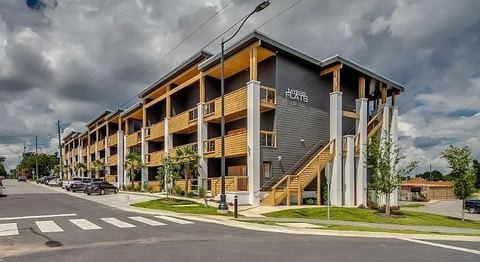
The U.S. Department of Housing and Urban Development publishes an annual rent estimate for every metro area, calculated as the 40th percentile of standard-quality gross rents. For fiscal year 2025, Tuscaloosa’s HUD Metro FMR Area figures were:
| Bedroom size | FY2025 Fair Market Rent (40th percentile) | FY2025 median rent (50th percentile) |
|---|---|---|
| Studio / efficiency | $916 | $984 |
| 1 bedroom | $922 | $990 |
| 2 bedroom | $1,138 | $1,222 |
| 3 bedroom | $1,450 | $1,557 |
| 4 bedroom | $1,509 | $1,620 |
The gap between the two columns is the gap between the affordable end of the market and a typical unit. A renter budgeting to the Fair Market Rent column is budgeting toward the lower-cost 40 percent of standard units, not the citywide middle.
Tuscaloosa’s own trajectory shows the scale of change worth planning around: the two-bedroom Fair Market Rent moved from $885 in fiscal year 2020 to $1,138 in fiscal year 2025, a climb of roughly 29 percent over five years, documented directly in HUD’s published FMR schedules for the area.
Alabama Renter Rights You Need Before You Sign
Alabama’s Uniform Residential Landlord and Tenant Act sets a handful of hard numbers that apply statewide, not just in Tuscaloosa.
| Rule | What Alabama law sets | Citation |
|---|---|---|
| Security deposit cap | Generally capped at one month’s rent; landlords may add to this for pets, property changes, or added liability risk | Ala. Code § 35-9A-201 |
| Deposit return deadline | Landlord must return the deposit, or send an itemized statement of what was withheld, within 60 days of move-out | Ala. Code § 35-9A-201 |
| Notice before landlord entry | At least two days’ notice for non-emergency entry, except in a genuine emergency or under court order | Ala. Code § 35-9A-303 |
| Notice for nonpayment of rent | Landlord must give at least seven business days’ written notice to cure before terminating the lease | Ala. Code § 35-9A-421 |
| Late fees and rent increases | No statutory cap on late fees, and no rent control; a late fee still needs to be written into the lease to be enforceable | Alabama URLTA framework |
Alabama’s 60-day deposit return window runs longer than many states use, which cuts the other way for tenants who need that money back quickly for a next deposit. Photograph the unit at move-in and move-out; Alabama’s law puts the documentation burden largely on whoever disputes the condition report.
How much notice does a landlord have to give before entering?
At least two days for anything routine, such as showing the unit or handling a non-urgent repair. No advance notice is required in a genuine emergency, such as a burst pipe or fire, or when a court order permits entry.
What to Have Ready When You Apply
Most Tuscaloosa leasing offices, whether student-focused or general market, ask for a similar document set:
- Photo ID. A driver’s license or passport for every named applicant.
- Income verification. Recent pay stubs, an offer letter, or, for students without independent income, documentation supporting a cosigner.
- Cosigner information, if applicable. Many near-campus leases require a cosigner for any applicant without two years of independent income history; the cosigner typically goes through the same screening as the tenant.
- Rental history or a reference. A previous landlord’s name and contact information, if you’ve rented before.
- Application fee. Charged per applicant in most cases, and generally non-refundable regardless of the outcome.
Property managers commonly screen income against a multiple of the rent. The American Apartment Owners Association identifies the 30 percent rule and the 3x-rent rule as the two most common benchmarks nationally: gross monthly income at or above three times the monthly rent, or rent at or below 30 percent of gross income. Both are voluntary industry benchmarks, and Tuscaloosa properties vary in how strictly they apply either one, but budgeting against a three-times-rent income target before you tour is a reasonable starting point.
What documents do I need to apply?
Photo ID, recent proof of income or a cosigner’s documentation if you don’t have independent income, a prior landlord reference if you have one, and the application fee. Have all of it ready before you tour; near-campus units in the weeks before August can be claimed within a day of listing.
A Note on Neighborhoods
Tuscaloosa’s neighborhoods differ meaningfully by distance from campus, building age, and flood exposure near the Black Warrior River, but this page is not going to hand you a precise walk-time or safety comparison by name. No independently verifiable source publishes that data at the neighborhood level for Tuscaloosa outside of marketplace listing pages, whose figures this page does not treat as fact. Confirm commute time and flood-zone status directly with a property manager or the city’s own planning office before signing.
Where a Single City Average Breaks Down
Every number in the table above blends two very different rental populations into one figure: purpose-built student housing priced by the bedroom near campus, and standard family or long-term rentals priced by the unit elsewhere in the city. A single average-rent statistic for Tuscaloosa, whichever source publishes it, is a blend of both. If you’re not renting near campus on the academic calendar, treat the citywide figures here as a ceiling more than a forecast for the unit you’re actually touring.
Comments