
What zip code 33042 actually covers
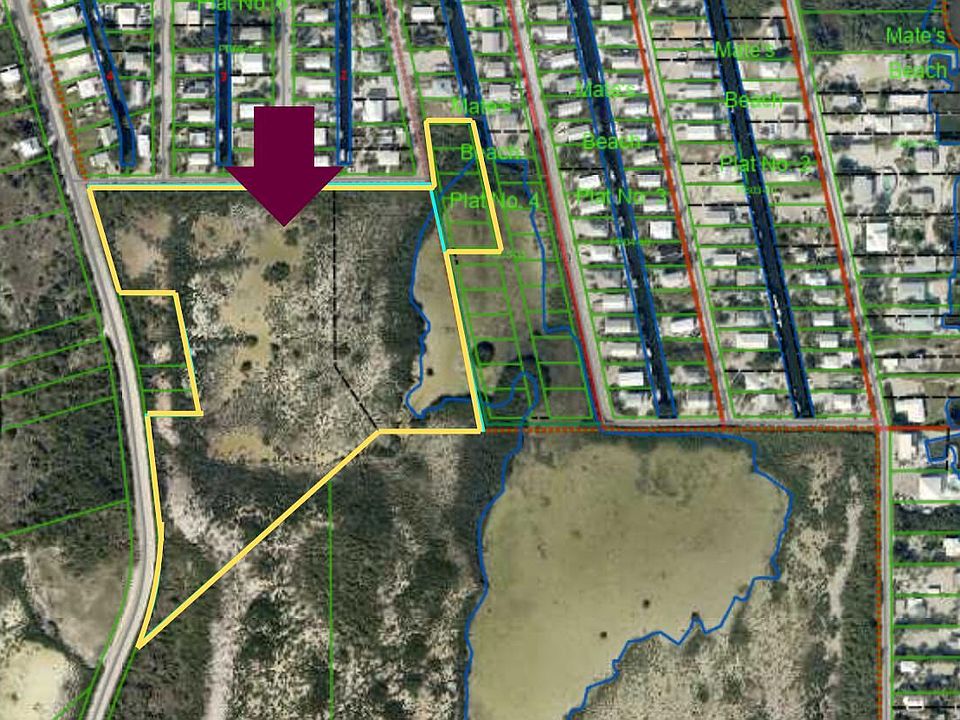
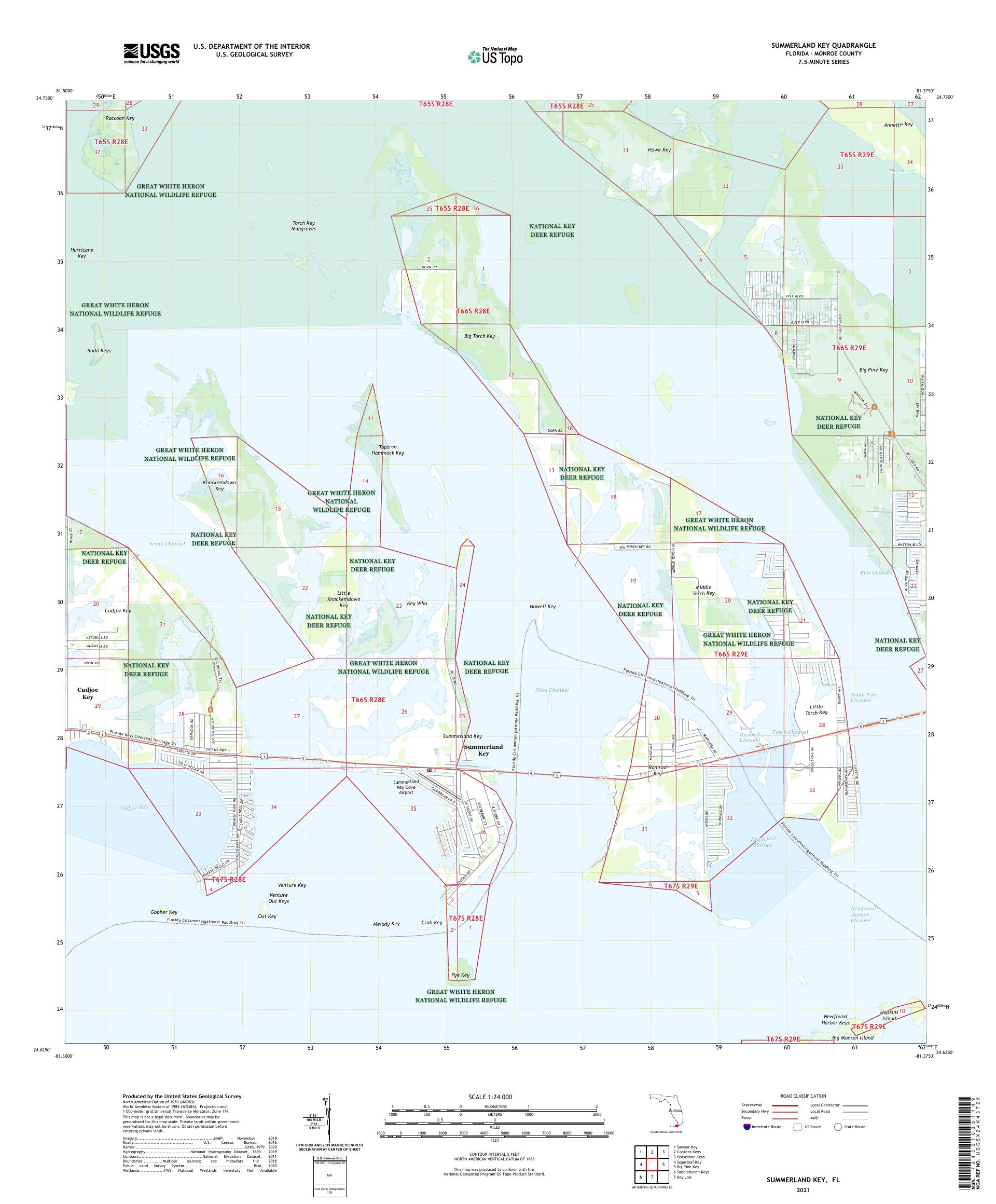
33042 is a postal boundary, not a neighborhood. It spans Summerland Key, Ramrod Key, Big Torch Key, Middle Torch Key, Cudjoe Key, and Sugarloaf Key, six distinct islands connected by the Overseas Highway between roughly mile marker 21 and mile marker 25. A buyer who searches the zip code alone will see listings from all six mixed together.
| Community | General price tier | Water-access character |
|---|---|---|
| Summerland Key | Upper-mid to luxury | Dredged residential canals, mostly flow-through to Niles/Kemp Channel; some open-water lots |
| Cudjoe Key | Mid to upper-mid | Mix of canal-front and interior lots; larger platted subdivisions |
| Sugarloaf Key | Mid | Canal and bayside lots; more undeveloped acreage than Summerland or Cudjoe |
| Ramrod Key | Mid | Smaller footprint, limited canal frontage, closer to Bahia Honda |
| Big Torch / Middle Torch Key | Entry to mid | Mostly unbridged interior roads, more raw land, least commercial development |
The table reflects general listing-price positioning gathered during research rather than a single audited per-community median; no independent, publicly available dataset broke 33042 sales out by these six communities at the time of writing. Treat the tiers as a starting filter, not a substitute for pulling live comps on the specific island.
Does 33042 include more than Summerland Key?
Yes. The zip code covers six islands: Summerland, Ramrod, Big Torch, Middle Torch, Cudjoe, and Sugarloaf Key. A property search filtered only by zip code will mix listings from all six.
Property types, and the one that’s missing
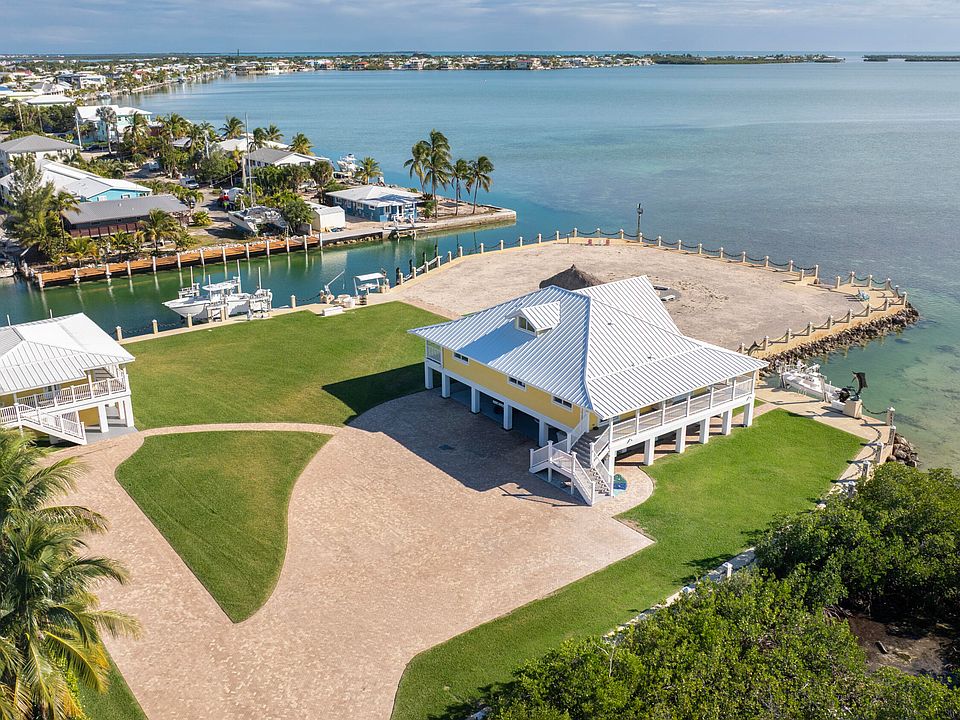
Single-family homes on pilings dominate this zip code, most built from CBS (concrete block and stucco) construction with the living space elevated above ground level. Waterfront canal lots are the most searched category; interior, non-waterfront lots trade at a discount but still carry the same flood-zone and ROGO exposure.
Condominiums are not part of Summerland Key’s housing stock. The island is built out almost entirely in raised single-family homes, with a handful of mobile homes scattered in. That’s a real disqualifier for a buyer assuming a low-maintenance condo option exists here specifically. It doesn’t hold for the zip code as a whole: an active MLS search of 33042 turns up at least one condo unit, at Spanish Main Drive, located on a different key within the same postal boundary. If a condo is part of the plan, the search needs to specify which island, not just the zip.
One property type is unique enough to name directly. Summerland Key Cove Airport (FLYING Magazine) is a private residential fly-in community built around a 2,394-foot runway dating to the 1950s. Roughly 25 hangar homes sit along the strip, the runway itself is owned collectively by 15 individual shareholders, and the community runs with no homeowners’ association at all. It’s a narrow, parcel-specific option, not a general Summerland Key feature, and eligibility to build a hangar has to be confirmed lot by lot with the airport’s operators.
Are there condos in Summerland Key?
No. Summerland Key’s housing stock is almost entirely raised single-family homes, with a small number of mobile homes. Condo inventory does exist elsewhere in zip code 33042, on other Lower Keys islands sharing the same postal boundary.
Why vacant land is scarce here
Monroe County limits new residential building permits through the Rate of Growth Ordinance (ROGO), a competitive, points-based allocation system that predates most buyers’ expectations of how land purchases work anywhere else in Florida. Owning a vacant lot does not, by itself, grant the right to build on it.
Under the county’s land development code, unincorporated Monroe County, which includes this entire zip code, has released 126 market-rate residential allocations per year, drawn from a lifetime pool of 1,970 permits established in 2012 and stretched through 2026 by slowing the annual release rate. Applications are scored on a tiered point system tied to environmental sensitivity and infrastructure access, and higher-scoring applications get permits first, regardless of how long a lower-scoring application has been waiting.
That system is in active transition. Senate Bill 180, signed into law in 2025, extends the county’s mandated hurricane-evacuation clearance time from 24 to 24.5 hours and authorizes up to 900 new building-permit allocations statewide for the Keys, to be distributed over 10 years, but only after the Florida Department of Commerce completes a study confirming the distribution method meets the law’s requirements. As of December 2025, county staff had earmarked 62 of the county’s existing set-aside “administrative relief” allocations specifically to keep issuing permits through July 2027 while that state review plays out.
Existing structures work differently from vacant land: a home that already has a lawfully permitted structure on it generally keeps a right to build tied to that structure, without re-entering the competitive ROGO queue, as long as the prior structure’s existence can be documented.
| ROGO allocation cycle | Period |
|---|---|
| Quarter 1, Year 33 | July 13, 2024 – Oct. 15, 2024 |
| Quarter 2, Year 33 | Oct. 16, 2024 – Jan. 13, 2025 |
| Quarter 2, Year 34 | Oct. 15, 2025 – Jan. 12, 2026 |
Per-cycle allocation counts aren’t uniformly published for every quarter in this table; confirm the current cycle and remaining allocation count directly with Monroe County’s Growth Management division before assuming a vacant lot’s timeline.
A buyer who purchases a vacant lot in this zip code assuming a building permit will follow routinely is taking on the single largest, least visible risk in this market: the lot may sit in the ROGO queue for years, or never clear it at all if better-scored applications keep outranking it every cycle.
Can I still get a permit to build here?
On a lot with an existing lawful structure, usually yes, without competing in ROGO. On vacant land, only by winning a competitive, points-based allocation, and the annual pool is capped and currently in legislative transition.
Flood zones, the 50% rule, and what it means for renovations
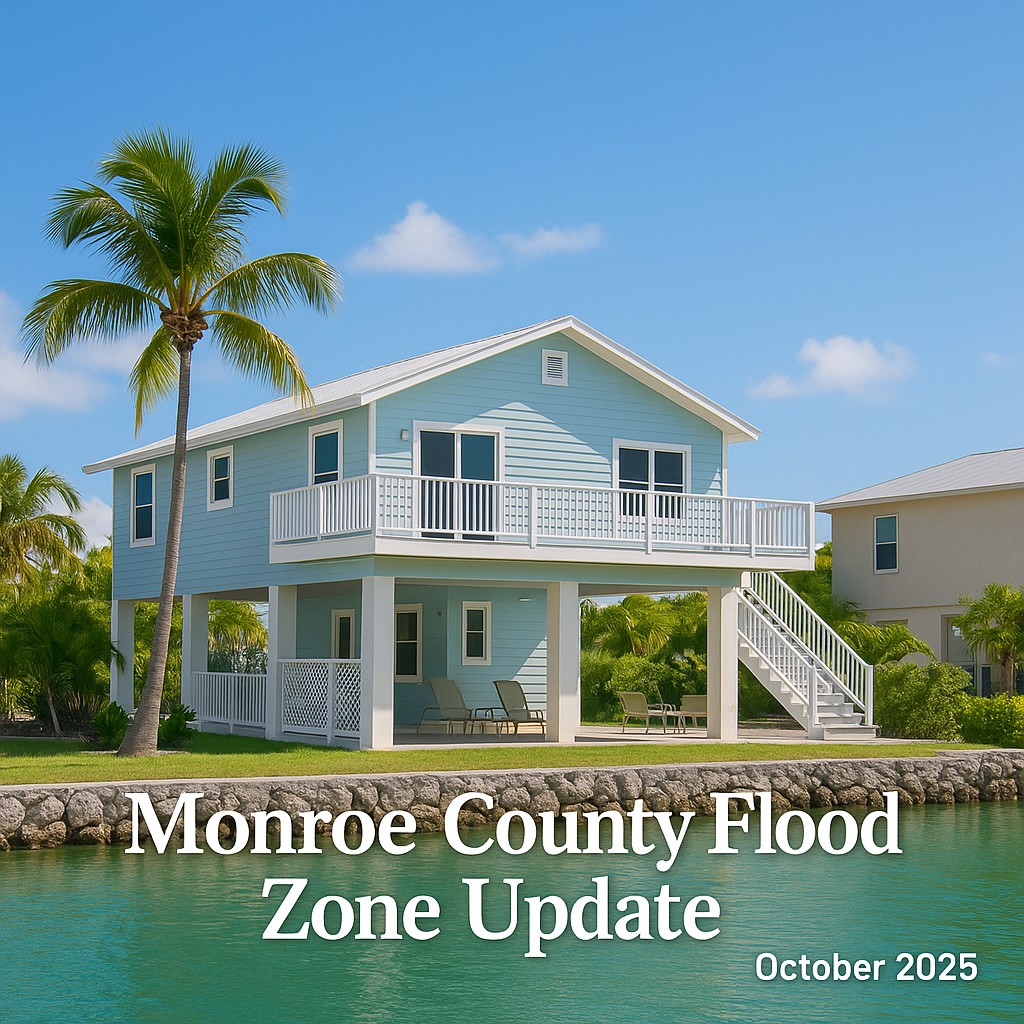
Nearly the entire zip code sits inside a FEMA Special Flood Hazard Area, mapped as either an AE zone (base flood elevation shown, varying by parcel) or a VE zone (coastal high-hazard, subject to wave action, carrying the steepest insurance and construction requirements). Structures built after 1975 were required to have their lowest floor at or above the base flood elevation for their zone; older homes below that line are often “legal nonconforming” and grandfathered for insurance purposes, until a major renovation changes that status, per Monroe County’s floodplain guidance.
| Factor | AE zone | VE zone |
|---|---|---|
| Basis for elevation | Base flood elevation (BFE) from detailed hydraulic analysis | BFE plus wave-height design requirements |
| Lowest-floor measurement point | Finished first floor | Bottom of lowest horizontal structural member |
| Floodproofing option | Allowed for non-residential structures only | Prohibited outright |
| Typical insurance cost pattern | Lower than VE, rises sharply below BFE | Highest-cost tier in the flood program |
Floodproofing is the clearest dividing line between the two zones, per FEMA’s NFIP guidance: allowed for non-residential AE-zone buildings, prohibited outright in VE.
Monroe County enforces the National Flood Insurance Program’s “50% rule”: if the cost of a renovation, addition, or storm repair equals or exceeds 50% of the structure’s market value before work starts, the entire structure must be brought up to current elevation standards, including full compliance with the base flood elevation for its zone, per the county’s Substantial Improvement/Damage guidance. The 50% threshold is cumulative across permits; breaking a renovation into smaller phases doesn’t avoid it, and the county evaluates related permits together specifically to prevent that. Only parking, limited storage, and building access are allowed in any space below the base flood elevation once the rule is triggered.
Before making an offer on an older, non-elevated home, request the seller’s elevation certificate: it documents the structure’s actual lowest-floor elevation relative to the parcel’s base flood elevation, which drives both the renovation ceiling and the ongoing flood-insurance premium. A specific parcel’s flood zone and base flood elevation should always be confirmed on FEMA’s Flood Map Service Center rather than assumed from a neighboring property, since boundaries can split individual lots.
Do I need flood insurance no matter what I buy?
If the property has a federally backed mortgage and sits in a Special Flood Hazard Area, which covers most of this zip code, flood insurance is required by the lender. Without a government-backed loan, it’s still strongly advisable given how much of the area maps into AE or VE zones.
Current market snapshot for 33042
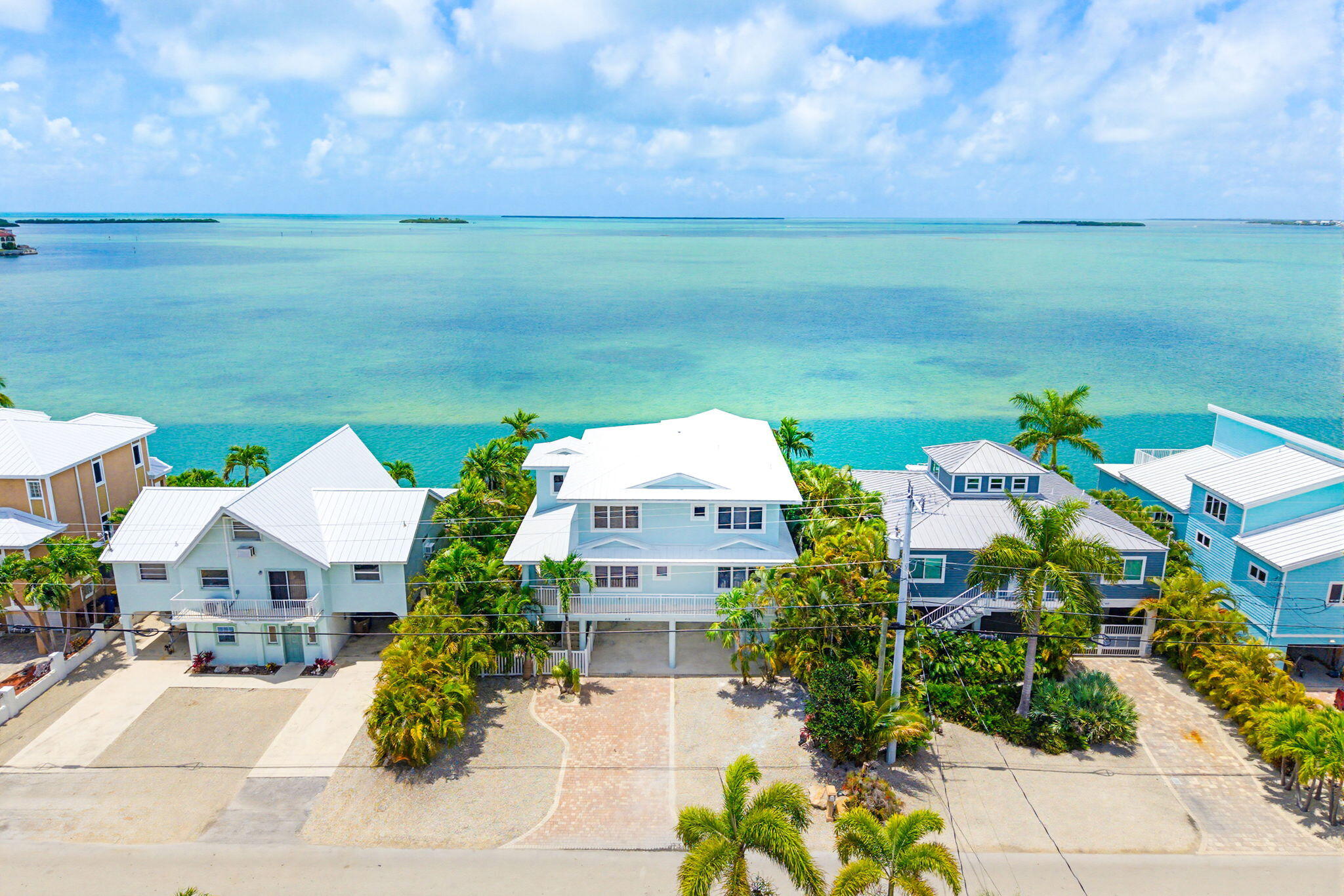
Across the zip code, RealtyTrac’s MLS-based data puts the trailing twelve-month median sale price at $1,001,968, with individual sales spanning $265,007 to $6,995,000 and 252 recorded transactions. That spread reflects the community table above: a Big Torch Key interior lot and a Summerland Key open-water estate can sit in the same zip code and be a full order of magnitude apart in price.
Population and income figures on this zip code vary depending on the source and vintage cited. The Census Bureau’s 2020–2024 American Community Survey five-year estimates put ZIP 33042 at 6,841 residents, a median household income of $103,041, and a median home value of $856,500, figures that update annually and should be re-checked against data.census.gov rather than relied on as a fixed number.
How to get an updated number
Because both RealtyTrac’s snapshot and the ACS figures update on their own schedules, pull a fresh comparative-market analysis from a Monroe County MLS-affiliated agent, or the Miami/Key West MLS IDX search directly, before treating any number on this page as current pricing.
Mistakes buyers make in this zip code specifically
- Assuming a vacant lot is automatically buildable. ROGO governs new construction, not the other way around; confirm the specific lot’s ROGO status and any existing allocation before treating a “buildable” listing description as a guarantee.
- Skipping the elevation certificate request. Without it, there’s no way to know how close a structure sits to triggering the 50% rule on its next renovation.
- Reading “no condos” as applying to the whole zip code. It applies to Summerland Key specifically; other communities inside 33042 do have limited condo inventory.
- Treating a single price ranking as the whole market, instead of checking the actual sales spread noted above.
- Assuming pre-1975 construction is automatically compliant. Older homes are frequently grandfathered as legal nonconforming, which is a different, more fragile status than being flood-compliant outright.
How 33042 compares to nearby Lower Keys zips
Big Pine Key and No Name Key sit under a separate, smaller ROGO sub-allocation specific to endangered-species habitat protections, which caps new construction even tighter than the rest of the unincorporated county. Key West and Marathon use their own Building Permit Allocation System rather than county ROGO, with different queues and cycle timing entirely. A buyer cross-shopping 33042 against those areas is comparing different regulatory systems, not just different price tags.
Comments