
What a rental house costs in Huntsville, separate from apartments
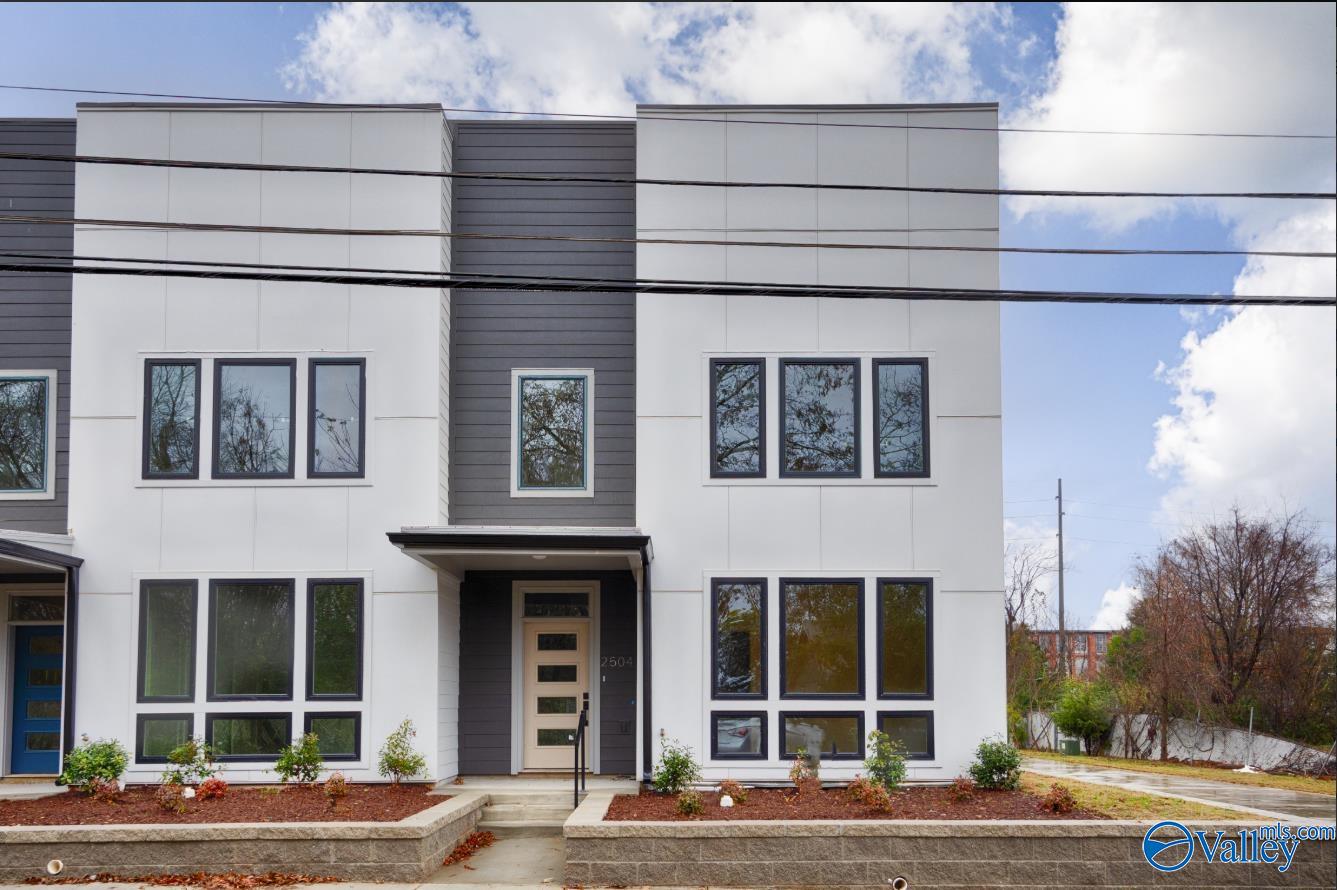
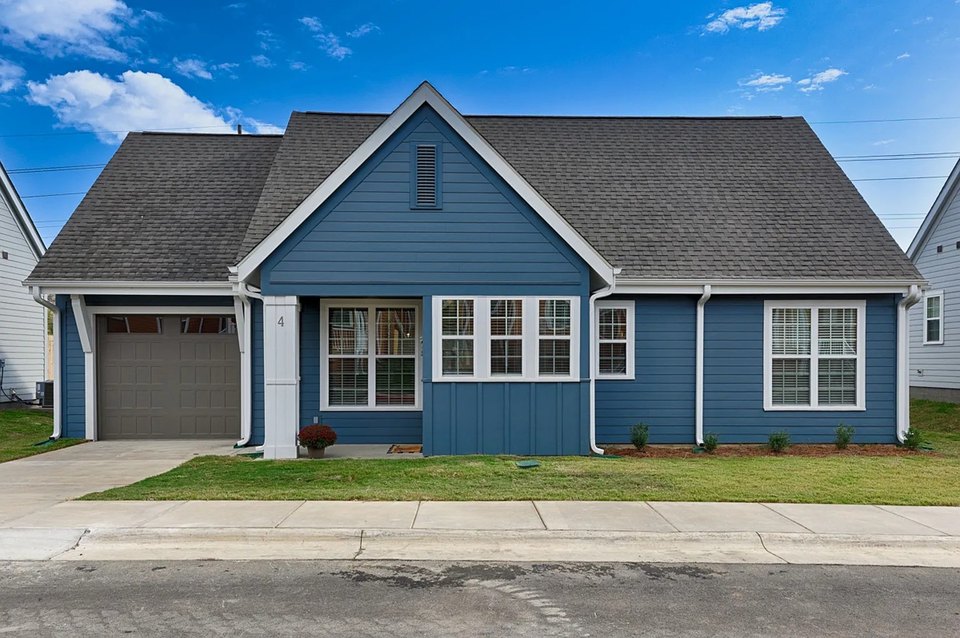
Renting a house here costs more than the citywide “average rent” figure most portals lead with, because that figure is usually blended across studios, apartments, and houses together. Isolate the house-only listings and the number moves. Rentable.co’s current inventory of 53 houses averages $1,430 a month. Zillow’s Rental Manager data puts the house-specific median at $1,500, with a wide spread from $595 to $7,318 depending on size and condition. RentCafe’s house-only page, pulling from a smaller pool of 21 active listings as of March 9, 2026, shows a higher average of $1,705.
By bedroom count, Rentometer’s metro report breaks it out further: three-bedroom houses commonly fall in the $1,600 to $1,700 range, and four-or-more-bedroom homes reach $2,100 to $2,200. A one-bedroom house, less common in this market, tends to sit near $900 to $1,000.
Is it cheaper to rent a house or an apartment in Huntsville?
Usually, apartments are cheaper. Citywide blended averages that include apartments run $1,252 to $1,375 a month, while house-only figures from the same class of portals run $1,430 to $1,705. The premium buys yard space, garage or driveway parking, and typically no shared walls.
Why “average rent” figures disagree across sites
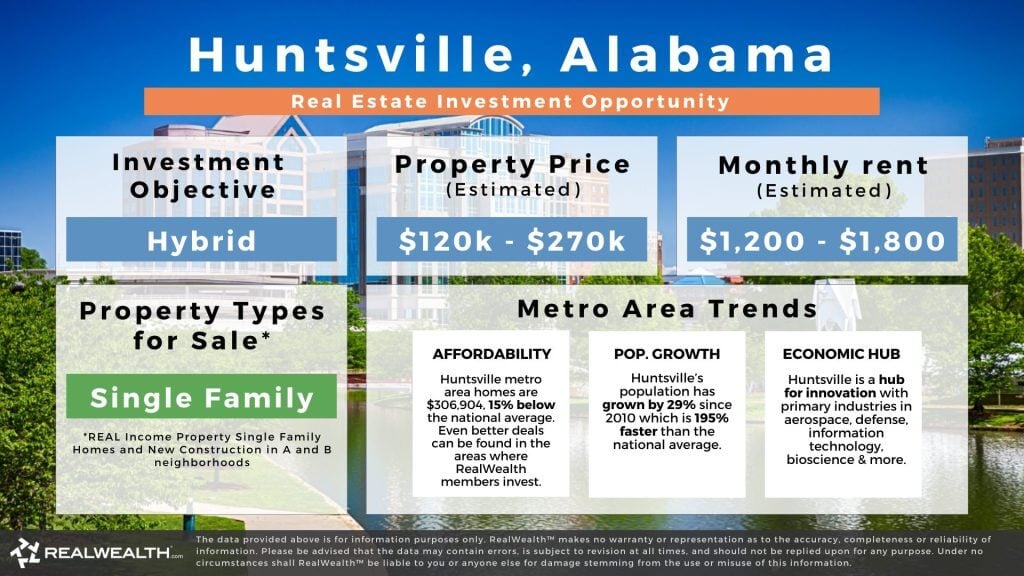
Nobody publishing an “average rent in Huntsville” number is measuring the same thing.
| Source | Stated figure | Property-type scope | Date |
|---|---|---|---|
| RentCafe / Yardi Matrix | $1,252 | Blended, all unit types | 2025–2026 data |
| Zumper | $1,375 median | Blended, all bedroom counts and types | Feb 2026 |
| Rentable.co | $1,430 avg | Houses only, 53 active listings | Current |
| Zillow Rental Manager | $1,500 median | Houses only | Live market page |
| RentCafe houses-for-rent | $1,705 avg | Houses only, 21 active listings | Mar 9, 2026 |
Neighborhood comparison for renters
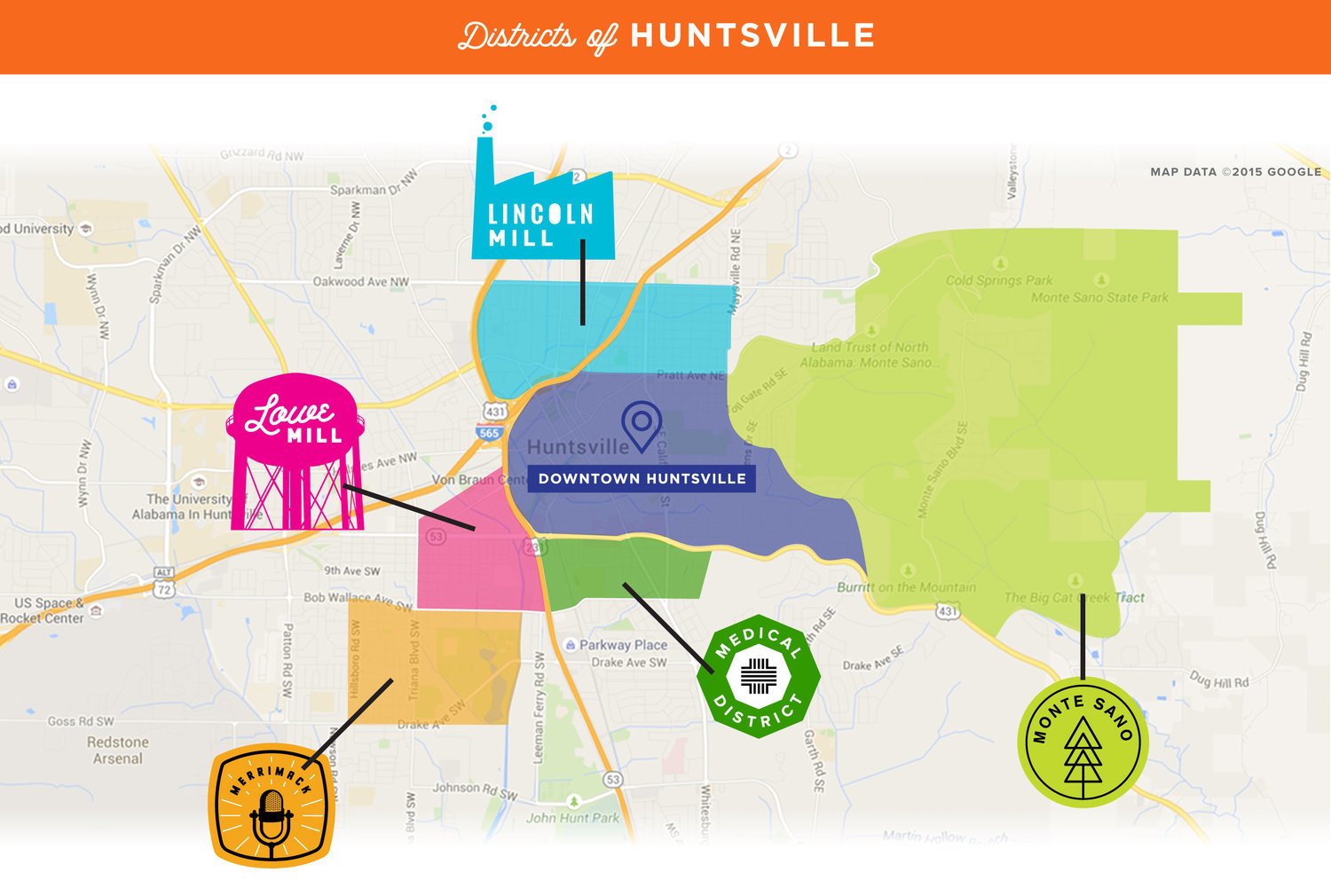
No portal in this market publishes single-family rent broken out by named Huntsville neighborhood with a clear methodology; the rent-by-neighborhood tables that do exist mix in apartments. Median home sale price, tracked cleanly by Redfin at the neighborhood level, is the best available public proxy for relative cost tier and gives a defensible stand-in until house-specific rent data by neighborhood becomes available.
| Neighborhood | Median home sale price | Proximity note | Who it suits |
|---|---|---|---|
| Southwest Huntsville | $315,000 | Nearest to Redstone Arsenal’s south gates | Arsenal contractors, defense employees minimizing commute |
| Northeast Huntsville | $280,000 | Closer to Research Park Boulevard corridor and UAH | Research-park and university-adjacent workers |
| Northwest Huntsville | $231,000 | Furthest west from the Arsenal and research corridor | Renters prioritizing space and price over commute |
| Downtown Huntsville | $520,000 | Walkable core, restored and loft-style housing stock | Renters who don’t commute to Redstone and want no car dependency |
Downtown’s median sale price runs more than double Northwest’s, and that spread is a reasonable signal that Downtown rental houses, where they exist at all in a market dominated by lofts and condos, command a comparable premium. A renter choosing purely on a single citywide average rent figure has no way to see this spread; choosing by neighborhood cost tier and commute distance does.
Who’s driving demand: Redstone Arsenal and the research corridor
Redstone Arsenal’s government and contractor workforce reached about 45,500 people as of late 2024, already above its pre-pandemic 2020 level, with Arsenal officials projecting continued growth toward 50,000. That growth isn’t abstract. On September 2, 2025, the Department of Defense announced that U.S. Space Command’s headquarters would relocate from Peterson Space Force Base in Colorado to Redstone Arsenal, a move that brings a new wave of permanent-change-of-station relocations into the Huntsville rental market. Separately, the FBI’s presence at Redstone has passed 2,000 employees, with the bureau’s stated plan to nearly double that workforce by 2030.
None of this shows up as a line item on any of the rental portals.
Which Huntsville neighborhoods are closest to Redstone Arsenal?
Southwest Huntsville sits nearest the Arsenal’s south gates. Northeast Huntsville and the Research Park Boulevard corridor sit closer to the research and university employers rather than the Arsenal gates themselves. Downtown and Northwest Huntsville sit furthest from both.
Renting a house vs. an apartment: process differences that matter
Application and screening
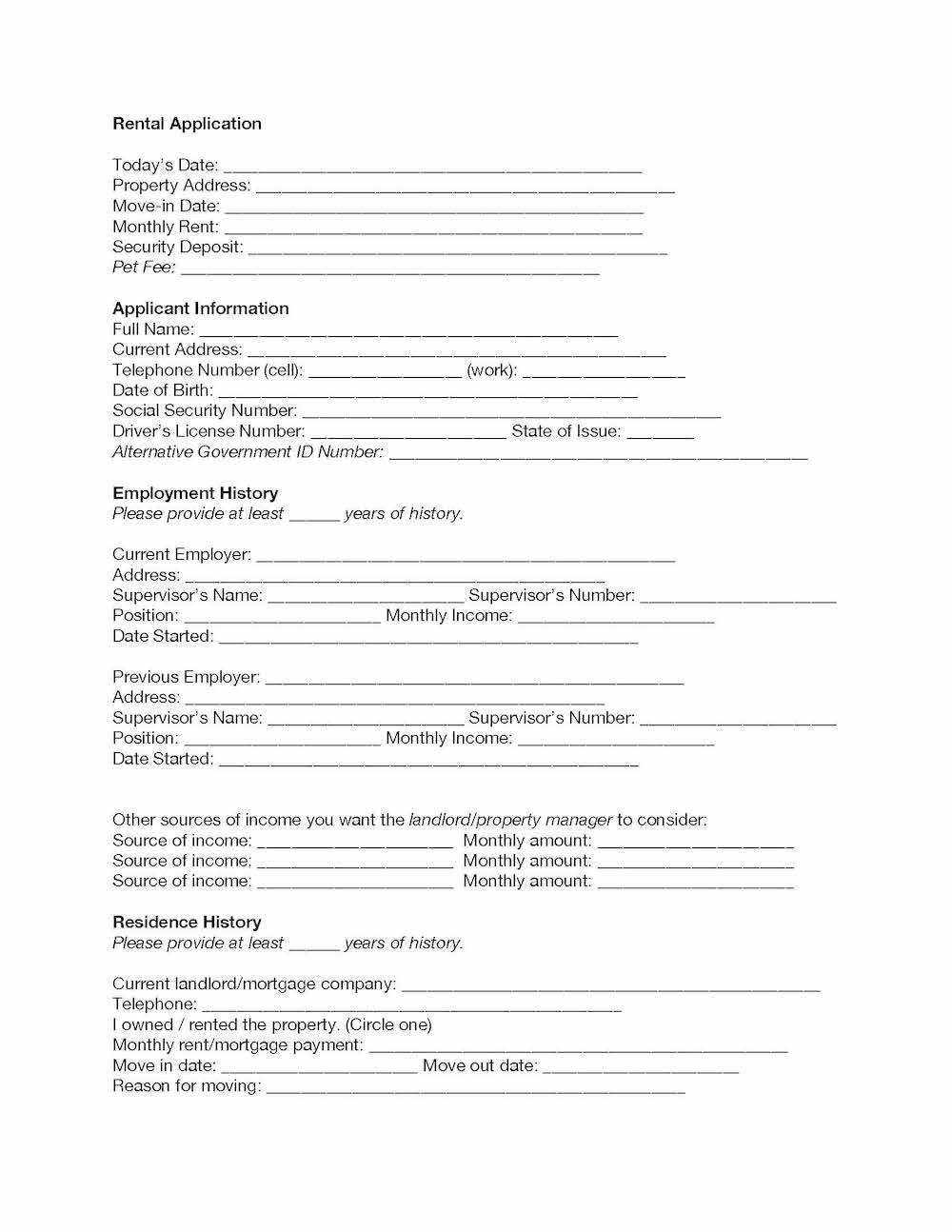
House rentals in Huntsville split between large property-management portfolios, the kind that list dozens of units on Zillow or Apartments.com under one brand, and individual landlords listing a single property. Portfolio managers typically run a standardized online application with a fixed credit and income threshold applied the same way to every unit. Individual landlords are more likely to negotiate move-in terms, pet deposits, or lease length directly, since they aren’t bound by a corporate screening matrix.
Pets, yards, and maintenance
Single-family rentals in Huntsville generally allow pets more often than apartment complexes do, since there’s no shared building policy to enforce. Lawn care responsibility is usually the tenant’s unless the lease states otherwise.
Lease length and deposit rules
Alabama caps a residential security deposit at one month’s rent, with room for additional charges tied to pets or documented added risk. Under Alabama Code §35-9A-201, a landlord has 60 days after the tenant moves out and returns possession to either refund the full deposit or send an itemized list of deductions; missing that window can make the landlord liable for double the original deposit. Alabama law also requires landlords to give at least 48 hours’ notice before entering the unit for non-emergency reasons, and a month-to-month tenancy generally needs 30 days’ written notice to end on either side.
How much can a Huntsville landlord charge for a security deposit?
Up to one month’s rent under Alabama law, with an allowance for extra deposit amounts tied to pets or added liability. The landlord then has 60 days after move-out to return it or provide an itemized deduction list.
Evaluating Huntsville as a rental investment
Huntsville’s citywide median home sale price reached $350,000 over the three months ending May 2026, up 3.5% year over year, at $175 per square foot, with homes averaging 54 days on market. Using that citywide price against the $1,500 median house rent reported by Zillow gives a rough price-to-rent ratio near 19.4, a $350,000 purchase price divided by $18,000 in annual rent. Ratios above roughly 15 to 20 generally lean toward renting being the more cost-efficient near-term choice for an occupant weighing that decision; for an investor, the same ratio signals a market priced for appreciation and long-term hold more than for immediate cash-flow yield.
| Neighborhood | Median sale price | Rough price-to-rent (vs. $1,500/mo citywide house rent) | Investor read |
|---|---|---|---|
| Northwest Huntsville | $231,000 | ≈12.8 | Favors cash flow, if rent holds near the citywide figure |
| Northeast Huntsville | $280,000 | ≈15.6 | Balanced |
| Southwest Huntsville | $315,000 | ≈17.5 | Leans appreciation over yield |
| Downtown Huntsville | $520,000 | ≈28.9 | Appreciation-driven; weak cash-flow case at citywide rent levels |
This table applies one citywide rent figure across every neighborhood because no clean per-neighborhood house-rent data exists, so the Northwest and Downtown numbers likely understate how much rent actually varies by area. Treat the spread as directional, not exact.
Is Huntsville a good rental market for investors right now?
The fundamentals support it: a workforce near 50,000 at Redstone Arsenal, a newly announced Space Command headquarters relocation, and home prices still meaningfully below the national median. The citywide price-to-rent ratio near 19.4 favors longer-hold appreciation plays over immediate high cash-flow yield, and that math is more favorable in Northwest and Northeast Huntsville than in Downtown.
Common mistakes when renting a house in Huntsville
- Choosing on price alone. A cheaper house in Northwest Huntsville can cost more in total once a 30-plus-minute commute to Redstone Arsenal or the research corridor factors in.
- Assuming a quoted “average rent” applies to the house you’re looking at. The number changes depending on whether apartments are blended in and how large the sample is.
- Applying apartment-market assumptions to a house rental. Pet policies, yard responsibility, and application flexibility often differ between a portfolio-managed house and an apartment unit.
- Missing the security deposit clock. Both landlord and tenant have obligations tied to Alabama’s 60-day post-move-out window, with real financial consequences on either side.
Comments