

Which track applies to you
Budgeting a move? The renter sections below, on full monthly cost, affordability, and negotiation, apply directly. Pricing or checking a rent on a property you own? Skip to the pricing section: it runs on comps and reserve percentages, not a household budget.
What sets the price beyond the address
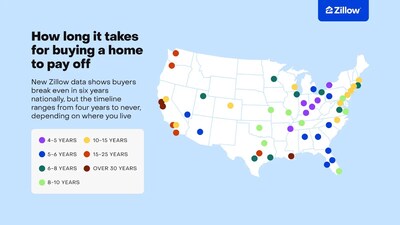
Location does more work than any other single variable, but “location” without numbers is where most rent guides stop being useful. The table below lines up five real, dated figures across methodologies that don’t usually get compared side by side.
| Market | Current 3BR average | Basis | vs. national apartment baseline |
|---|---|---|---|
| National, apartments | $2,125/mo | Zillow Rental Manager | baseline |
| National, single-family houses | $1,892/mo | Dwellsy IQ Rental Housing Index | 11% lower |
| New York State, apartments | $2,906/mo | RentCafe, June 2, 2026 | 37% higher |
| San Francisco, apartments | $6,695/mo | Zillow Rental Manager | 215% higher |
| Bergen-Passaic, NJ (government benchmark) | $2,835/mo | HUD FY2026 Fair Market Rent, gross rent | 33% higher |
The four-fold gap between the Bergen County government benchmark and San Francisco’s market average isn’t noise. It separates a regulated floor from an unregulated luxury submarket, and blending the two into one national average is where most published rent ranges stop making sense. New York’s RentCafe figure, last refreshed on June 2, 2026, sits well above the national apartment average, which is exactly what a high-demand state should show against a national line, not a sign the national figure is off.
Condition, age, and amenities move the number too, but by less than metro tier, and no dataset isolates their dollar effect the way the metro comparison above does. Treat a renovated kitchen or in-unit laundry as a tie-breaker between two listings in the same metro, not as an explanation for a $500 gap between two different cities.
Renting: the full monthly number, not just the rent line
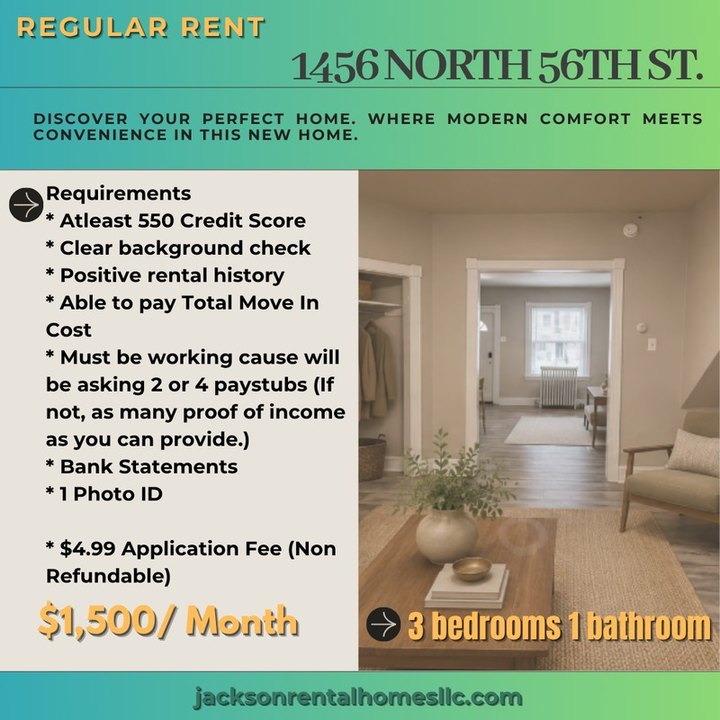
Base rent is the number everyone quotes and the number that most underestimates real cost. Electricity for a three-bedroom house runs $120 to $180 a month based on EIA consumption data; the rest of a mid-size home’s utility bundle, gas, water, sewer, trash, and internet combined, adds another $300 to $360. Renters insurance averages $23 a month nationally, ranging $16 to $36 by state. Pet rent, where it applies, adds $10 to $60 a month per pet on top of a one-time fee of $250 to $500.
| Cost item | Typical monthly range | Who typically pays |
|---|---|---|
| Base rent, 3BR house, national | $1,892 | Tenant, set at lease signing |
| Electricity | $120 to $180 | Tenant, unless bundled |
| Gas, water, sewer, trash, internet combined | $300 to $360 | Tenant, unless bundled |
| Renters insurance | $16 to $36 | Tenant, required by most leases |
| Pet rent (per pet, if applicable) | $10 to $60 | Tenant, only with a pet |
Add the full column and a renter comparing only the base-rent line across two listings can be off by $450 a month or more before either lease is signed. HOA dues, where a property carries them, aren’t in the table above: the amount is set by the individual association with no reliable national average to quote, so ask for the HOA’s current budget directly.
Is a security deposit counted separately from monthly rent?Yes. Deposits are typically capped by state law, often at one to two months’ rent, and held separately, refundable at move-out where required. It’s a one-time cost, unlike every line in the table above.
Checking the number against your income
The 30%-of-income threshold is the fastest way to test any rent figure against a paycheck. The median American renter’s rent-to-income ratio in 2026 was 26.87%, based on a full-time median weekly wage of $1,204, and 22.4 million renting households already spend more than 30% of income on rent and utilities combined, per iPropertyManagement’s rent research. Against the national house figure, $1,892 a month at that 30% threshold implies roughly $6,307 in monthly gross income, about $75,700 a year.
What if 3-bedroom rent is more than 30% of my income? Is that automatically a bad idea?Not automatically. The 30% threshold is a screening rule, not a law of personal finance, and it ignores debt load and what’s bundled into rent. It’s a starting point for a budget conversation, not a pass/fail test.
Pricing a rental: comps, the reserve fund, and the cost of guessing wrong
Comps matched on bedroom count, bathroom count, square footage, and proximity set the starting price, not a single citywide average. Once that number is set, two more figures determine whether it holds up over a full year of ownership.
Maintenance reserves commonly run 5% to 15% of gross rental income annually, per Rentastic’s maintenance-reserve guidance. On a $1,892 monthly rent, $22,704 a year, that’s $1,135 to $3,406 set aside annually, roughly $95 to $284 a month, before any major system failure happens. Property managers typically charge 6% to 10% of monthly rent, per Mynd’s cost breakdown, plus a placement fee equal to 50% to 100% of one month’s rent whenever the unit turns over.
This is where mispricing costs real money. Price the same house $150 above comps and it sits vacant an extra 30 days, matching the national average list-to-lease time reported by Apartment List, and the owner has given up a full month’s rent, $1,892, chasing a premium that would take over a year to recoup even if a tenant eventually paid it. Price it $150 under comps instead, and the owner forgoes roughly $1,800 over the following twelve months in guaranteed, uncontested income.
How often should a landlord recheck comps once a tenant is in place?At minimum, at every lease renewal. Asking rents move seasonally, and a rent competitive at signing can drift several percentage points behind the market within a year without anyone noticing.
Why the government’s number and the listing number don’t match
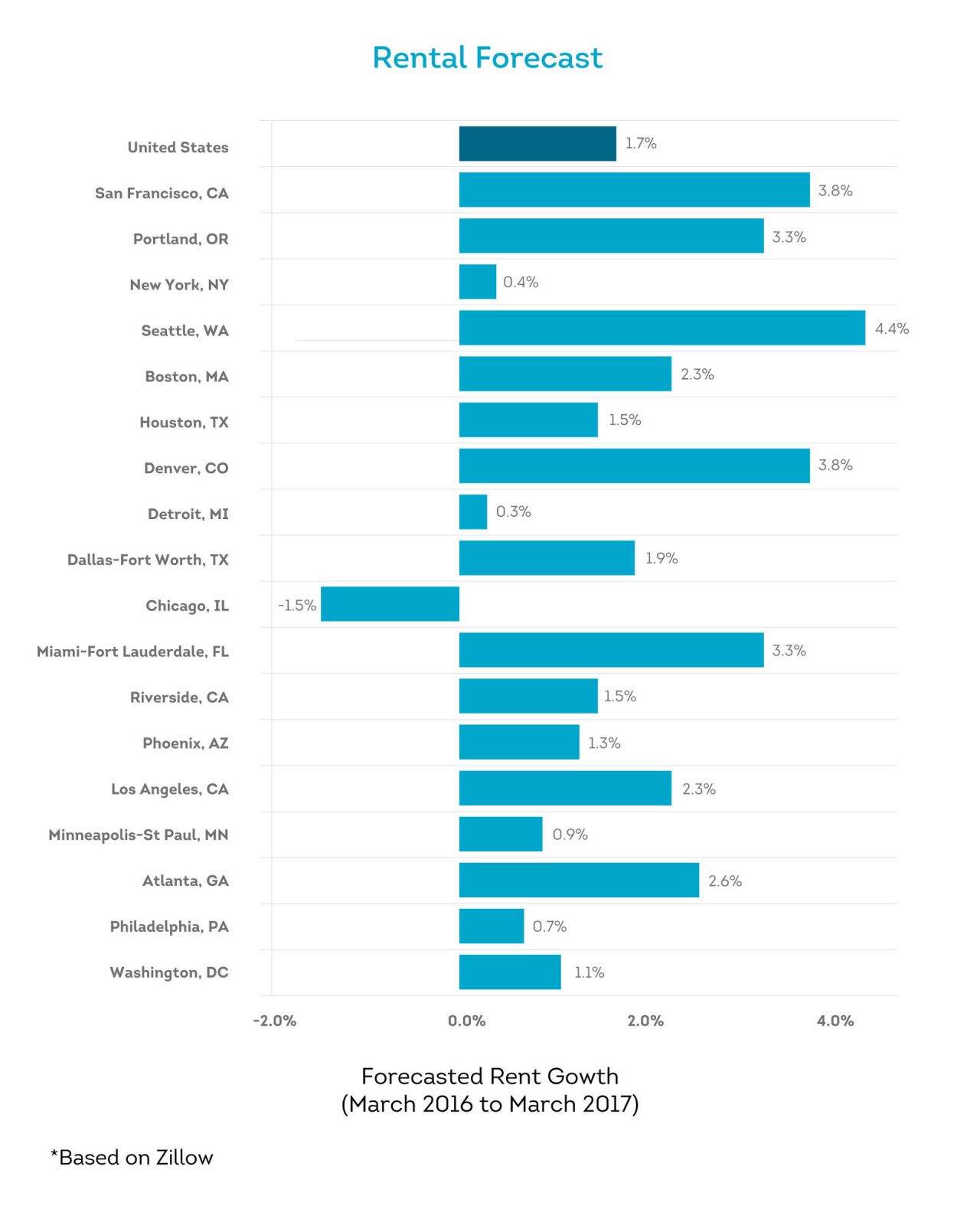
HUD’s Fair Market Rent is a gross-rent estimate set at the 40th percentile of standard-quality rents in an area, meaning 40% of comparable units rent at or below it, and it includes most tenant-paid utilities. Bergen-Passaic, NJ’s FY2026 three-bedroom FMR is $2,835, part of a national weighted-average FMR increase of 2.8% for fiscal year 2026, effective October 1, 2025, per Novogradac’s analysis of HUD’s release. An asking-rent tracker like RentCafe’s instead reports a straight average of active listings, refreshed monthly, with no percentile logic and no guarantee utilities are included.
Which number should I trust when comparing rent estimates?Match the number to the decision. Use FMR only for voucher or subsidy eligibility questions. Use a current asking-rent tracker, matched to the specific metro rather than the national figure, for an actual budgeting or pricing decision.
What moves the number when you negotiate
None of the figures below promise a specific discount; no source states one, so none is invented here. What they show is where leverage currently exists in the data.
| Signal | What it means | Current data point | How to use it |
|---|---|---|---|
| Metro rent falling year-over-year | Supply has outpaced demand locally | Austin −4.3%, San Antonio −5% YoY | Ask for a rent below the prior listed price, not a token discount |
| National vacancy above its recent range | Landlords compete harder to fill units | 7.2% national vacancy, June 2026 | Raise vacancy as the opening point, not “the market” in general |
| Long list-to-lease time on a specific unit | That unit has already sat unfilled | 30-day national average to lease | Ask directly how long the unit has been listed before naming a number |
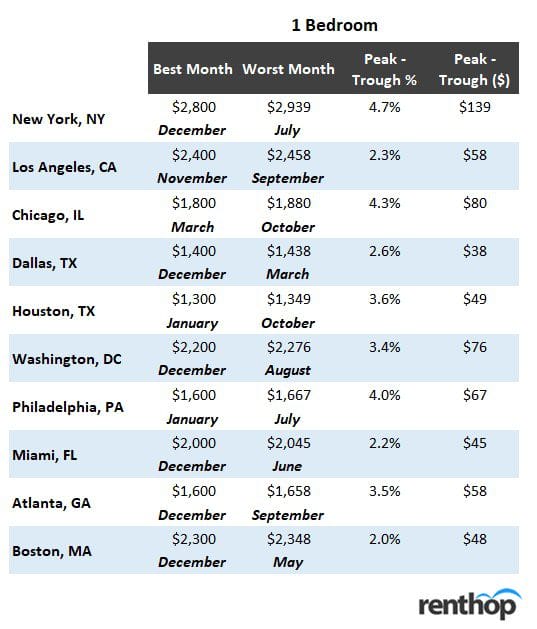
| Timing relative to the summer peak | Asking rents move with the season | 3BR asking rents up 3.8% over three months into summer 2026 | Move in fall or winter to avoid the seasonal premium |
All four figures above come from Apartment List’s June 2026 report and the ApartmentAdvisor National Rent Report. A renter walking into a lease conversation with one of these four numbers is arguing from data the landlord already has access to, which is a different conversation than asking for a discount because moving is expensive.
When 3-bedroom rents move during the year

Three-bedroom asking rents typically climb through the spring and summer moving season and soften afterward. The 3.8% three-month rise recorded into June 2026 sits squarely inside that seasonal pattern rather than outside it.
Comments