
Port Orange by neighborhood
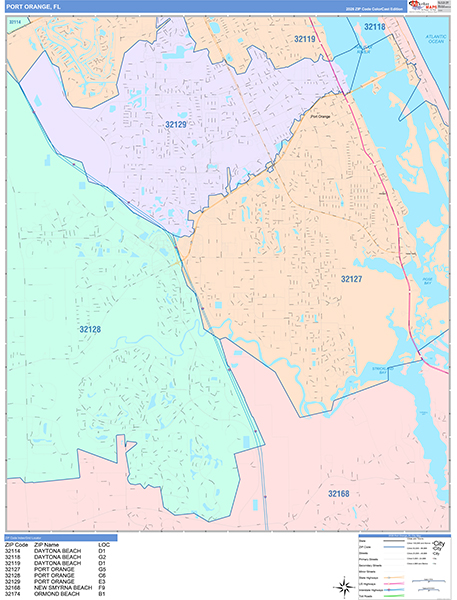
Prices here split less by square footage than by which of five distinct submarkets a listing sits in.
| Neighborhood | Recent price range / median | Typical HOA | Gated | Notes |
|---|---|---|---|---|
| Waters Edge | $490,000 to $500,000 median, single-family | $200 to $400/month | Yes | Master-planned; zoned for Sweetwater Elementary and Spruce Creek High |
| Spruce Creek Fly-In | $335,000 to $635,000, recent closed sales | Not independently published; verify per listing | Yes | Aviation community; hangar-access homes sell at the top of the range |
| Cypress Head | $352,000 to $385,000, community-wide | Not independently published; verify per listing | No | Built around a championship golf course |
| West Port Orange (older, non-master-planned) | Entry from roughly $280,000; new construction from $317,000 | Often $0; some voluntary associations near $25/year | No | Widest starter-home and new-construction inventory |
| 55+ communities (e.g., The Gardens) | $280,000 to $450,000 | $150 to $300/month | Varies | Age-restricted; lower price ceiling than family-zoned communities |
The HOA gap matters as much as the price gap for monthly budgeting: a Waters Edge buyer at $490,000 with a $300 HOA payment carries a different monthly obligation than a same-priced Cypress Head buyer with no HOA at all, before property tax even enters the math.
One recent example of what that range looks like on the ground: a 1,779-square-foot lakefront home on Waterway Place in Spruce Creek Fly-In closed at $489,000 in December 2025, near the top of the community’s typical range.
If waterfront and boating access matter most, Waters Edge and the lake-and-pond listings near it are the natural search. If hangar access and taxiway frontage matter, only Spruce Creek Fly-In qualifies, a genuinely rare amenity even within Florida’s aviation-community niche. If minimizing monthly carrying cost matters most, west Port Orange’s HOA-free inventory and $317,000 new-construction floor are the more relevant numbers than any citywide median.
What it actually costs to own here

Property tax, HOA dues, and flood insurance add roughly $250 to $900 a month on top of principal and interest for a typical purchase, and the exact figure depends heavily on homestead status and flood zone.
Volusia County’s combined millage across every taxing authority, county, city, school district, and special districts, averaged about 19.21 mills in 2025 per Florida TaxWatch’s county-average figure. The City of Port Orange’s own council-approved operating millage for fiscal year 2024-25 was $4.975 per $1,000 of taxable value, up from the prior year’s rolled-back rate of $4.6134. That city figure is only one slice of the total bill; county, school, and special-district millage stack on top of it.
For a homesteaded permanent residence, Florida’s homestead exemption removes up to $50,000 from assessed value: the first $25,000 applies to every taxing authority including schools, and the second $25,000 applies only to non-school levies on value between $50,000 and $75,000. The Volusia County Property Appraiser requires filing by March 1 of the year it takes effect. On top of the flat $50,000, the Save Our Homes cap limits future assessed-value increases to 3% a year, or the change in the Consumer Price Index, whichever is lower, for as long as the owner keeps the homestead. At the county’s typical combined millage, the exemption alone is worth roughly $829 a year.
The mistake buyers make most often here is reading the seller’s current tax line as a preview of their own bill. A long-time owner’s Save Our Homes cap resets to the purchase price the moment the property changes hands, so the new owner’s first-year bill is typically higher than what the listing sheet shows, sometimes by thousands of dollars.
Florida voters will decide in November 2026 whether to raise the flat homestead exemption to $250,000, a measure the Legislature passed on June 2, 2026; it needs 60% approval and would phase in at $150,000 for 2027 and the full $250,000 for 2028. School-district levies would still apply on top of any expanded exemption.
Non-homesteaded property, second homes and rentals, carries no Save Our Homes cap, only a 10% annual assessment-increase cap that does not apply to school-board millage. That distinction matters directly for the investor case below.
| Cost category | Typical amount | Note |
|---|---|---|
| Combined property tax, homesteaded | 0.93% to 1.0% effective rate of market value | Volusia County average, post-homestead |
| Homestead exemption savings | roughly $829/year | Flat $50,000 off assessed value, county-average millage |
| City of Port Orange operating millage, FY2024-25 | $4.975 per $1,000 taxable value | One component of the total bill |
| HOA dues | $0 to $500/month | Community-dependent; ranges reported by a local buyer’s agent, not a government source, so verify per listing |
| Flood insurance, Zone X | roughly $400 to $800/year | General NFIP low-risk pricing context |
| Combined state and local sales tax | 6.95% | Applies to purchases |
A $360,000 HOA-free west Port Orange home can carry a lower monthly total than a $340,000 Waters Edge home once a $300 HOA payment and any special-assessment risk are added.
Is there a deadline to claim the homestead exemption after buying? Yes: you must own and occupy the home as your permanent residence as of January 1, and file with the Volusia County Property Appraiser by March 1 of that same year to have the exemption apply.
Cost of living and the 2026 price trend
Four separate trackers reported four different median prices for Port Orange in the same March-to-April 2026 window, a $47,000 spread that matters more to a serious buyer than any single percentage claim about affordability.
| Source | Reported figure | Period | Direction |
|---|---|---|---|
| Redfin | $342,000 median sale price, $189/sqft | March 2026 | down 3.8% year over year |
| Zillow | $334,587 average home value | through May 2026 | down 5.9% year over year |
| Broker One, MLS-derived | $350,000 median sale price, $228/sqft, 612 sold | April 2026 | sales volume up from 486 a year prior |
| Homes.com | $381,000 median single-family list price; $463,548 average asking | current | asking prices down 2% over 12 months |
The spread traces mostly to methodology. Redfin and Broker One both report closed-sale medians for the same months and land within $8,000 of each other; Zillow’s figure is a modeled average across all owned homes rather than a sale price; Homes.com’s $381,000 reflects current asking prices on active listings, which run higher than what buyers are actually paying. A buyer comparing an agent’s quoted median against an online estimate should confirm which of these four definitions is in play before treating the gap as a market signal.
Schools by neighborhood
Port Orange’s public schools split sharply by rating even within a few miles of each other, and the numbers GreatSchools itself publishes show the gap plainly.
| School | Level | GreatSchools rating | Niche grade |
|---|---|---|---|
| Sweetwater Elementary | PK, K to 5 | 9/10 | A- |
| Cypress Creek Elementary | PK, K to 5 | 8/10 | not captured |
| Spruce Creek Elementary | PK, K to 5 | 7/10 | B+ |
| Silver Sands Middle | 6 to 8 | 5/10 | not captured |
| Spruce Creek High | 9 to 12 | 6/10 | A |
The elementary-level gap is the widest of the group: Sweetwater rates two full points above Spruce Creek Elementary on GreatSchools’ ten-point scale. A buyer whose top priority is elementary performance should confirm exact attendance-zone boundaries with Volusia County Schools before assuming a neighborhood name guarantees a specific assignment.
Which Port Orange elementary school has the highest GreatSchools rating? Sweetwater Elementary, at 9 out of 10, the highest of the elementary schools serving Port Orange addresses; Cypress Creek Elementary follows at 8 out of 10.
Safety and crime data
Crime-rate sites disagree sharply enough on Port Orange that citing any single number here would mislead more than it would inform.
Why do crime-rate websites disagree so sharply on Port Orange? Each applies its own population baseline and normalization method to the same underlying FBI-reported incident counts, producing different per-100,000 rates and different national comparisons from identical raw data.
Commute and access to Daytona and Orlando job markets
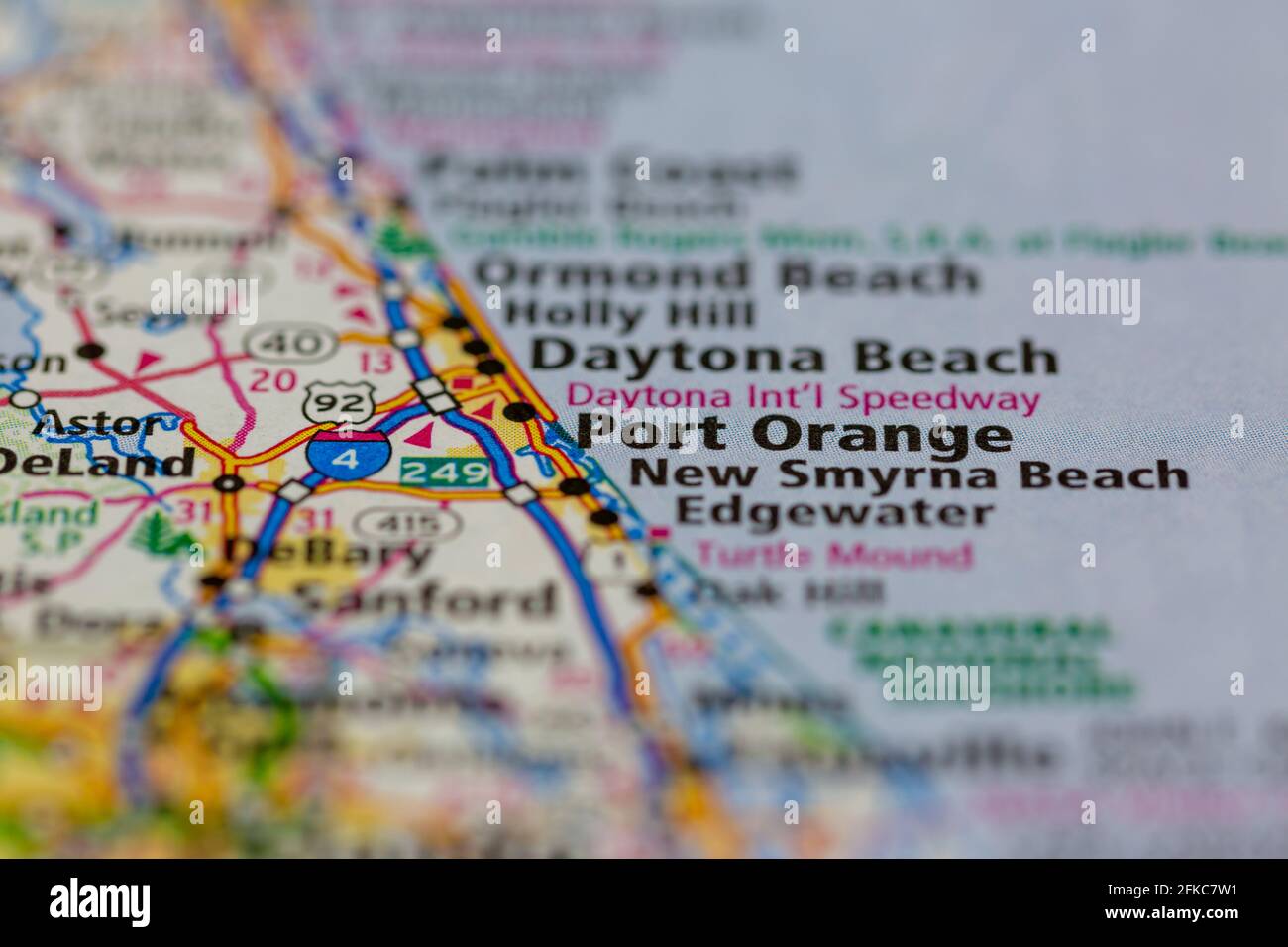
Port Orange sits about 6 miles and a 9-minute drive from downtown Daytona Beach, and roughly 60 to 65 miles from downtown Orlando, a drive that typically runs 60 to 90 minutes depending on the exact Orlando destination and I-4 traffic.
Daytona Beach International Airport sits about 5 miles from Port Orange, roughly a 15-minute drive, which also puts Daytona Beach Shores and Ponce Inlet beaches within the same window. No rated walkability or transit-frequency figure specific to Port Orange surfaced in this research; a buyer relying on public transit rather than a personal vehicle should verify Votran bus route coverage for their specific street before committing to a purchase.
Sales tax and the no-income-tax math
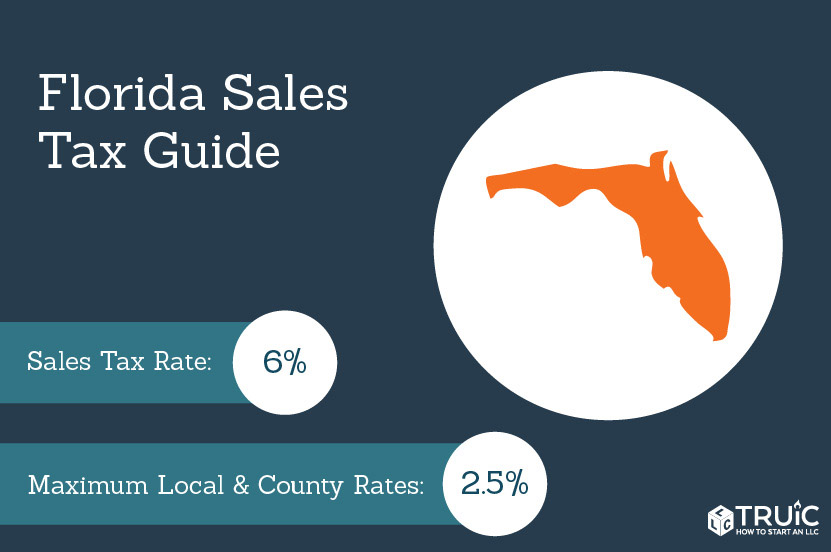
Florida levies no state income tax, and Port Orange purchases carry a combined state and local sales tax rate of 6.95%. For a household relocating from a high-income-tax state, that difference typically outweighs any gap in property tax rates between Florida cities. It taxes the transaction on goods and services, separate from the home’s sale price.
For investors: what the data shows and does not show
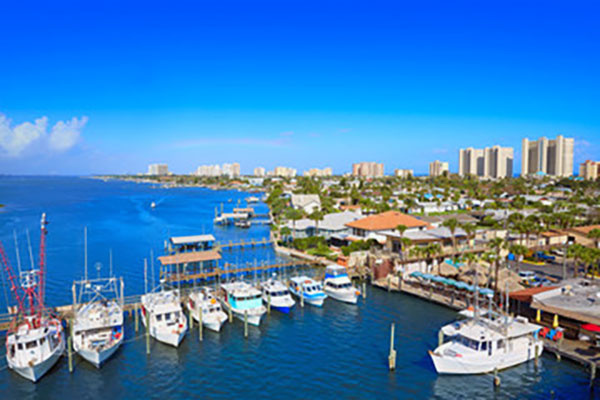
Publicly available data supports three investor-relevant facts for Port Orange in 2026: prices are down 3.8% to 5.9% year over year depending on the tracker, days on market stretched to roughly 75 to 78 days from 40 to 60 a year earlier, and sales volume rose to 612 closings in April 2026 from 486 a year prior. Read together, those three figures point toward a market that has shifted some negotiating leverage toward buyers, though that reading is an inference from the numbers above, not a separately published conclusion. A reliable rental-yield or cap-rate figure specific to Port Orange was not found in any dated, methodology-disclosed public source, and none is estimated here.
An investor needs an actual rent-comparable figure before running returns and should request current comparable-rental data from a local property manager or a paid market-data service, since a citywide estimate borrowed from the wider Daytona Beach metro would not be specific enough to trust.
Are Port Orange home prices rising or falling in 2026? Falling on a year-over-year basis by every tracker reviewed here: Redfin reports minus 3.8%, Zillow reports minus 5.9%, both for the twelve months ending in spring 2026.
Exceptions: flood zones, hurricane season, and who this city doesn’t suit
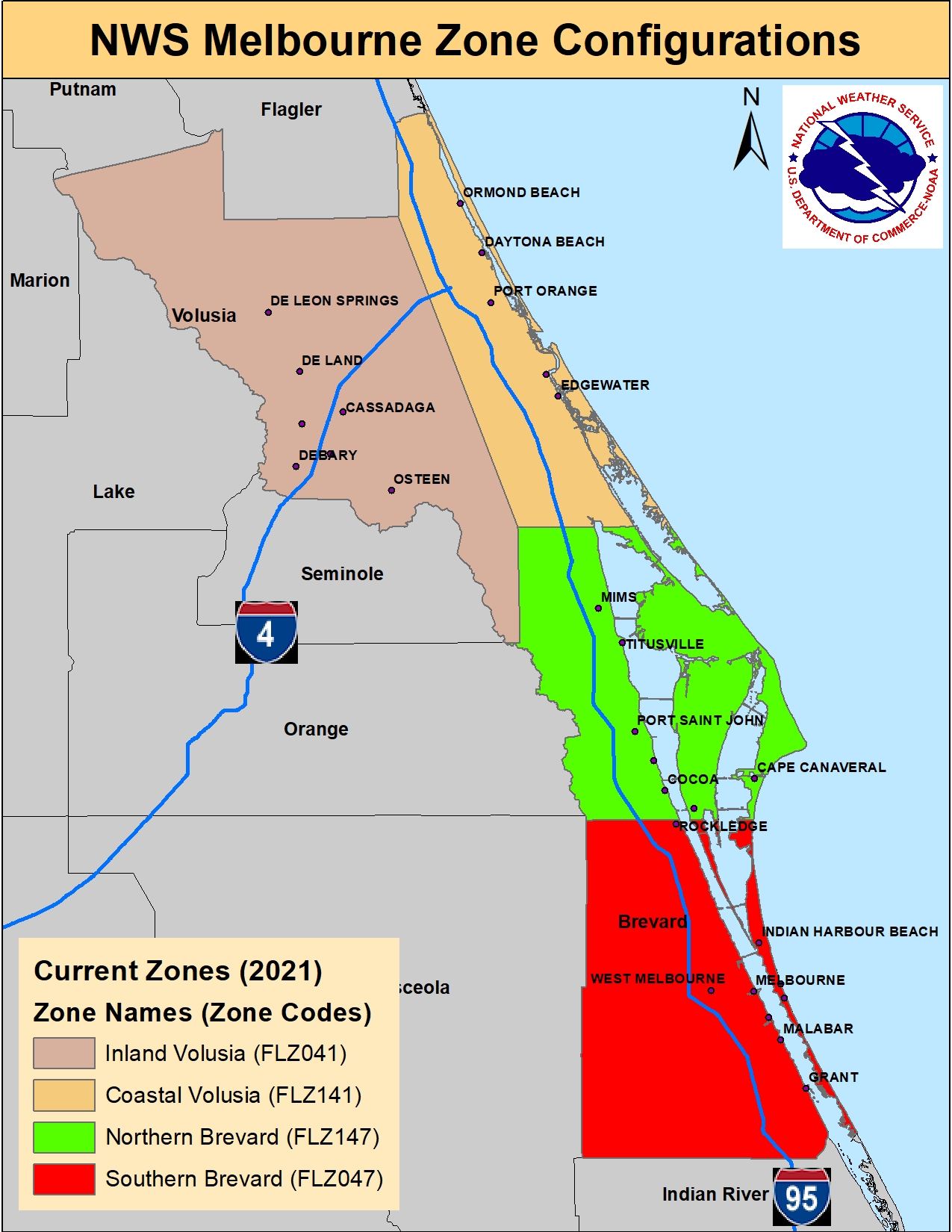
Most of Port Orange west of I-95 falls in FEMA Zone X, the lowest-risk designation, while areas along the Halifax River, the Intracoastal, and Spruce Creek itself carry Zone A or AE designations with mandatory flood insurance for federally backed mortgages.
Volusia County defines Zone A and AE as areas with at least a 1% annual chance of flooding; Zone VE adds storm-surge risk along the coast. Flood zone is parcel-specific, not reliably inferable from a neighborhood name, so any specific address should be checked against FEMA’s Flood Map Service Center before contract. General National Flood Insurance Program guidance puts low-risk-zone premiums as low as $400 a year; high-risk coastal premiums run into the thousands.
Port Orange does not suit a buyer who wants to live without a car: no walkability or frequent-transit data specific to the city surfaced in this research, and the neighborhood data above shows the city’s most amenity-dense communities are still built around gated, auto-oriented street patterns. A buyer expecting beachfront pricing at west-side Zone X insurance costs is looking for a property type Port Orange does not sell.
Who shouldn’t move to Port Orange? Buyers who need to live without a car, and buyers who want beachfront proximity at west-side insurance costs; both exist in the wider Daytona Beach metro but not from the same Port Orange address.
Comments