
What Homes Cost Right Now
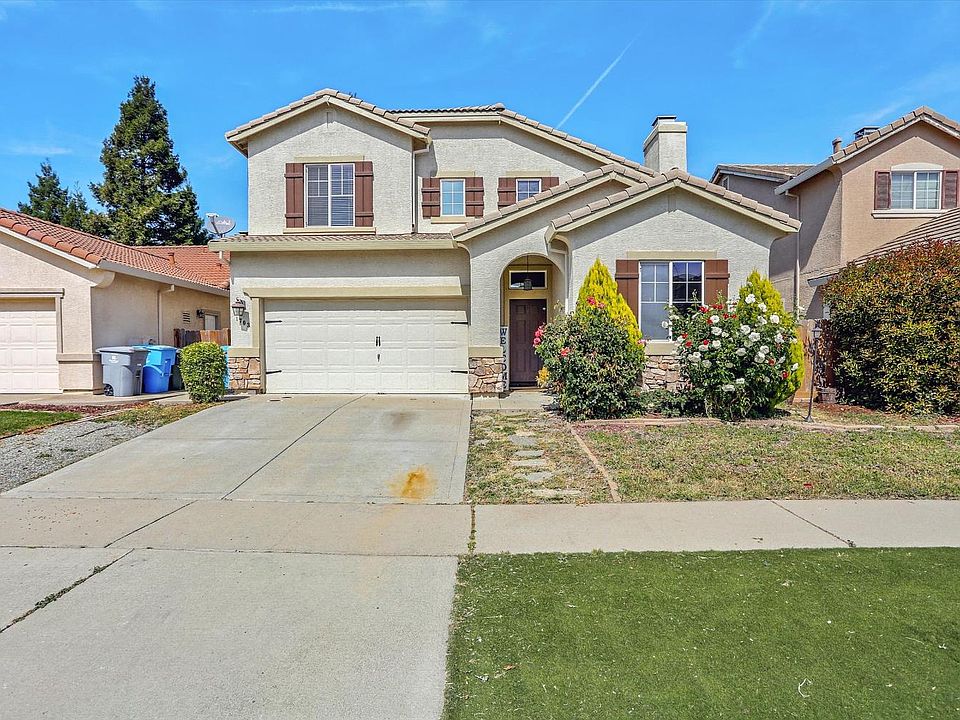
Two listing services disagree on the exact median, which is itself useful: Movoto put the July 2026 median list price at $544,000, or $238 per square foot, down 6% from the prior month and 5% from a year earlier, while Redfin’s sold‑price median for May sat at $538,678. The gap is normal; list price and closed price rarely match exactly, and both point the same direction: a market that cooled from its spring peak. Movoto’s own affordability math assumes 25% down and treats housing as 35% of monthly income, landing on roughly $101,000 in required annual income; Homes.com runs the same exercise with 20% down at a 6.35% rate and the more conservative 28% rule, and gets $115,000. Neither number is wrong; they’re answering slightly different questions, and a buyer should run their own numbers against their actual down payment and rate rather than borrowing either figure as-is.
The community itself is new by design. Construction began in 2004, and local brokers describe it as an affordable alternative for people commuting to Sacramento or Roseville jobs, which shapes who’s actually bidding on these listings: dual-income commuter households, not retirees or investors chasing cash flow.
New construction vs. resale, July 2026
| Segment | Price range | Size | Notes |
|---|---|---|---|
| Resale (all types) | $409,900 to $725,000 | Varies | Median $238/sqft; oldest homes date to 2004 |
| Cresleigh Homes (new) | $454,000 to $493,990+ | 1,542 to 2,836 sqft | Entry-tier new construction |
| Richmond American (new) | $469,000 to $690,460 | 1,542 to 3,497 sqft | Widest size range of the active builders |
| Lennar (new) | $491,040 to $650,562 | 1,832 to 3,308 sqft | Multiple active communities, frequent price cuts on inventory homes |
| KB Home (new) | $553,591 to $664,996 | 2,421 to 3,427 sqft | Priced above the resale median for comparable square footage |
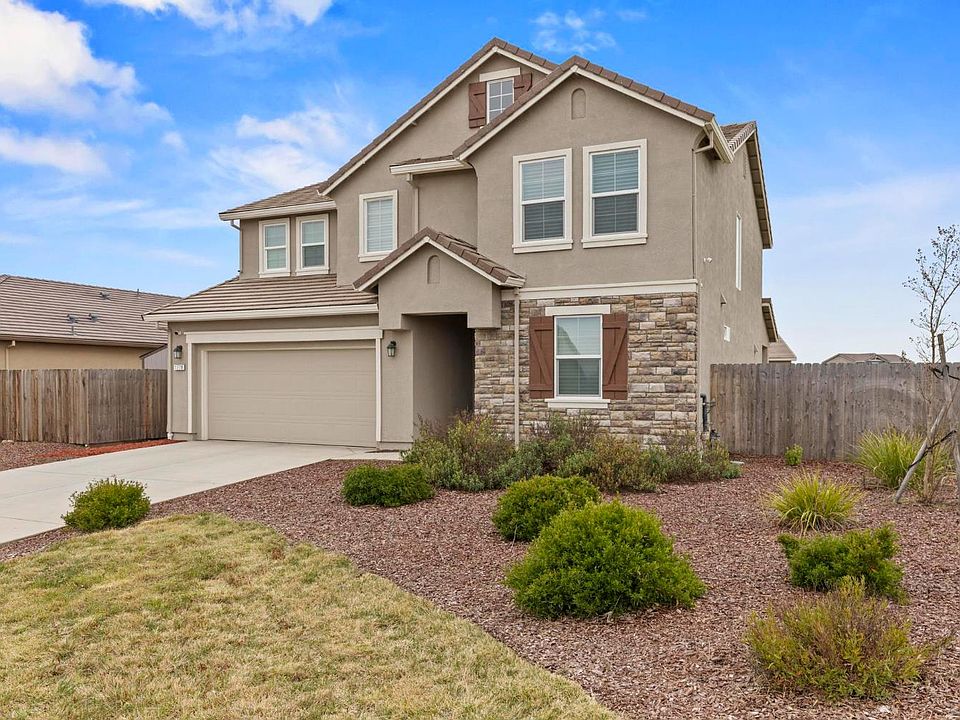
Sourced from builder-fed new-home listings for zip 95961. The spread that matters here is not new versus resale in the abstract; it’s that KB Home’s floor plans start above where most resale listings top out, while Cresleigh’s start below the resale median. Two buyers both shopping “new construction in Plumas Lake” can end up $100,000 apart before either picks a lot premium or upgrade package.
Is now a good time to buy in Plumas Lake? Days on market dropped from 99 to 52 between February 2025 and February 2026, and prices per square foot fell 5 to 6% year over year on the list side even as the median sale price ticked up slightly. That combination, faster sales at flatter or falling per-square-foot prices, usually favors buyers who can move quickly on price rather than sellers holding out for last year’s numbers.
The Real Cost of Buying Here: Mello‑Roos and Special Taxes
This is the number every competitor guide skips. Plumas Lake sits inside several overlapping Mello‑Roos Community Facilities Districts and county special-assessment zones, and which ones apply to a given parcel depends on the subdivision and the year it was built, not on the general area. According to Yuba County Supervisor Gary Bradford’s office, which publishes the itemized breakdown, here’s what actually shows up on tax bills:
| Assessment | Typical annual range | Who pays it |
|---|---|---|
| River Oaks South IA (Mello‑Roos) | $1,340 to $1,510 (2023 figures, varies by builder) | Only the three River Oaks South subdivisions east of Lennar’s community |
| RD784 levee/drainage assessment | $200 to $560 | Most parcels, scaled to lot and home size |
| CSA66 park and services assessment | Roughly $400+, indexed to inflation from a 2008–09 base | Countywide new-development parcels |
| CSA70 law enforcement assessment | Roughly $200 | Homes sold primarily after 2020 |
| WUHSD GO Bond 2012 and 2016 | About $85 per $500,000 of assessed value | Parcels within Wheatland Union High School District |
River Oaks South residents don’t pay the PLESD, TRLIA, or OPUD 2002‑1 CFDs that apply elsewhere in Plumas Lake, so two homes a few blocks apart can carry noticeably different annual add-ons. None of this shows up in a Zillow or Redfin estimate; it only appears on the preliminary title report and the seller’s Natural Hazard Disclosure package, which is why it needs to be pulled for the specific parcel, not assumed from a neighbor’s bill or a listing agent’s summary.
What is Mello‑Roos and how much does it add to my payment? It’s a special tax that funds infrastructure the base 1% property tax doesn’t cover, layered on top of your regular bill. In Plumas Lake it ranges from roughly $200 a year for older, already-built-out parcels to over $1,500 a year in the newer River Oaks South phase. On a $2,680 monthly payment, even the higher end adds only about $125 a month, but it’s a cost that never shows up in a mortgage pre-approval unless it’s asked for directly.
Flood Risk: Two Numbers That Don’t Agree
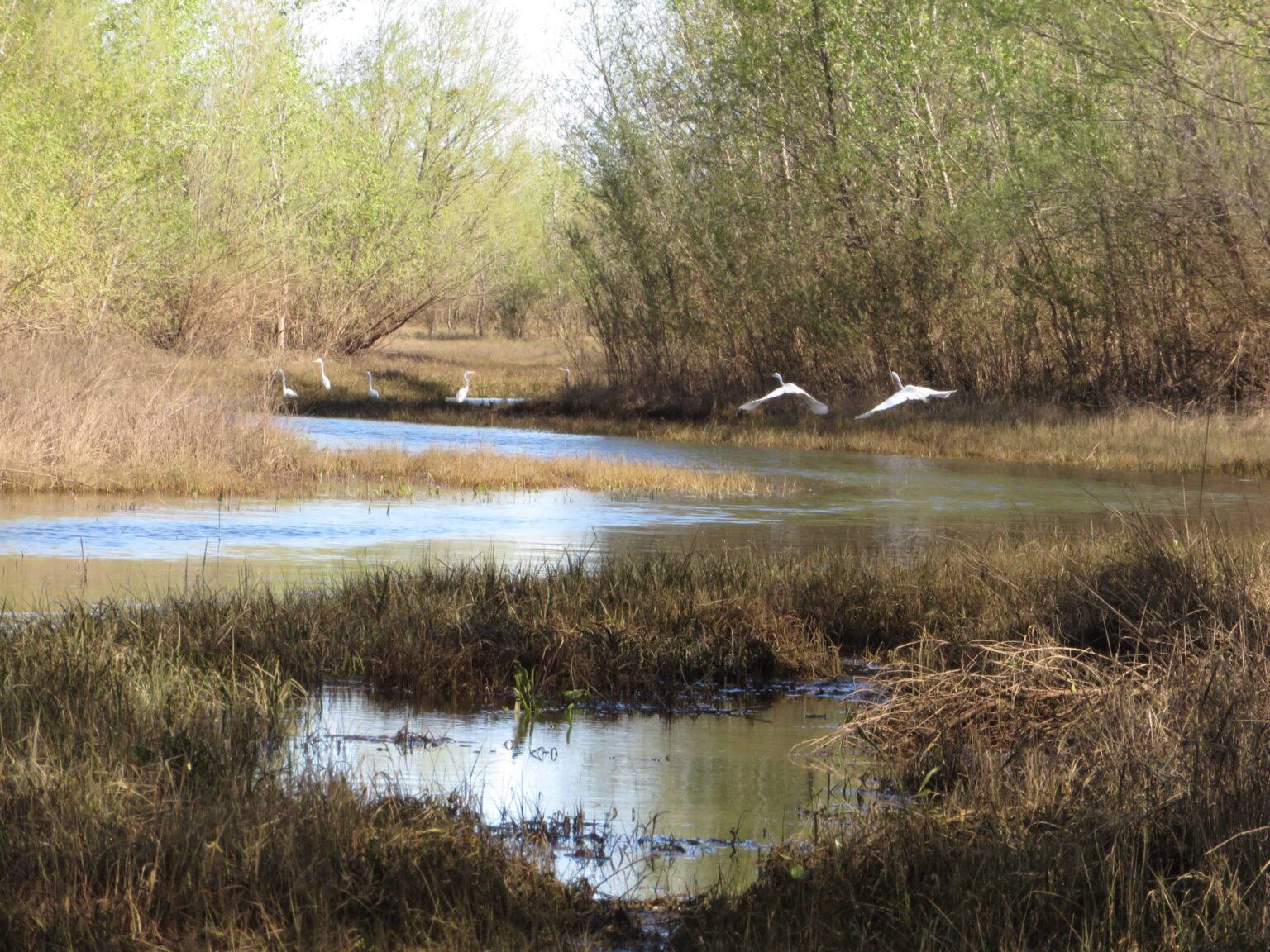
Plumas Lake sits on a former lakebed near the confluence of the Feather and Bear Rivers, and its flood status has been actively contested, not settled trivia. In the early 2010s, Yuba County temporarily capped new building permits in the area while levee repairs were underway, lifting the cap only after federal reviewers accepted the completed work. That levee investment eventually paid off on paper.
Is Plumas Lake really at risk of flooding? The area has flooded before the levee upgrades (notable events were recorded in 1986 and 1997), and the surrounding levee system now maintains over 30 miles of protection with an internal drainage network of pump stations and detention basins. That infrastructure lowered the risk considerably; it didn’t eliminate it, which is exactly why the two figures above coexist instead of agreeing.
Commute Reality by Destination
Generic livability sites often quote a single unnamed commute number. The actual drive to downtown Sacramento is 32 miles, taking 32 to 39 minutes without traffic, and that range widens noticeably during peak hours on the two-lane stretches of Highway 70. A federally funded fix is already underway: Yuba County was awarded a $35.5 million grant to extend Plumas Lake Boulevard over Highway 70 via two new bridges, with construction starting in 2026 and completion targeted for late 2028 or early 2029, which will also eliminate a rail-crossing bottleneck that currently forces local traffic through neighborhood streets during events at the nearby amphitheater and casino.
| Destination | Distance | Typical drive time |
|---|---|---|
| Downtown Sacramento | 32 miles | 32 to 39 minutes off-peak |
| Yuba City / Marysville | 10 to 12 miles | Under 20 minutes |
| Sacramento International Airport | 28 miles | About 30 to 40 minutes by car |
For buyers without a car in the household, Yuba-Sutter Transit’s Route 70 runs commuter express service from the Plumas Lake Park and Ride, with the first departure at 5:42 a.m. and the last return at 6:05 p.m., a narrow enough window that it only really works for a standard daytime office schedule, not shift work or late meetings.
How far is the commute to Sacramento, really? 32 miles and roughly 35 minutes in light traffic, closer to 50 to 60 minutes during the evening rush on Highway 70’s two-lane segments. The Plumas Lake Boulevard bridge project won’t shorten that distance, but it’s designed to remove the rail-crossing detour that currently adds to local trip times, not the Sacramento commute itself.
Grocery and Retail Access

For two decades this was the community’s most consistent complaint, and it was accurate: CBS Sacramento reported that the nearest full-service grocery stores sat 8 to 10 miles away, requiring a highway trip even for produce. That changed on the ground, not just on paper: the area broke ground on Holiday Market, a 30,000-square-foot natural-and-organic-focused store from North State Grocery, its first full-service grocery store since the community began construction in 2004.
Schools, Compressed

Plumas Lake sits across two districts. In the Plumas Lake Elementary School District, Rio Del Oro Elementary rates 5 out of 10 on GreatSchools, and Cobblestone Elementary rates the same, 5 out of 10. High schoolers feed into Wheatland Union High School, rated 7 out of 10, the strongest school in the local set.
| School | Grades | GreatSchools rating |
|---|---|---|
| Rio Del Oro Elementary | K–5 | 5/10 |
| Cobblestone Elementary | K–5 | 5/10 |
| Riverside Meadows Intermediate | 6–8 | 5/10 |
| Wheatland Union High School | 9–12 | 7/10 |
The jump at the high school level is the one worth planning around if a family is choosing a lot based on eventual grade-band assignment, since it’s a bigger gap than anything separating the elementary options from each other.
For Investors and Landlords
None of the four guide-style pages covering this zip code address landlord economics; the closest any get is a bare population count. Current listings put the average rental house in Plumas Lake at $2,684 a month, with a full range of $625 to $3,410, and three-bedroom single-family rentals specifically running $2,000 to $3,100. Against a $538,678 median purchase price, a $2,684 average rent works out to roughly a 6% gross rent-to-price ratio before taxes, insurance, Mello‑Roos, and vacancy, which is a workable but unremarkable number for a buy-and-hold investor, not the kind of yield that justifies overlooking the CFD math above.
- Where the math tends to work: newer 3‑ and 4‑bedroom homes in lower‑Mello‑Roos zones, rented to the same dual‑commuter household profile the area was built for.
- Where it tends not to: new‑construction purchases at the top of a builder’s current price range, since the rent ceiling in this market doesn’t move as fast as new‑home list prices do.
Is Plumas Lake a good rental market? The roughly 6% gross rent-to-price ratio is workable for a long-term hold but not a standout, and it assumes a buyer already knows which CFD zone a property sits in before running the numbers, since a $1,500-a-year Mello-Roos bill on the River Oaks South side changes the net yield more than a typical maintenance reserve would.
Common Mistakes Buyers and Sellers Make Here

- Comparing a resale “affordable” price tag to new construction without checking the CFD zone. A $460,000 resale in an older, lower-assessment zone and a $460,000 new build in River Oaks South are not carrying the same annual tax load.
- Assuming a flat commute number applies to every job location. The Sacramento figure and the Yuba City figure differ by nearly 20 minutes each way; picking a lot without checking the actual workplace-to-lot drive is a common regret among recent buyers.
- Treating the new grocery store as already open when pricing in convenience. Groundbreaking is not the same as a stocked shelf; buyers moving in during construction should still plan on the 8‑to‑10‑mile trip for groceries.
- Skipping the parcel-specific FEMA lookup because the community “isn’t really a flood zone.” The 2019 accreditation and the current long-term risk model measure different things, and a lender can still require coverage regardless of either one.
Every one of these mistakes has the same root cause: treating Plumas Lake as a single, uniform price tag and risk profile when it’s actually a patchwork of subdivisions, each with its own tax district, construction year, and distance from the amenities that are still catching up to the population.
Comments