

Why every source disagrees on price and population
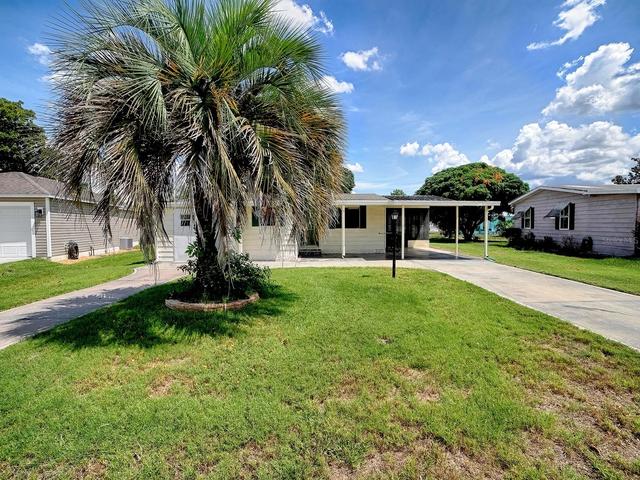
Four numbers circulate for “Liberty City,” and none of them measure the same thing.
| Source | Stated figure | What it’s measuring | As of |
|---|---|---|---|
| Zillow, via The Miami Times | ~$430,000 average home value | Editorial “Liberty City” polygon, zip-blended | March to May 2026 |
| Zillow, 33127 subset, same source | $660,000+ median | Zip code 33127, overlapping Wynwood and Little Haiti | March 2026 |
| Redfin | $575,000 median sale price | Miami-Dade County as a whole | March 2026 |
| U.S. Census Bureau ACS 5-year estimates, via Point2Homes | 20,283 residents, $41,052 median household income | A tract composite built specifically for “Liberty City” | 2019 to 2023 |
The county figure isn’t a Liberty City number at all: it’s a benchmark showing how far the neighborhood average sits below the metro median. The zip-level figure is real but pulls in higher-priced blocks outside what most residents would call Liberty City. This isn’t new: the 2000 Census produced two different population counts for the same name, 23,009 under one boundary and 43,054 under a wider one, long before Zillow or Redfin existed. Ask which blocks a figure covers before comparing it to another source’s number.
Which price figure should I actually use when making an offer? Neither the $430,000 neighborhood average nor the $660,000 33127 median describes any single property. Pull the Zillow or Redfin estimate for the exact parcel, then check it against recent sales on the same block through the Miami-Dade Property Appraiser’s comparable-sales tool, since block-level prices vary more than either headline number suggests.
History and the name

The name traces to the 1930s relocation of Black residents from an overcrowded Overtown into a new development built under the New Deal, which opened in 1937 as one of the first public housing projects for African Americans in the Southern United States. The site is central to nearly every other data point in this guide.
Housing stock and prices by type
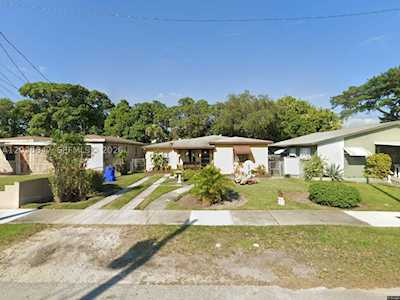
The dominant stock is older single-family and duplex construction, concrete block built mostly before the 1970s, with newer infill on individual lots near Charles Hadley Park. A typical house sold for roughly $150,000 in 2018 and $350,000 to $450,000 today, a shift The Miami Times attributes largely to investor demand and elevation. New construction has moved further: a four-bedroom build near Charles Hadley Park listed at $925,000. Flipping is now a named business model here, not an incidental trend: Crusader Capital Group has purchased homes in the $300,000 to $360,000 range and resold them for $560,000 to $600,000 after renovation, per the same reporting; the firm didn’t respond to an interview request.
Liberty Square: the nine-phase timeline
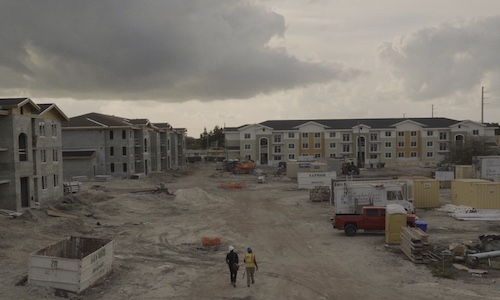
Liberty Square is a 57-acre, nine-block Miami-Dade County site built in 1937. Its rebuild, Liberty City Rising, is a nine-phase project led by Related Urban Development Group with Miami-Dade County, and it is the single biggest driver of the price data above.
| Phase | Status | Units | Milestone |
|---|---|---|---|
| Phase 1 | Completed | 204 | Completed July 2019 |
| Phase 2 | Completed | 204 | Part of the ~$400M initiative |
| Phase 3 | Completed | 192 | Final phase of original-resident relocation |
| Phase 4, Serenity at Liberty Square | Completed | 193 | Completed 2025; added the Jessie Trice Healthcare Center |
| Phases 5 and 6, Oasis and Soul at Liberty Square | Broke ground | 540 (408 family, 132 senior) | Groundbreaking February 27, 2026 |
Four completed phases have delivered 790 homes so far, housing more than 793 families, including more than 245 legacy families who returned to new units, per a Miami-Dade County release reported by The Miami Times. All units in phases five and six will serve households at or below 80% of area median income. The county’s release puts the full nine-phase build-out at 1,900 homes; a 2025 industry account cited 1,800, a small discrepancy worth flagging rather than smoothing over.
What is currently under construction at Liberty Square? Phases five and six broke ground February 27, 2026: 408 family units and 132 units for seniors, together adding 540 homes to the 790 already delivered across the first four phases.
Zoning: what T4 permits here
Liberty City sits inside the City of Miami, so the applicable code is Miami 21’s transect system, not Miami-Dade County’s Chapter 33, which is the source of designations like RU-2 and applies only in unincorporated areas. Most parcels here fall under T3 or T4, with T4 split into T4-L, T4-O, and T4-R sub-districts.
| Zone | What it permits | Implication for a buyer |
|---|---|---|
| T3 | Detached single-family homes | Assembling adjacent lots for denser building requires unity-of-title, not a simple rezone |
| T4-L / T4-O | Townhouses, small multifamily, live/work units | The zone most flips and small new-construction infill actually use |
| T5 | Mixed-use, ground-floor commercial on primary frontages | Applies mainly along corridors, not interior residential blocks |
| Live Local Act overlay on T4-L/T4-O | Bonus floor-lot ratio and reduced parking for income-restricted units | Lets a developer build denser than base T4 allows if a share of units serves workforce-income tenants, treated as qualifying by right under the City of Miami’s 2024 guidelines |
A parcel’s exact sub-district changes what’s buildable enough that a zoning verification letter is worth the fee before an offer on anything beyond a straightforward single-family resale.
Financing, flood exposure, and CRA eligibility
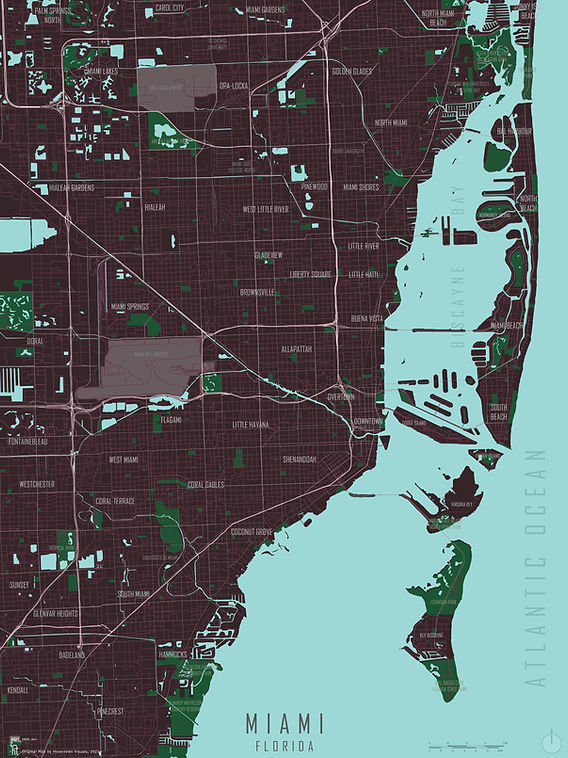
Liberty City sits atop the Biscayne Ridge, roughly 10 to 15 feet above sea level, well above Miami’s low-lying coastal neighborhoods, the elevation advantage behind what researchers call climate gentrification here. That lowers flood exposure relative to Miami Beach or Brickell without eliminating it: FEMA flood zone letters are assigned parcel by parcel, so a specific address needs checking against Miami-Dade County’s flood zone map tool before pricing insurance into an offer. No independently published, address-level insurance premium figure for this neighborhood currently exists to cite here.
Median household income here is $41,052, well below the city and county figures. Under CRA rules, a tract generally qualifies as low-to-moderate income when its median family income falls below 80% of the area median, a threshold this neighborhood’s income level suggests some tracts would clear. But eligibility is determined tract by tract through the FFIEC’s address geocoder, not by neighborhood name, and a neighborhood this size can straddle tracts with different designations. A buyer chasing down-payment assistance should run the specific address through the geocoder rather than assume the whole neighborhood qualifies.
Naomie and Errick Pigatt bought their four-bedroom home about 13 years ago for roughly $130,000 through a first-time homebuyer program backed by the Liberty City Community Revitalization Trust, the kind of program-assisted purchase this financing landscape was built to enable.
Is Liberty City eligible for down-payment assistance or CRA-linked lending? Parts of it likely are, given median household income well under the metro figure, but eligibility is tract-specific. Run the exact address through the FFIEC geocoder or a lender’s LMI lookup before assuming.
Schools

Miami-Dade County Public Schools serves the area, with Charles R. Drew K-8 and Miami Northwestern Senior High most commonly cited as neighborhood-zoned options. Confirm current attendance boundaries and any magnet or choice-program eligibility directly with the district, since boundaries shift independently of the sales cycle above.
Safety, block by block
ZIP 33147, covering much of Liberty City, recorded 31 homicides in 2020. By 2024 that had fallen to five, moving the zip code from the county’s highest homicide count to tenth, according to a Scaling Safety analysis of medical examiner data reported by WLRN. Redevelopment-phase blocks, corridor blocks, and untouched interior blocks inside the same zip code can carry different risk profiles, and a five-year homicide count is one indicator among several.
How does that decline compare with the rest of Miami-Dade? The same report found a 39% countywide drop in homicides and a 42% drop in firearm-related ones, so 33147’s fall from first to tenth place reflects a broader trend, not an isolated local anomaly.
Who should buy here now
Owner-occupants face the smallest immediate financing friction: current resale prices of $350,000 to $450,000 and possible LMI-linked assistance, address-dependent, make this closer to a standard purchase than an edge case.
Buy-and-hold investors should weight the redevelopment timeline directly. Phases five and six won’t complete for several years, and appreciation tied to the build-out is a multi-year thesis.
Renters and prospective movers should treat the zip-level homicide decline as real and still ask about the specific block, since a zip-wide number can’t resolve variance inside a nine-phase construction site.
Agents representing buyers here have the clearest job: reconcile whichever price a client has already seen against the boundary it actually measures, before quoting a number.
Comments