
Where Jupiter Island Actually Is, and Who Governs It
The barrier island called Jupiter Island runs from the Palm Beach–Martin county line north to the Hobe Sound National Wildlife Refuge, according to Wikipedia’s geographic summary of the island. The incorporated Town of Jupiter Island, established by the Florida Legislature in 1953, occupies only the Martin County portion: 1,643 acres, nine miles of oceanfront, run by a Town Council and roughly 100 staff across Public Safety, Public Works, Building and Zoning, Finance, and Administration, per the Town’s own Community Profile. The South Martin Regional Utility, which the town also operates, supplies water and wastewater to the island and to the Hobe Sound mainland.
South of the town line, the island continues into Palm Beach County. Jupiter Inlet Colony, a separate incorporated town, occupies the southern tip. A handful of unincorporated Palm Beach County parcels sit between the Tequesta Towers and Blowing Rocks Condo buildings and north of Coral Cove Park, per a geographic breakdown of the island’s jurisdictions. None of these fall under the Town of Jupiter Island’s code at all; they answer to Palm Beach County or to Jupiter Inlet Colony’s own government.
Population figures illustrate the same confusion in miniature. The 2020 Census counted 804 residents; the town’s current published estimate is about 820 permanent residents with a seasonal population near 2,000, per the Community Profile above. Figures like 871 that circulate on brokerage sites typically come from a different data vendor’s snapshot of the same area, not from a competing headcount.
How long is Jupiter Island, really? The incorporated Town of Jupiter Island runs nine miles of ocean frontage on 1,643 acres. Broker listings citing 11 or 17 miles are usually describing the full barrier island, including Jupiter Inlet Colony and the Palm Beach County sections south of the town line, not the town itself.
What It Costs to Buy and Own
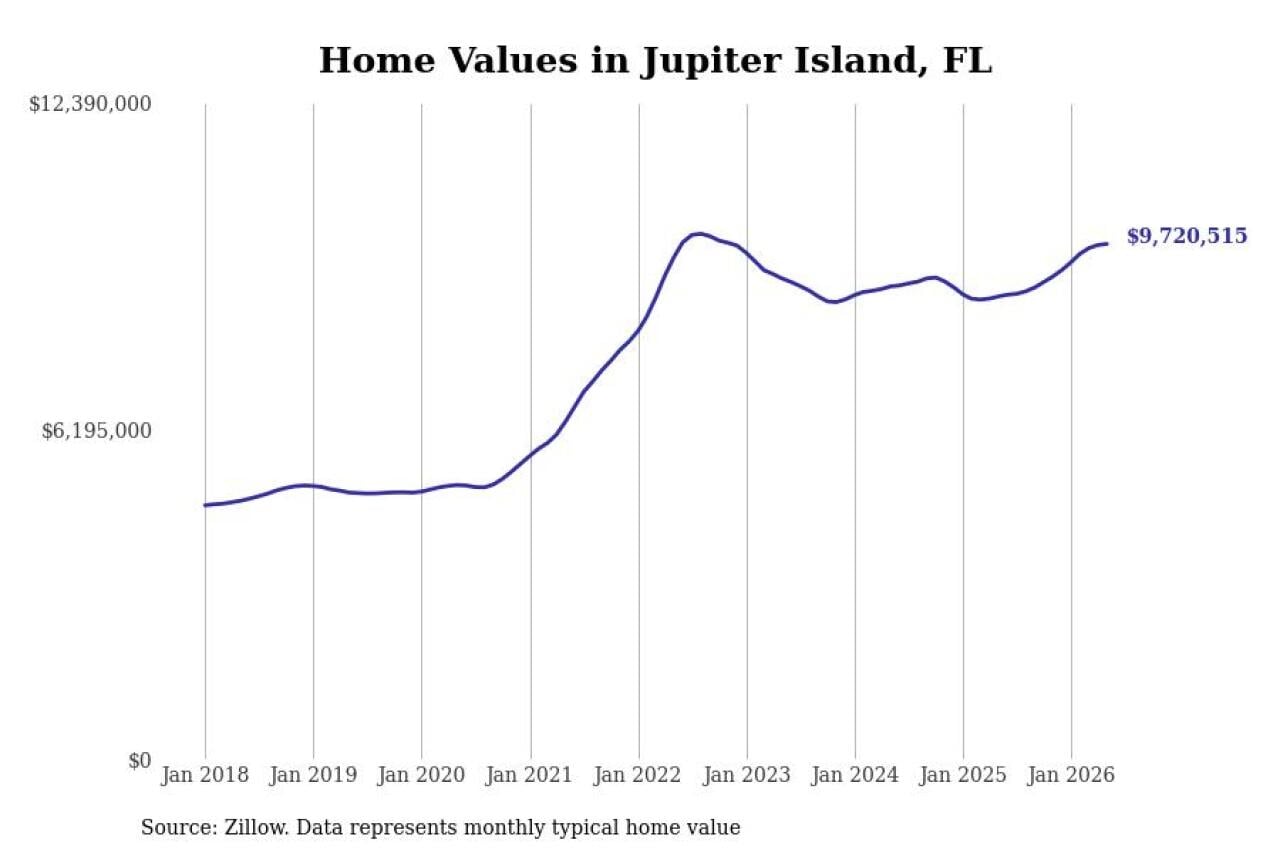
Three data sources price the market differently because they measure different things.
| Metric | Value | Scope | Period | Source |
|---|---|---|---|---|
| Average sale price | $16,317,632 | Single-family, Town of Jupiter Island (BeachesMLS) | Trailing 12 months to March 2026 | ZFC Real Estate |
| Price per square foot | $2,567 | Same scope | Same period | ZFC Real Estate |
| List-to-sell ratio / days on market | 89% / 152 days | Same scope | Same period | ZFC Real Estate |
| Median sale price | $7.4M | All property types, broader Jupiter Island area | 3 months to May 2026 | Redfin |
| Home Value Index | $9,133,017 (+0.6% YoY) | All homes, valuation index, not a sale average | May 2026 | Zillow |
A buyer comparing these three figures should read them as three different instruments, not three disagreeing appraisals. ZFC’s average tracks actual closed single-family deals inside the incorporated town. Redfin’s median pulls in condos and a wider footprint, which explains why it lands so much lower. Zillow’s index estimates value across the whole area rather than counting closed sales at all.
Property tax follows the same jurisdictional split as governance. Inside the Town of Jupiter Island, the Martin County Property Appraiser sets assessed value and the Town Council layers its own millage on top of the county’s roughly 15.47-mill 2025 average, per a Florida TaxWatch-sourced county estimate. South of the line, Palm Beach County’s Property Appraiser and its own municipal or unincorporated millage apply instead, feeding a different school district. Anyone comparing two “Jupiter Island” parcels should confirm which county’s tax roll and TRIM notice actually governs the one in front of them; the county line runs through the middle of the market, not around its edge.
Flood exposure adds a second cost that rarely appears on a listing sheet. Jupiter Island sits in evacuation Zone B, the first zone ordered out ahead of a hurricane, and its oceanfront lots face direct wave action, per a local flood-zone breakdown of the island, the condition FEMA’s VE designation is built around. VE-zone flood insurance commonly runs $4,000 to $10,000 or more a year for a single-family home under NFIP’s current pricing model, per FEMA’s flood-zone guidance; that figure is a general Florida coastal benchmark, not a Jupiter Island quote, so treat it as a range to confirm against an actual elevation certificate rather than a bill.
| Jurisdiction | County | Property tax authority | School district | Permitting/zoning authority |
|---|---|---|---|---|
| Town of Jupiter Island | Martin | Martin County Property Appraiser + Town millage | Martin County School District | Town of Jupiter Island Building & Zoning |
| Jupiter Inlet Colony | Palm Beach | Palm Beach County Property Appraiser | School District of Palm Beach County | Town of Jupiter Inlet Colony |
| Unincorporated pockets (near Tequesta Towers, Blowing Rocks Condo) | Palm Beach | Palm Beach County Property Appraiser | School District of Palm Beach County | Palm Beach County Planning, Zoning & Building |
The three rows above answer the question a buyer’s attorney will ask first: which government actually issues the permit and sends the bill for this specific parcel.
Zoning, Building, and Short-Term Rental Rules
Within the Town of Jupiter Island, land use runs almost entirely to low-density single-family estates and conservation land; the town’s comprehensive plan describes preserving natural resources as a stated goal alongside residential development. The town regulates short-term rentals under its own ordinance, titled ORD 402, Vacation Rentals, listed on the town’s official document center. The ordinance’s existence is confirmed there, but its specific minimum-stay length and licensing terms were not accessible for direct verification in this research pass; anyone planning to buy for rental income should request the current ordinance text from the Town Clerk before assuming a stay length.
Can you rent out a home on Jupiter Island short-term? The town has a dedicated vacation-rental ordinance (ORD 402), so some form of regulated short-term rental exists. The exact minimum stay and licensing steps require pulling the current ordinance text directly; don’t assume nightly rentals are unrestricted.
Lifestyle, Club Life, and the Landmarks Worth the Trip
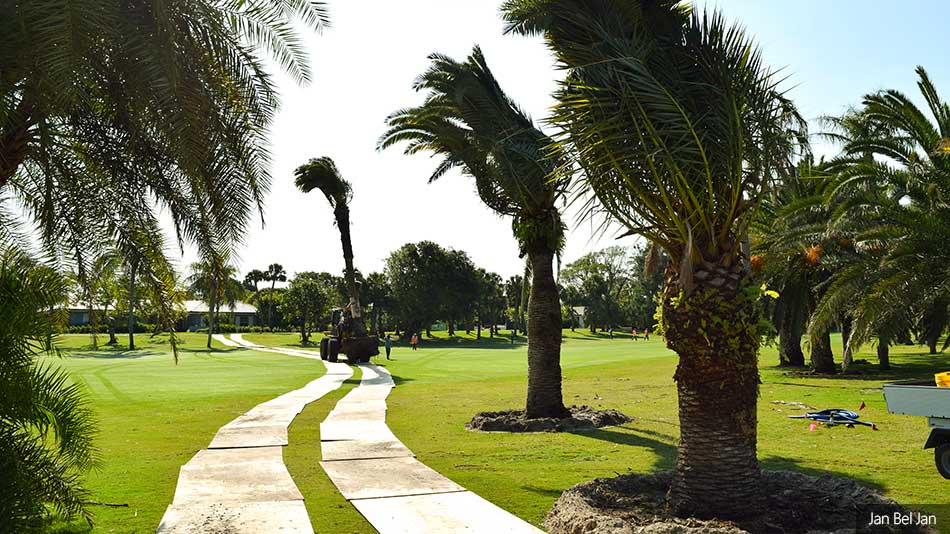
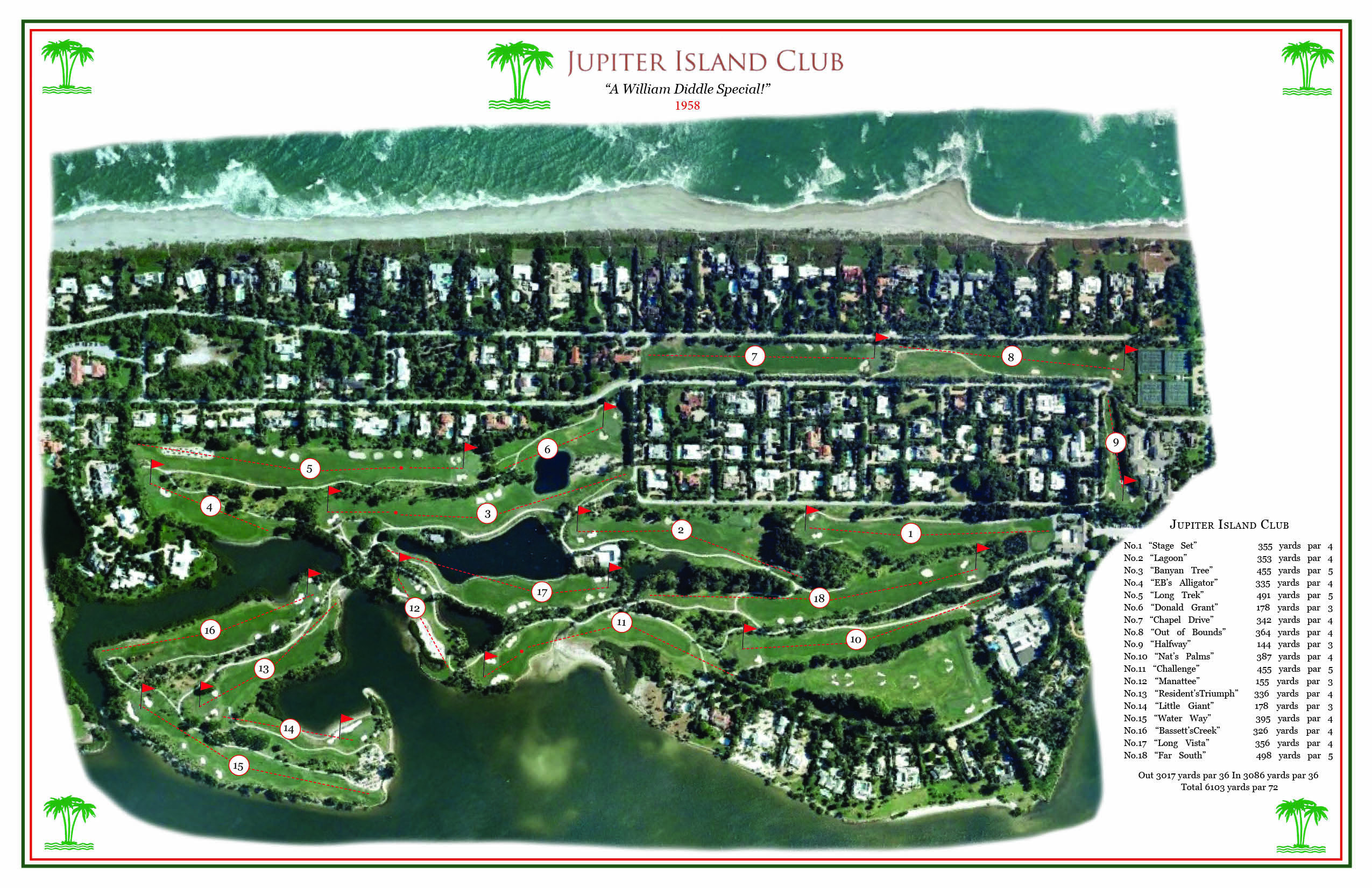
Jupiter Island Club anchors the town’s private social life: an 18-hole course laid out by William Diddel in 1916, expanded to its current routing in 1959, and renovated under architect Jan Bel Jan through a project completed in 2019, per a club history summary. Membership costs are not publicly disclosed by the club; the figures that circulate online are explicitly labeled as rumor by the sources reporting them, so treat any specific initiation-fee number you read elsewhere as unverified.
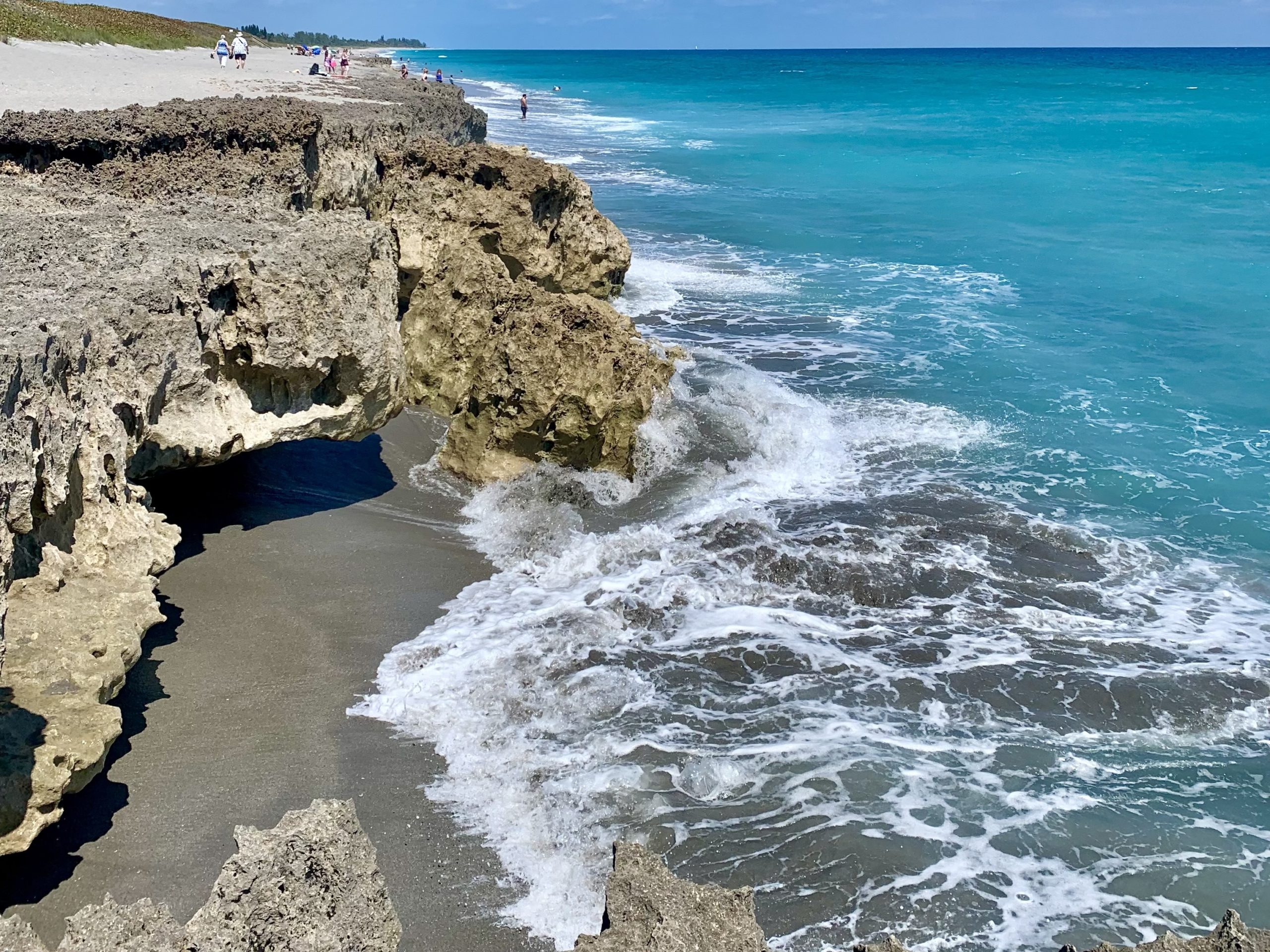
Blowing Rocks Preserve, at 574 S Beach Road in Hobe Sound, is the one landmark every competitor mentions and few source. The Nature Conservancy, which owns and manages the 73-acre preserve, states that wave action forces water through the Anastasia limestone up to 50 feet into the air, most reliably during winter storms at high tide. Entry is free; the preserve suggests a $2 donation and is open 9 a.m. to 4:30 p.m.
Beach access on the island itself is public below the mean high-tide line even where private estates line the shore, and Blowing Rocks and Coral Cove Park both offer public parking and entry points, though the island’s residential roads carry little through traffic and no public parking beyond those specific access points.
Is there public beach access on Jupiter Island? Yes, below the mean high-tide line, plus dedicated public entry at Blowing Rocks Preserve and Coral Cove Park. There is no public parking along the private residential stretches of Beach Road itself.
Schools

There are no schools on Jupiter Island itself. Families typically enroll on the mainland, in Jupiter or Palm Beach Gardens, with the specific assignment depending on which county’s district covers the parcel, per the jurisdiction table above.
History, Told Straight
The wealth reputation is real and well documented independently of any shipwreck story. The island has drawn some of the country’s highest per-household incomes for decades, a fact the governance and cost data above establish on its own, without needing a 300-year-old hurricane that happened somewhere else to explain it.
Comments