
What Texas Housing Actually Costs Right Now
Three organizations tracking Texas home prices in 2026 report three different numbers, and the gap is not a data error. It reflects three different measurements taken at three different points in the spring selling season.
| Source | Date | Geography | Price |
|---|---|---|---|
| Texas Real Estate Research Center | March 2026 | Statewide, closed sales | $332,000 |
| TRERC year-end forecast | 2026 (forecast) | Statewide | ~$334,000 |
| Redfin | May 2026 | Statewide, closed sales | $343,779 |
| Zillow Home Value Index | May 2026 | Statewide, value index | $302,550 |
TRERC and Redfin both track closed sales but sample different months; Zillow’s figure is an average valuation index across the entire housing stock, not a median of homes that actually sold, which is why it sits well below the other two. Treat $325,000 to $345,000 as this spring’s working range for a typical Texas home, and expect the number to keep moving through the second half of the year, since TRERC’s own forecast anticipates modest, single-digit growth rather than a repeat of pandemic-era jumps.
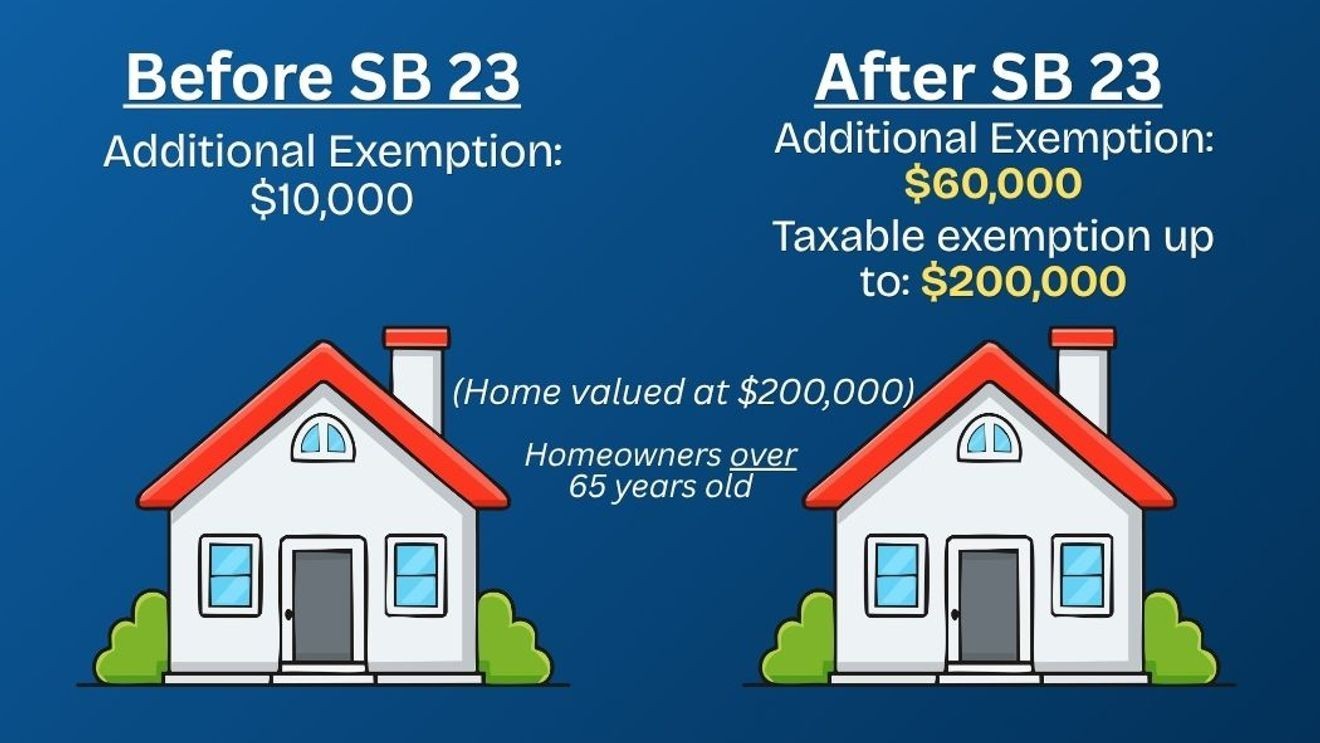
Price alone does not tell you what a home costs to hold. Texas has no state income tax, and it collects the difference through property tax: county-level trackers put combined county, city, school, and special-district rates at roughly 1.75% to 2.2% in the state’s largest metros before any exemption is applied. The state’s $140,000 school-district homestead exemption (Texas Tax Code §11.13(b)) reduces the taxable value on a primary residence once you file Form 50-114 with your county appraisal district, a filing that costs nothing and is due by April 30 of the year you want the reduction applied.
| Home price | Est. property tax/mo (pre-exemption) | Est. insurance/mo | Est. mortgage P&I/mo | Est. total/mo |
|---|---|---|---|---|
| $250,000 | $370 to $460 | $230 to $320 | $1,410 (10% down, 6.43% 30-yr) | $2,010 to $2,190 |
| $350,000 | $520 to $640 | $275 to $410 | $1,980 (10% down, 6.43% 30-yr) | $2,775 to $3,030 |
| $450,000 | $670 to $825 | $320 to $460 | $2,540 (10% down, 6.43% 30-yr) | $3,530 to $3,825 |
Mortgage payments assume Freddie Mac’s July 2, 2026 30-year fixed average of 6.43% and a 10% down payment; property tax uses the roughly 1.75% to 2.2% combined-rate band reported for major Texas counties before the homestead exemption reduces the school-tax portion in your first full year of ownership; insurance spans the Texas Department of Insurance’s official statewide average ($3,291 a year, 2024 filings) up through the higher $4,529 to $4,915 range that independent 2026 market analyses report, a gap that itself signals how much carrier selection and coastal exposure matter. A homeowner east of Houston’s Highway 146 or in one of the fourteen Tier 1 coastal counties adds a separate windstorm policy through the Texas Windstorm Insurance Association, averaging roughly $2,877 a year on top of the base homeowners premium, plus flood coverage averaging $1,116 a year through the National Flood Insurance Program if the property sits in a mapped flood zone.
What credit score do I actually need to buy in Texas? FHA loans require a 580 score for the standard 3.5% down payment, or 500 to 579 with 10% down; most conventional lenders set an informal floor around 620, and Texas’s own down-payment-assistance programs (TDHCA’s My First Texas Home) also set 620 as their minimum.
The Buying Process, Step by Step
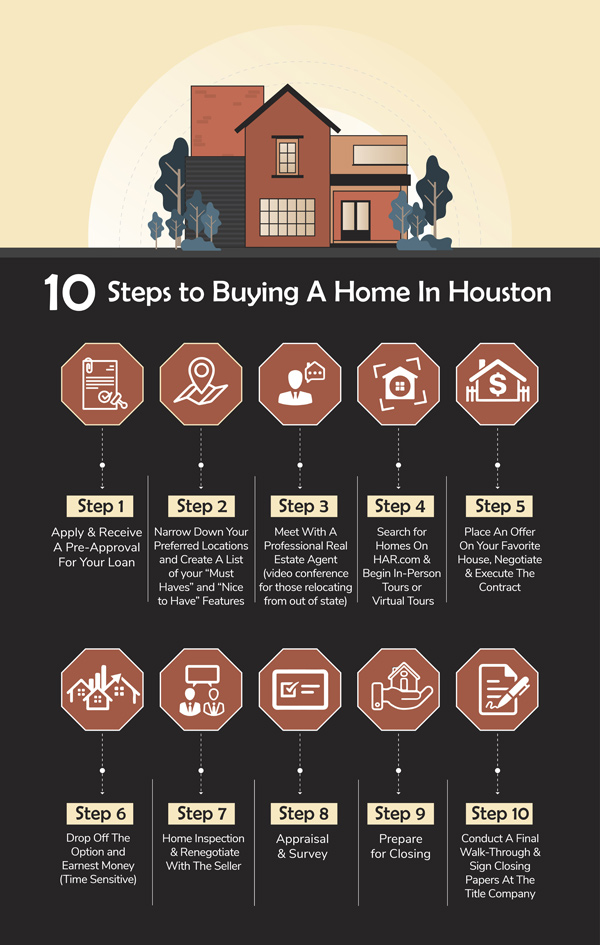
Get pre-approved before you tour homes. A lender reviews income, debt, and credit to tell you what you can actually borrow, which differs from what you can afford to carry monthly once tax and insurance are added in. From there: find an agent, search, write an offer, inspect, finalize financing, close. Each step is covered in more depth below where Texas adds a wrinkle worth knowing; where it does not, the mechanics match any other state and are not repeated here.
Spring and summer bring the most listings and the most competition; TRERC’s own inventory data shows active listings running 3% to 10% above year-ago levels across the major metros as of March 2026, giving buyers more room to negotiate than the tightest years of the pandemic market. Shopping in late fall or winter typically means fewer competing offers, at the cost of fewer homes to choose from.
What’s Different About Buying in Texas
Two structural facts separate a Texas purchase from a generic transaction, and a third is new for 2026.
Individual agents cannot legally represent both the buyer and seller in the same deal as full dual agents. What Texas allows instead is a broker “intermediary,” authorized under Occupations Code §§1101.559 through 1101.561 with written consent from both parties, who can appoint separate associates to advise each side. Those appointed associates can still give opinions and negotiating advice to their own client; the broker sitting above them stays neutral and cannot disclose either side’s confidential price flexibility without written permission. This is a meaningfully different structure from a true dual-agency ban, worth understanding before you sign an intermediary consent form.
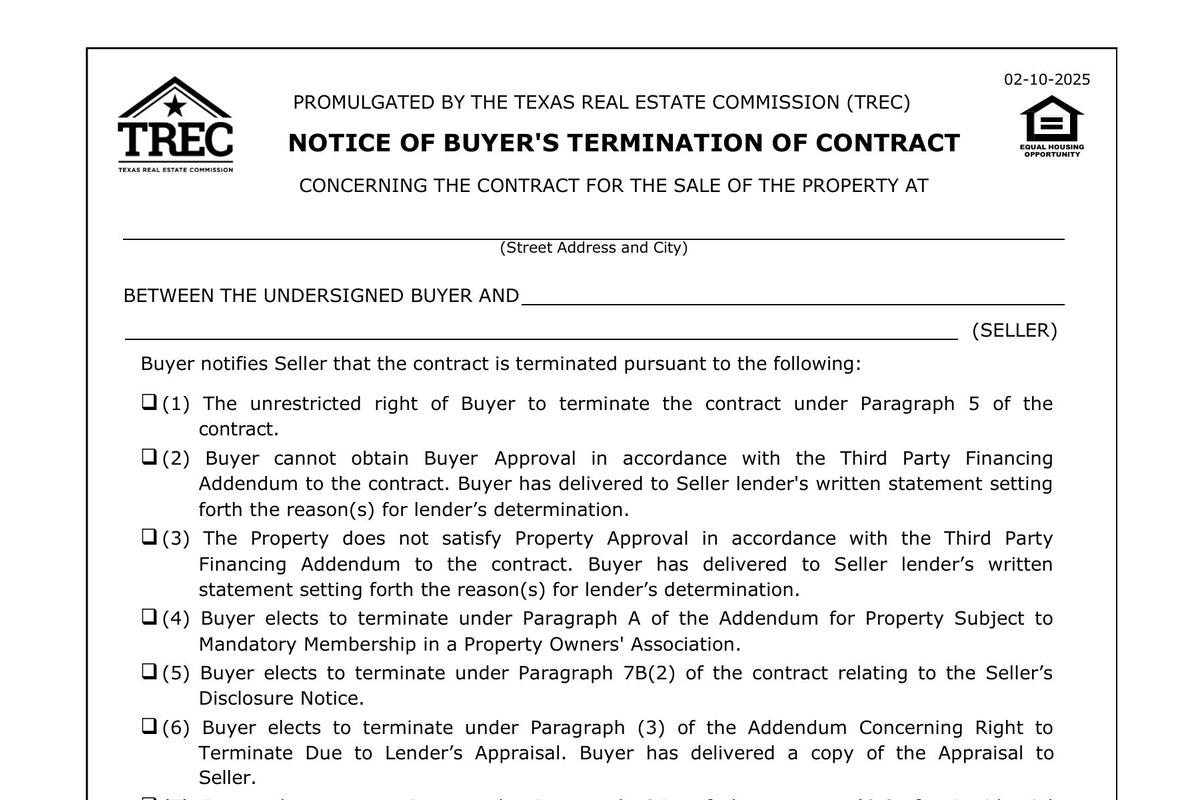
Texas Property Code §5.008 requires most residential sellers to complete a written Seller’s Disclosure Notice on the TREC-published form (OP-H) before or at contract execution, covering known defects in the foundation, roof, systems, and any prior flood history. Sellers of newly constructed homes that have never been occupied are exempt from this requirement. If a seller delivers the disclosure late, you gain the right to terminate the contract within seven days of receiving it.
Do I need a real estate attorney to buy a house in Texas? No state law requires one; Texas transactions run on standardized TREC contract forms that brokers are trained to use, though buyers with unusual title issues, a divorce-related sale, or an out-of-state trust often hire one anyway.
New this year: Texas requires a written buyer representation agreement before an agent takes any substantive action on a buyer’s behalf, a broader trigger than the national standard set by 2024’s NAR commission settlement, which only required a signed agreement before touring a home. That settlement also moved buyer-agent compensation offers off the MLS entirely and made all commissions explicitly negotiable rather than a default percentage split. In practice, sellers in most Texas transactions still choose to offer buyer-agent compensation to keep their listing competitive, but the amount is now a negotiated line item to ask about up front, not an assumed 2.5% to 3%.
New Construction vs. Resale
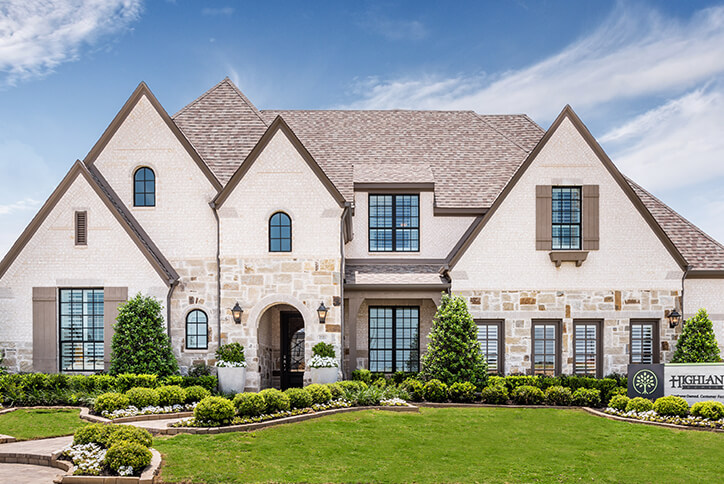
The literal search “houses in Texas” often carries a build-versus-buy decision the “how to buy” guides skip. TRERC’s May 2026 data shows the average price gap between new construction and resale homes has narrowed to $15,500, an all-time low, as builders lean on rate buydowns and incentives to compete with existing inventory.
| Criterion | New construction | Resale |
|---|---|---|
| Price gap (TRERC, May 2026) | Baseline | About $15,500 lower on average, narrowest gap on record |
| Timeline to close | Often 60 to 120+ days if not yet built; faster for spec/inventory homes | About 42 days for a conventional loan, per ICE data |
| Disclosure requirements | Exempt from TREC’s Seller’s Disclosure Notice if never occupied | Seller’s Disclosure Notice required under Property Code §5.008 |
| Customization | High on pre-construction contracts, low on completed spec homes | None; you buy the layout as built |
| Neighborhood maturity | Landscaping, schools, and retail often still filling in | Established trees, schools, and amenities |
New construction favors buyers who can wait and want input on finishes; resale favors buyers who need a firm, near-term move-in date and want to see exactly what they are getting rather than a floor plan.
Buying by Metro
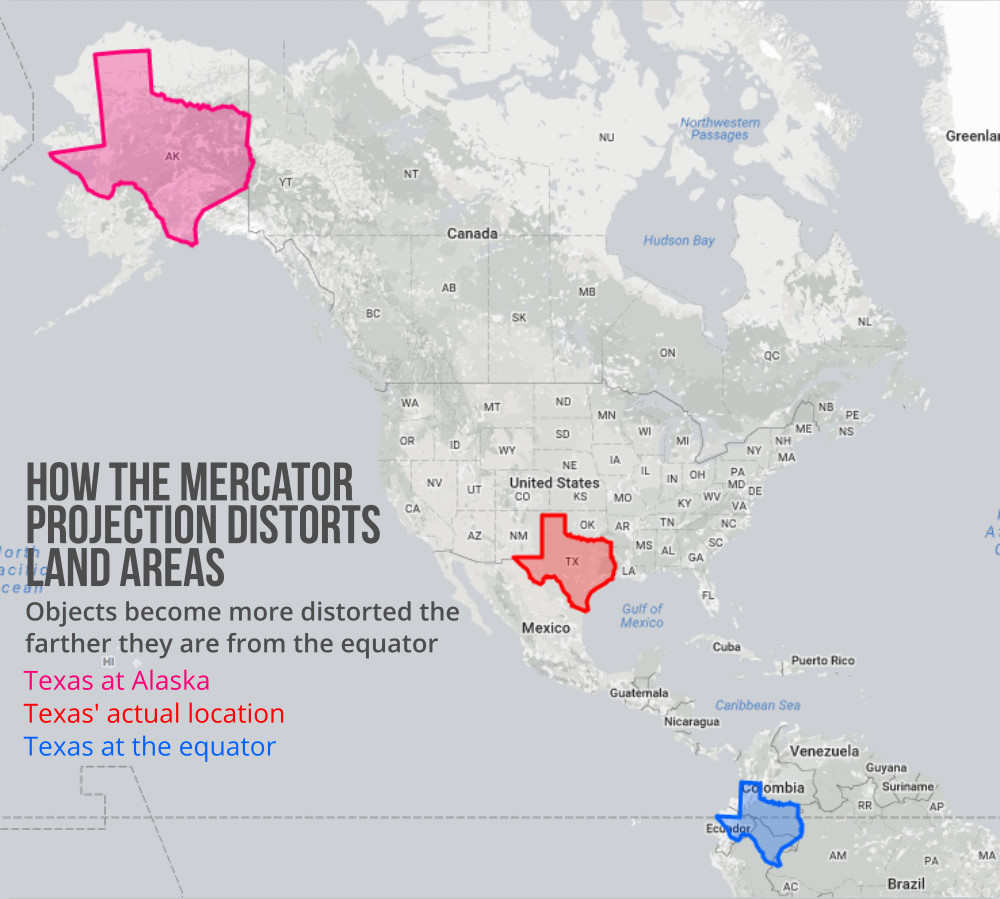
Texas is not one housing market; it is several, and the tax and insurance load varies with the price.
| Metro (county) | Recent median price | Combined property tax rate | Insurance context |
|---|---|---|---|
| Houston (Harris) | ~$324,200 (Redfin, 2026) | ~2.0% to 2.15% | Inland from the coastal wind zone west of Highway 146; east of it, TWIA windstorm coverage applies |
| Dallas (Dallas Co.) | ~$375,000 (Redfin, 2026) | ~1.85% to 2.22% | No TWIA exposure; standard homeowners policy includes wind/hail |
| Austin (Travis Co.) | ~$440,000 metro / $573,750 city (KXAN/Unlock MLS, Apr. 2026) | ~2.07% to 2.1% | No TWIA exposure; among the state’s highest property tax rates |
| San Antonio (Bexar Co.) | Softening, TRERC reports a 1.7% March YoY decline | ~1.75% | No TWIA exposure |
Austin illustrates why metro averages hide the real spread: in April 2026, homes in zip code 78675 sat on the market an average of 320 days, while homes in zip 78742, a few miles away, averaged just 5 days, according to Unlock MLS data reported by KXAN. A metro-wide median tells you almost nothing about either of those streets.
Is Texas a buyer’s or seller’s market right now? By supply alone, yes, leaning toward buyers: TRERC and Redfin both put statewide inventory around 5 months’ supply in the first half of 2026, and homes sat a median 68 to 82 days on market depending on the source and month, both signs of a market with more room to negotiate than the tightest pandemic years.
If You’re Buying, Selling, Representing, or Investing
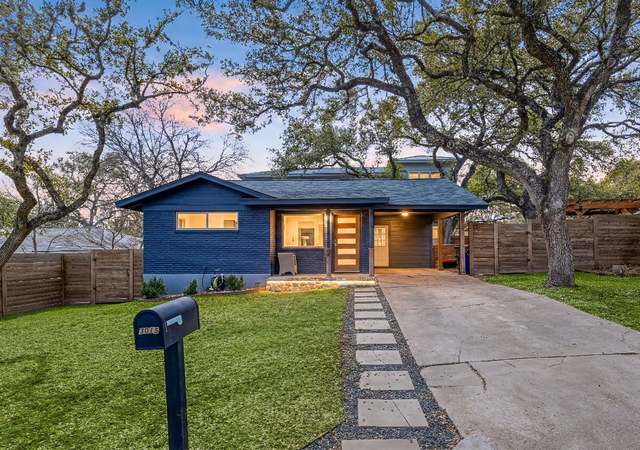
Buying. Get pre-approved first, budget the full stacked monthly cost above, not just the mortgage line, and file your homestead exemption the January after closing; it is not automatic and the deadline is April 30.
Selling. Your Seller’s Disclosure Notice is a legal document, not a formality; TREC’s Standards of Practice and the Deceptive Trade Practices Act both create exposure for known defects left off the form, even in an “as is” sale.
Agents. The written buyer-representation-agreement rule applies before any substantive action, not just before a tour; document the conversation and the compensation terms early, and keep MLS compensation fields clean under the current rules.
Investors. TREC’s Seller’s Disclosure exemption for never-occupied new construction, plus the still-narrow $15,500 new-build-to-resale price gap, changes the math on spec-building versus buying distressed resale inventory for a flip; run both against the same 42-day resale versus 60-plus-day to-be-built closing timeline before committing capital.
Common Mistakes
- Budgeting only the sale price, not the stacked monthly cost. A $350,000 home in a 2.2% tax county with a coastal insurance stack can carry a materially higher monthly payment than the same price in a 1.75% inland county.
- Skipping pre-approval before touring. Without it, you cannot act quickly when a well-priced home in a fast-moving zip code like Austin’s 78742 appears.
- Assuming a statewide average applies to your specific street. The 320-day-versus-5-day Austin zip code gap above is not an outlier; metro and even neighborhood variation routinely swamps the state median.
Limitations and Exceptions

Coastal buyers face a materially different insurance picture than the rest of the state, and it is not optional. Following Hurricane Beryl’s landfall near Matagorda Bay on July 8, 2024, insurers tightened terms across the Gulf Coast, and any property in a TWIA-eligible county needs a separate windstorm policy on top of a standard homeowners policy, plus flood coverage if it sits in a mapped zone. Rural buyers should also confirm USDA loan eligibility by address rather than county name alone, since USDA maps exclude many small-city cores. New-construction buyers should treat any builder-quoted closing date as a floor, not a promise; framing delays and permitting backlogs regularly push to-be-built timelines past initial estimates.
Deciding Your Next Step
If your main obstacle is the down payment rather than the monthly payment, TDHCA’s My First Texas Home program combines up to 5% in down-payment assistance with a 620 minimum credit score, and can stack with a Texas Mortgage Credit Certificate worth up to $2,000 a year in federal tax credit against mortgage interest, for buyers who have not owned a home in the past three years. If your obstacle is the monthly number, work the stacked-cost table above by county before settling on a price tag that leaves out tax and insurance.
Comments