
Can You Legally Buy Right Now?
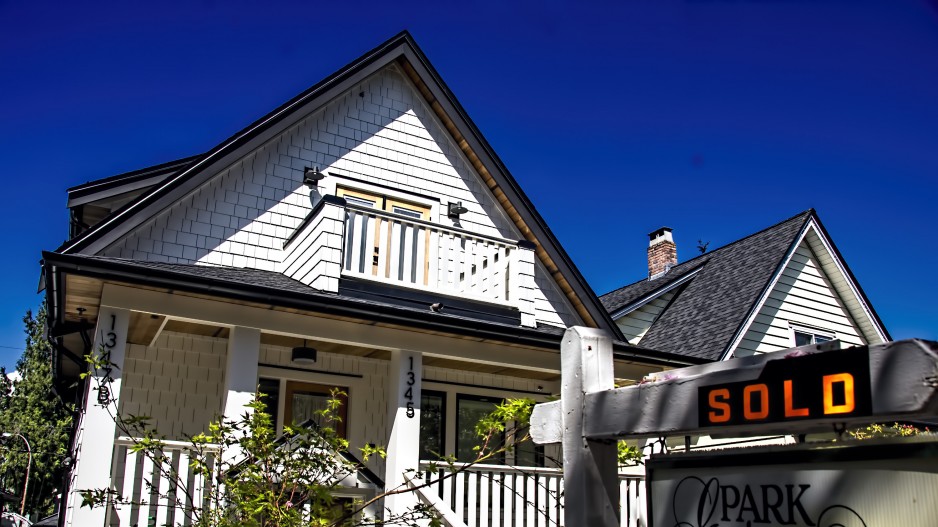
Start here, because it determines whether the rest of this page even applies to you. The Prohibition on the Purchase of Residential Property by Non-Canadians Act took effect January 1, 2023 and was extended by two years to January 1, 2027, according to CMHC’s summary of the Act. It restricts non-Canadians from buying residential property with three or fewer dwelling units inside Census Metropolitan Areas and Census Agglomerations, the areas covering most Canadian cities and their suburbs.
Permanent residents are treated exactly like citizens: no restriction applies to them. For everyone else, the exemptions are narrower than headlines suggest. A work permit holder qualifies if the permit has 183 or more days of validity remaining on the closing date. International students qualify only after five consecutive years of filed Canadian tax returns and at least 244 days of physical presence in Canada in each of those years, and only for one property. Refugees and protected persons are exempt. A non-Canadian buying jointly with a Canadian citizen, permanent resident, or Indigenous rights holder spouse is exempt. Vacant land zoned residential or mixed-use is not covered by the ban at all, and a separate development exemption lets non-Canadians buy property specifically to build, substantially renovate, or add units, though not to hold for rental income alone.
Rural areas outside CMAs and CAs are outside the ban entirely, which is why a cottage or acreage purchase can proceed when a city condo purchase by the same buyer cannot.
Ontario’s housing ministry confirmed in December 2025 that a formal review of the ban is underway ahead of its scheduled 2027 expiry, reportedly examining a model closer to Australia’s, where foreign buyers could purchase new construction but not existing homes, per reporting on the review. Nothing has been finalized as of this writing, so treat the current rules, not the review, as the operative framework for any purchase closing before the outcome is confirmed.
Can a U.S. citizen or other non-Canadian buy a house in Canada right now?Only under an exemption. A work permit with 183+ days remaining, refugee status, joint purchase with a Canadian or permanent-resident spouse, vacant land, or a development purchase all qualify. A straightforward purchase of an existing city condo with no exemption does not, regardless of the buyer’s finances.
What It Costs by Province
The federal ban is one gate. Provincial and municipal taxes are a second, separate cost layer that applies even to buyers who clear the federal test.
| Province / City | Transfer tax structure | First-time buyer relief | Foreign-buyer surcharge |
|---|---|---|---|
| Ontario | Marginal Land Transfer Tax, rising to 2.5% on the portion above $2,000,000 | Rebate up to $4,000, covering the full tax on homes to $368,000 | Non-Resident Speculation Tax: 25% province-wide since Oct 25, 2022 |
| Toronto (within Ontario) | Ontario LTT plus a separate Municipal LTT | Combined provincial + municipal rebate up to $8,475 | Add a 10% Municipal NRST since Jan 1, 2025 (35% combined with the provincial NRST) |
| British Columbia | Property Transfer Tax: 1% to $200,000, 2% to $2,000,000, 3% to $3,000,000, 5% above | Full exemption to $835,000, partial to $860,000 | Additional 20% PTT in designated areas (Metro Vancouver, Fraser Valley, Capital Regional District, Central Okanagan, Nanaimo) |
| Alberta / Saskatchewan | No land transfer tax; a smaller title registration fee applies instead | Not applicable | None at the provincial level |
Sources: Ontario Ministry of Finance, Ontario NRST page, BC Ministry of Finance, and BC’s additional PTT page.
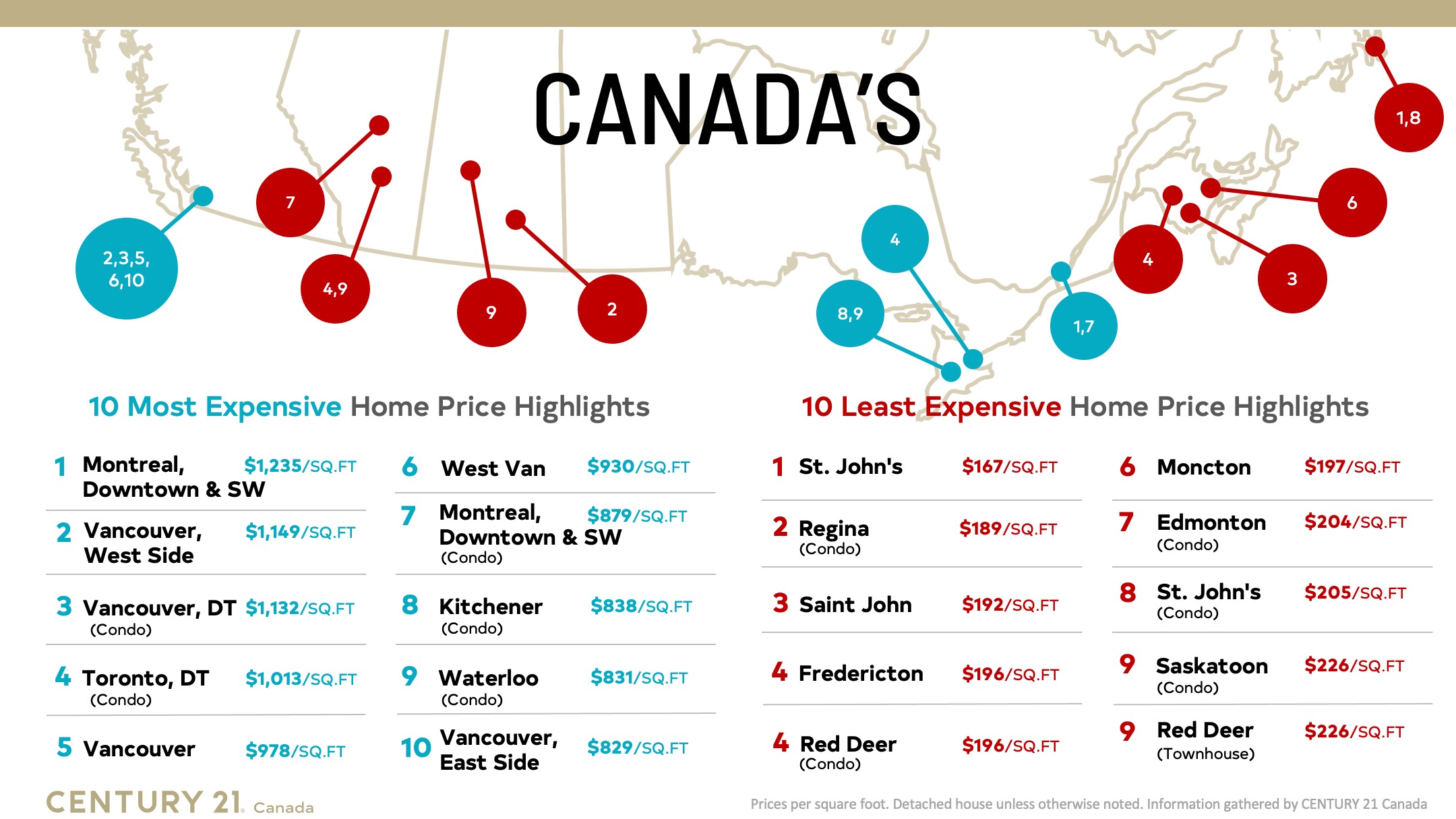
One province genuinely charges nothing here. That single fact changes the closing-cost comparison between an Edmonton purchase and a same-priced Toronto one by thousands of dollars before financing terms even enter the picture.
Toronto’s Municipal Non-Resident Speculation Tax took effect January 1, 2025 at 10%, layering directly onto Ontario’s existing 25% provincial NRST. A foreign buyer closing on a $1,000,000 Toronto condo today owes $350,000 in combined speculation tax alone, before the regular land transfer tax and before whatever the federal ban’s exemption rules already required them to clear.
Why does Alberta have no land transfer tax at all?Alberta and Saskatchewan never adopted one; both charge a much smaller land title registration fee instead. It is a genuine structural difference, not a rebate or a temporary program, and it holds regardless of buyer type or price.
What It Costs by Buyer Type
| Buyer type | Federal ban status | Minimum down payment | Notable extra cost or benefit |
|---|---|---|---|
| Resident first-time buyer, existing home | Not applicable | 5% to $500,000; 5%/10% blended above | Provincial LTT rebate where available |
| Resident first-time buyer, new-build home | Not applicable | Same as above | GST rebate up to $50,000 on qualifying new builds to $1,000,000, phasing out to $1,500,000 |
| Repeat buyer / investor | Not applicable if Canadian | Typically 20%+ on non-owner-occupied purchases to avoid insurance restrictions | No first-time rebates; provincial LTT still applies in full |
| Non-Canadian buyer under a federal exemption | Exempt from the ban, not from provincial tax | Set by individual lender, not by CMHC | Full provincial foreign-buyer surcharge still applies on top |
Source for down payment tiers and insured cap: CMHC’s mortgage insurance requirements.
The GST rebate is new enough that many buyers currently house-hunting haven’t priced it in. Bill C-4 received Royal Assent on March 12, 2026, eliminating the federal 5% GST for first-time buyers on new or substantially renovated homes priced at $1,000,000 or less, worth up to $50,000, with a straight-line phase-out between $1,000,000 and $1,500,000 and nothing above that. It applies retroactively to agreements signed on or after March 20, 2025. It does not touch resale homes at all, so a first-time buyer choosing between an equivalently priced new build and a resale unit is comparing numbers that are no longer close to equivalent.
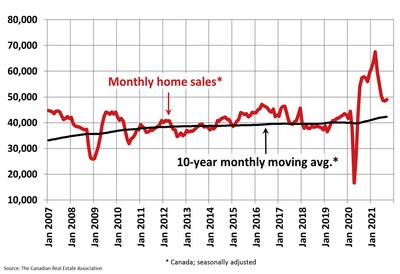
What’s the real average home price in Canada right now?Two different numbers, tracking different things. CREA’s May 2026 release put the national average sale price at $702,079, up 1.5% year over year. Its benchmark MLS Home Price Index, which adjusts for the mix of homes actually sold, was down 4.1% over the same period. The average moved up partly because more higher-priced homes changed hands that month, not because typical home values rose; the benchmark is the more reliable read on like-for-like price direction.
Financing: Down Payment, Stress Test, and the Debt-Ratio Math
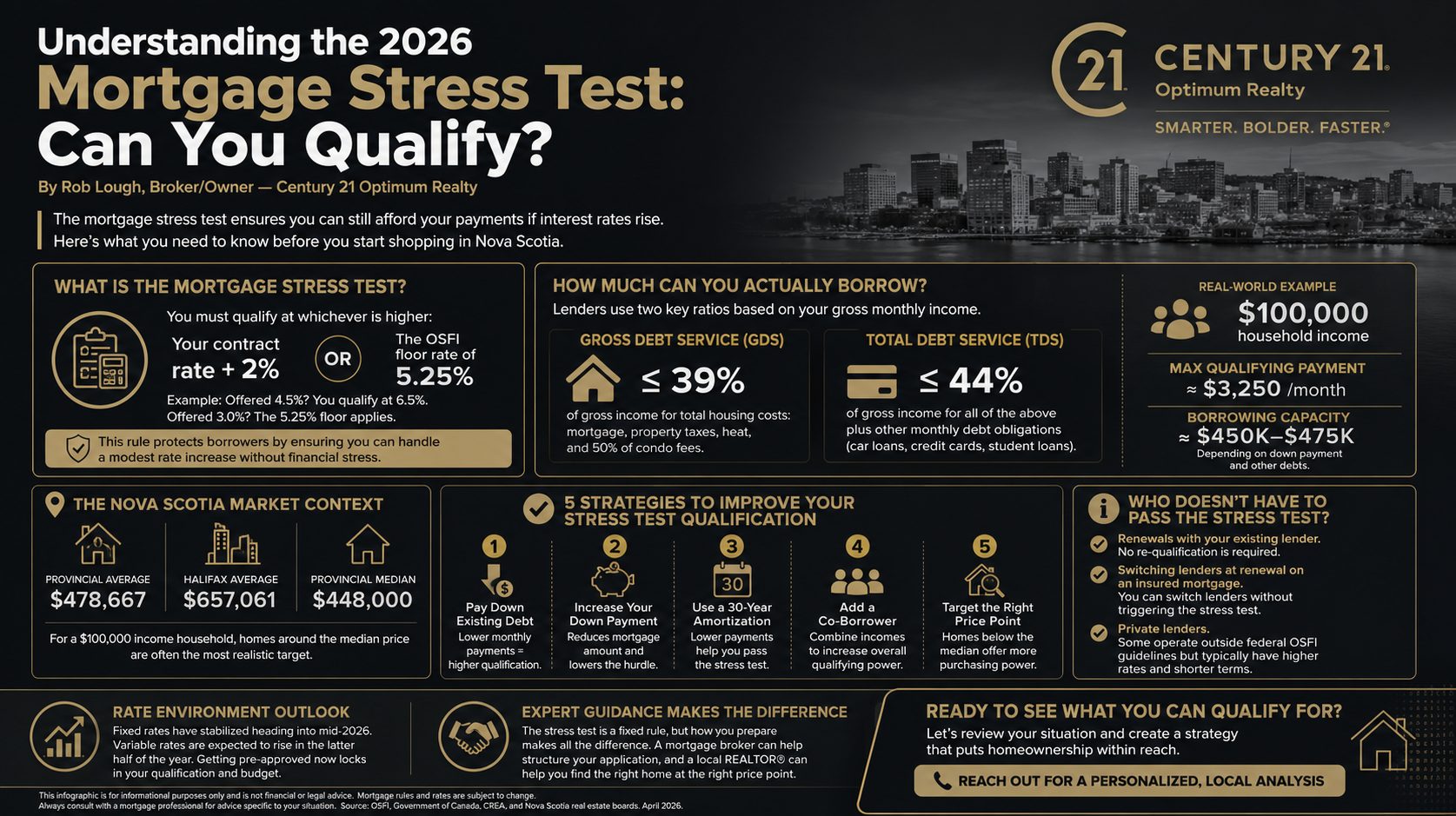
CMHC sets the floor that Sagen and Canada Guaranty mirror: minimum down payment is 5% on the first $500,000 of a purchase price and 10% on the remainder, available only on homes priced under $1,500,000. Below 20% down, mortgage default insurance is mandatory, and it protects the lender, not the buyer, if the loan defaults.
Two ratios then decide how much you actually qualify to borrow. Gross Debt Service, which is principal, interest, property tax, heating, and half of any condo fee divided by gross income, is capped at 39%. Total Debt Service, the same figure plus every other debt payment, is capped at 44%. Both are federally set ceilings, not lender preferences.
Every federally regulated lender must also qualify you at a stress-test rate: the higher of your contract rate plus 2 percentage points, or 5.25%, per OSFI’s minimum qualifying rate rule. With most insured five-year fixed rates in 2026 sitting between roughly 4.5% and 5.5%, contract-plus-2% is usually the binding number, which means a buyer approved at a 5.0% contract rate is actually being qualified against 7.0%. Budget for closing costs separately from the down payment: legal fees, applicable land transfer tax, and adjustments typically run 1.5% to 4% of the purchase price, and CMHC flags this specifically because first-time buyers are the group most often surprised by it at closing.
Buying a Condo: What the Standard Process Skips
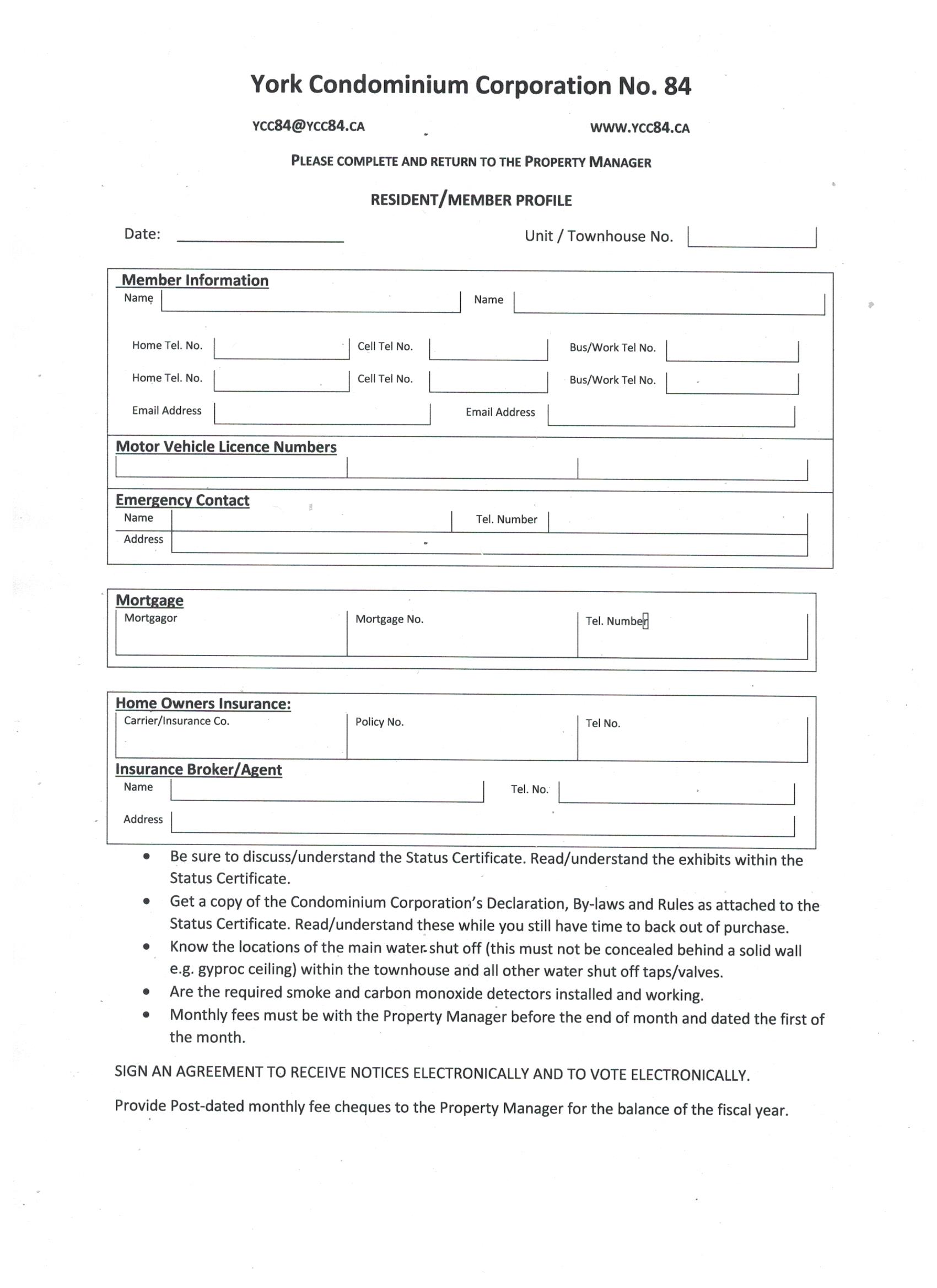
Condo purchases carry a document that resale-house purchases don’t: the status certificate, which discloses the building’s reserve fund health, any pending special assessments, and active litigation involving the corporation. CMHC’s own condominium buying guide treats reviewing it, ideally with a lawyer, as a distinct step, separate from a general home inspection.
What is a status certificate, and why does it matter?It’s the building’s financial and legal disclosure document, covering reserve fund balance, upcoming special assessments, and any lawsuits involving the corporation. A healthy purchase price means little if the reserve fund is thin and a special assessment lands the year after you close.
Where Buyers Lose Money

The happy-path version of buying a home skips the moments that actually cost people money.
- Waiving the financing condition before financing is confirmed. A pre-approval is not a firm approval; if the lender’s underwriting later declines the specific property or the buyer’s file changes, a waived condition can mean forfeiting the deposit.
- Treating the deposit as refundable by default. In a competitive multiple-offer situation, buyers sometimes drop financing or inspection conditions to compete, then discover the deposit is genuinely at risk if the deal collapses for a reason the waived condition would have covered.
- Pricing off stale comparables in a fast-moving local market. The national average and the benchmark index are currently moving in opposite directions; a local market can diverge from both, and an offer built on a three-month-old comparable can be materially wrong.
- Underestimating the gap between listing conditions and actual closing costs. Land transfer tax, foreign-buyer surcharges, and the 1.5% to 4% general closing-cost range are each easy to check individually and easy to forget to add together.
A buyer who waives a financing condition on a $700,000 purchase with a standard 5% deposit is putting $35,000 at risk on a condition most other buyers in the same market kept in place.
What happens if I waive my financing condition and then can’t get approved?You remain contractually bound to complete the purchase. If you can’t, the seller can typically keep your deposit and may pursue further damages for the difference if they have to resell at a lower price.
Finding Out What a Home Actually Sold For
This is uneven across boards. Some provincial boards publish sold prices on public-facing tools; others restrict that data to REALTORS® and require a login through a licensed agent. Third-party estimate tools exist and are useful for a rough figure, but they provide an estimate, separate from the board’s registered figure. If a specific sold price matters to your decision, the reliable path in 2026 remains asking a local REALTOR® to pull the actual comparable from their board’s system.
The Process, Compressed
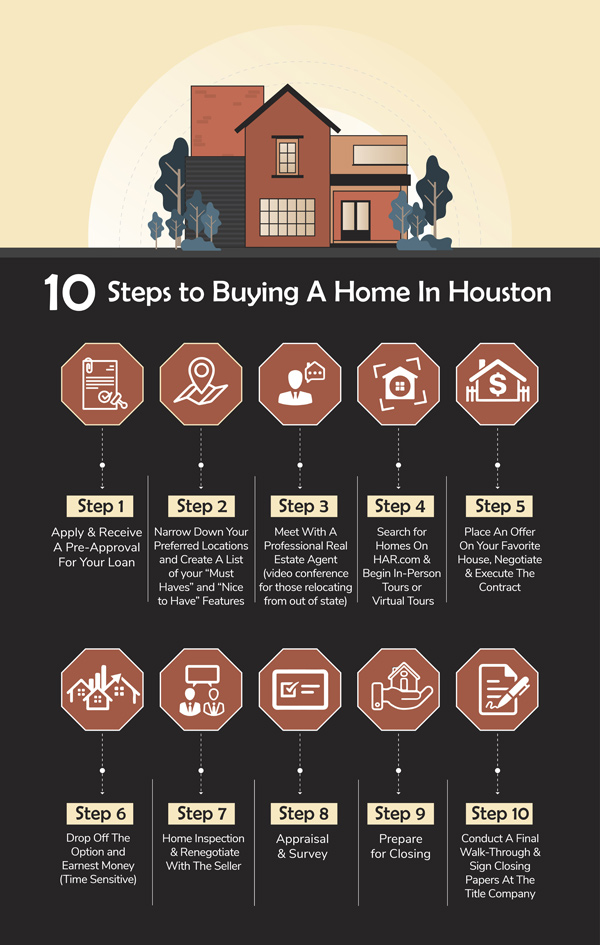
If you’ve cleared eligibility and understand the cost stack above, the mechanical sequence is short: confirm mortgage pre-approval, set your total budget including closing costs, engage a REALTOR® and a real estate lawyer, make an offer with financing and inspection conditions intact, complete due diligence (including the status certificate for condos), then close. For a full walkthrough of each of these steps, CMHC’s homebuying guide covers the mechanics in more depth than this page needs to.
Comments