
The Market by Zone
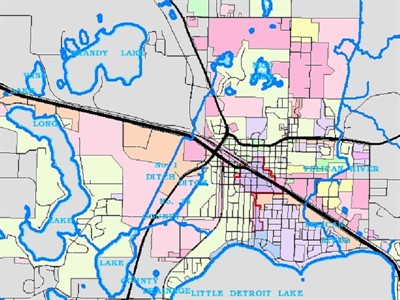
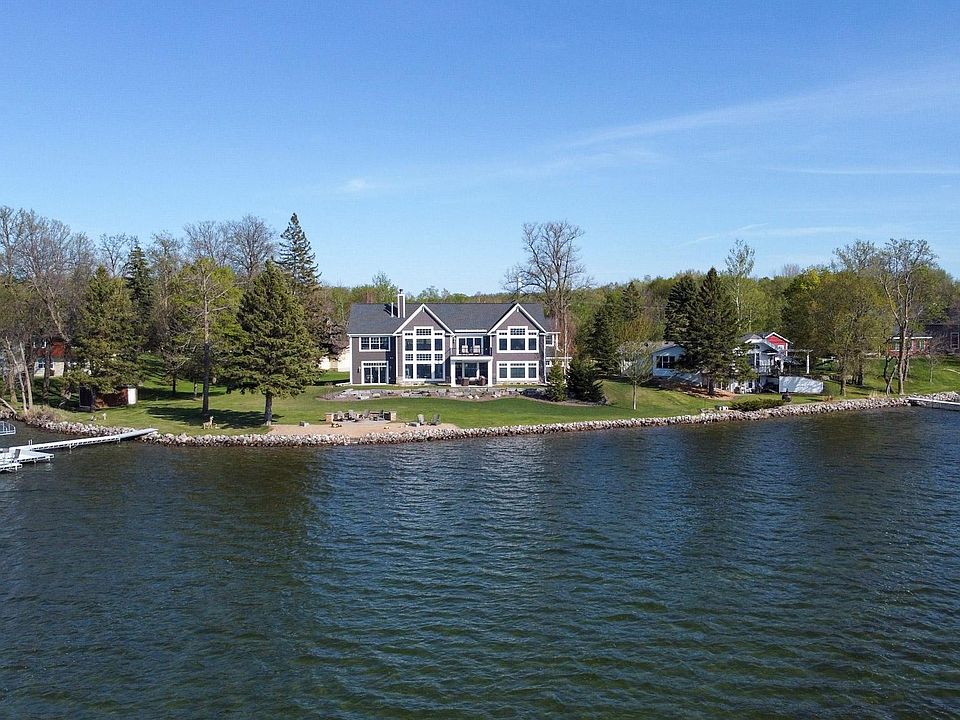
Detroit Lakes home prices split sharply by whether a property touches water, with in-town homes clustering under $460,000 and lakeshore listings averaging well over $700,000.
| Segment | Typical price | Frontage/lot note | Data vintage |
|---|---|---|---|
| In-town, no water access | $215,000 to $459,900 (median) | standard city lots, no shoreline | Active MLS listings, June 15, 2026, per an IDX feed of the local MLS |
| Citywide value index (all types) | $366,530 | Zillow’s Home Value Index, a modeled estimate, not an asking price | Trailing 12 months to June 2026, up 3.0% year over year |
| Lakeshore, all local lakes | $50,000 to $4,500,000; average $740,094 ($423 per sq ft) | 117 active listings; average 3.2 bed / 2.4 bath / 2,243 sq ft, per LakePlace.com’s active listing data | Active listings, June 21, 2026 |
| Lakeshore, Detroit Lake specifically | $79,000 to $1,725,000; average $434 per sq ft | 20 active listings; average 3.0 bed / 2.8 bath / 2,304 sq ft, per LakePlace.com’s Detroit Lake listing data | Active listings, January 17, 2026 |
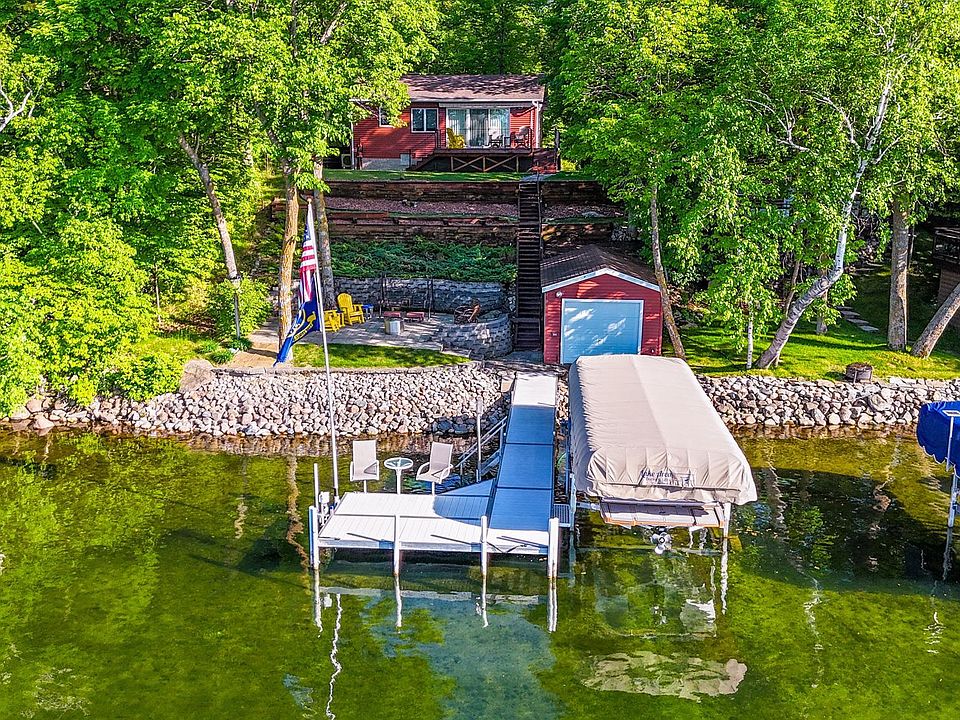
A buyer comparing the citywide median against the lakeshore average is comparing two different products: the $459,900 median describes a mostly non-waterfront pool, while the $740,094 lakeshore average sits 61% higher and can climb past $4 million for premium Detroit Lake frontage.
In-town listings benefit from a nearby draw: City Park added Alexa’s Elixir, a wood troll sculpture by Danish artist Thomas Dambo, in 2024, and it drew an estimated 60,000 visitors in its first three months, per the Detroit Lakes Tribune.
How much more does lakeshore cost than an in-town home here? On a price-per-square-foot basis, roughly 75% more: in-town listings averaged $241 per square foot in Movoto’s June 2026 market snapshot, while lakeshore listings averaged $423 per square foot. The dollar gap is wider still in absolute terms, since lakeshore homes also tend to sit on larger, premium lots.
Comparing the Named Lakes
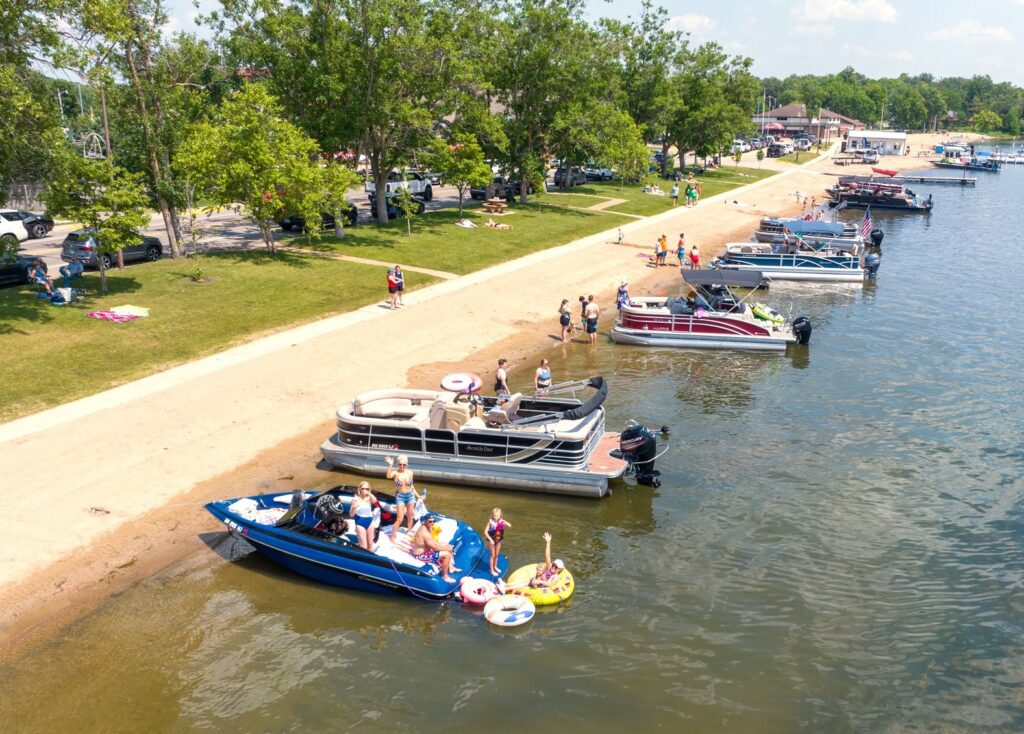
Detroit Lakes buyers choose among several distinct lakes, not one uniform market, and the lakes differ substantially in size, depth, and how boats move between them.
| Lake | Surface acres | Shoreline | Max. depth | Notable feature |
|---|---|---|---|---|
| Detroit Lake (Big, Little & Curfman basins) | 3,067 | 13 miles | 89 ft | inside city limits; three connected basins, average depth 15 ft, per Lake-Link’s DNR-sourced lake data |
| Lake Sallie | 1,280 | 6 miles | 50 ft | DNR walleye egg-take source lake; connects to Detroit Lake via the Pelican River, per Lake-Link |
| Lake Melissa | 1,850 | 7 miles | 37 ft | zebra mussels confirmed 2014; heavy shoreline development, per Lake-Link |
| Muskrat Lake | 69 | 2 miles | 18 ft | shallow and fertile; a seasonal boat tramway links it to Sallie, per Lake-Link |
Depth is the clearest technical divider: Detroit Lake’s 89-foot maximum dwarfs the other three, while Muskrat’s 18-foot maximum and dense summer plant growth make it a panfish lake, not a deep-water cruising lake.
Is Big Detroit Lake worth a premium over the smaller nearby lakes? No sourced per-lake price breakdown exists to answer that directly. What the data does support: Big Detroit sits inside city limits with direct access to downtown, while Melissa, Sallie, and Muskrat sit farther out and connect to Detroit Lake by river or seasonal tramway rather than open water.
What’s Different About Buying on the Water
Waterfront parcels carry state and county rules that in-town properties do not: shoreland zoning applies within 1,000 feet of a lake’s ordinary high water level (OHWL), and it limits lot coverage and how close new structures can sit to shore.
- Shoreland zone: applies to any parcel within 1,000 feet of the OHWL, the reference line every setback below is measured from, per the Minnesota DNR’s shoreland guidance for property owners.
- Impervious surface cap: driveways, patios, and roofs together are capped at 25% of the lot under state shoreland rules, regardless of lot size.
- Water-oriented accessory structures: a boathouse or similar structure closer to the water than the main setback needs at least 10 feet of clearance from the OHWL, capped at 400 square feet if used solely for watercraft storage, per Minnesota Rules 6120.3300.
- Guest cottages: capped at 700 square feet and 15 feet in height under the state model rules.
- Elevation: the lowest floor of a new structure must sit at least 3 feet above the OHWL or the highest known water level, whichever is higher.
- Exact setbacks are set locally: Becker County, not the state, sets the numeric setback per lake classification; confirm the current figure with Becker County Planning & Zoning before designing a project.

Many lakeshore parcels outside the city’s sewer service area rely on individual septic systems, permitted and inspected through Becker County’s Planning & Zoning office. Older cabins converted for year-round use sometimes carry septic systems sized for occasional weekend use, and Becker County requires a compliance inspection before approving major changes.
Do I need a permit before adding a dock or fixing rip-rap on my shoreline? Most in-water and near-shore work needs a local shoreland permit, and larger projects can also need a DNR public-waters permit. Check with Becker County Planning & Zoning, or the City of Detroit Lakes for in-town parcels, before starting any dock, rip-rap, or grading work.
Short-Term Rentals and Local Rules
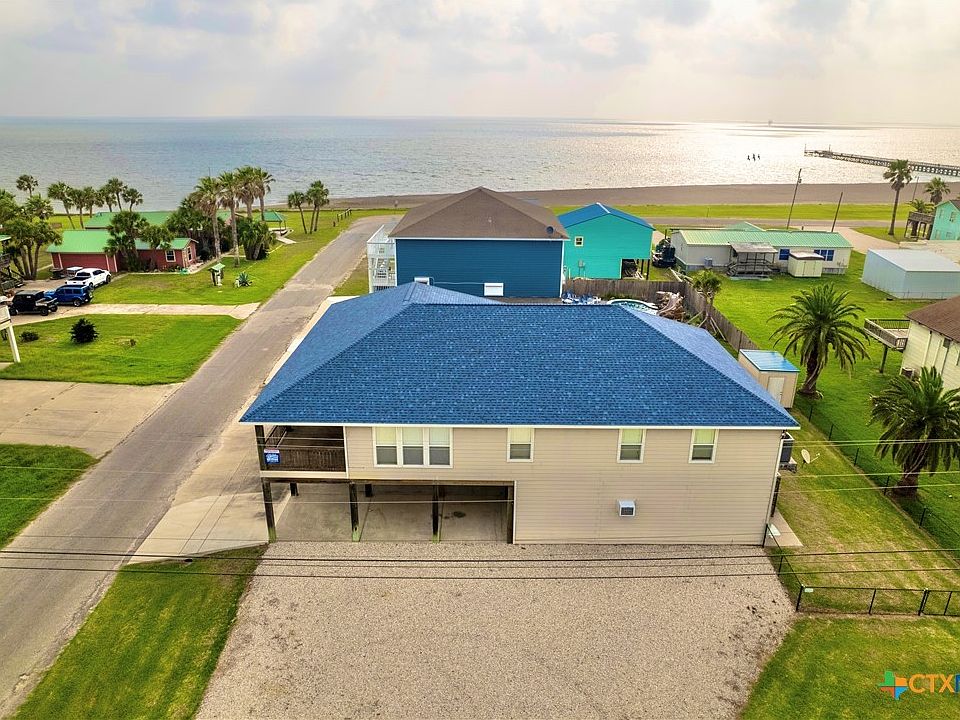
The City of Detroit Lakes requires an annual short-term rental license, currently capped at 100 licenses per calendar year, and Becker County runs a separate registration process for lakeshore parcels outside city limits.
Minnesota has no statewide short-term-rental license; the only universal state requirement is tax. The Minnesota Department of Revenue applies the state’s 6.875% sales tax to stays under 30 days, as Minnesota House Research’s summary of local lodging-tax law explains.
Within city limits, the council adopted a short-term rental ordinance in November 2022, with licensing taking effect the following year. The license costs $350 annually and comes in three forms:
- Hosted rental: the owner or a resident manager stays on site during the guest’s stay.
- Un-hosted rental: the unit is rented without an on-site host.
- Dedicated rental: the unit is used exclusively as a short-term rental, not as a residence between bookings.
The city caps total licenses at 100 per calendar year, still requires license holders to pay the same lodging tax hotels pay, and can revoke a license under a three-strike rule for disorderly-conduct violations, according to the ordinance reported by the Detroit Lakes Tribune. Parcels outside city limits use Becker County’s separate short-term rental permit process.
Can I legally rent out a Detroit Lakes lake home short-term? Yes, with a license. In town, that means a City of Detroit Lakes license ($350 a year, capped citywide at 100) plus the city’s lodging tax. Outside city limits, Becker County’s separate permit applies. Either way, Minnesota’s 6.875% state sales tax applies to stays under 30 days.
Timing the Market
The typical Detroit Lakes listing sold or went under contract after 65 days on market, based on a live snapshot of the local MLS taken in mid-June 2026. No publicly published source breaks that figure down by season for this specific zip code, so a buyer hoping to time a summer versus winter purchase should ask their agent for the local board’s month-by-month days-on-market history rather than assume a citywide pattern from the annual figure alone.
Common Mistakes Buyers Make in This Market
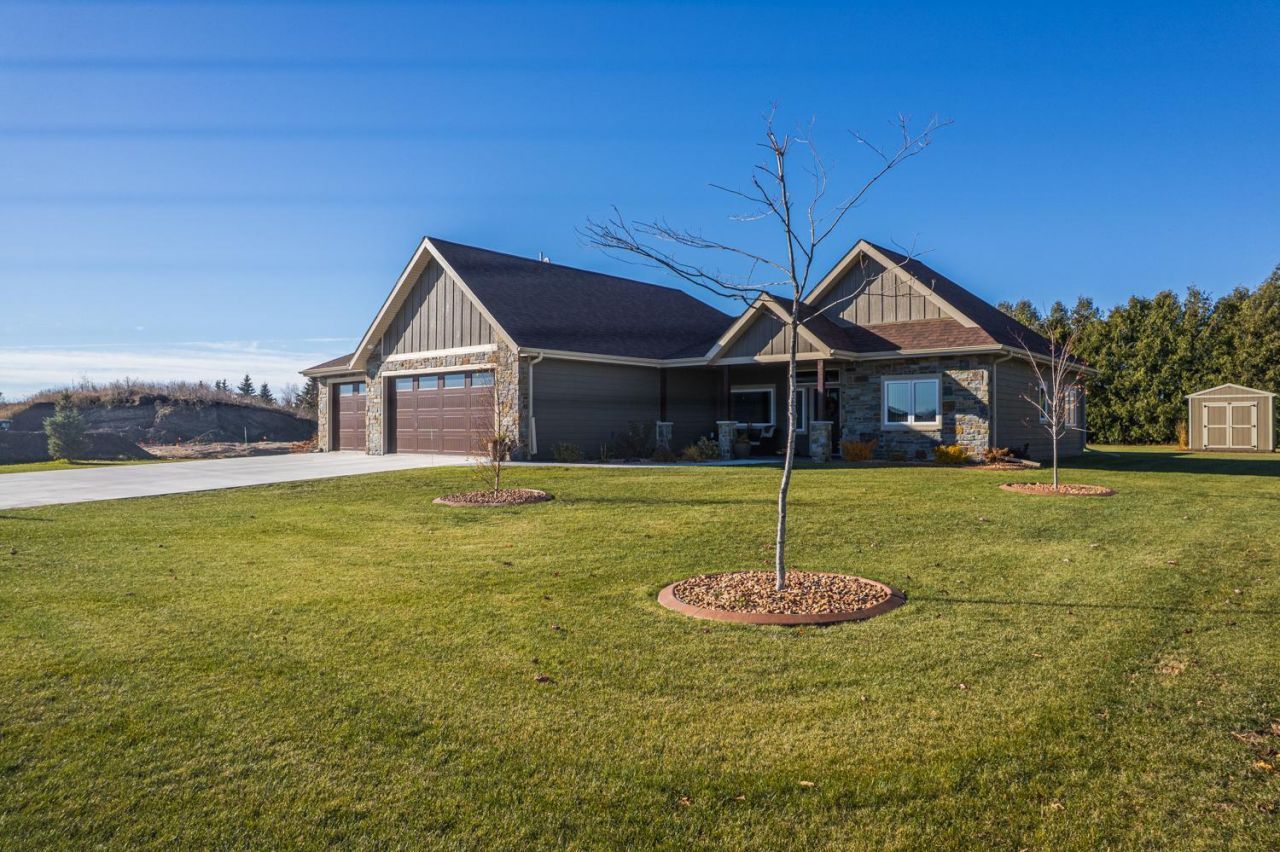
The costliest mistakes in this market involve confusing lake access with lakeshore, underestimating older septic systems, and misreading an index figure as an asking price.
- Lake access vs. lakeshore: a “lake access” listing usually means a deeded or shared easement to a communal landing, not private frontage; “lakeshore” means the parcel itself borders the OHWL. Confirm which one a listing actually offers.
- Aging septic on older cabins: a cabin built decades ago as a seasonal property may carry a septic system sized for occasional weekend use; converting it to year-round use can trigger a Becker County compliance inspection and a system upgrade.
- Treating the ZHVI estimate as a list price: Zillow’s $366,530 figure is a modeled value index across all housing types, not a lakeshore-specific asking price; use the lakeshore-specific range above when budgeting for water.
- Shared or disputed access: older lake-country plats sometimes split access rights among several non-adjacent lots. A title search focused specifically on lake-access easements catches this before closing.
What’s the difference between “lake access” and “lakeshore” listings? “Lakeshore” means the parcel itself borders the lake’s ordinary high water level. “Lake access” typically means a deeded or shared right to use a nearby landing, without the parcel bordering the water. The difference affects dock rights, resale value, and which shoreland setback rules apply at all.
Schools and Getting Around
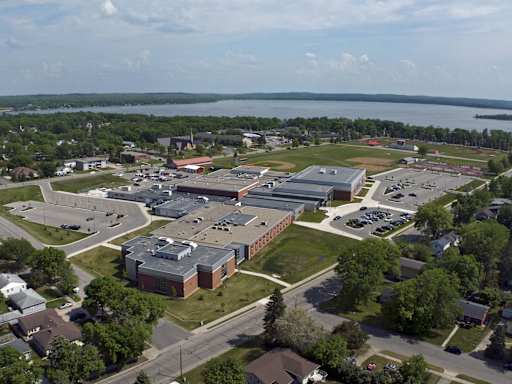
Detroit Lakes Public Schools (ISD #22) runs two elementary schools, Rossman and Roosevelt, plus one middle school and one high school, serving roughly 3,000 students district-wide. U.S. Highway 10 and Minnesota Highway 59 are the two primary routes through the city, connecting it to the broader Highway 10 corridor toward Fargo-Moorhead to the west.
Comments