
The Four Villages, Compared
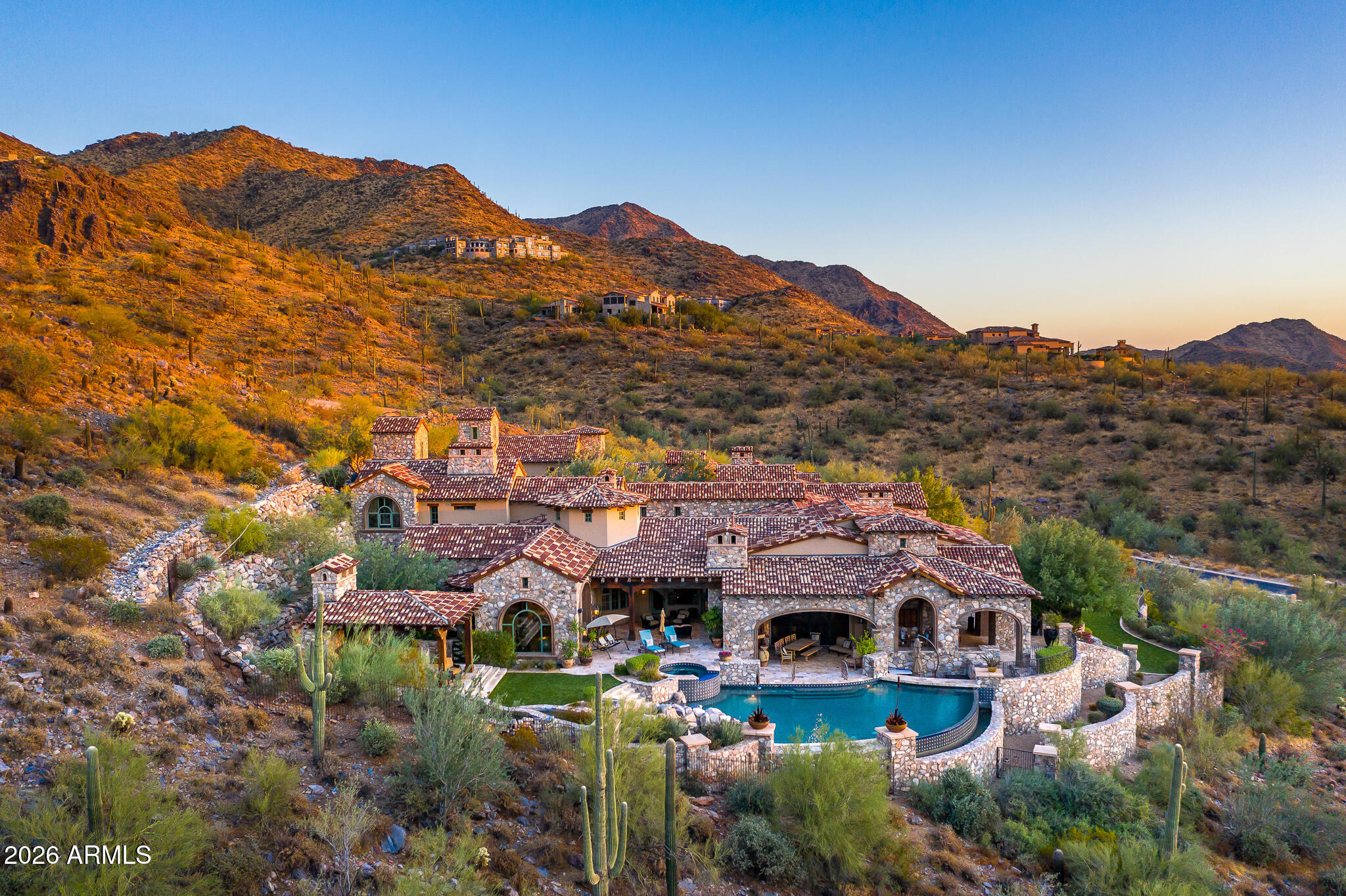
Desert Camp Village holds about 655 residences, condos, townhomes, and single-family homes, within walking distance of Market Street and the 9-acre Desert Camp Community Center, per DC Ranch’s lifestyle overview. It is the most walkable and the least expensive village to enter.
Desert Parks Village (roughly 677 residences) sits near DC Ranch Crossing and Canyon Village, the community’s other two shopping districts, and is served by the 4-acre Homestead Community Center.
Country Club Village (about 485 residences, custom and semi-custom homes plus townhomes) sits inside the gates of the Country Club at DC Ranch golf course, so proximity to the private club is the defining feature rather than retail access.
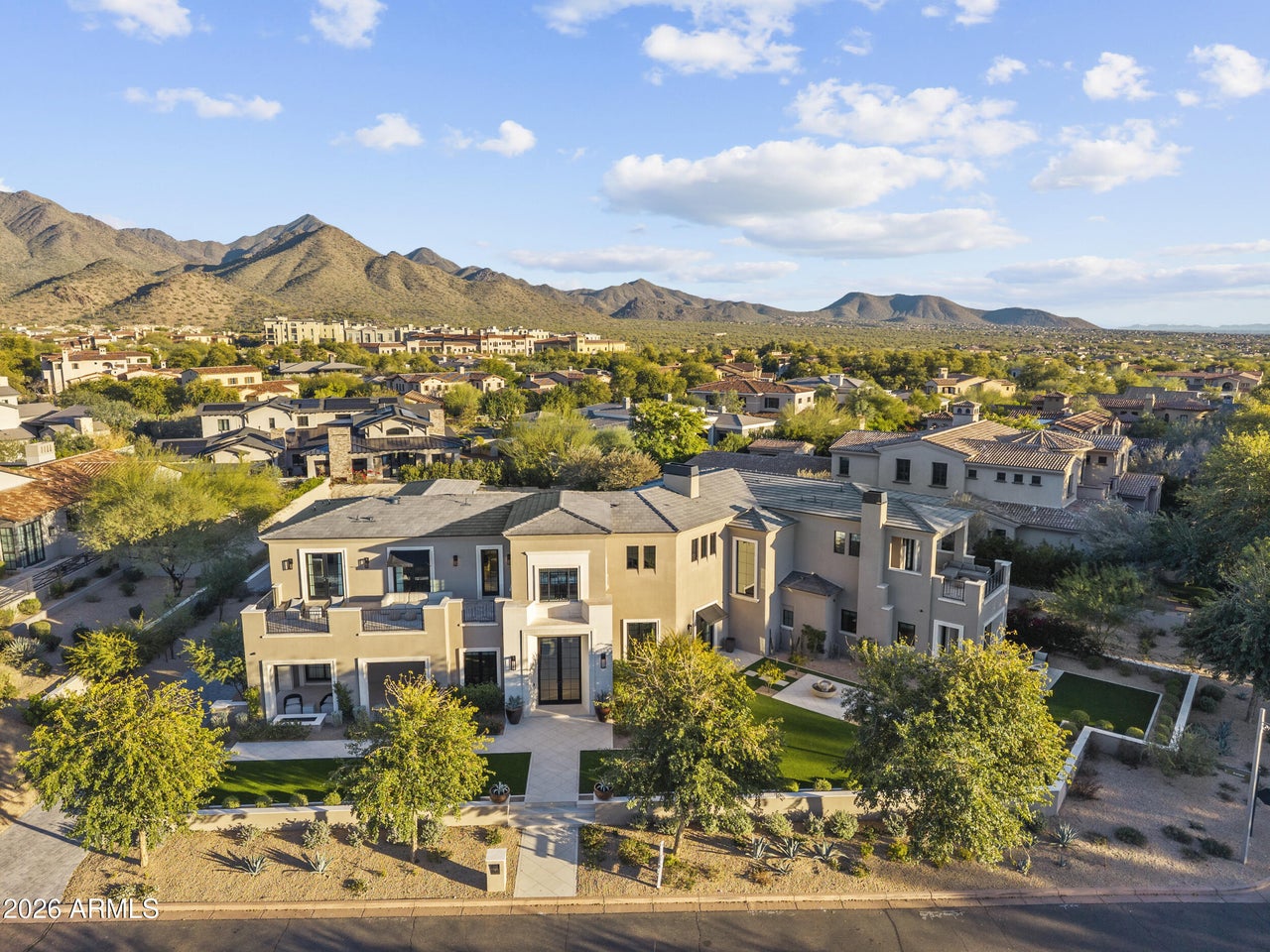
Silverleaf Village (about 783 residences, 3,000 to more than 15,000 square feet) is the estate tier, anchored by the private, Tom Weiskopf-designed Silverleaf Club. One current listing illustrates the top of that range: a 12,128-square-foot Mediterranean estate on 3.67 acres in Silverleaf’s Horseshoe Canyon enclave, newly built by Salcito Custom Homes, per Homes.com’s current DC Ranch listings.
| Village | Typical product | Entry price band (2026) | Gate style | Defining amenity |
|---|---|---|---|---|
| Desert Camp | Condos, townhomes, single-family | $429,000 to about $1 million | Mixed gated | Market Street walkability; 9-acre community center |
| Desert Parks | Single-family, townhomes | $700,000 to $2 million | Gated | Canyon Village and DC Ranch Crossing retail |
| Country Club | Custom and semi-custom homes, townhomes | $1.1 million to $4 million and up | Guard-gated | Inside the golf club’s gates |
| Silverleaf | Custom estates | $3 million to $25 million and up | Guard-gated, separate HOA | Private Weiskopf-designed golf club |
Which DC Ranch village is closest to Market Street?Desert Camp Village. Market Street sits at its edge, and several Desert Camp neighborhoods are within walking distance rather than a drive.
What Homes Cost, By Property Type
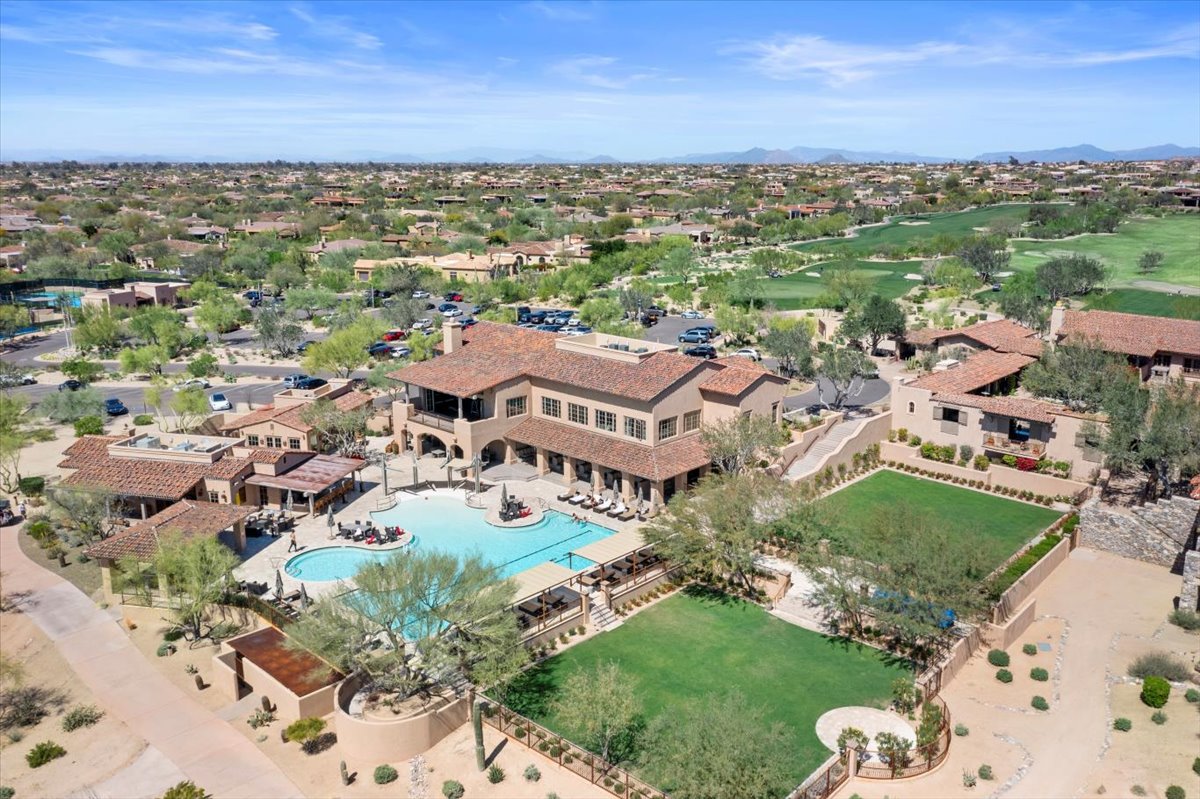
Single-family homes listed from $745,000 to $48 million as of March 2026, with a reported median of $2.05 million and an average of about $2.66 million, per Homes.com’s single-family DC Ranch page. Redfin’s separate DC Ranch housing-market page put the October 2025 median at $1.4 million, up 1% year over year, a figure $650,000 below Homes.com’s March number and a clear sign of how much a single month’s closing mix moves the total. Redfin’s all-property-types module reported a $2,581,541 median for April 2026, up 75% year over year; Movoto’s March 2026 figure for listed homes was $3.6 million. None of these figures states its underlying sample size.
Townhouses show the clearest internal inconsistency: Homes.com’s October 2025 townhouse page lists a $1,825,000 median while stating the price range tops out at $1.5 million, so the reported median sits above the reported ceiling, a sign the two numbers came from different data cuts. HomesByMarco’s year-over-year snapshot for April shows single-family sales volume up 160% while the median price fell 47.6%, from $6.3 million to $3.3 million, and townhouse sales down 70% in volume while the median rose 0.9%. Swings that size, on volumes that small, describe which specific homes closed more than they describe market direction.
| Property type | Recent reported median | Stated range | Days on market | What moves the figure |
|---|---|---|---|---|
| Single-family | $2.05 million (Mar 2026) | $745,000 to $48,000,000 | 77 | A single Silverleaf closing shifts the median by hundreds of thousands |
| Townhouse | $1,825,000 (Oct 2025) | $429,000 to $1,500,000 | 68 | Median exceeds the stated range ceiling in its own source |
| Condo | $2,250,000 (Dec 2024) | $465,000 to $7,680,000 | 60 | Source data is over a year old |
| All types combined | $2,581,541, +75% YoY (Apr 2026) | – | – | Blends villages and property types into one number |
Treat any single “DC Ranch median price” headline as one month’s closing snapshot. Ask for the property-type and village breakdown behind it before comparing it to a listing price.
HOA Structure, Gates, and Design Review
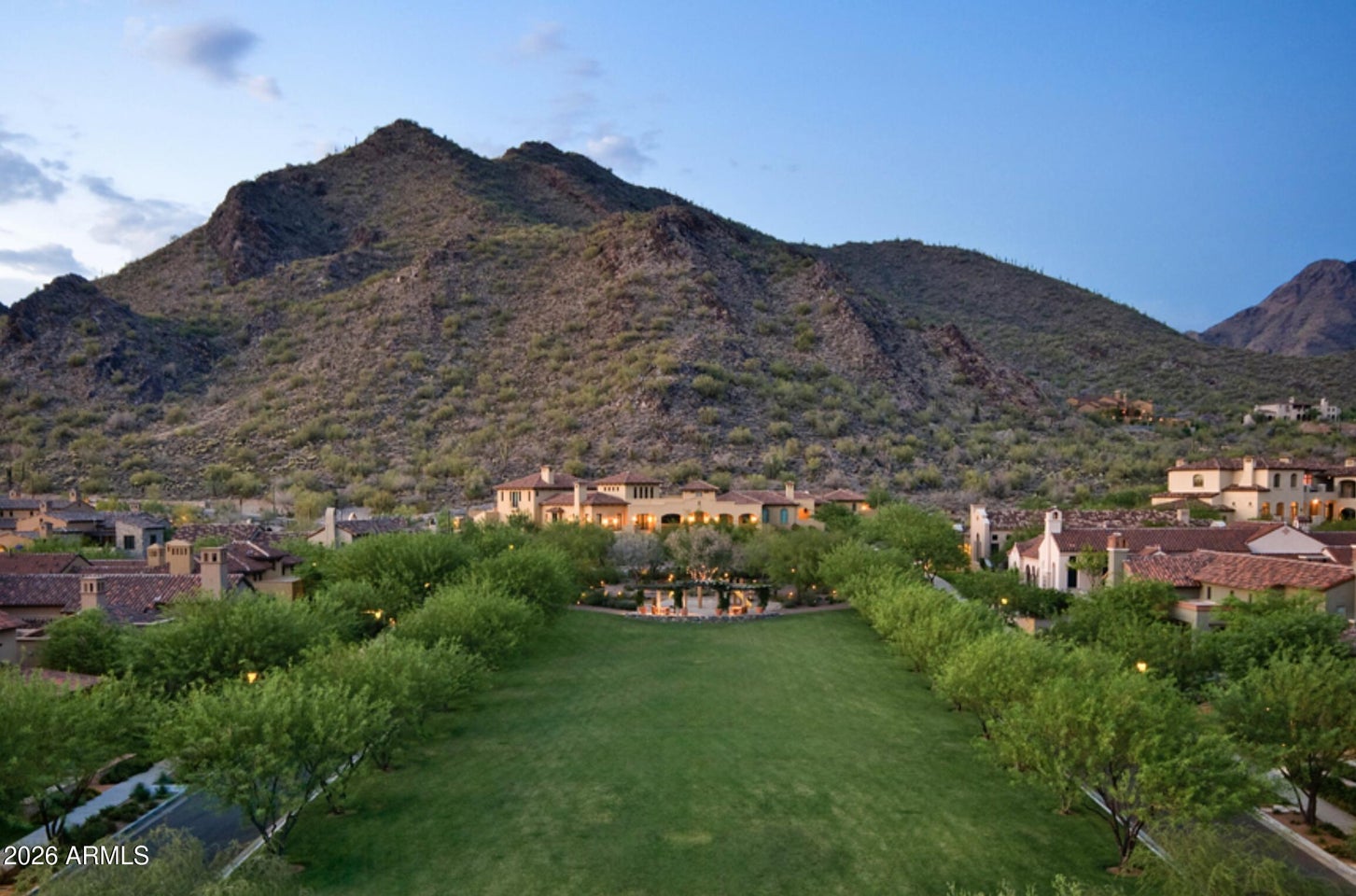
DC Ranch runs on three separate governing bodies: the Community Council (community life, both community centers), the Covenant Commission (architectural review and design standards), and individual village or sub-association boards that set local rules and gate operations, per DC Ranch’s lifestyle overview. Most buyers pay into at least two of these layers.
Silverleaf is separate, not a layer inside DC Ranch
Two independent local sources describe Silverleaf as its own legal entity: a separate homeowners association with its own CC&Rs and its own club governance, sharing the same 4,400-acre boundary and address but not folded into the DC Ranch Community Council’s structure, per a local gated-community explainer and a comparison from a North Scottsdale team. A buyer comparing a Country Club Village townhome to a Silverleaf estate is comparing two governing documents and two clubs, not one HOA with a pricier tier.
Is Silverleaf part of DC Ranch or separate?Geographically it sits inside DC Ranch’s boundary and shares the address. Legally, it runs its own homeowners association and its own private club, distinct from the DC Ranch Community Council and the Country Club at DC Ranch.
Remodeling goes through the Covenant Commission
Exterior changes, additions, and new construction require design-review approval before permitting. Reviewers typically request current CC&Rs, board minutes from the past 12 to 24 months, and the latest reserve study before writing an offer if renovation is part of the plan, since approval timelines vary by village; no source publishes a standard review timeline, so confirm it directly with the sub-association.
Do I need HOA approval to remodel?Yes. Exterior and structural changes go through the Covenant Commission’s design-review process before permitting, and the documentation required differs by village. Request the specific sub-association’s architectural guidelines during due diligence.
Golf Club Access and Membership
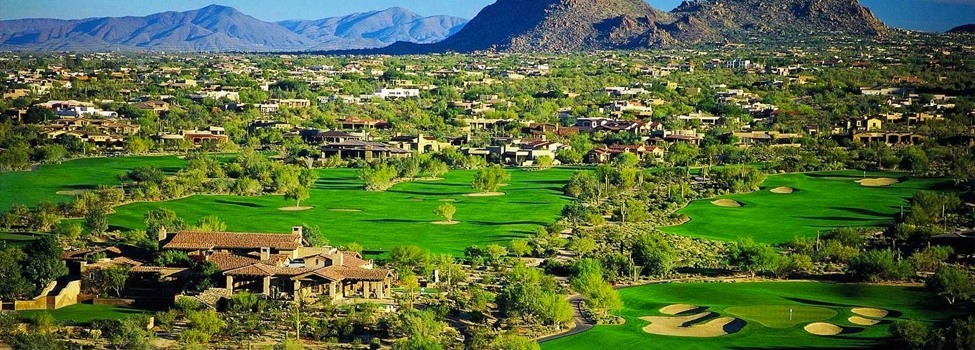
The Country Club at DC Ranch is an 18-hole, par-71 course at 6,888 yards, originally laid out by Scott Miller in 1997 and redesigned by Tom Lehman and John Fought in 2002; slope rating runs 123 to 137 depending on tee, per the club’s membership page. Four tiers exist: Golf (equity, unlimited play), Junior Golf (non-equity, unlimited play), Sport Social (non-equity, pool, fitness, and tennis with reduced-rate golf), and Clubhouse (social only). As of one recent listing, the Full Golf Membership wait list held 45 approved applicants, per a local brokerage’s neighborhood page, a concrete sign that golf access in Country Club Village isn’t guaranteed by the home purchase alone.
Silverleaf’s club is a separate, Tom Weiskopf-designed, par-72 course that opened in 2003, with its clubhouse following in 2004, per a dated local-history feature. Membership there is entirely independent of DC Ranch’s club and dues structure.
Schools Serving DC Ranch
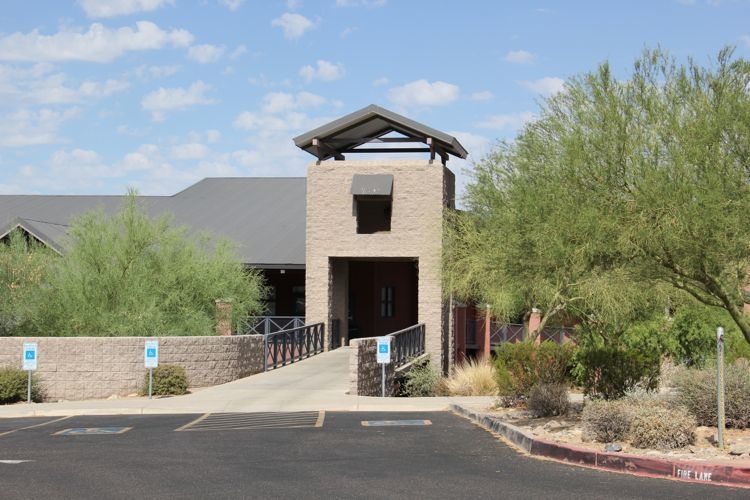
DC Ranch’s K-8 campus, Copper Ridge School, opened in 2001 within the community at 10101 E. Thompson Peak Parkway under Scottsdale Unified School District. High-school-age students typically feed into Chaparral High School, with Notre Dame Preparatory as a nearby private option. Zoning is stable across all four villages, which is why every source covers it identically.
Trails, Parks, and Community Centers
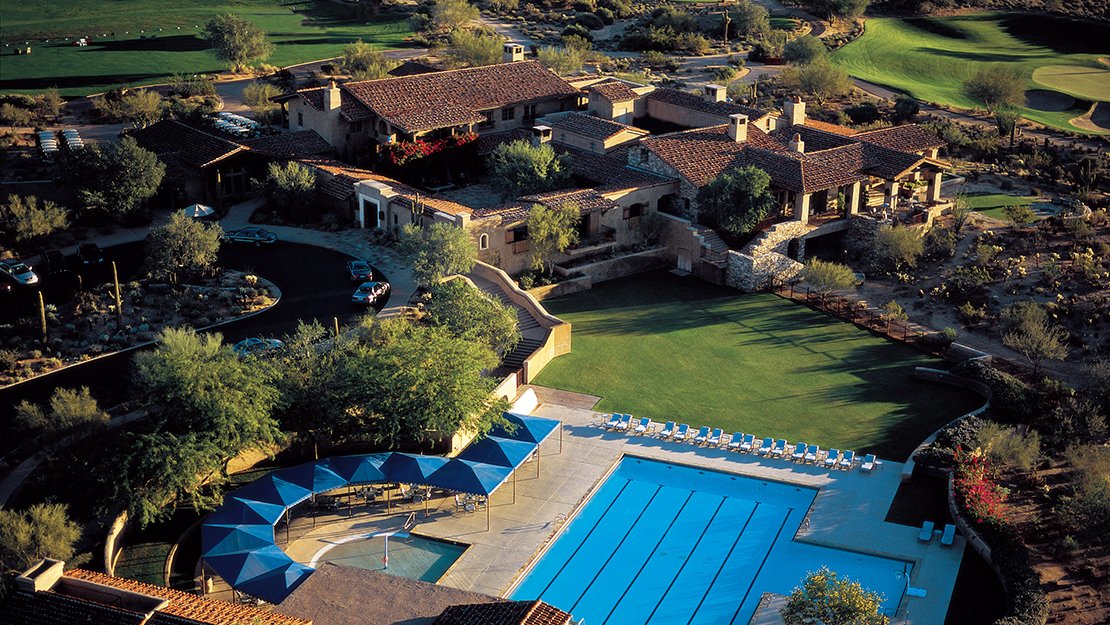
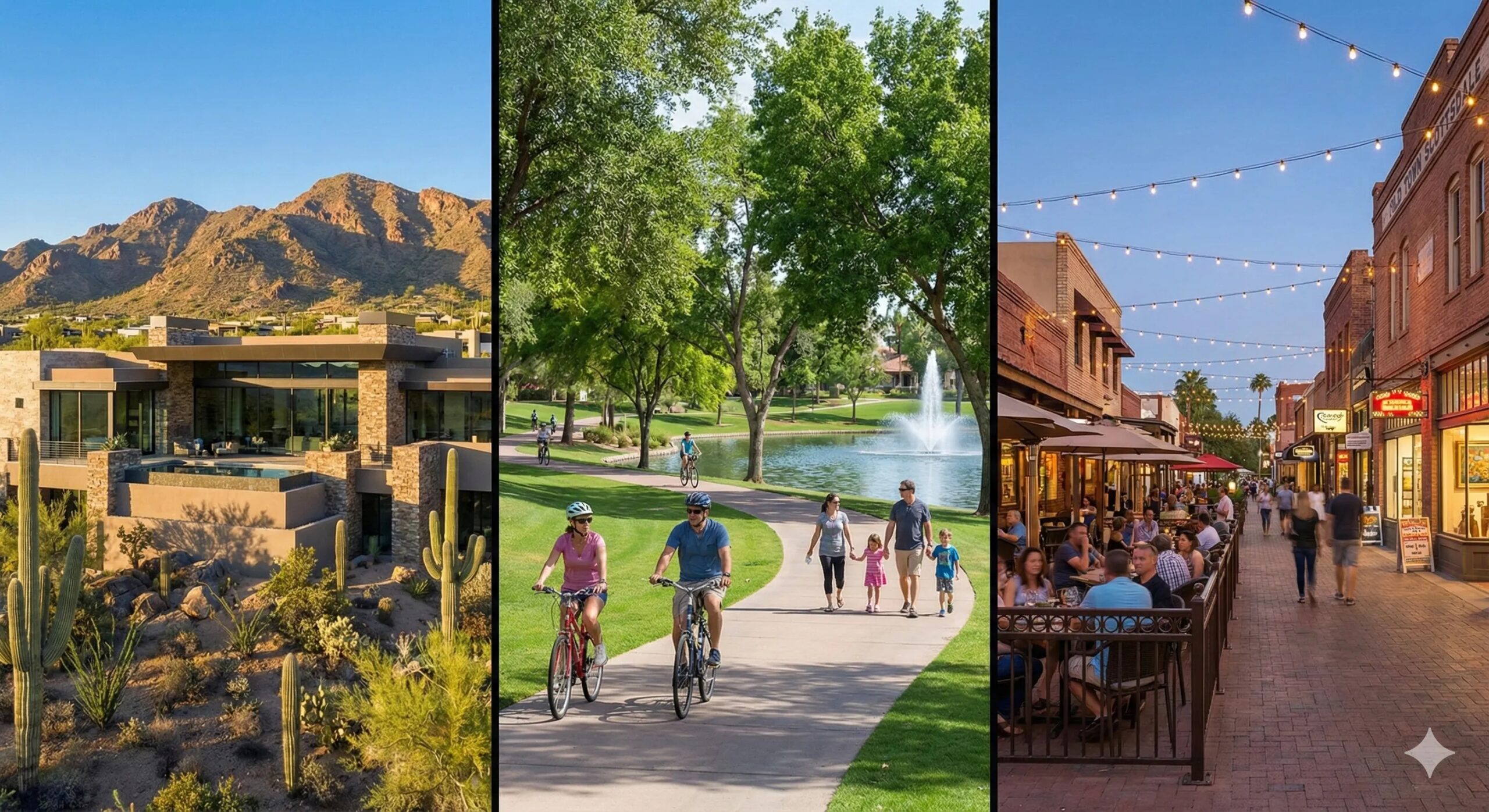
Sources disagree on total trail mileage: one figure is 33 miles, another 50, and no source defines what each count includes; the gap likely comes from whether connector trails into the adjacent McDowell Sonoran Preserve are counted alongside DC Ranch’s own maintained paths. Two independent sources put the park count at 47, distributed across neighborhoods rather than concentrated in one greenbelt. Two community centers anchor the system: Desert Camp (9 acres) and The Homestead (4 acres), both offering pools, fitness facilities, and sport courts to residents.
How DC Ranch Compares to Nearby Communities
Based on a monthly North Scottsdale market report compiled from local sales records, per a Troon North submarket report and its companion Desert Mountain report:
| Community | Entry price (2026) | Golf access | Gate style |
|---|---|---|---|
| Grayhawk | $700,000 to $3.5 million | Two public-membership courses (Raptor, Talon) | Mixed gated and non-gated |
| DC Ranch | $1.4 million to $8 million | Private Country Club at DC Ranch, optional | Guard-gated master plan |
| Silverleaf | $3 million to $25 million and up | Private Weiskopf-designed Silverleaf Club | Guard-gated, separate HOA inside DC Ranch’s boundary |
| Troon North | Around $1.4 million median | Two Weiskopf courses (Monument, Pinnacle), public-membership | 13 gated sub-associations under one master HOA |
| Desert Mountain | $1.8 million to $15 million and up | Seven Nicklaus-designed courses, club-centered | Guard-gated, single perimeter |
Grayhawk undercuts DC Ranch on entry price with public-access golf. Desert Mountain and Silverleaf sit above it on both price and club exclusivity. DC Ranch’s own position is the middle one: private golf without Desert Mountain’s mandatory club culture, and a wider product mix than Silverleaf’s estates-only footprint.
Buying as an Investor: Rentals, Taxes, and Water
Short-term rentals aren’t guaranteed
Scottsdale requires a citywide short-term-rental license regardless of neighborhood, but several DC Ranch villages layer HOA restrictions or minimum lease terms on top of that citywide rule, according to local brokerage guidance. No source publishes the specific minimum-lease-term number for DC Ranch’s CC&Rs; that figure has to come from the sub-association’s governing documents directly. That gap is worth naming plainly rather than filling with a guess.
Can I rent my DC Ranch home short-term?Only if both Scottsdale’s citywide STR license and your specific village’s HOA rules allow it. DC Ranch is commonly cited as one of the more rental-restrictive North Scottsdale communities; confirm the minimum lease term in writing with the sub-association before assuming rental income.
Property taxes run above the North Scottsdale norm
DC Ranch’s average annual property tax is $8,786.04, per a brokerage’s aggregate of recent closings. That is roughly double the $4,198 median tax bill Ownwell reports for the broader 85255 ZIP code, which already sits well above Scottsdale’s citywide median of $2,573, per Ownwell’s Scottsdale property tax data. DC Ranch’s higher average reflects its home values, not a special district rate.
Water supply has a documented buffer, and a documented risk
Scottsdale holds a 100-year Assured Water Supply designation from the Arizona Department of Water Resources, meaning any DC Ranch subdivision served by Scottsdale Water doesn’t need a separate certificate of its own, per the City of Scottsdale’s water supply page. About 90% of Scottsdale’s drinking water now comes from the Central Arizona Project and Salt River Project rather than groundwater, a shift the city made starting in the mid-1980s. The city’s water resources page also states it is actively monitoring the risk of further Colorado River allocation cuts and planning for a lower-water future.
Flood and wildfire risk both apply, per First Street data reported through Redfin’s DC Ranch housing market page: 26% of DC Ranch’s roughly 4,127 properties, 627 homes, carry a severe flood risk over the next 30 years, and 100% of properties carry some wildfire exposure, though wind risk is minimal.
History, With the Numbers Resolved
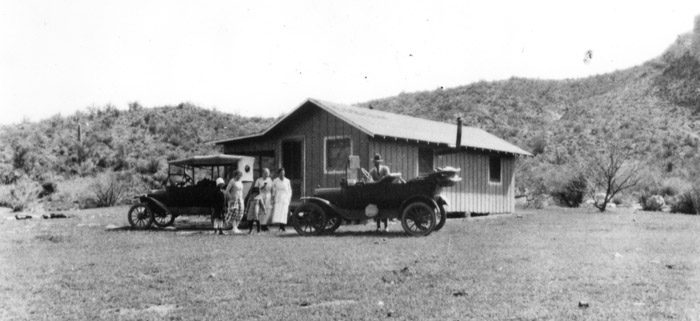
The “DC” brand was registered by Dr. William Dorr “Doc” Crosby on June 1, 1885; E.O. Brown acquired it in 1917 and ran cattle under it at the northwest base of the McDowell Mountains, per DC Ranch’s history page. That working ranch grew to nearly 43,000 acres at its largest extent, the source of the 43,000-acre figure some sites still repeat as if it described today’s community. It doesn’t: the DC Ranch Community Council states the current platted community covers 4,400 acres, per the Community Council’s own listing. The 3,700- and 4,000-acre figures on other agent pages are looser roundings of that same modern footprint, not competing measurements of the historic ranch.
The residential timeline gets conflated the same way. DMB Associates began master-planning the land in the 1990s; the Country Club at DC Ranch golf course opened April 24, 1997; and the first residents moved into Desert Camp Village in 1998, according to DC Ranch’s history page and a dated local-history feature. “Founded in 1998” and “a cattle ranch since 1885” both describe the same place. They’re just different centuries of it.
| Figure | Values found | Likely explanation |
|---|---|---|
| Acreage | 43,000 vs. 4,400 / 4,000 / 3,700 | 43,000 is the historic cattle ranch at peak size; 4,400 is the current platted community per its own Community Council |
| Founding | 1885, 1993, 1997, 1998 all cited as “founding” | Cattle-brand registration, master-plan conception, golf-course opening, and first residents are four different milestones |
| Trail mileage | 33 vs. 50 miles | No source defines whether preserve-connector trails are included |
| Recent median sale price | $1.4 million to $3.6 million | Small monthly sample sizes mixed with unsegmented property types |
Comments