
Current Market Snapshot

Redfin’s neighborhood page reports a median sale price of $800,000 for November 2025, up 10.8% year over year, with 41 homes sold and a median 66 days on market. The same page reports median price per square foot fell 9.88% over the same period, to $456. Those two figures moving in opposite directions is not a contradiction: a shift toward larger or more expensive homes selling in a given month can push the median price up while the per-square-foot rate falls. Anyone quoting one number without the other is describing only part of what moved.
Movoto’s July 2026 data puts the median list price at $619,000, a measure of what sellers are currently asking rather than what buyers are paying. Zillow’s Home Value Index, a modeled estimate of typical value rather than a transaction count, puts the figure at $700,812, down 4.5% over the trailing year. A buyer reading only the Redfin sale-price line and assuming it applies to every listing will misjudge what is actually available at the lower end of Movoto’s asking-price range.
Is Canoga Park actually cheaper than nearby West Hills, and by how much? On matched, same-period Redfin data, Canoga Park sells for $456 per square foot against West Hills at $580, a gap of about 21%. That is wider than the “10 to 15% cheaper” figure repeated across informal market write-ups, none of which source it to a dated pull.
How Canoga Park Compares to West Hills
The commonly repeated claim that Canoga Park runs 10 to 15% cheaper per square foot than neighboring West Hills does not hold up against a matched check. Both figures below come from Redfin’s neighborhood pages, pulled for overlapping periods in 2025 and 2026.
| Metric | Canoga Park | West Hills | Source |
|---|---|---|---|
| Median sale price | $800,000 (Nov 2025) | $1.1M (3mo to May 2026) | Redfin |
| Median $/sqft | $456 | $580 | Redfin |
| Days on market | 66 | 36 | Redfin |
| Homes sold (period) | 41 | 106 | Redfin |
Canoga Park’s per-square-foot discount against West Hills runs close to 21%, above the smaller figure that gets repeated without a source. West Hills also moves faster, 36 days against 66, and turns over more volume, pointing to tighter buyer competition there rather than simply a pricier market.
Renting vs. Buying: The Yield Math

None of the market write-ups circulating for this neighborhood compute what a Canoga Park property would return as a rental, despite investors being an active buyer segment here. The inputs below come from named rent trackers rather than a single figure, because they disagree by roughly 30%.
| Rent source | Monthly rent | Annualized rent | Gross yield vs. Zillow ZHVI ($700,812) |
|---|---|---|---|
| Zumper (Feb 2026, all unit types) | $2,450 | $29,400 | 4.2% |
| Apartments.com (current, all unit types) | $1,876 | $22,512 | 3.2% |
| Redfin sale price basis ($800,000) at Zumper rent | $2,450 | $29,400 | 3.7% |
A 3.2 to 4.2% gross yield range, before taxes, insurance, HOA, and vacancy, sits below what many out-of-state single-family rental buyers target. The spread itself is a signal: running the higher Zumper figure against the lower Movoto list price produces a materially rosier number than running Apartments.com’s average rent against Zillow’s estimate.
Is Canoga Park a renter’s market or a buyer’s market right now? RentCafe’s Census-sourced figures show 70% of Canoga Park housing units are renter-occupied against 30% owner-occupied, unusually renter-heavy for a neighborhood built around a buy-sell market page.
Housing Stock
Canoga Park was founded in 1912 as a planned community called Owensmouth, annexed by the city of Los Angeles in 1917, and renamed in 1931. Beyond that founding history, no source meeting a government, agency, or primary-data standard currently publishes a dated breakdown of construction era, typical lot size, or floor-plan range specific to Canoga Park; that detail is flagged here as an open research item rather than repeated from unsourced write-ups.
Fire Hazard and Insurance: Two Different Risks
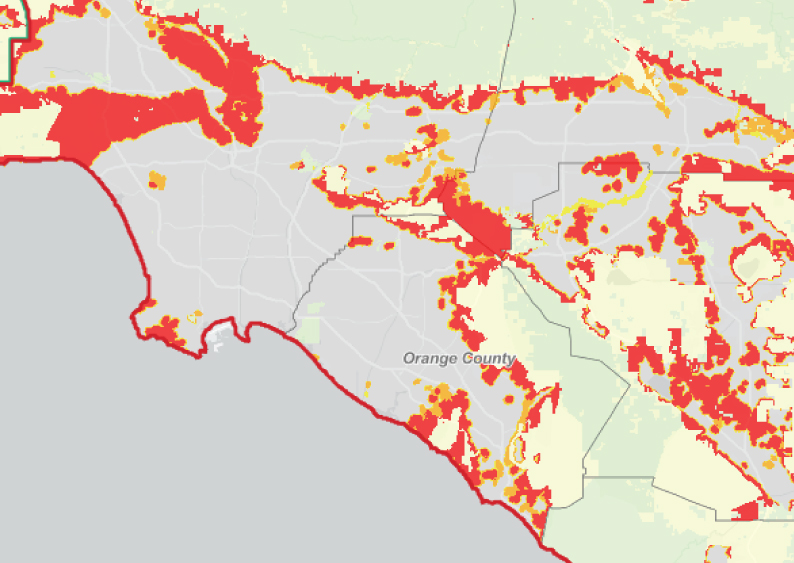
Two entirely different systems produce fire-risk numbers for this neighborhood, and they answer different questions. Redfin’s climate module, sourced to First Street, reports 45% of Canoga Park properties carry some wildfire risk over a 30-year modeled horizon. Separately, the Los Angeles Fire Department’s list of communities within the state’s Very High Fire Hazard Severity Zone names West Hills, Woodland Hills, Chatsworth, and Tarzana among others; Canoga Park does not appear on that list. The first is a private, probabilistic climate model built for consumer information. The second is a regulatory designation that triggers defensible-space inspection requirements at time of sale and affects building code compliance.
A buyer asking whether a specific house sits in modeled wildfire territory needs the First Street answer. A buyer asking whether closing will require a defensible-space inspection needs the LAFD designation, and for Canoga Park specifically, that answer is currently no. CAL FIRE’s 2025 map update is still being aligned to city parcel lines by LAFD, worth re-checking at the time of any specific transaction rather than assumed permanent.
Does fire risk affect insurance costs in Canoga Park specifically? The regulatory VHFHSZ designation, which insurers weigh most heavily, does not currently list Canoga Park among covered communities, unlike several adjacent West Valley neighborhoods. The modeled First Street risk score is a separate figure and does not by itself change insurability.
Schools and Livability

Canoga Park Senior High School carries a 2 out of 5 rating from SchoolDigger, ranking 1,098th of 2,162 California high schools, with 92.4% of students receiving free or reduced lunch. The same data shows a 93% graduation rate exceeding both district and state averages, and English-language-arts performance ahead of district and state norms, against notably weaker math and science proficiency. A family weighing Canoga Park against a pricier neighboring ZIP code on school quality should look at graduation outcomes and subject-level performance separately, not a single star rating.
| Attribute | Canoga Park figure | Source |
|---|---|---|
| Walk Score | 69 | Redfin |
| Renter-occupied share | 70% | RentCafe (Census) |
| Canoga Park Senior High rating | 2/5 stars, 93% graduation rate | SchoolDigger |
| VHFHSZ regulatory status | Not listed | LAFD |
A Walk Score of 69 puts daily errands within reach on foot for many addresses without requiring a car for every trip, a different profile from more driving-dependent neighborhoods further west in the Valley.
Warner Center and What’s Being Built
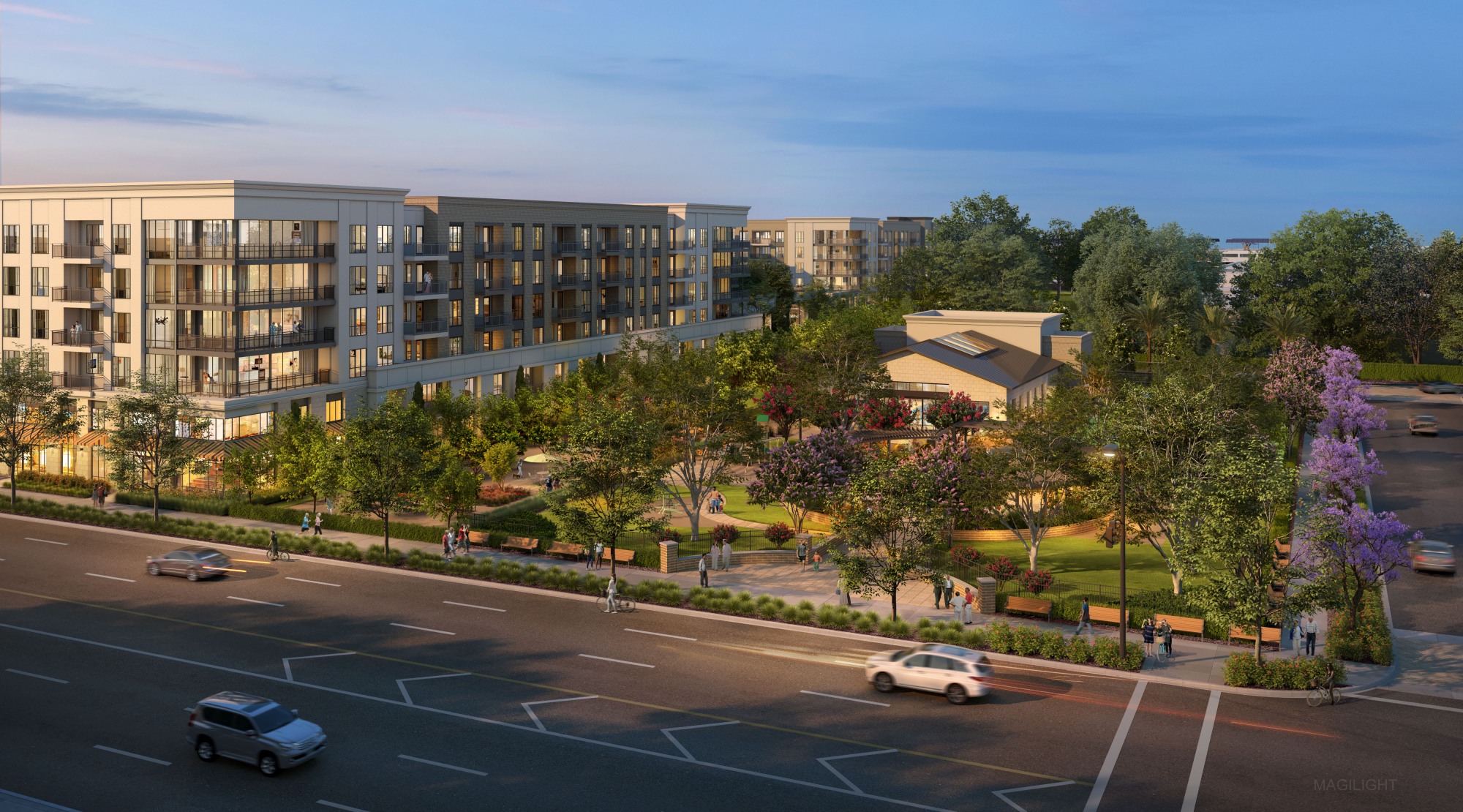
The Warner Center 2035 Plan covers roughly 1,100 acres directly adjacent to Canoga Park. The most concrete project currently moving through that plan is Rams Village at Warner Center, a 52-acre mixed-use development announced in April 2025 by the Kroenke Organization as the Los Angeles Rams’ permanent headquarters and training facility, alongside retail and residential components. A zoning framework and a named, financed project with an owner and an acreage figure carry very different levels of certainty; buyers weighing proximity to Warner Center as a value driver should track the second, not the first.
Mistakes Buyers and Sellers Both Make
- Comping across mismatched dates. Redfin’s November 2025 sale figure and Movoto’s July 2026 list figure are eight months apart on different metrics; treating them as the same snapshot skews any offer strategy.
- Assuming one aggregator’s rent figure applies city-wide. Zumper and Apartments.com disagree by close to 30% on Canoga Park’s average rent; an investor should model both ends of that range, not just the more favorable one.
- Reading “near Warner Center” as a finished amenity rather than a phased build. Rams Village is announced and dated; other components of the 2035 Plan area remain at earlier planning stages.
No source available at the neighborhood level currently publishes sub-area price segmentation within Canoga Park itself, ADU permit-cost figures specific to its lots, or a finalized, parcel-aligned fire-hazard boundary. A buyer or seller needing any of those three should ask a local agent for a live MLS pull rather than rely on aggregator pages.
Comments