
What Rent Actually Looks Like by Bedroom Count
The clearest current market read comes from Rentcast-sourced listing data pulled in July 2025, which shows rents falling year over year even as unit counts stayed roughly flat.
| Unit size | Median asking rent | Year-over-year change |
|---|---|---|
| 1 bedroom | $1,180 | part of a −1.1% town-wide trend |
| 2 bedroom | $1,180 | part of a −1.1% town-wide trend |
| 3 bedroom | $2,040 | part of a −1.1% town-wide trend |
| 4 bedroom | $2,270 | part of a −1.1% town-wide trend |
The one- and two-bedroom figures land at the same $1,180 median, which means the usual jump in price per added bedroom does not show up until the three-bedroom tier, where the median rent nearly doubles. That single-tier jump, not the year-over-year dip, is the number worth planning around if you’re comparing a two-bedroom to a three-bedroom unit. (Source: Prop:Metrics, Rentcast data, July 2025.)
Is Kernersville cheaper to rent in than Greensboro or Winston-Salem? Kernersville’s median gross rent for existing renter households was $1,224 in 2024 per Census ACS data compiled by City-Data, while residents accept an average 22.6-minute commute to reach Triad-area jobs, according to Data USA’s Census-based commute figures, a tradeoff renters weigh against big-city rent in Greensboro or Winston-Salem proper.
Downtown, I-40, South Side, or 55+: The Submarkets Are Not Interchangeable
Kernersville’s apartment stock splits into distinct pockets, and the properties’ own marketing confirms the split rather than inventing it.
| Submarket | Example community | Location detail (source) | Best fit for |
|---|---|---|---|
| Downtown / Main Street | Hawthorne at Main | Walking distance to Main Street dining and the Ciener Botanical Garden, per the property’s own listing | Renters who want walkable downtown access without a car-dependent commute |
| I-40 corridor | Abbotts Creek | Sits just off I-40 between Greensboro, High Point, and Winston-Salem, per Abbotts Creek’s site | Commuters working across multiple Triad cities |
| South Kernersville | Welden Park | Neighbors the Welden Village retail area in South Kernersville, per Homes.com listing data | Renters prioritizing newer construction and retail proximity |
| Age-restricted 55+ | Davis Gardens | 1- and 2-bedroom 55+ community near Greensboro and Winston-Salem, with elevator access, per Davis Gardens’ own site | Active adults wanting low-maintenance living |
Location claims here come straight from each property’s own published site, so the differentiation is verifiable rather than a directory’s marketing copy: a commuter choosing Abbotts Creek for I-40 access is optimizing for something a downtown renter at Hawthorne at Main is deliberately trading away.
What a Rent Number Can Actually Support
Housing counselors commonly use the 30%-of-gross-income guideline to flag when rent starts to strain a budget; Kernersville’s own income data shows exactly where that line falls.
| Unit size | Median rent | Monthly income needed at 30% | Annual income needed |
|---|---|---|---|
| 1 to 2 bedroom | $1,180 | $3,933 | $47,200 |
| 3 bedroom | $2,040 | $6,800 | $81,600 |
| 4 bedroom | $2,270 | $7,567 | $90,800 |
Kernersville’s 2024 median household income of $71,918 clears the one- and two-bedroom threshold comfortably but sits below the $81,600 a three-bedroom unit requires under the 30% rule, which is the concrete reason family-sized units in town skew toward two-income households rather than a single median earner. (Income source: Point2Homes, Census-derived.)
Are there income-restricted or Section 8 apartments in Kernersville? Only about 2.9% of Kernersville housing units fall under the Section 8 program as of 2024, per HUD data compiled by Prop:Metrics, a low share that means most renters here are competing in the open market rather than an income-restricted pool.
The Fee Line That Changes the Real Price
Listed “starting at” rents frequently exclude required monthly fees, and one current Kernersville listing shows exactly how large that gap can be. Spire at Smith Crossing advertises a one-bedroom base rent of $1,539 and up, but the total monthly price shown on the same listing is $1,674 and up, a $135 difference attributed to required monthly fees, per the property’s own Apartments.com listing. Before comparing two properties’ advertised rents side by side, ask each leasing office for the total monthly price, not the base rent alone, since that $135 gap on a single unit is large enough to change which property is actually cheaper.
Do Kernersville apartments typically charge fees on top of base rent? Yes; several current listings show required monthly fees layered onto base rent, and the Spire at Smith Crossing example above is a documented case, so the base rent quoted in a search result is not reliably the number that lands on a lease.
A Small Note on Turnover
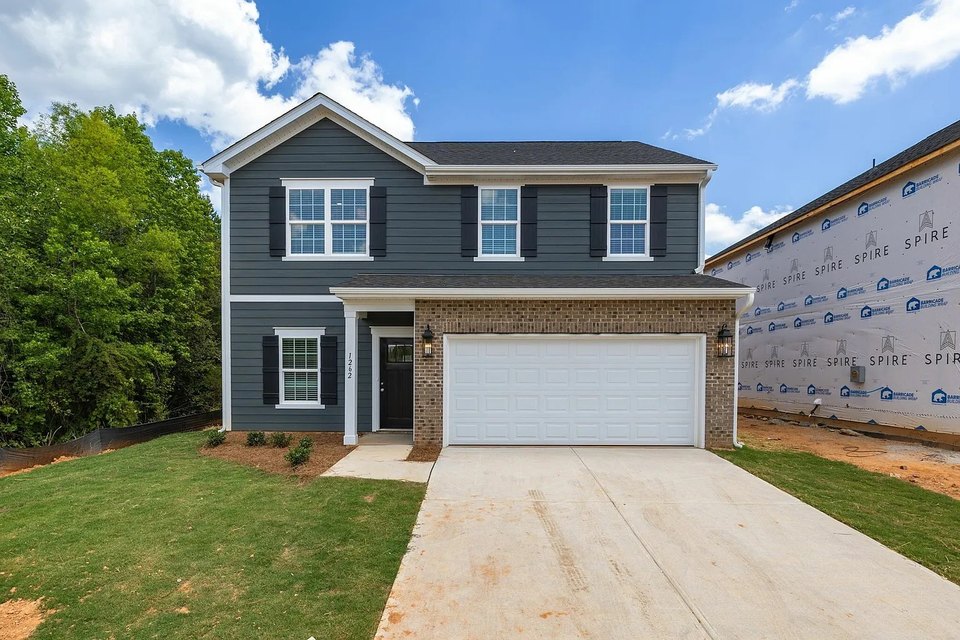
Kernersville’s rental market moves fast enough that specific unit availability shifts week to week; several currently listed units on Zillow were posted within the past four days of this page’s research.
Why “Average Rent in Kernersville” Numbers Disagree
Which rent figure should I actually budget against? Use the newer listing-based figures for a unit you’re about to sign; the older gross-rent averages describe the existing tenant base, not what a new lease will cost you today.
Comments