
Greenwood’s rental corridors, and what each actually costs
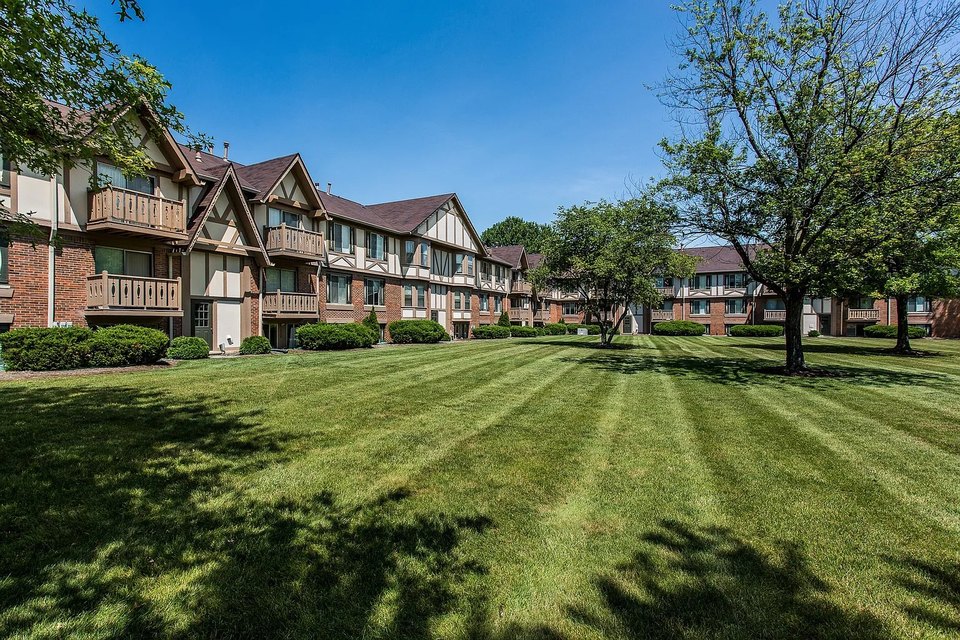
Greenwood doesn’t price like one market. Four corridors carry distinct stock:
| Corridor | Example complex | Starting price | Defining feature |
|---|---|---|---|
| Center Grove / south Main Street | Copper Chase at Stones Crossing | $1,222 base rent; $1,351 to $1,420 total monthly price for a 930 sq ft one-bedroom | Center Grove school district, newer amenity-heavy build (Apartments.com) |
| County Line Road / I-65 | Arlington Farms | $1,395 (community range $1,395 to $2,045) | Newly developed, garden-style, Clark-Pleasant schools (ApartmentHomeLiving.com) |
| Valle Vista golf corridor | Courts of Valle Vista | $999 | Built around the Valle Vista golf course and three lakes, Greenwood Community Schools (ApartmentHomeLiving.com) |
| US-31 / mall corridor | Barton Farms | Not independently confirmed in this pass, open item | Closest to Greenwood Park Mall; resident reviews raise security concerns, see the safety section below |
Two of the four corridors, Valle Vista and the mall corridor’s general area, list at or under the HUD one-bedroom line. The other two run $80 to $150 over it, and the newest development, Arlington Farms, is the only one whose upper range clears the two-bedroom line by several hundred dollars.
What the federal benchmark says versus what’s actually listed
| Unit size | HUD FY2026 FMR, Indianapolis-Carmel HMFA | What’s actually listed in Greenwood (this survey) |
|---|---|---|
| Studio | $1,118 | None of the four surveyed complexes currently lists a studio |
| One-bedroom | $1,267 | $999 to $1,420 total monthly price, across Courts of Valle Vista and Copper Chase |
| Two-bedroom | $1,473 | Up to $2,045 at Arlington Farms, community-wide range, not isolated by bedroom count |
| Three-bedroom | $1,907 | Falls inside Arlington Farms’ $1,395 to $2,045 range; no complex isolated a three-bedroom figure in this pass |
The federal benchmark and the actual listings agree at the bottom of the market and diverge at the top: nothing surveyed here undercuts the FMR badly, but the newest community prices well past it once you reach a two-bedroom.
Do apartment prices in Greenwood ever come in below what HUD publishes? Yes. Courts of Valle Vista’s one-bedrooms start about $270 under the $1,267 HUD figure, largely because the complex is older and priced accordingly rather than because the area is generally cheap.
Base rent versus the total monthly price you’ll pay
Listing sites increasingly separate “base rent” from a “total monthly price” that folds in required fees. At Copper Chase at Stones Crossing, a one-bedroom base-rent listing of $1,222 becomes a total monthly price of $1,351 to $1,420 once mandatory fees are added (Apartments.com). Pet ownership adds a separately disclosed layer at the same property: a $150 one-time fee plus $25 a month per pet, for up to two cats or two dogs (Zillow). None of the four complexes surveyed publishes a single all-in number that a renter can compare directly against another property’s base rent without checking whether that second number already includes fees.
- Ask for the total monthly price in writing, not the “starting at” base rent quoted on a call, before comparing two properties.
- Ask separately about pet fees, since they’re billed monthly and compound over a lease term rather than being a one-time cost.
- Confirm whether the deposit is refundable and what it covers, since Indiana law lets landlords apply it to unpaid rent, unpaid utility charges, and damage beyond normal wear, not just damage.
What’s the difference between the base rent and the total monthly price? Base rent is the unit’s listed rate. Total monthly price adds mandatory recurring charges the property requires from every resident, such as trash, pest control, or amenity fees; it doesn’t include optional add-ons like a reserved parking spot or a second pet.
Newer construction versus an established complex
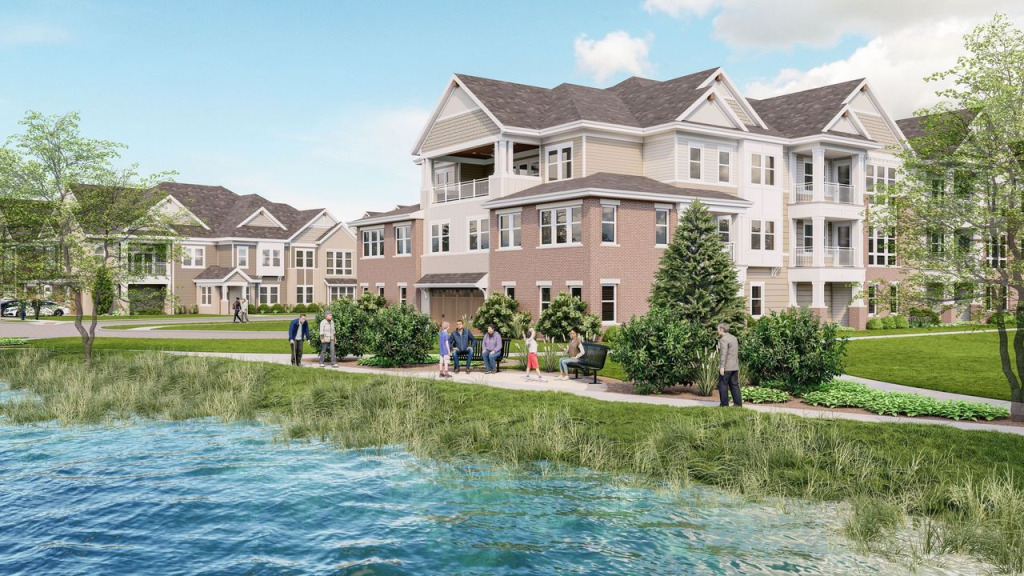
Arlington Farms markets itself as a newly developed community, and a resident review posted on Apartment List backs that up with a specific complaint: doors that residents say naturally slam shut even without being pushed (Apartment List), the kind of build-quality friction that shows up in the first year or two of a property’s life and tends to fade as management adjusts hardware and residents settle in. The Fairways at Valle Vista, by contrast, was built in 1980 and carries 340 units across two stories (CorporateHousing.com), the kind of age where finishes are dated but the building’s quirks are known and usually already fixed.
Neither age profile is automatically the better choice. A newer complex generally means updated appliances, tighter energy efficiency, and amenities like package lockers or a dog park, alongside a real chance of lease-up noise, unfinished landscaping, or hardware that hasn’t been adjusted yet. An older complex generally means lower rent for comparable square footage and a maintenance history you can ask about directly, alongside dated kitchens and, in some cases, no in-unit washer and dryer.
Is a brand-new Greenwood complex worth paying more for? It depends on how much lease-up friction you can tolerate for the first year: newer buildings run higher rent and updated finishes, but issues like door hardware and unfinished common areas are more common until the property has been open a year or two.
Safety and livability: what’s actually published, and what isn’t
No public, complex-level or sub-area-level crime data source for Greenwood surfaced in this research pass. What exists instead is scattered resident reviews, including reports of break-ins and inconsistent security follow-up at one specific property, Barton Farms, on ApartmentRatings.com. That’s a signal worth asking a leasing office about directly. It isn’t a citywide safety verdict.
Is Greenwood, IN safe to live in? No sourced, complex-by-complex crime data was found for this piece; treat any single online review, including the ones cited here, as one data point, and ask the local police department’s records division for area-specific incident data before signing.
Lease terms and Indiana renter basics
Indiana law gives a landlord 45 days after a tenant moves out to either return the full security deposit or send an itemized list of damage deductions; missing that window forfeits the landlord’s right to withhold anything from the deposit (Indiana Code 32-31-3-12 and 32-31-3-14, text via Justia). There’s no statutory cap on how large a security deposit can be. For notice to end a lease, Indiana Code sets one month’s written notice for a month-to-month tenancy, three months for a year-to-year tenancy, and a ten-day pay-or-quit notice for nonpayment before an eviction filing can proceed (IC 32-31-1-1, 32-31-1-3, 32-31-1-6, cited in a secondary summary of the code rather than the primary statute text directly); a fixed-term lease with a stated end date needs no notice at all, since it simply expires.
How much notice do I need to give before moving out in Indiana? One month in writing for a month-to-month lease, three months for a year-to-year lease, and none at all if you’re on a fixed-term lease and plan to leave on its listed end date.
Common mistakes when choosing a Greenwood complex
- Comparing a base-rent quote to another property’s total monthly price. The two numbers aren’t the same unit of measurement, and the gap can run over $100 at a single Greenwood property.
- Signing at a newly opened community without asking about lease-up status. Ask directly whether adjacent buildings are still under construction, since active construction affects noise and parking availability, not just the unit itself.
- Skipping the pet-fee math over a full lease term. See the fee section above for the exact monthly figure at one Greenwood property.
- Assuming a low advertised starting price applies to every unit. Courts of Valle Vista’s $999 figure is a floor, not a typical price; the complex’s own range runs to $1,394.
Aggregator-reported “average rent” figures for Greenwood are not stable enough to repeat as fact. Apartment List’s own property pages show two different city averages for a one-bedroom: $1,282 or more on its Copper Chase page (source) versus $1,270 on its Arlington Farms page (source), both dated the same season. The HUD FY2026 figure of $1,267 is the only number in this comparison with a disclosed date and methodology.
Greenwood’s rental corridors price differently enough that picking the right one matters as much as picking the right complex.
Comments