
What Ann Arbor apartment buildings are priced at right now
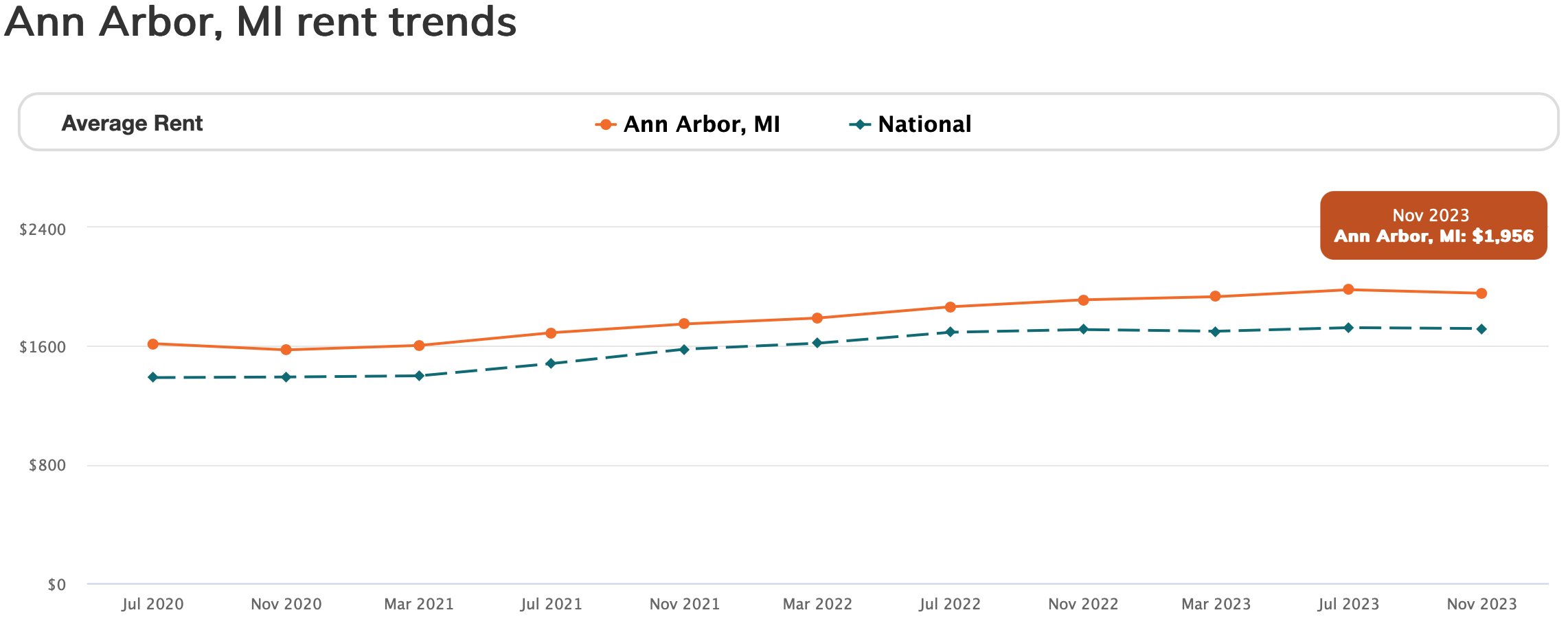
Rent moved down before it moved up: Apartment List’s July 2026 report shows Ann Arbor’s median rent rising 0.9% month over month to $1,621, while still sitting 2.8% below where it stood a year prior. That single trend line matters, because every acquisition decision here rests on projecting forward from a rent base that just spent a year contracting.
Cap rates tell a similar half-story. Arbor Realty Trust’s research, developed with Chandan Economics, put the national multifamily average at 5.7% for full-year 2025 transactions and 5.8% for the trailing twelve months through Q1 2026. Regionally, the Midwest closed Q4 2025 at 5.8%, the highest cap rate of any U.S. region, after compressing 40 basis points that quarter.
Submarket dispersion is real on the rent side and undocumented on the acquisition side. RentCafe’s Yardi Matrix data puts Ann Arbor’s citywide average rent at $2,053 a month, down 1.35% year over year, with neighborhood averages ranging from $1,490 in Bryant to $5,169 in Burns Park, a figure skewed by large off-campus houses rather than comparable apartment stock. Rent.com’s neighborhood data shows a similar spread for one-bedroom units: $1,361 in South Ann Arbor versus $2,992 downtown. No comparable submarket breakdown exists for acquisition pricing; that gap sits with the brokerage community, not with public data, and is worth naming directly to a broker rather than assuming a citywide range applies evenly.
| Submarket | 1BR avg. rent | Zoning context | Typical tenant |
|---|---|---|---|
| Downtown core (D1/D2) | $2,992 | Downtown Character Overlay districts | Young professionals, graduate students |
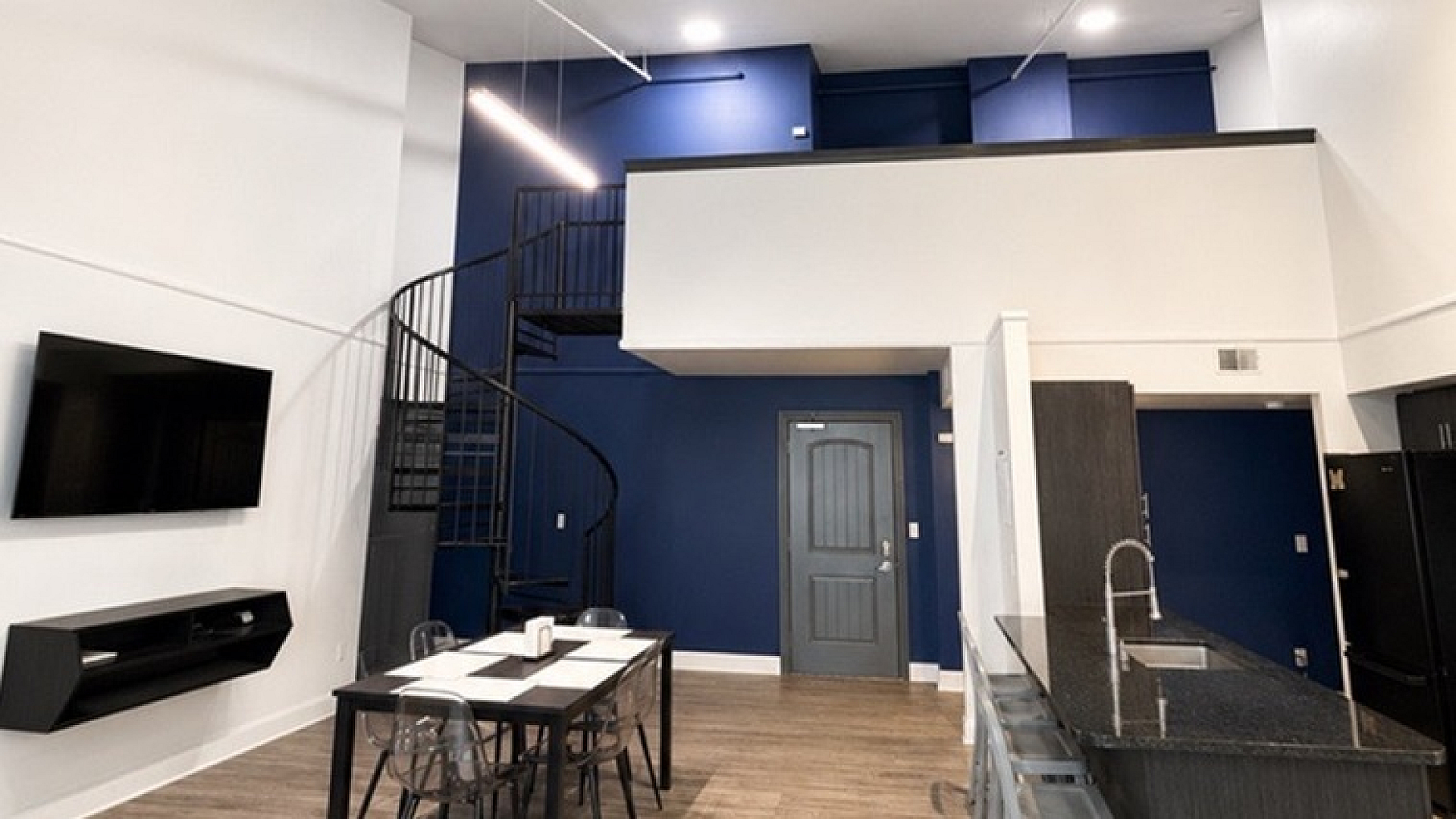
| Central/near-campus corridor | $1,400 to $2,757 | R4C, sited near the University of Michigan campus | Undergraduates, academic-year leases |
| South Ann Arbor / South Maple | $1,361 to $1,384 | Lower-density perimeter districts | Non-student, year-round renters |
The spread between $1,361 and $2,992 for the same unit type is not explained by square footage alone; it tracks proximity to campus and the zoning that permits that proximity, which is exactly what a citywide average erases.
Turning a rent figure into an implied acquisition value takes one calculation most published sources skip.
| Cap rate scenario | Annual NOI per unit* | Implied value per unit |
|---|---|---|
| 5.0% | $9,726 | $194,520 |
| 5.8% (Midwest Q4 2025 avg.) | $9,726 | $167,690 |
| 6.5% | $9,726 | $149,631 |
*NOI assumption: Apartment List’s $1,621 monthly rent and a 50% expense ratio, a common industry rule of thumb for older Class B/C stock, not an Ann Arbor-specific figure. Replace this line with a real rent roll and expense schedule for any given building.
Moving from a 5.0% to a 6.5% cap-rate assumption changes the implied per-unit value by roughly $45,000, more than most buyers negotiate off a purchase price through inspection findings alone.
Is a 5% to 6% cap rate good for Ann Arbor right now? It sits close to the Midwest regional average of 5.8% for Q4 2025, the tightest of any U.S. region tracked by Arbor and Chandan. A rate meaningfully above 6.5% on a stabilized property in this submarket set is worth a direct question to the seller: deferred maintenance, weak lease terms, or a location outside the campus-proximate corridor where rent commands a premium.
What a citywide number hides
Every publicly available acquisition-side cap-rate figure for Ann Arbor collapses the whole city into one range from one marketplace. Rent data splits cleanly by neighborhood, as the table above shows. Sale-side data, at the time of this writing, does not split the same way anywhere public.
Zoning and compliance requirements specific to Ann Arbor
| Designation | What it permits | Key restriction | Practical implication |
|---|---|---|---|
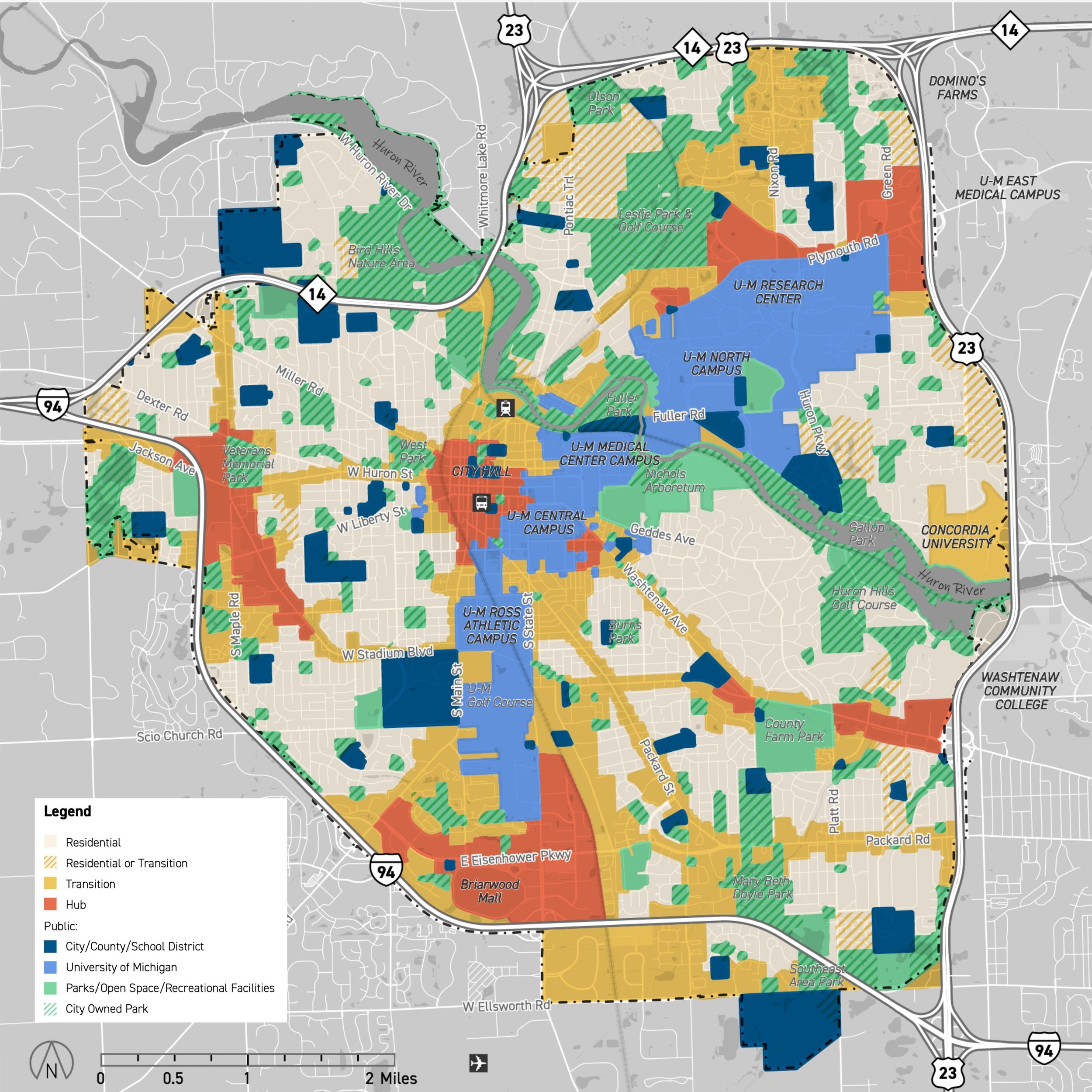
| R4C (Multiple-Family) | Multi-family dwellings by right, sited near downtown and central campus | Occupancy capped at 6 unrelated persons per unit | Sets the ceiling on legal by-the-bedroom leasing regardless of unit size |
| R4A (Multiple-Family, perimeter) | Similar multi-family use, positioned for perimeter locations | Must provide open land area for compatibility with surroundings | Typically lower achievable density than R4C despite the shared label |
| Downtown Character Overlay (Kerrytown, Liberty/Division, First Street, and others) | Adds design and massing standards atop base D1/D2 zoning | Several overlays coincide with the Old Fourth Ward, East William, and Old West Side Historic Districts | Renovation inside these overlays needs historic-level design review, a longer process than a standard permit |
| Certified Rental status (Housing Code, Chapter 105, all districts) | Legal occupancy as a rental unit | Certificate of Compliance must stay current; inspections run every 30 months | A lapsed certificate blocks legal advertising or leasing, independent of the zoning district |
Source: Ann Arbor Unified Development Code, Chapter 55; City of Ann Arbor Rental Housing Services.
What R4C and its neighbors actually permit
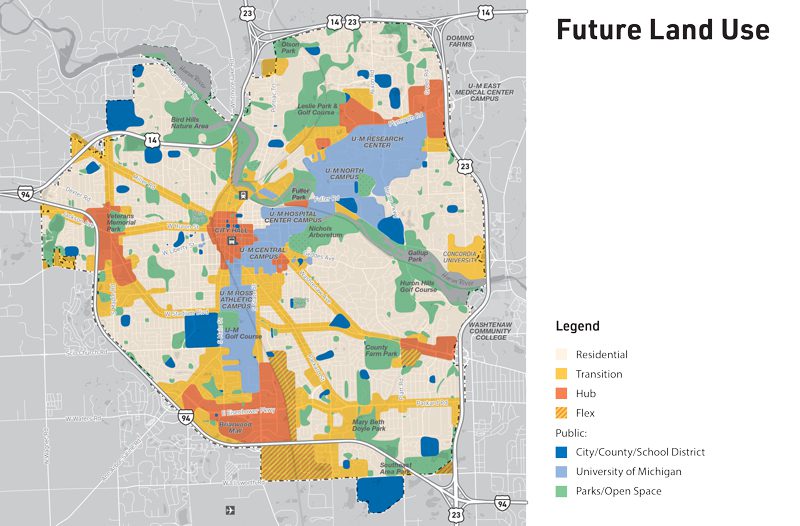
R4C’s own purpose statement in the Unified Development Code places it deliberately close to the central business district and the University of Michigan campus, distinguishing it from R4B (small infill tracts) and R4A (perimeter developments). The detail most buyers miss sits one layer down: this district caps occupancy in multiple-family districts at six unrelated persons per housekeeping unit. A property zoned R4C can permit multi-family use by right and still cap out well below what a naive per-bedroom rent calculation assumes, because the occupancy limit applies per unit, not per building.
Does R4C zoning let me add more units to a building? R4C permits multi-family dwellings by right, but actual buildable density comes from a separate area, height, and placement schedule in the Unified Development Code, not from the district label alone. Adding units also runs into the six-person occupancy cap per unit, which limits how much a denser layout increases legal bedroom count. A site plan review against the dimensional standards, not a zoning lookup, answers this for any real parcel.
The certificate of compliance cycle
No unit here can be advertised, listed, or occupied as a rental without a current Certificate of Compliance, per the city’s Housing Code. The inspection cycle runs every 30 months, and a certificate is valid for 2.5 years from the last physical inspection, extended to 3.5 years if the property passes on the first attempt with no re-inspection needed. Ann Arbor’s Green Rental Housing Ordinance layers on a separate requirement: a Home Energy Rating System score of 110 or below, or an equivalent path, at time of inspection.
Do I need a certificate of compliance before I can lease units here? Yes, and the timeline is the part buyers underestimate: an initial inspection can surface violations that take weeks to correct before a certificate issues, typically within 30 days of a clean re-inspection. Build that lag into a closing schedule, not just into ongoing ownership.
The University of Michigan leasing calendar and occupancy risk
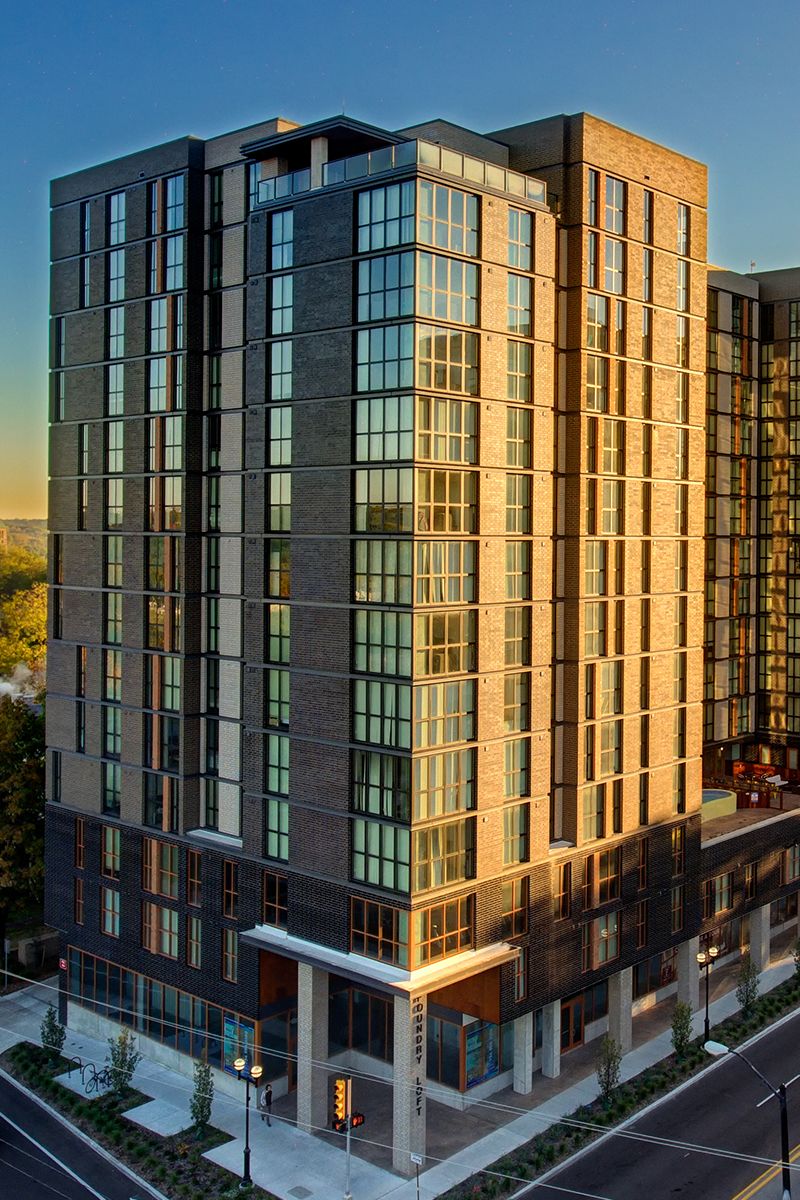
Fall 2026 classes at the University of Michigan begin August 31, 2026, per the Registrar’s academic calendar, anchoring the leasing cycle that drives most student-oriented buildings in the city: leases signed and units turned over in the weeks before that date, one-year terms, and a single major re-leasing window each year rather than the staggered turnover typical of conventional apartment communities. Buying mid-cycle, after that turnover window has passed, means inheriting whatever lease roll exists until the following August, with limited ability to reset rents or address a vacancy before the calendar resets again.
1136 Prospect Street’s Samuel Miller Residence, an 11-unit R4C property in the North Burns Park neighborhood less than half a mile from central campus, illustrates how the zoning and the calendar interact in practice: nine one-bedroom units, one two-bedroom, one efficiency, and eleven parking spaces, all leased on the academic-year cycle that R4C’s campus-proximate siting was built to serve.
What happens if I buy right before the fall leasing turnover? Closing shortly before August 31 without a signed lease roll for the coming academic year risks a near-full year of exposure to whatever occupancy exists at closing, since re-leasing individual student units off-cycle is materially harder than during the annual turnover window. Confirming a signed rent roll for the upcoming term, not just trailing twelve-month income, is the relevant due-diligence step here.
Common mistakes and red flags specific to this market

- Treating a marketplace-sourced cap-rate range as a quote. If a listing cites a single-source city-wide range with no date or transaction set attached, price the property off its own rent roll instead, not off that range.
- Assuming R4C zoning alone sets achievable density. The dimensional schedule and the six-person occupancy cap, not the district label, determine how many legal bedrooms a building can carry.
- Underwriting off trailing rent without checking the Certificate of Compliance status. A property can show a clean rent roll and still be blocked from re-leasing units if its certificate has lapsed; the expiration date belongs in due diligence alongside a title search.
- Ignoring the Green Rental Housing HERS threshold. A property that fails the 110-or-below score at its next scheduled inspection may need capital improvements never built into the acquisition budget.
- Buying without a confirmed rent roll for the next academic year. Trailing income says little if current leases expire before the next turnover window and no renewals are signed yet.
Who this market suits (and who it doesn’t)

- First-time multifamily buyers: the regulatory layer here, occupancy caps, rental certification, historic overlays, is denser than a first acquisition in most markets; pairing with a local property manager who already holds active Certificates of Compliance in the city shortens the learning curve.
- Experienced operators with student-housing exposure elsewhere: the academic-calendar leasing cycle and per-unit occupancy math will feel familiar, and the main new variable is Ann Arbor’s specific inspection and HERS requirements.
- Long-hold investors: tight regional cap rates and constrained new supply near campus reward a hold period long enough to absorb one or two rent cycles rather than a fast flip.
- Value-add flippers: capital improvements need to clear both the standard building code and, inside a historic overlay, a separate design review with its own timeline, adding risk to a short hold.
Is this a market for a first-time buyer or an experienced operator? Either can work, but a first-time buyer’s due-diligence checklist should lead with certificate status, HERS compliance, and occupancy caps specifically, since those, not the headline cap rate, are where new owners in this market are usually surprised.
Comments